

We do this every year.
On the last Sunday of every year, we send a snapshot.
At first, it was just a timeline with significant dates marked.
Over time, it evolved to include more qualitative information.
This year will be similar — but more in-depth.
A lot happened, but that is literally every year. Let’s dive.
Timeline
Nifty 50: 1 Jan, 2025 — 23,743
January-March Period
- Union Budget: zero-tax limit increased to Rs 12 lakh
- RBI cut interest rates by 0.25% (first cut since 2020)
Nifty 50: April 1, 2025 — 23,166
April-June Period
- US announced broad tariffs that affected India also
- RBI cuts rates by 0.25% again
- RBI cuts rates yet again in June. This time, 0.50% (most aggressive rate-cut cycle since 2019)
- CPI (consumer inflation) fell to 1.55%, the lowest level since 2017
Nifty 50: July 1, 2025 — 25,542
July-September Period
- 25% US tariff on India effective in Aug
- Followed by another 25% later in Aug, total tariffs = 50%
- GDP grew 7.8% in the April-June quarter
- Manufacturing and services activity touched 17-year highs
- S&P upgraded India’s credit rating to BBB (1st upgrade in ~18 years)
Nifty 50: October 1, 2025 — 24,836
October-December Period
- India approved a major GST reform
- SIPs crossed Rs 29,000 cr for the first time
- Inflation fell to 0.25% (record low)
- Trade deficit hit an all-time high due to heavy gold imports
- Biggest IPO of the year — Tata Capital’s Rs 15,512 crore IPO
- Markets all time highs: Nifty: ~26,325; Sensex: ~86,159
- USD-INR exchange rate fell below Rs 90 per USD
- RBI’s cuts rates again by 0.25%
- India’s biggest IPO-year ever. 100+ IPOs. Raise Rs ~1.75 lakh crore
- Gold & silver prices at all-time high
Nifty 50: Dec 26, 2025 — 26,042
So, Nifty 50 rose ~9.68% this year.
Geopolitics
For Indians, “geopolitics” reminds us of the conflict with a neighbour-country in May 2025.
The next major theme: changing relations with the USA and China.
We were surprised by US tariffs. Our ties with China improved.
India has had to play a balancing act with major powers in 2025. A multi-polar world seems to be emerging.
The USA, Russia, and China — all being carefully balanced.
Our ties with Russia remain crucial to us.
We continued buying Russian oil, upsetting the West. Despite that, we’re trying to have good relations with the West.
In the immediate neighbourhood, we saw tensions in Bangladesh and Nepal. It is something we will have to keep an eye on in 2026.
On a more global level, 2025 was dominated by the USA’s new president.
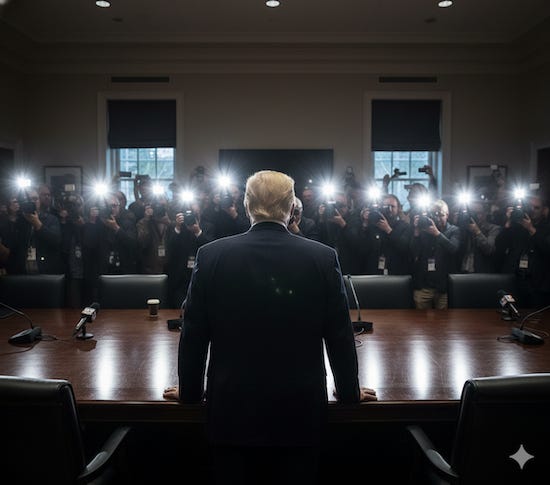
Existing conflicts like the Israel-Gaza conflict and the Ukraine-Russia conflict got tinted by Trump’s policies.
His policies were more hostile towards many countries this year.
They tried to restrict export of GPUs (for AI training) to China. In response, China ramped up GPU R&D efforts.
The Ukraine-Russia conflict is straining US-Russia ties currently.
Iran is another challenging country for the US. Trump doubled down on that. More sanctions, pressure tactics, and a few military flare ups.
The US is also getting involved in the Israel-Gaza conflict.
The situation in the Middle East has always caused scares across the world, especially to countries that import crude oil.
Crude oil prices this year remained stable.
Of course, the big talking point of the year remains — US tariffs.
It deserves a section of its own.
Tariffs
In April, the newly elected US President Trump announced a 10% tariff on all US imports and proposed a total of 26% duty on Indian goods.
The India-US negotiation talks that took place after this were not fruitful.
On 1 Aug, a flat 25% tariff was imposed on most Indian exports to the US. Not even a month later, an additional 25% penalty was imposed over India’s purchase of Russian oil, taking the total tariffs to 50% — the highest imposed by the US.
Labour-intensive sectors like textiles, leather, gems and jewellery, and seafood, especially shrimp, were hit the hardest.
Pharma and semiconductors were largely spared due to US dependence on Indian supply chains.
The sudden shift disrupted exports and forced Indian firms to diversify.
While exports fell sharply in September, India responded with measures like the Export Promotion Mission and trade talks with countries, including negotiations with the US.
The talks are still going on at the time of writing this.
IT Sector
The Indian IT sector faced pressure from multiple external factors. Mainly in the US and Europe.
First, the US moved to make the “new H-1B visas” far more expensive ($100,000 fee), which directly affects the model Indian IT companies use for US clients.
Second, there was also talk of policies like a 25% US outsourcing tax.
Third, the overall demand stayed soft.
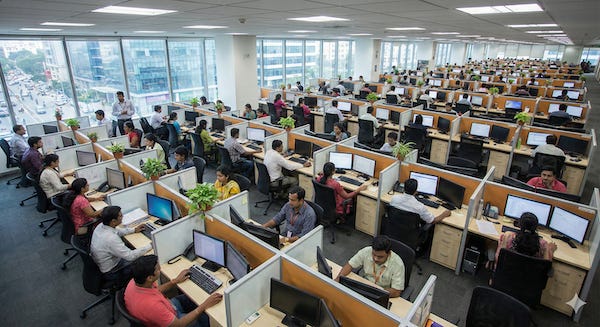
Clients in North America delayed deals and reduced discretionary tech spending, which slowed down the overall IT sector.
This stress showed up in the stock market as well.
Foreign investors sold about Rs 67,800 crore worth of Indian IT stocks as of September 2025, the highest among all sectors.
The Nifty IT index fell much more than the broader market.
Interest Rates
In the past 2-3 years, interest rates have increased.
The US Fed, India’s RBI, and the central banks of the UK, EU, Canada, Australia, and more, had all jacked up the interest rates.
Why?
That’s one way central banks use to reduce inflation.
If you recall, inflation was shooting through the roof in many countries, especially western countries. So they raised interest rates.
All kinds of loans became more expensive — business loans, home loans, education loans, etc.
It appears that that method worked. Inflation rates world over were healthier in 2025. With that problem tackled, central banks could focus on economic growth.
How does that happen?
Lower interest rates. Which is what we saw in 2025.
The US Fed reduced interest rates starting in Sept and continued to reduce till Dec.
The European Union did something similar. So did the UK, Canada, Australia, China, and India.
India’s RBI lowered interest rates by a total of 1.25% in 2025.
One exception: Japan.
Japan has had extremely low interest rates for 3 decades now. They had kept it around 0% or even negative.
Their population is low. They had been trying to desperately increase economic activity.
They increased rates for the first time in 25-30 years. This caused some shocks in the global financial system.
Many investors/traders used to take advantage of cheap Japanese loans to trade. That became difficult.
GDP & Inflation
India’s GDP saw strong growth in 2025.
In the first quarter of 2025, it came in at 7.4% and reached 8.2% in the July-Sept quarter.
This was marked by strong domestic consumption, investment in infrastructure, and a services sector that stayed strong despite geopolitical uncertainties.
At the same time, retail inflation fell steadily, staying below the RBI’s target of 4% (± 2%) by September.
It reached a record low of 0.25% in October, before rising slightly to 0.71% in November.
In response, the RBI gradually reduced rates throughout the year to support growth and maintain economic momentum.
Gold & Silver
Gold — up ~75% in 2025
Silver — up ~150% in 2025
The main reasons for the rise in prices of gold and silver are different.
For gold, it started with the weakening of the Indian Rupee, which led to higher opportunity cost of not holding gold.

The US tariffs on Indian goods were another reason for the gold price surge.
A newfound demand from the Gold ETFs also had a massive contribution.
This reflects a rise in retail investment and mutual funds interest in gold in 2025.
For Silver, the story is different.
Silver prices surged due to factors completely different from gold — including strong industrial demand and a constant supply shortage.
The solar energy sector, AI and electronics, and electric vehicle adoption significantly increased silver demand, while supply from mined silver remained unchanged.
Additionally, investment flows into silver ETFs, geopolitical instability, and favourable monetary policies further increased demand for silver.
Tax Reforms
The year saw falling inflation and rising GDP rates. This required a push by government policies.
A major push came in the form of new GST reforms effective from 22 Sept.
It simplified the GST structure by replacing the 4 tax rates (5%, 12%, 18%, 28%) with 2 tax rates (5% and 18%). Plus, a 40% flat tax rate on luxury and sin goods (like tobacco, designer bags, etc).
These reforms also increased the demand for automobiles which reflected in the rising auto sales for the months of Sept to Dec.

The new GST structure made taxation easier for businesses, SMEs, and startups by removing several ambiguities.
In addition, a revamped Income Tax structure introduced earlier this year during the Union Budget in Feb also contributed.
Income tax liability was removed for income till about Rs 12.75 lakh.
Beyond that, a gradual 5% increase till Rs 24 lakh was included. And, a flat 30% tax on income above Rs 24 lakh was aimed at improving spending and investment activity.
IPOs
Mainboard IPOs exhibited a broadly positive but unstable market for new listings, with more gains than losses — with some underperforming significantly.
Out of over 100 IPOs this year, around 67% of them listed with positive gains. The year had an upbeat start, with January observing 7 IPO listings with gains ranging from 10% to 33%.
October was the busiest month with 18 IPO listings, with August observing the highest gain in 2025 for Highway Infrastructure Ltd.
IPOs in 2025 also showed very high volatility. The gains were as high as over 60%. The losses were as low as below -30%.
The average return on these IPOs was relatively modest (at just around 9%).
2026
With that, we have broadly covered the year 2025.
Of course a lot happened — and a lot is not written above.
But these are the broad themes.
As for 2026, many of these themes will probably continue.
Some of these themes will vanish. Some will evolve. And some new themes will be born — as happens every year.
Nobody can tell you precisely which those themes will be.
We hope next year will be a good one.
Quick Takes
+ India’s core infrastructure output grew 1.8% year-on-year in November (vs -0.1% in Oct). Coal, cement, steel, and fertilizer sectors saw a growth while crude oil, natural gas, petroleum refinery products, and electricity fell.
+ India and New Zealand concluded the negotiations for a Free Trade Agreement (FTA) with reduction in tariffs on Indian goods and new opportunities for various sectors.
+ India’s gross FDI fell marginally to $6.5 billion in Oct (vs $6.6 billion in Sept). Net FDI was negative, with an outflow of $1.5 billion (vs an outflow of $2.3 billion in Sept).
+ China launched an online visa application system in India to speed up the visa process in a step to ease travel between the two countries.
+ China has initiated a trade dispute with India with the WTO over tariffs and policies on solar cells, solar modules and IT goods, saying the measures discriminate against Chinese imports.
+ The US annual GDP grew 4.3% in the July-Sept quarter (vs 3.8% in the previous quarter).
+ The central government approved the Delhi Metro Phase 5(A) expansion project with 13 new stations for a cost of Rs 12,015 crore.
+ India’s Civil Aviation Ministry has granted No Objection Certificates (NOCs) to Al Hind Air and FlyExpress to enter the aviation industry. Another airline, Shankh Air, is expected to begin operations in 2026.
+ The National Highway Authority of India (NHAI) sponsored Raajmarg Infra Investment Trust (RIIT) has received SEBI’s approval as an Infrastructure Investment Trust (InvIT).
+ India’s forex reserves rose by $4.37 billion to $693.32 billion in the week that ended on 19 Dec.
The information contained in this Groww Digest is purely for knowledge. This Groww Digest does not contain any recommendations or advice.
Team Groww Digest
That sums up 2025
ok