

Holidayers were noticing black sludge on the beach.
This was the March of 1967.
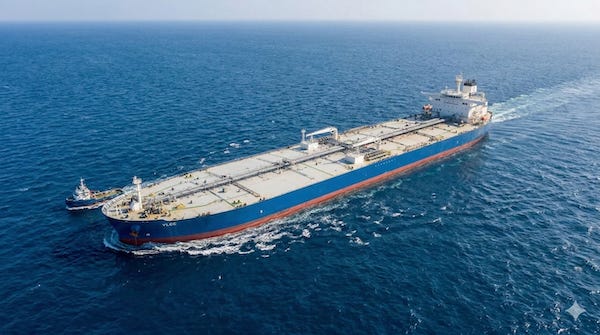
Off the coast of Cornwall, UK, a supertanker had hit the reefs.
The ship’s hull had been punctured, and crude oil leaked into the seas.
Desperate to solve the matter, the British government deployed fighter planes to bomb the ship, burn off the oil, and sink it. They thought sinking it would solve the problem.
Nearby tourist beaches were getting dirtied and covered in a black slurry of crude oil.
Afraid of the huge damages to the local tourism, the government decided to drop vast amounts of detergent in the ocean. The idea was that it would break up the oil.
Many years later, it was realised that not using the detergent would have been kinder on the environment and the cleanup.
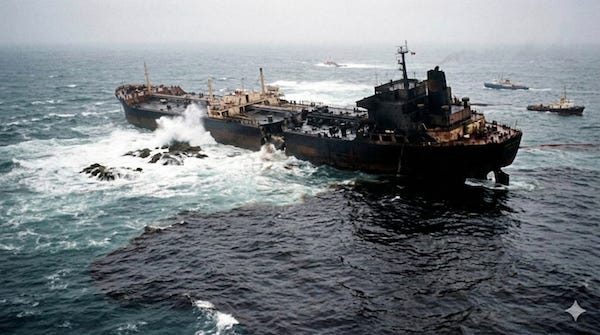
Millions of animals died and years went by before recovery was noticed.
The crashed ship was called Torrey Canyon. It was headed for the UK, carrying oil from Kuwait.
The debate soon shifted from the damage to the tourism industry and ecology to the cost of the repair.
Public opinion on these supertankers carrying oil was obviously not nice. What usually follows that is regulation.
Fearful of action against them, some of the largest tanker owners got together and decided to actively insure each other against future crude oil accidents.
Soon, this insurance became the standard of the global crude oil shipping industry.
Without it, ships don’t move. They are so powerful, they can effectively abandon a ship in the middle of the ocean, or prevent it from entering any port.
In this week’s edition of Weekly Groww Digest, we’re exploring the biggest potential choke-points in the global supply of crude oil.
While most other topics get enough eyeballs, the powerful impact of insurers often misses the attention of the larger audience.
Strait of Hormuz
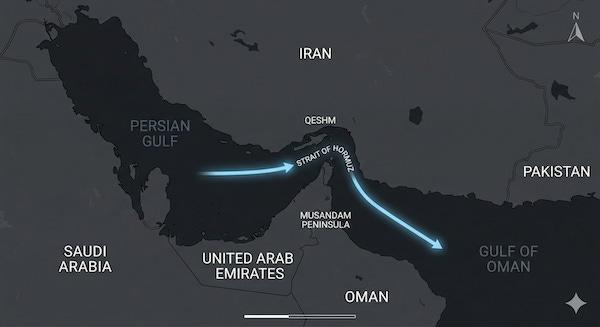
The Persian Gulf touches the shores of Kuwait, Bahrain, Qatar, the UAE, Oman, Saudi Arabia, Iraq, and Iran.
The narrow geographic location is responsible for supplying nearly 20% of the world’s crude oil supply. Oil from this region heads to China, India, Japan, and other Asian countries.
The Strait of Hormuz is a narrow passage of the sea that has Oman and the UAE on one side, and Iran on the other. At its narrowest, it is only 34 km wide.
If you’re aware of geopolitical relations, you’d know, Iran and the US do not get along well. It’s been that way for many decades.
But countries like Qatar, the UAE, and Saudi Arabia are on great terms with the USA.
This makes the region extremely tense and potentially susceptible to conflict.
Any conflict in the region can affect the supply of 20% of the world’s crude oil.
Adding to the criticality of the strait, there are no alternate paths. If this route is closed, there is very little most countries can do to ship the oil out to their customers.
If you’re following the news, you’d be aware that many oil tankers are currently said to be stuck in the Persian Gulf. They’re afraid to cross the Strait of Hormuz.
We can’t say the Strait of Hormuz is ‘shut’. But traffic is extremely slow for sure.
As geopolitical experts and crude oil analysts had been saying for years, any conflict in the region can rock global oil supplies.
That’s happening right now.
But the interesting point to note is that Iran has not closed the Strait of Hormuz even though many assume so.
In fact, Iran has said they have not shut the Strait yet, even though they claim to have the power to do so.
So why are tanker ships not crossing the Strait of Hormuz?
Insurance providers.
The insurance providers are too afraid of the conflict and are raising insurance premiums sky high.
This example perfectly demonstrates two choke points at once: the powerful insurance providers and the Strait of Hormuz’s extreme sensitive location.
Strait of Malacca
Another strait; another narrow piece of water wedged between two landmasses.
Malaysia on one side, Indonesia on the other, this strait is one of the world’s busiest trade routes.
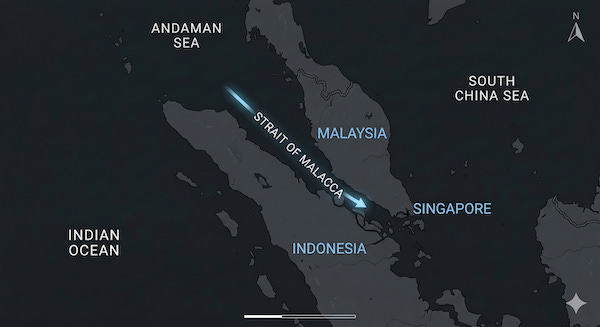
Similar to the Strait of Hormuz, the Strait of Malacca sees about 20-22% of the world oil supply pass through it.
More crucially, about 80% of the crude oil consumed by China passes through this strait.
About 25% of all traded goods in the globe (not just crude oil but everything traded) passes through the strait.
Since China is also the world’s factory, a lot of its goods pass through these waters.
This is yet another global choke point in the crude oil world.
It might not be as critical as the Strait of Hormuz though, largely because it is crucial but not the only path.
If for some reason the Strait of Malacca is shut, oil and trade will still be able to reach. It’s just that they will have to take a much longer path.
Suez Canal/SUMED Pipeline
The narrow canal in Egypt joining the Mediterranean Sea and the Red Sea is known to anyone who reads about global trade.
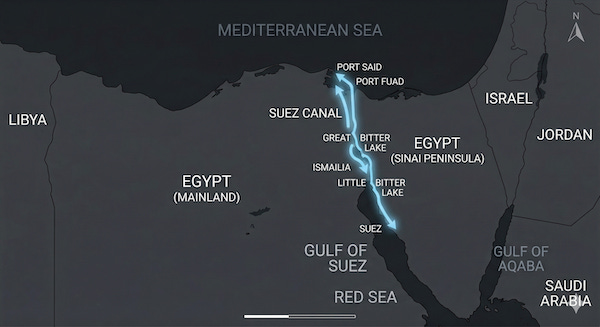
The Suez Canal hosts $10 billion worth of trade every day. Ships carrying various goods from manufacturing hubs in China and other Asian countries cross it every day.
Oil also crosses the canal every day. About 7-8% of the global daily supply of crude oil passes through the canal every day.
The world actually got to experience what it looked like when the canal closed in 2021. Ships had to sail across the entire African continent to reach Europe.
What’s SUMED pipeline?
The Suez canal isn’t deep enough for very large tanker ships. So Egypt came up with an ingenious solution.
These tanker ships offload oil into the SUMED pipeline that runs along the canal.
On the other side, the oil is loaded in tankers and taken to their destination ports.
Obviously, any blockage of the Suez canal can massively impact the global supply of crude oil, and global trade.
There are a few other such geo-choke points in the global crude oil supply chain.
OPEC
The Organisation of Petroleum Exporting Countries (OPEC).
This is a group consisting of major oil-producing and exporting countries like Saudi Arabia, Iraq, Iran, Kuwait, Libya, UAE, Venezuela, and a few others.
It is a cartel. They decide and control the output of oil from their member nations. This way, they are able to greatly influence and control the price of crude oil in the world.
According to some reports, OPEC had increased the output of crude oil recently — probably in anticipation of the Iran-US conflict.
US Shale Oil
This is one of the world’s biggest reserves of oil.
The US sat on it for decades. Not because it wanted to not use it but because it was difficult to extract.
Technological improvements made this extraction possible, leading to the US having one of the world’s largest supplies of crude oil.
This supply of oil was a great counterbalance to the Middle-East’s oil and in general, to the powerful OPEC countries.
As US shale oil production increased in the 2010s, the price of oil fell and the US was able to have a meaningful say in global oil prices.
OPEC isn’t OPEC anymore. There’s OPEC+ which means a few other nations are also coordinating with this group of countries.
One of the biggest on this list is Russia (a significant producer).
Saudi Arabia’s Spare Oil
Another one of the world’s biggest counterweights in the world of crude oil is Saudi Arabia.
Most countries pump out as much crude oil as they can. But not Saudi Arabia.
Saudi Arabia has so much oil, it actually produces significantly less oil than its capacity.
This allows it to regulate the supply of crude oil in the global market.
When there is a shortage, they can increase their output. If a member of the OPEC tries to make extra profit by increasing their production beyond what members had agreed to, Saudi Arabia can increase their own production and flood that market with crude oil.
This would result in crude oil prices crashing, and therefore the errant country suffering losses.
As the Strait of Hormuz is seeing difficulties, wouldn’t this spare capacity of Saudi Arabia be useless?
No. Saudi Arabia had planned for a day like this.
It has a pipeline running from the east part of the country (near the Strait of Hormuz) to the west of the country (near the Red Sea).
So effectively, they can continue selling their oil despite the Strait of Hormuz being shut. According to some reports, they can send up to 70% of their daily supplies via this pipeline.
Petrodollar
Back in the 1970s, Saudi Arabia had turned out to be one of the most oil-rich countries in the world.
Saudi Arabia had signed a deal with the American government. The pact was that the Americans would provide security and military protection to Saudi Arabia. Being an oil-rich nation, they were susceptible to attacks.
What did America get in return?
Saudi signed a deal with them that ensured that Saudi would only deal in US dollars with any buyer.
Nearly every country in the world needs oil. They buy it from oil-producing countries like Saudi Arabia. If Saudi Arabia accepts only US dollars, everybody would need US dollars.
Demand for the currency shot and soon, the US dollar became the reserve currency for the world.
That has not changed much even today. Though there are some changes emerging.
This made the American dollar extremely powerful.
SWIFT is an international financial messaging system that allows money to be sent internationally. It is the pipeline via which US dollars are sent and received when trading crude oil.
This system is greatly influenced by the Americans. Since they have a lot of influence on the system, they can bar countries from using it.
Which means, the US can limit the oil supply of certain countries.
For example, Venezuela and Iran were sanctioned. Nobody was allowed to buy their oil. Thanks to the Swift system, this ban was quite effective.
Others
Yes, there are many many other ways in which crude oil prices are influenced.
Despite the sanctions, some countries do buy oil from countries the Americans don’t want. Iranian and Venezuelan oil does find its buyers.
Something more complicated but similar happens with Russian oil.
Some countries do not follow the petrodollar system and trade using their own individual currencies. Calls to make such trades more common have also come to the surface in light of recent activities.
Even Saudi Arabia has started accepting other currencies in recent times.
New oil is constantly being discovered. Countries like Guyana have found more reserves than thought before.
The dynamics are constantly changing.
That said, over the last few years, the above mentioned factors have continued to have an outsized impact on crude oil prices.
Of course, the situation right now is very volatile with the conflict in the Middle East.
It’s hard to say which way the price of crude will go.
Definitely something to keep a watch on.
Quick Takes
+ The US and Israel jointly carried out military strikes against Iran hitting multiple strategic targets across the country. The attacks triggered Iranian retaliation aimed at Israel and US military bases in the region, escalating tensions in the Middle East.
+ India’s manufacturing PMI rose to 56.9 in Feb (vs 55.4 in Jan). This means manufacturing activity grew more in Feb than in Jan.
+ India’s industrial production grew 4.8% year-on-year in Jan as per preliminary data (vs 8% in Dec). Manufacturing grew 4.8% (vs 8.4% in Dec).
+ India’s gross GST collection rose 8.1% year-on-year in Feb (vs 6.2% in Jan).
+ The Employees’ Provident Fund Organisation (EPFO) has decided to retain the interest rate on EPF deposits at 8.25% for FY25-26 for the third year in a row.
+ India and Canada finalised the Terms of Reference (ToR) to begin talks on a Comprehensive Economic Partnership Agreement (CEPA).
+ Clean Max Enviro Energy IPO listed on the stock exchanges at a discount of 8.83% over the issue price and closed 17.62% down at the end of the day.
+ India’s composite PMI (manufacturing + services) rose to 58.9 in Feb (vs 58.4 in Jan). Services PMI fell to 58.1 (vs 58.5 in Jan). This means overall economic activity grew more in Feb than in Jan.
+ India and Finland signed MoUs on migration and mobility, environmental cooperation, and statistics. The two countries also agreed to expand collaboration in trade and technology.
+ Omnitech Engineering IPO listed on the stock exchanges at a discount of 11.01% over the issue price and closed 9.72% down at the end of the day.
+ The US has granted India a temporary 30-day waiver to buy Russian crude oil that is already in transit, to ease energy supply concerns during the conflict in West Asia. The waiver applies to oil cargoes already at sea, not new purchases.
+ The central government has asked refiners to increase LPG production and prioritise supply to domestic consumers amid global energy disruptions caused by the West Asia conflict: as per media reports
+ India’s forex reserves rose by $4.88 billion to $728.49 billion in the week that ended on 27 Feb.
The information contained in this Groww Digest is purely for knowledge. This Groww Digest does not contain any recommendations or advice.
Team Groww Digest