

Lefdal Olivine Mine is located in Norway.
It is no longer a functional mine.
Opened in 1971, it used to be the world’s biggest olivine mine.
Lefdal was an underground mine in which olivine was extracted by making tunnels. Over the decades, the mine had become massive.
Each tunnel was sufficiently tall and wide.
In case you’re wondering, olivine is a green mineral. It looks fit for use as jewellery but its primary use is in the steel industry.

Only 10 km from Lefdal, they found another olivine site. Here, the olivine was on the surface, not underground.
Once this was discovered, it made no sense to take the effort to dig and bring out olivine from underground.
The Lefdal Olivine Mine shut down in 2009.
The entire mine was about 13 lakh square feet in size. That’s about 1,000 times the size of a regular 3BHK urban apartment.
The space was not being used for anything. Until some folks had an idea for it.
Re-opening
In 2017, it opened again. It was back, not as an olivine mine, but as a data centre.
The massive mine had many traits that made it perfect for use as a data centre.
1: It already existed
When a new data centre is commissioned, the first step is to acquire land, and build the building that will house the data centre.
The land needs to be levelled. Fences need to be erected. Then the building’s foundation, walls, roofs, etc follow.
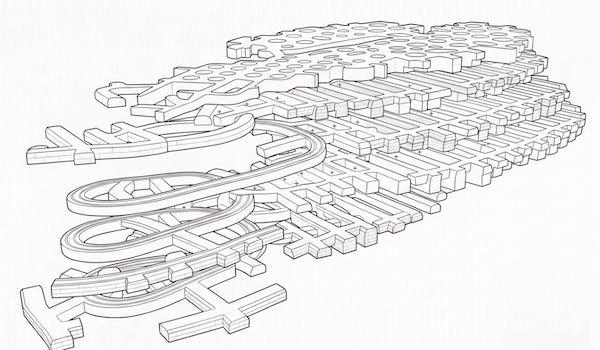
In Lefdal, all of this was already done. It was a giant underground system of wide tunnels.
Yes, a lot more work was needed to make it a data centre. But still easier.
2: Secure
One of the biggest headaches with data centres is security. Data centres are the backbone of the global tech industry.
So for bad actors, data centres are a good target. It could be to steal data, harm the operations of a company, disrupt communications, interrupt supply chains, and the list is endless.
Data centre owning companies spend a big portion of their expenses on securing them.
Deep underground, surrounded by rocks on all sides, this risk reduces by a massive degree.
Lefdal had that massive advantage as well.
3. Cooling
If you have been following the data centre boom of late, you would have realised that they get hot. They need cooling.
Lefdal sits right next to a 565 m deep and cold fjord. The fjord is able to supply a constant and steady stream of cold water.
4. Power supply
Norway happens to be a country with a massive hydroelectric power supply — renewable green energy.
Hydroelectric energy is non-polluting, renewable, and consistent. Another vital feather in Lefdal’s cap.
5. Norway
Norway is a developed, rich, stable, and influential European country. This further sweetened Lefdal’s appeal to international companies.
Less surprises like geopolitical tensions, surprise red tape, interruptions, etc.
Today, the Lefdal Olivine Mine is an expansive network of tunnels that operates as one of the world’s most efficient, green, and secure data centres.
You’d be amused to know, some of Mercedes’ servers are housed in this data centre, maintained by Infosys!
Data Centre Boom
Now, of course you have heard about all the hype around data centres in recent times.
If you have not, just know this: whatever hype around AI and LLMs you have heard, it sits on these data centres.
What is a data centre?
It’s just a computer. Or many computers. It looks more like a desktop computer without a screen. Everything you see on the internet is stored, processed, and passed through one or more servers across the world.
Your WhatsApp message passes through a server before reaching your friend. Your online pictures are passed through servers and stored on them too.
“Cloud” anything is literally a server something.
Cloud compute means instead of processing something on your computer, the processing will happen on a computer server somewhere in a data centre. Cloud storage — you get the idea.
So, what’s happening is, with AI, the need for computation power has shot through the roof.
The demand for AI products is only multiplying and so, the need to build data centres is also multiplying.
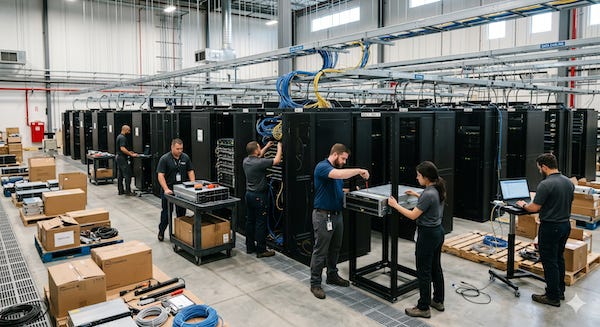
The challenge with data centres is that most of them are not as ideal as Lefdal Olivine Mine in Norway.
Most bring a set of challenges with them.
Power
Because of the massive demand for power thanks to AI, shuttered nuclear plants are being brought back to life.
In fact, many regions across the developed world had reached some sort of an equilibrium. Power demand had flattened and enough power was being produced.
Now, the demand has risen sharply. Some estimate that power demand from data centres will rise by 160% by 2030.
So sharply, in fact, that some developed areas with a history of consistent power supply are experiencing power cuts.
Data centres cannot do without power 24x7. So to deal with shortages, they often stock diesel generators. These can cause noise and air pollution.
Water
We have all heard about data centres requiring water. Data centres get very hot and require cooling.
This is true.
Since data centres are evolving rapidly, they are becoming more efficient with time. Many data centres require a constant stream of water.
Many are able to work with seawater also. Some are coming up with a closed-loop system where water is filled once and not needed again (similar to a car engine’s water & coolant system).
But these are still evolving, not fully ready.
As of now, anyone building a new data centre needs to worry about sourcing water.
Like electricity, there are places in the world that are facing water shortages because of new data centres opening up near them.
Land
Like factories and warehouses, data centres also need land.
And similar to those other industrial buildings, data centres also have a laundry list of location-based requirements.
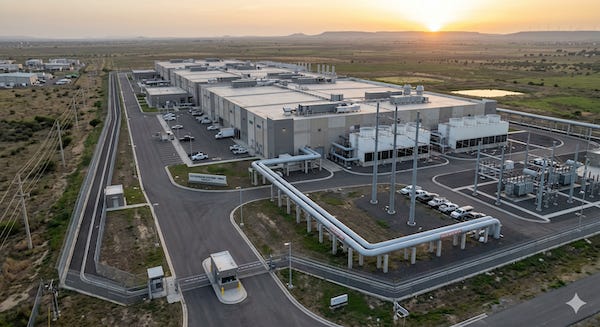
They want to be in a location where land is relatively cheap, but it must be well connected via roads and highways.
It shouldn’t be too remote such that finding employees for the data centre becomes difficult.
The location should be safe and secure from a crime perspective as well as from natural factors like flooding, storms, extreme heat, etc.
Further, data centres need to be connected to the internet — so they cannot be too far from existing fibre optic cable highways.
To reduce latency, data centres can’t be too far from their customers (enterprise or individual).
Equipment
All the above are factors that can be supplied and solved by different competing parties.
There are many different power sources, water sources, and locations.
A real bottleneck unique to the data centre industry — equipment.
Data centres or servers are just computers. And computer parts are supplied by a small number of companies.
Because of excessive demand, those companies’ order books are filled for years.
Supply of memory, CPUs, and GPUs is one of the biggest bottlenecks of the industry today.
Growth of Data Centres
Countries across the world have deeply internalised the importance of data centres, compute capacity, and data storage.
In a world where everything runs via computers, data centres are as important as any other national infrastructure like highways, telecommunications lines, etc.
Many countries now want more data centres within their own borders.
India has rules requiring finance and fintech companies to store customers’ data on Indian servers. The AI boom means that the ones who own the data and compute decide the next big breakthrough in AI.
As of 2025, the US is the biggest in this regard. They have over 5,000 data centres. The second is Germany with about 500 (that’s not a typing mistake).
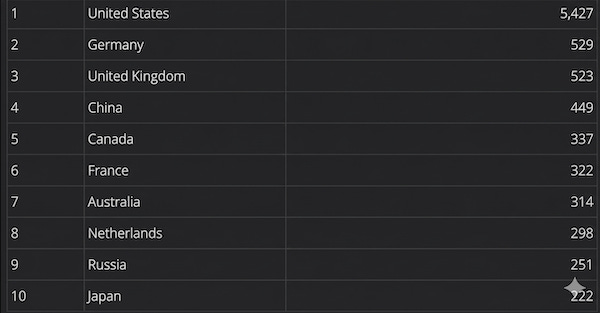
Measuring data centres in numbers is a wrong way to go about it. Because data centres can be tiny or massive. So saying ‘3 data centres’ does not automatically mean it is bigger than ‘1 data centre’.
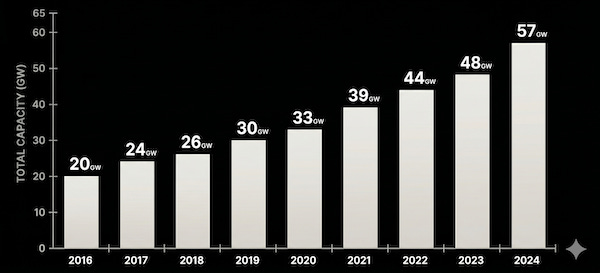
One way to measure data centre is by the amount of electricity they consume.
Measured like that, we see an interesting pattern.
We see that the data centre capacity has been rising consistently for many years, not just after the LLM boom.
The table below is data from a Goldman Sachs report where they highlight how power consumption from the Americas, the EU, and the Asia-Pacific region has consistently risen over the last decade.
Now, CPUs and GPUs are getting more powerful and efficient. This means that these metrics don’t represent processing power accurately.
A modern data centre might use less power than an older one and yet be more capable.
Most data centres are never “finished”. They are always being upgraded with the latest equipment.
This is why neither power usage nor number is a good measure.
Some simply prefer to measure in square footage. The assumption here is that everyone will be able to upgrade to the latest CPUs and GPUs soon.
So the one with the largest physical space is the one who will have the most compute power.
But wait — what if two data centres are 100,000 sqft each but one of them has a 3 m roof and other has a 6 m roof?
Obviously the second one will be able to house more servers?
Yet another way to measure capacity is number of servers. How many servers can a data centre house? That is another measure.
There are many more. It’s a bit messy. The unit you would use would depend on what you’re trying to talk about.
Real estate folks would use area (square feet or meters). Environmental analysts would care about water usage and heat generation. Power industry folk would care about the power needed. Data centre engineers would talk in terms of storage capacity, compute capacity, server count, rack count, etc.
And so on.
The Biggest Players
This industry has two types of companies.
Data centre companies and tech companies.
Data centre companies offer their services to other companies. They simply own and maintain the servers while others pay rent to use them.
Tech companies tend to develop, maintain, and use their own data centres. Theirs is not available on rent for others.
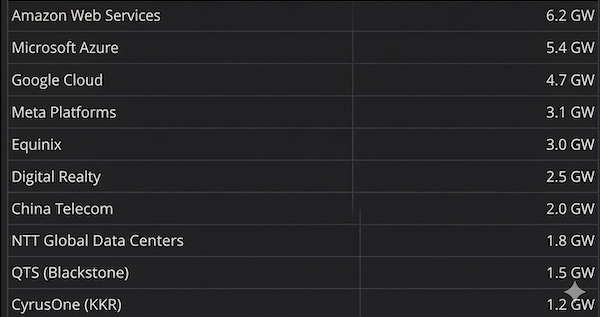
The 3 biggest data centre owners in the world today are cloud companies. They offer cloud services (storage and compute) to others and themselves.
Amazon Web Services, Microsoft Azure, and Google Cloud — these are the cloud companies owned by Amazon, Microsoft, and Google, respectively.
India
Yes, India is turning up the heat too.
Many new data centres are planned, and being built. Some are active.
India has a strong policy push in this space as well. The government wants more data centres. Data localisation is a dominant theme.
India’s active tech and IT sector also means that data centres have a natural pull.
Most of these serve local India based clients.
There are some existing tech companies who own data centres. Some legacy companies are also choosing to enter this new industry.
The thinking many investors have is that in an AI gold race, data centres are the shovels. This line makes a lot of sense if you have heard about the gold rush in Western USA in the 1800s.
But as usual, valuations and potential upside matter more than many investors give importance.
Besides, ability to execute on plans and quality of leadership also matter.
And of course, we can never rule out the possible negative and positive effects of luck in the mix.
Quick Takes
+ India’s petrol and diesel prices were hiked by around Rs 2.50 per liter, for the 4th time in the last 11 days.
+ Gas distributors in India have raised CNG prices across different cities by Rs 2 to Rs 5 per kg, the 4th hike in 11 days.
+ India and the US signed a bilateral Critical Minerals Framework to deepen cooperation across the critical minerals and rare earths supply chain for advanced technology and energy.
+ The government approved Rs 1,427.61 crore for a 4-lane Thiruvarur Bypass on NH-83 in Tamil Nadu.
+ The government has launched a 2 day offer-for-sale (OFS) for Coal India to divest up to a 2% stake in the company.
+ India’s forex reserves fell by $7.5 billion to $681.38 billion in the week that ended on 22 May.
+ India and Canada launched the Canada-India Trade and Investment Forum for new commercial partnerships and increased business engagement.
The information contained in this Groww Digest is purely for knowledge. This Groww Digest does not contain any recommendations or advice.
Team Groww Digest
Very interesting.