

Andrew had been a victim of car theft once before.
Based out of Toronto, Andrew owned a desirable SUV.
A GMC Yukon. This SUV was kept parked right outside his house.

Andrew and his wife had returned from a trip and had been suspicious since then.
The car’s steering wheel was slightly bent. The seat position was adjusted differently.
In 2024, he looked outside after dinner and saw what he had been fearing — the car was gone.
Andrew had worried about this situation. To try and prepare for such a day, he had installed two AirTags on his car.
The idea was that if the car was stolen, he’d be able to track it in real-time. He hoped that that information would help the police recover his vehicle for him.
Andrew checked his phone and could see that his SUV was still very much in the city.

He did not waste time. He called the cops. To be doubly sure, he even hired private investigators.
The police officer who responded to his calls went after the car based on the live location shared by Andrew.
Some time later, the cop sent pictures of shipping containers loaded onto a train. The cop was sure the car was inside one of the containers.
He had managed to trace the car, thanks to Andrew’s AirTag.
But Andrew did not have any reason to be happy.
The cop informed him that he couldn’t just go and open the containers. He didn’t have the authority to do so. He would have to raise the matter with the train authorities.
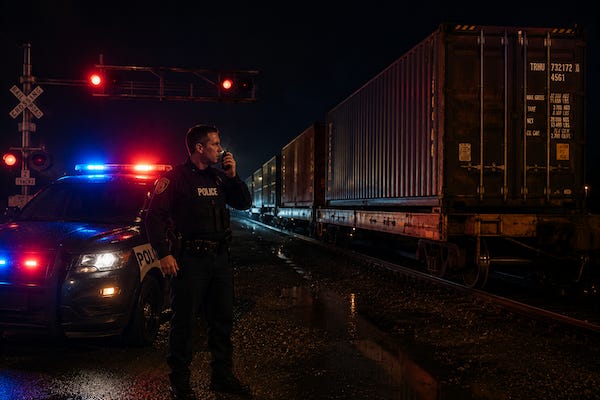
While he was still figuring that out, the train departed as per its schedule.
Andrew watched his car’s location update live on his phone. It was now moving towards the Port of Montreal.
Different authorities, bodies, and agencies were involved in each part of this network.
The authorities were still figuring out a way to flag the container’s contents as stolen.
The container had already been put on a ship. And that ship had sailed out to the seas.
Andrew watched it all on his phone, live.
The live tracker went offline as it left the port.
Andrew got an update a month later. The car had been offloaded at a port in Belgium, Europe. A few days later, it showed up in Dubai.
Andrew’s private investigator found the car in a used car showroom in the UAE.
A theft of this kind, where the car can be tracked live, and yet not stopped, is possible thanks to the incredibly efficient global supply chain network.
And central to that system is one single invention — the container.
Shipping Container
Trade by sea. There’s nothing new about it. It had been happening for centuries.
Grains were put in sacks and loaded on ships. Boxes for easily broken items. Baskets for fruits. Some items were loaded directly onto the ships.
In the mid-1900s, Malcolm McLean was working in this very industry.
He was in the trucking business. He hated the long waiting time. Once he reached port with his truck full of cargo, he often waited an entire day for them to load the items onto the ship.
The lines were long and seemed like a monumental waste of his time. While he viewed the situation from the perspective of a trucker, the same logic applied to the ship.
It was an expensive machine wasting time just standing.
With nothing much to do while waiting in queues, he eventually started wondering if simply loading the truck’s trailer itself would save time.
The idea evolved and he concluded that the wheels were not needed either.
Large boxes loaded on trucks would make loading and unloading ships and trucks much faster.
He took out a loan, bought 2 ships, and started using large steel boxes for easy loading and unloading. McLean’s patented steel boxes had posts on all corners that enabled them to be locked in place.
This allowed them to be easily loaded on truck trailers.
These boxes were also made sturdy enough to be stacked up to a certain height and load limit.
In 1956, his first ship completed its first journey with 58 containers.
The trucking and shipping industry veterans were watching keenly.
There were obstacles but all of them paled in comparison to the advantages.
The shipping costs were lower, the items arrived safe and dry, and the loading/unloading time was much shorter.
His company, Sealand Industries, was off to a flying start.
McLean understood that for these containers to be truly efficient, they needed to be standardized. Fixed sizes of containers. One type of corner locking mechanism.
A lot needed to change before these containers became the standard.
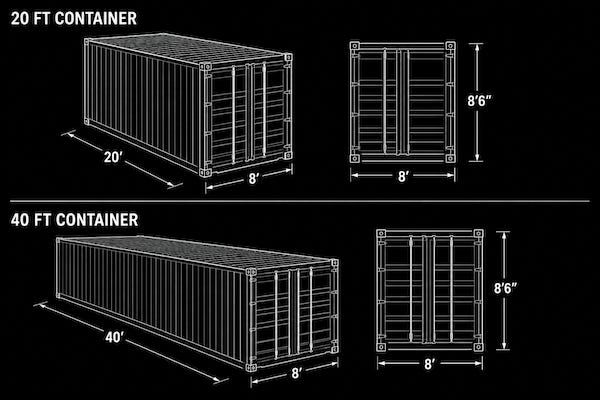
Ports would have to be better designed with cranes for loading and unloading containers. More truck-trailers that could handle containers were needed.
Above all else, ships designed exclusively for containers would need to be built.
Mass Adoption
The idea was simple, yet brilliant.
Sealand Industries had the patent to their container design. But unlike other companies that profit from keeping their design exclusive, Sealand needed mass adoption.
Without others adopting the same standards, Sealand wouldn’t be a widespread success.
So they offered the patent to many other companies operating in the same industry, for free.
And the trick worked.
Soon, more truck-trailers started being built optimized to carry the containers. Trains too. Ships started being built specifically to ferry containers.
The supply chain industry adapted to shipping using containers better.
The ease and speed was such, the container enabled globalized trade like never before.
Toys could be made in a factory in one remote corner of the world and loaded in a container.
That would then ride on trucks, trains, and ships to reach children on literally the other side of the globe.
This meant that containers were built, repaired, handled, and customized by companies across the world. Nearly 70 years later, the container hasn’t changed. It’s still pretty much the same in the external shape, size, and locking mechanism.
Today, some of the world’s biggest ships can easily carry more than 24,000 TEU (Twenty-foot Equivalent Unit).
Which means, these ships can carry 24,000 containers that are 20 ft long.
Compare that number to the 58 containers carried by the first ship.
Just to be clear, the containers these ships carry are most often 40 ft long. Which means, a ship with 24,000 capacity would be able to carry around 12,000 containers that are 40 ft long.
Some estimates say there are 40 million containers in the world.
About 250-300 million containers are moved per year (the same containers do multiple trips in a year).
There are different types of containers too now. But the overall form factor remains the same.
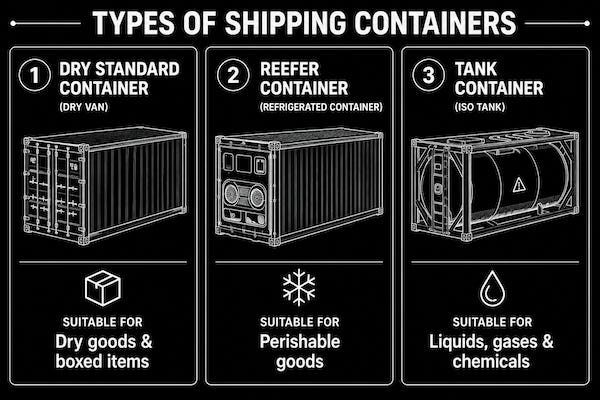
The scale and speed of this is absolutely staggering. Things move so fast, countries and border police have a difficult time ensuring illegal items don’t get transported.
This greatly explains why Andrew’s car left Canada before the police could intervene.
Containers & Modern Life
Modern life is impossible without containers.
It just isn’t possible without these steel boxes.
Just look around. Most things would have been inside a container. The device you are reading this write-up on has definitely been inside a container.
If something was made outside India, it would have almost certainly been inside a container and on a container-carrying ship too — through the various ports and supply chain systems.
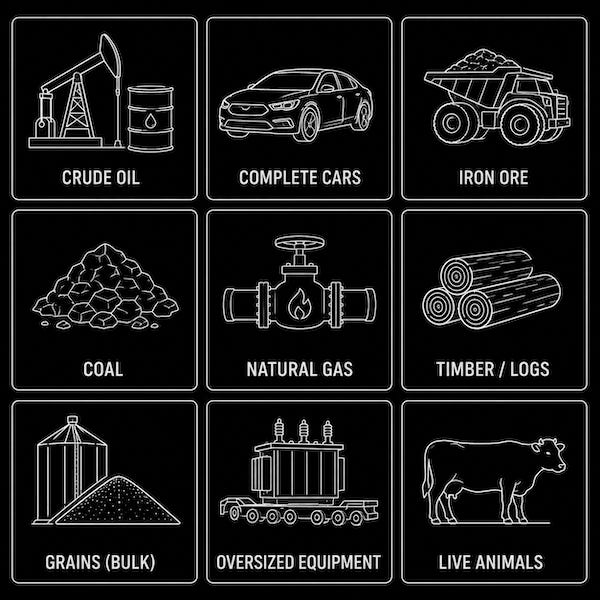
Some examples of item-categories transported in containers.
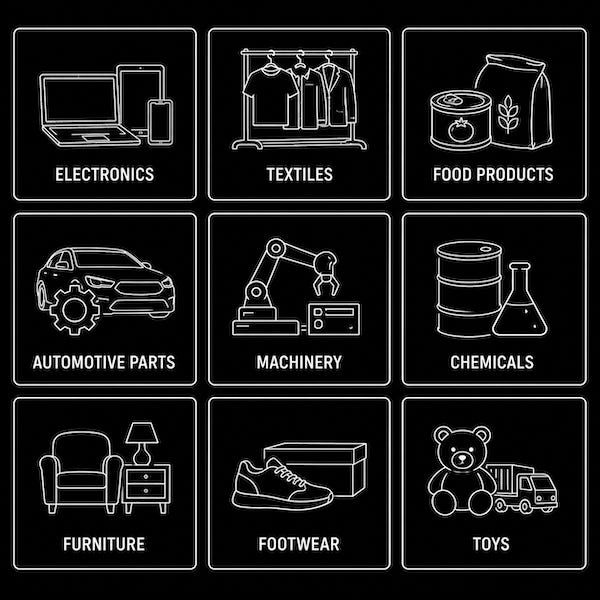
Obviously, a lot of things are better not transported by containers. Some examples:
Revenue & Profits
An industry that is so essential, the world would crumble without it. Surely that’s a great moat to have for companies in this space?
Not quite.
In fact, the container industry and industries around it are infamously low margin. It’s all down to fierce competition and thin margins.
In that sense, it is very similar to the airline industry — absolutely essential and yet brutally difficult to survive in.
— High Capex —
This is a very high capex or capital expenditure industry. Everything requires spending lots of money before the first dollar starts coming in the form of revenue.
To make matters worse, the industry goes through violent cycles.
There are periods when the margins are non-existent. Sometimes, even below operating cost.
And then there are periods when margins are thick.
Half the trick is being able to survive a thin-margin period till the next cycle of thick-margins.
— Competition is Fierce —
Containers are containers. There’s not much different that companies can offer. It’s easily replicable across the world. Same with ships carrying them, ports loading and unloading them, and so on.
So competition among the players in this space is fierce. They keep eating into their margins.
— Scaling Up or Down Takes Time —
If demand for global shipping increases, new containers cannot just be added. They take time to manufacture and put into service.
Conversely, if demand subsides, companies cannot just get rid of excess containers. There’s a lot of it and needs storage when not in use. Or, they need to be sold as scrap/recycled material.
All of those require time, effort, and money.
The above is true not only in the case of containers, but also in the case of the very ships that carry them.
— Demand Unpredictability —
Now, all of this ties into the unpredictable nature of demand.
Yes, many industries face unpredictable demand. But most of those industries never face the kind of challenges the container industry (and related industries) face in scaling up or down.
Wars, interest rates, inflation, crude oil prices, manufacturing output, tariffs, ports, weather, changing demand trends — there’s a lot that can move demand for the container space.
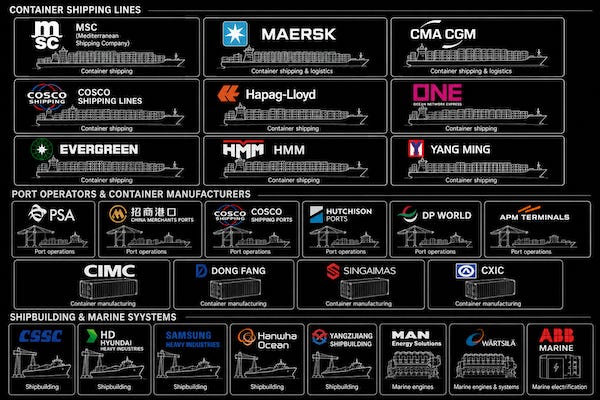
As for Sealand Industries, it was acquired by different companies until it was finally acquired by Maersk.
Maersk is one of the world’s biggest shipping companies. For a few years, they used the Sealand brand name.
As of today, even that does not exist. It’s just called Maersk.
Quick Takes
+ India’s infrastructure output of core industries grew 0.5% year-on-year in May (vs 1.7% in April). Electricity, cement and steel production increased, while coal, crude oil, natural gas, petroleum refinery products and fertilizer production declined.
+ SBI Mutual Fund received SEBI’s approval for a Rs 13,000 crore IPO.
+ India’s manufacturing PMI fell to 57.4 in June (vs 59.3 in May) as per preliminary estimates. Services PMI fell to 54.5 (vs 55.0 in May). Composite PMI fell to 57.3 (vs 59.8 in May). This means that economic activity grew less in June than in May.
+ The RBI sold a net $8.9 billion in April to protect the rupee amid West Asia war tensions, while physical gold holdings remained unchanged: RBI
+ The government will auction securities worth Rs 28,000 crore on 25 June, including Rs 17,000 crore of 6.68% GS 2040 and Rs 11,000 crore of 7.43% GS 2076.
+ Ministry of Statistics and Programme Implementation (MoSPI) will launch the Index of Services Production (ISP) in July 2026, a new monthly indicator to track growth in India’s services sector, similar to the Index of Industrial Production (IIP) for manufacturing.
+ The government has approved 96 road projects worth Rs 211.71 crore in Tripura under PMGSY-IV. The projects will cover 163.9 km.
+ RBI has proposed draft guidelines requiring banks to strengthen governance and risk management of AI and machine learning models.
+ The government has removed restrictions on the supply of commercial LPG cylinders and restored supplies to pre-West Asia crisis levels. It has also resumed bulk LPG supplies at 50% of pre-crisis levels.
+ The government is planning to estimate the economic value of India’s coal reserves, helping track their role in the economy and environment rather than their market price.
The information contained in this Groww Digest is purely for knowledge. This Groww Digest does not contain any recommendations or advice.
Team Groww Digest
Containers and containers.