

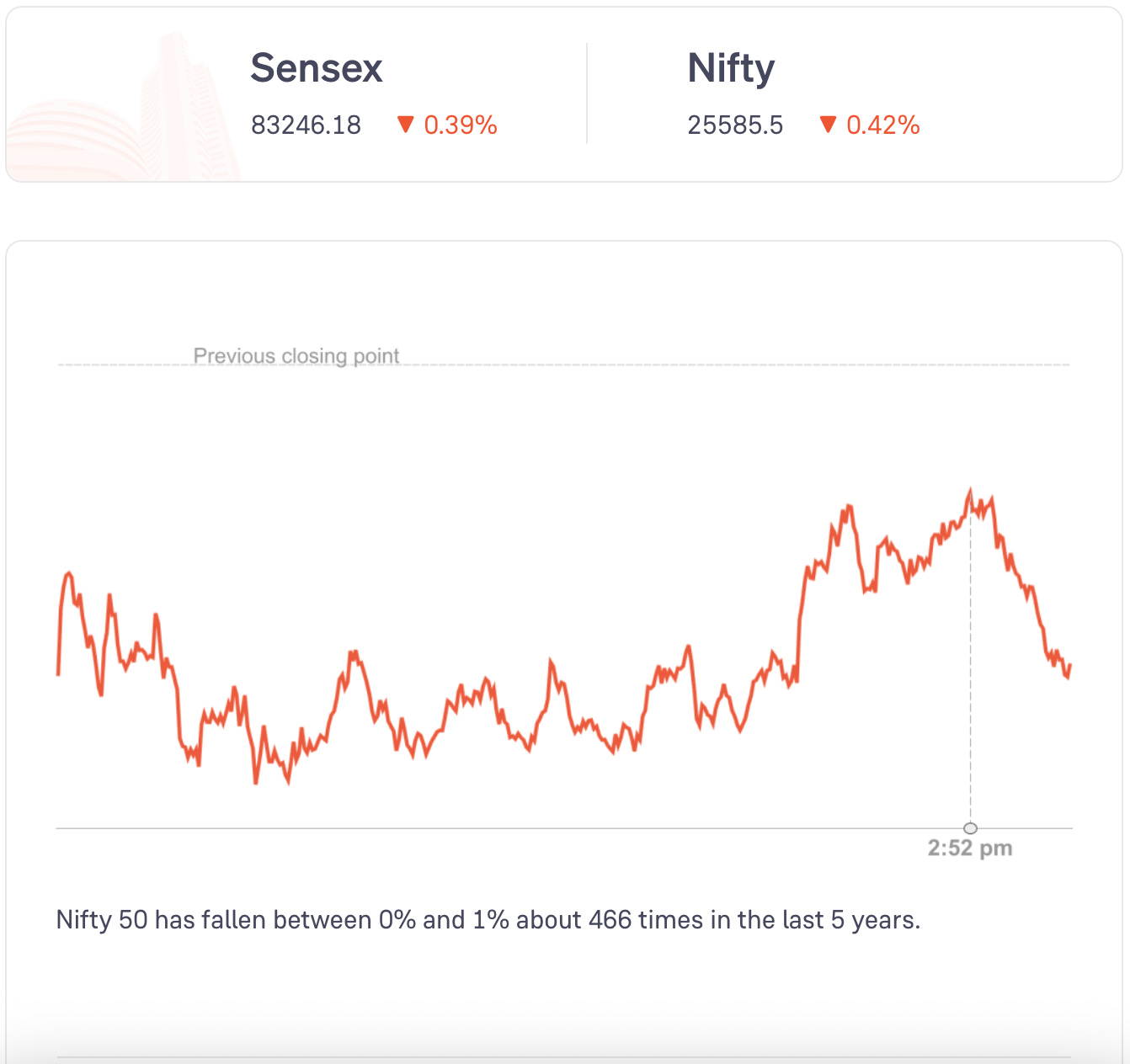
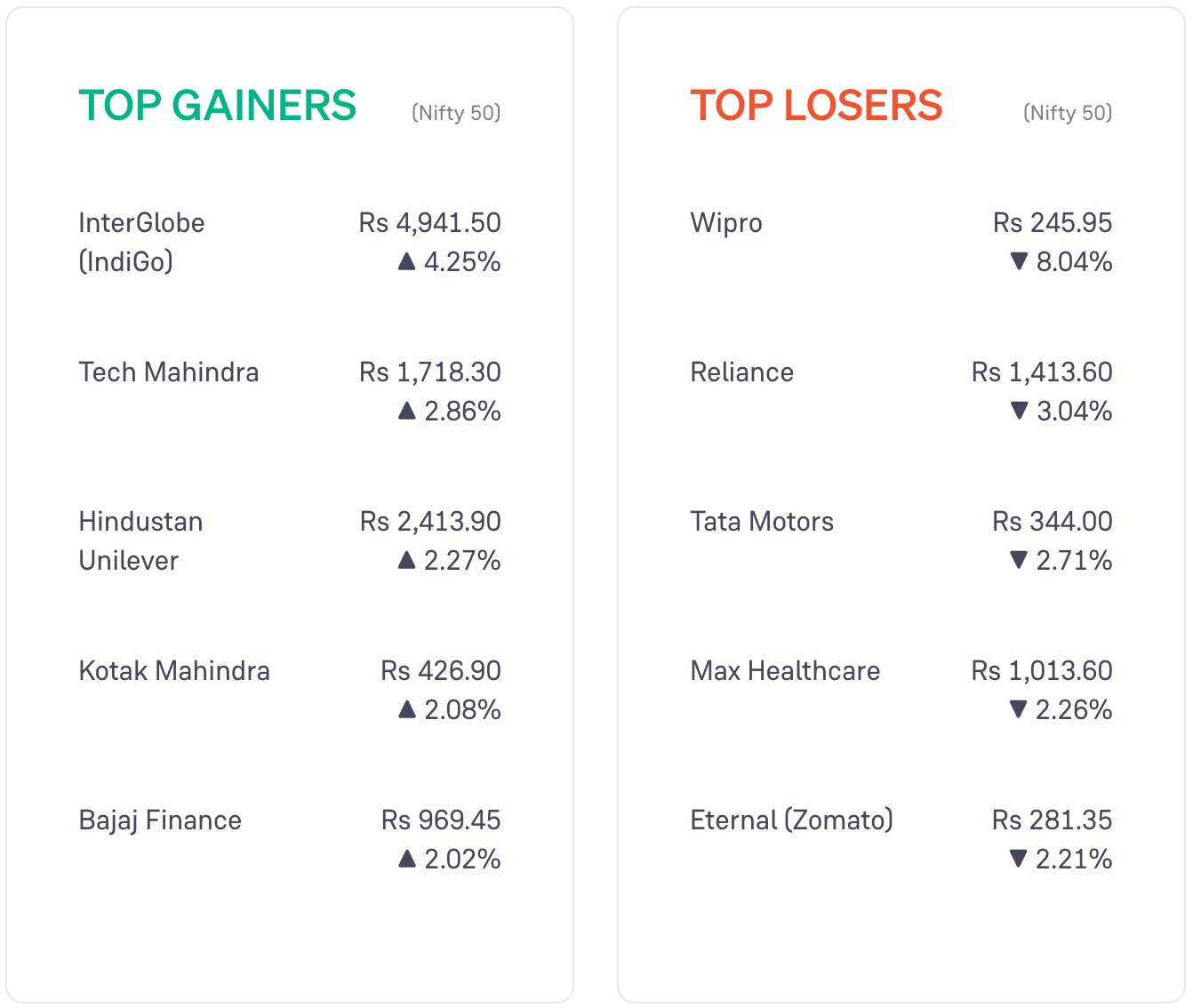
Markets opened below Friday’s closing point.
All sectors’ stocks fell today except for FMCG stocks and auto stocks. Realty stocks and media stocks fell the most.
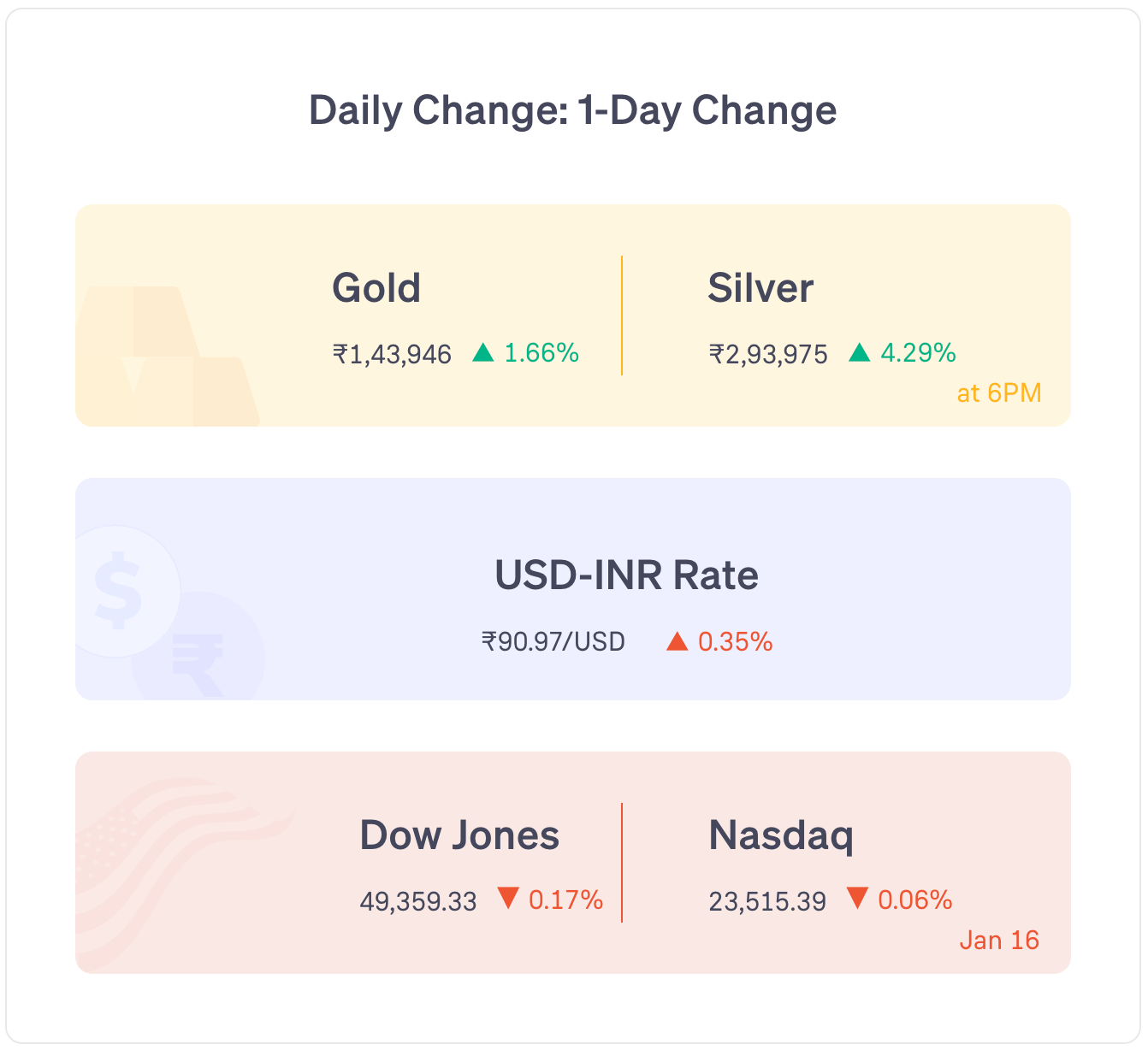
Global markets: US markets closed flat on Friday. Asian markets showed a mixed trend. European markets fell (as of 6 pm IST).
News
China’s GDP grew 5% year-on-year in 2025. In the Oct-Dec quarter, growth slowed down to 4.5% (vs 4.8% in the previous quarter).
SEBI’s revised mutual fund regulations introducing a Base Expense Ratio (BER), lowering expense ratio caps, etc which were approved in Dec 2025, will come into effect on 1 April 2026.
The RBI has pointed out priority sector lending (PSL) compliance issues at HDFC Bank and ICICI Bank, and has asked them to keep aside extra provisions to align with the norms.
Bharat Coking Coal IPO listed on the stock exchanges at a premium of 95.65% over the issue price and closed 76.43% up at the end of the day.
Stocks Updates
ABB India: dispatched its first locally manufactured wind power converter from its Bengaluru facility, after acquiring Gamesa Electric’s power electronics business.
Airtel: deployed more than 2,400 new 5G sites across Madhya Pradesh and Chhattisgarh in the past year across 87 districts.
InterGlobe (IndiGo): the DGCA imposed Rs 22.2 crore penalties, demanded a Rs 50 crore bank guarantee, and issued warnings to IndiGo’s senior management over operational disruptions in Dec 2025.
Info Edge (Naukri): company’s wholly owned subsidiary Jeevansathi approved an investment of about Rs 10 crore in its step-down subsidiary Aisle Network to meet working capital needs.
Vedanta: company subsidiary, ESL Steel, received Odisha government demand notices totaling Rs 1,255.37 crore for production shortfalls at 2 mines. The company plans to challenge the orders.
Hindustan Zinc: net profit rose 46% year-on-year to Rs 3,916 crore in the Oct-Dec quarter.
LTIMindtree: net profit fell 11% year-on-year to Rs 971 crore in the Oct-Dec quarter.
IRFC: net profit rose 11% year-on-year to Rs 1,802 crore in the Oct-Dec quarter.
Tata Capital: net profit rose 17% year-on-year to Rs 1,257 crore in the Oct-Dec quarter.
Punjab National Bank: net profit rose 16% year-on-year to Rs 5,556 crore in the Oct-Dec quarter. Net interest income rose 3% to Rs 32,889 crore.
BHEL: net profit rose 190% year-on-year to Rs 390 crore in the Oct-Dec quarter.
Havells: net profit rose 8% year-on-year to Rs 301 crore in the Oct-Dec quarter. Dividend declared: Rs 4 per share. Record date: 23 Jan.
Word of the Day
Statutory Liquidity Ratio (SLR)
It is the minimum percentage of deposits that a bank has to maintain in the form of cash, gold or government securities
It is a reserve requirement by the RBI that is kept with the banks themselves to ensure that banks have financial stability for their operations.
It is also a tool to control money supply in the economy and consequently inflation.
Indirectly, it also promotes investment in government bonds.
6 Day Course
Theme: corporate debt
Day 1: Monday
We often hear that companies take loans to function.
In this week’s course, we will try to understand corporate debt and its different faces.
Many companies use debt as ‘fuel’ to run their business.
This means that they borrow, run their business, take further loans, pay back older loans, take another fresh loan, etc.
It is a continuous part of their functioning.
Companies often take loans for aggressive expansion. If they are sure a business will work well, they try to use borrowed money to grow faster.
Many companies prefer taking loans (opposed to raising money via shares) because it allows them to retain their shareholding percentage.
In addition to that, interest payment may be tax-deductible in certain cases.
Featured Question
Q. “If a stock is continuously under performing then how to recover the invested money in it?”
You cannot always recover money from an investment.
If a stock is going down without stopping, the only step you can take is to stop further losses from happening — by selling it.
Even the best investors invest in stocks that go down. Investors should aim to make sure that their investments do well as whole.
Trying to ensure every single investment performs well usually does not work well.
This is why many times investors have to cut their losses and use that money to invest somewhere else.
It is not mandatory to recover your money from the same stock.
It must be said here that not all stocks keep performing consistently well.
Even the best stocks go through ups and downs.
If your stock is in the red due to temporary factors, it might be better to wait (if you are sure it will recover well).

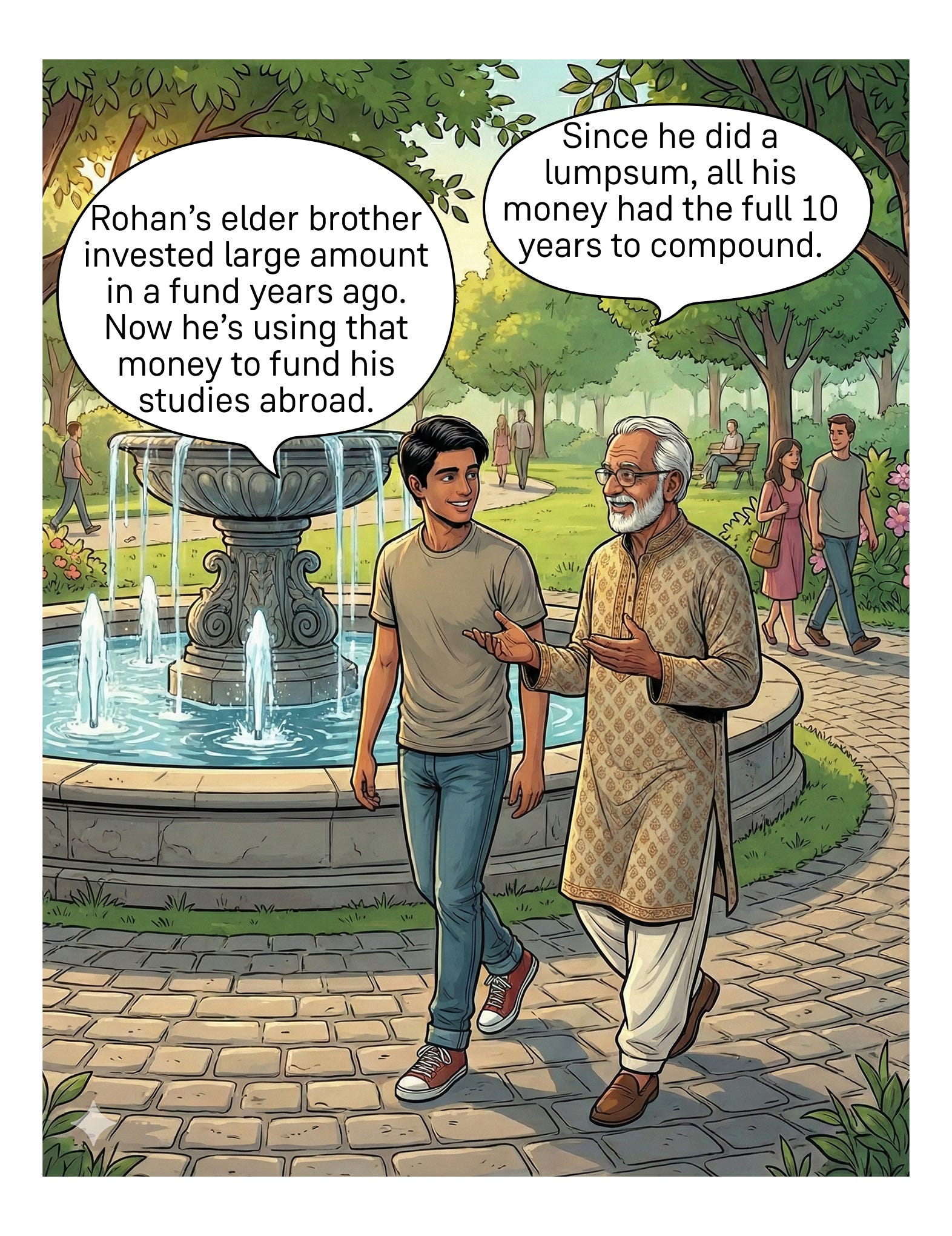
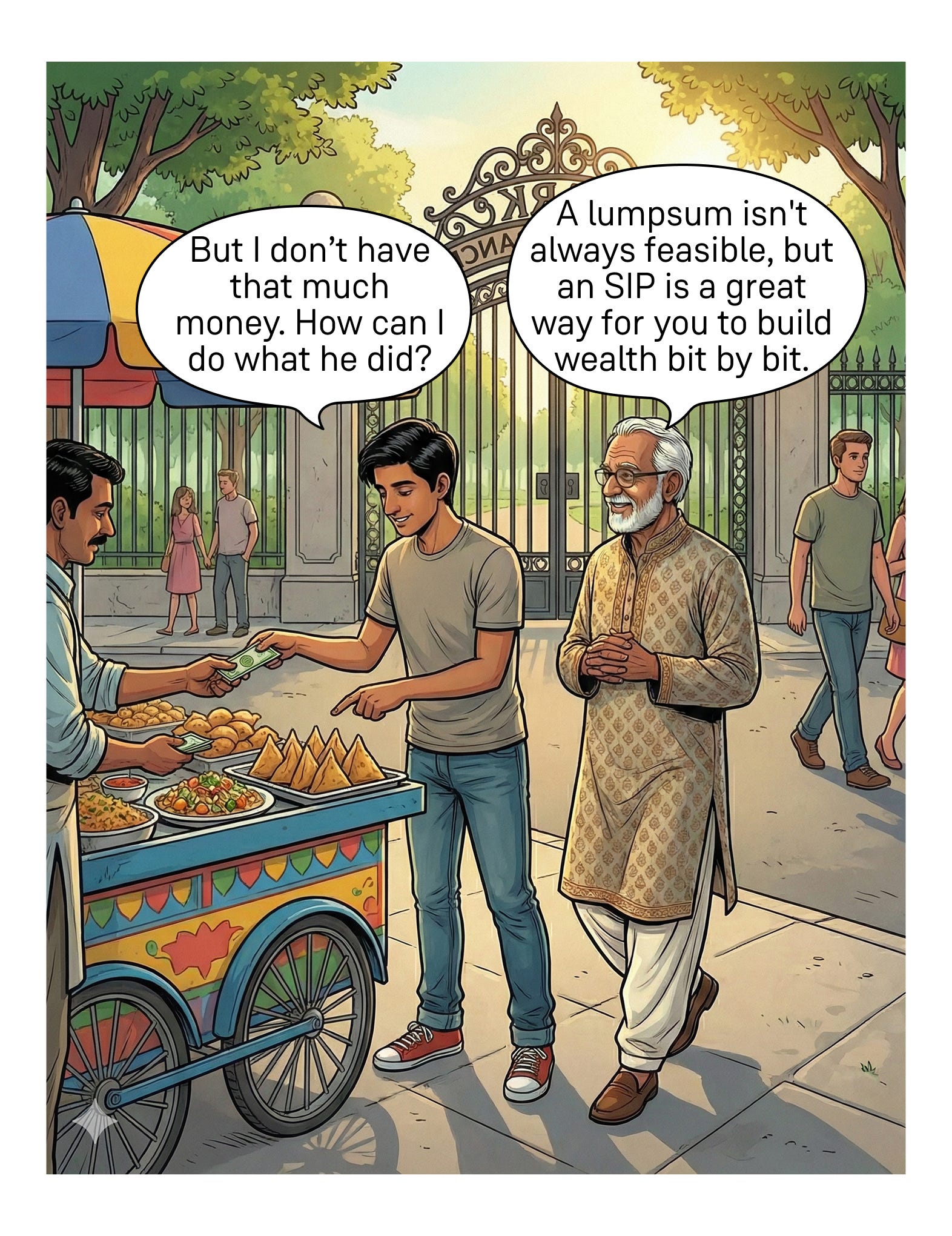
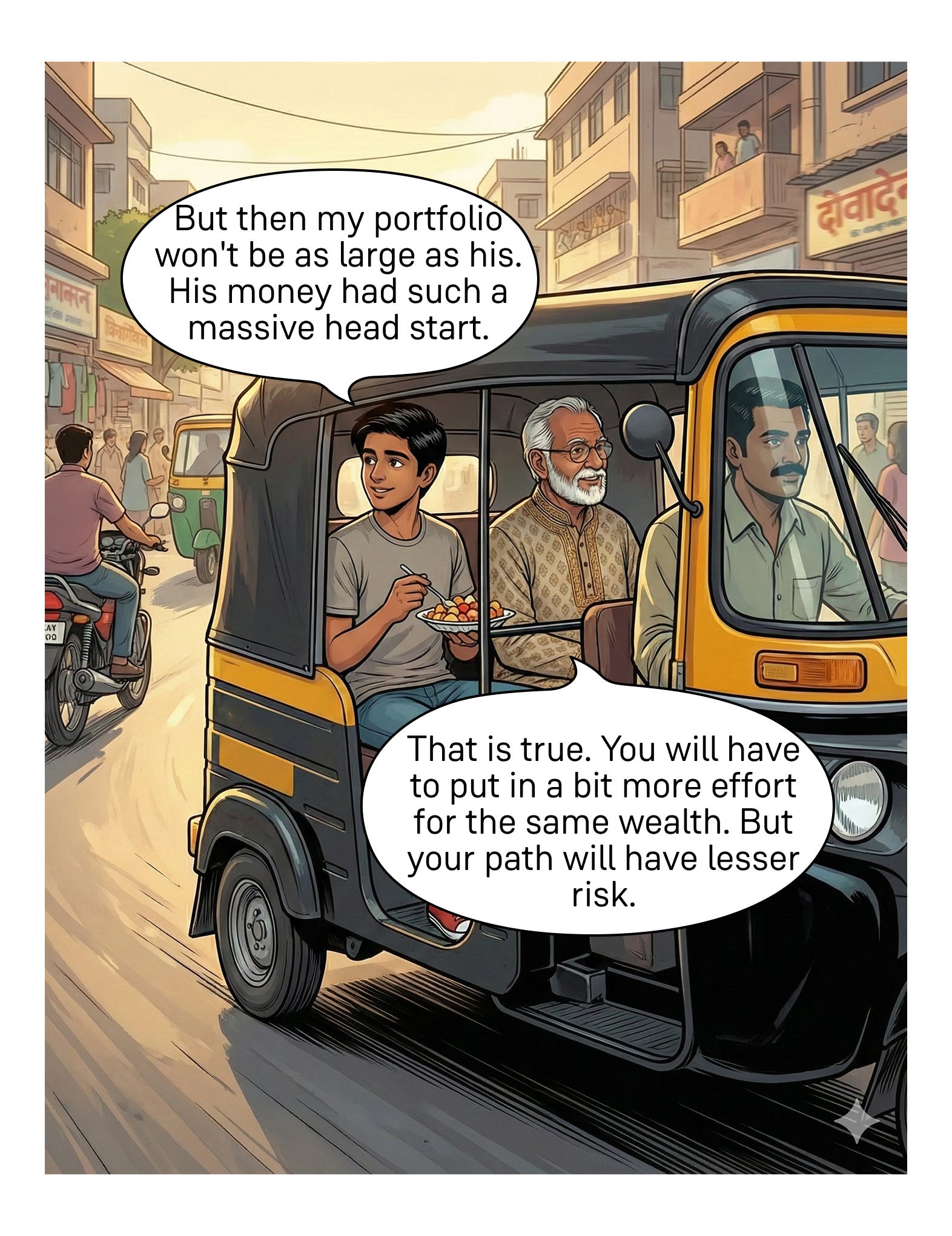
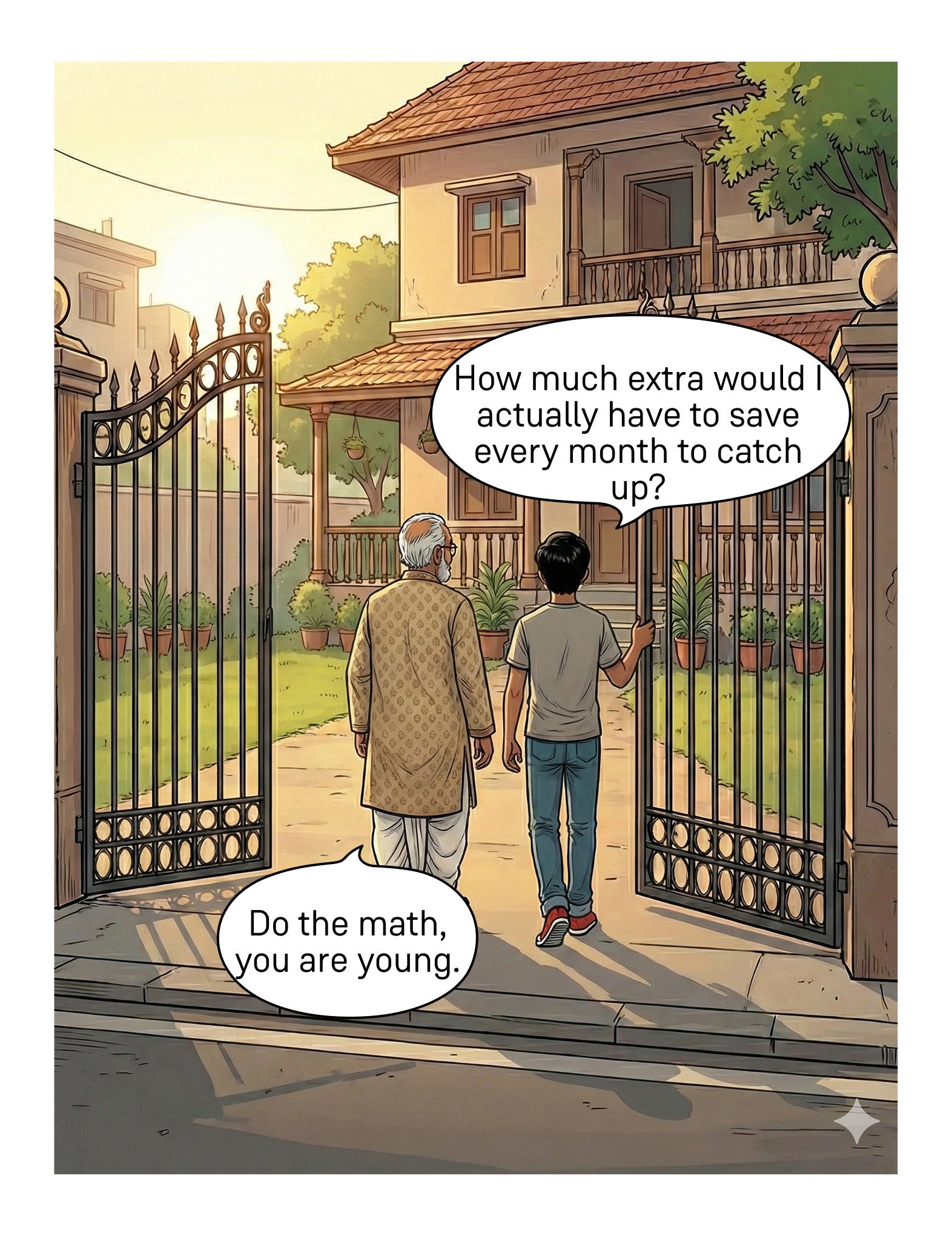
We explored the question "What if your Rs 10,000 SIP could beat a Rs 10 lakh lumpsum?"
Check out the full report here.
Did you like this edition?
Leave a feedback here!