
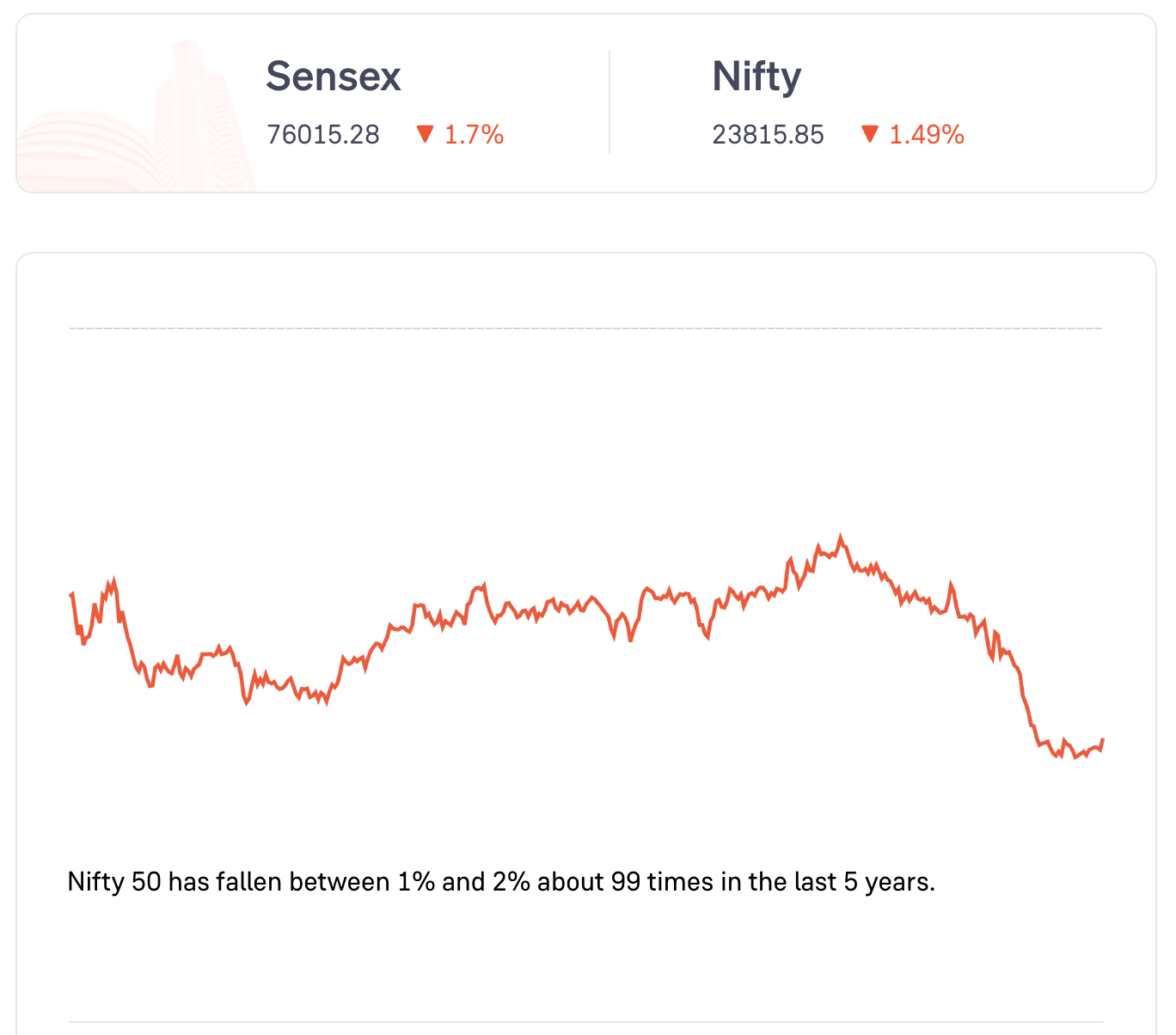
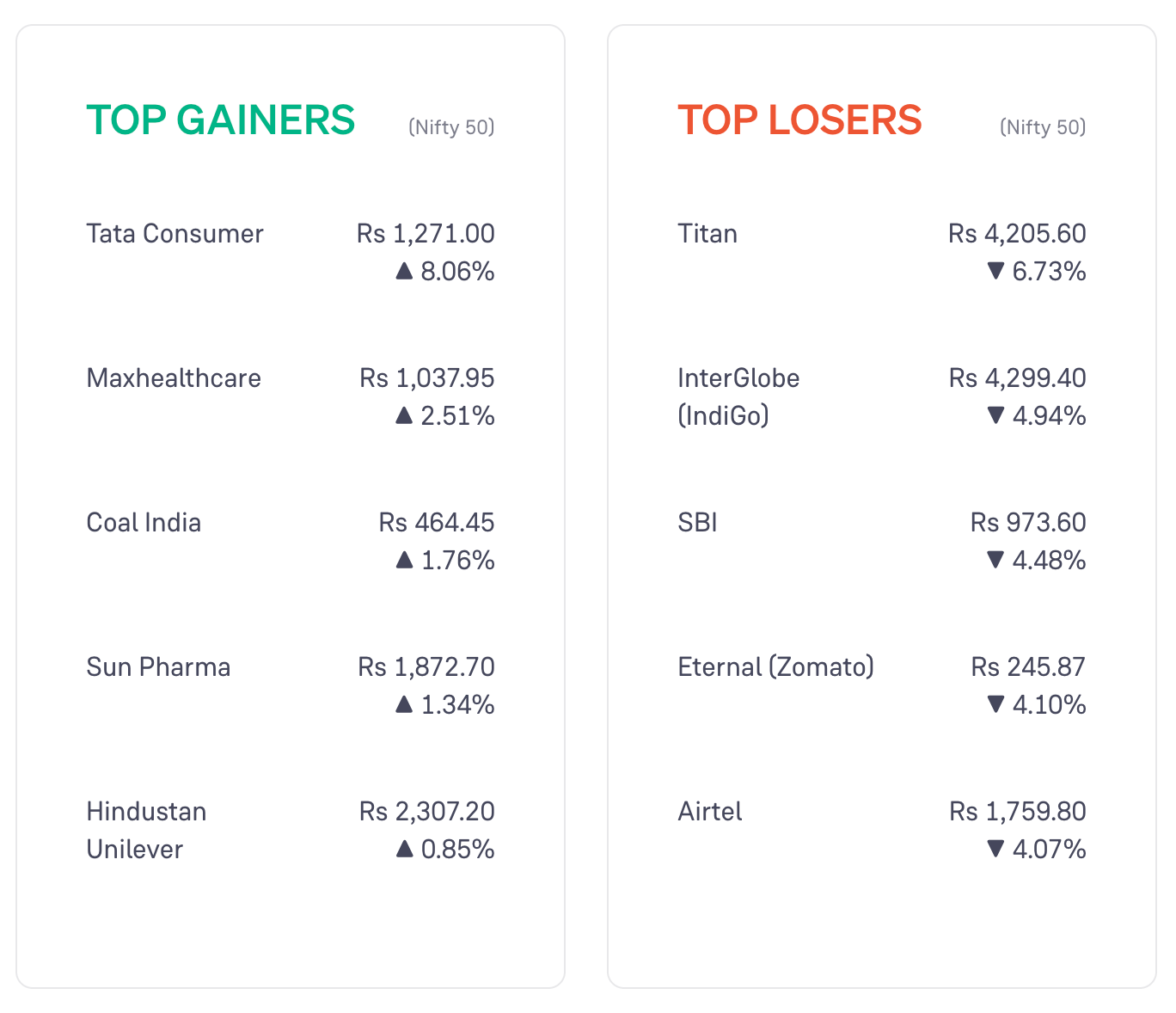
Markets opened significantly below Friday’s closing point.
Healthcare stocks and pharma stocks rose the most today. Consumer durables stocks and realty stocks fell the most.
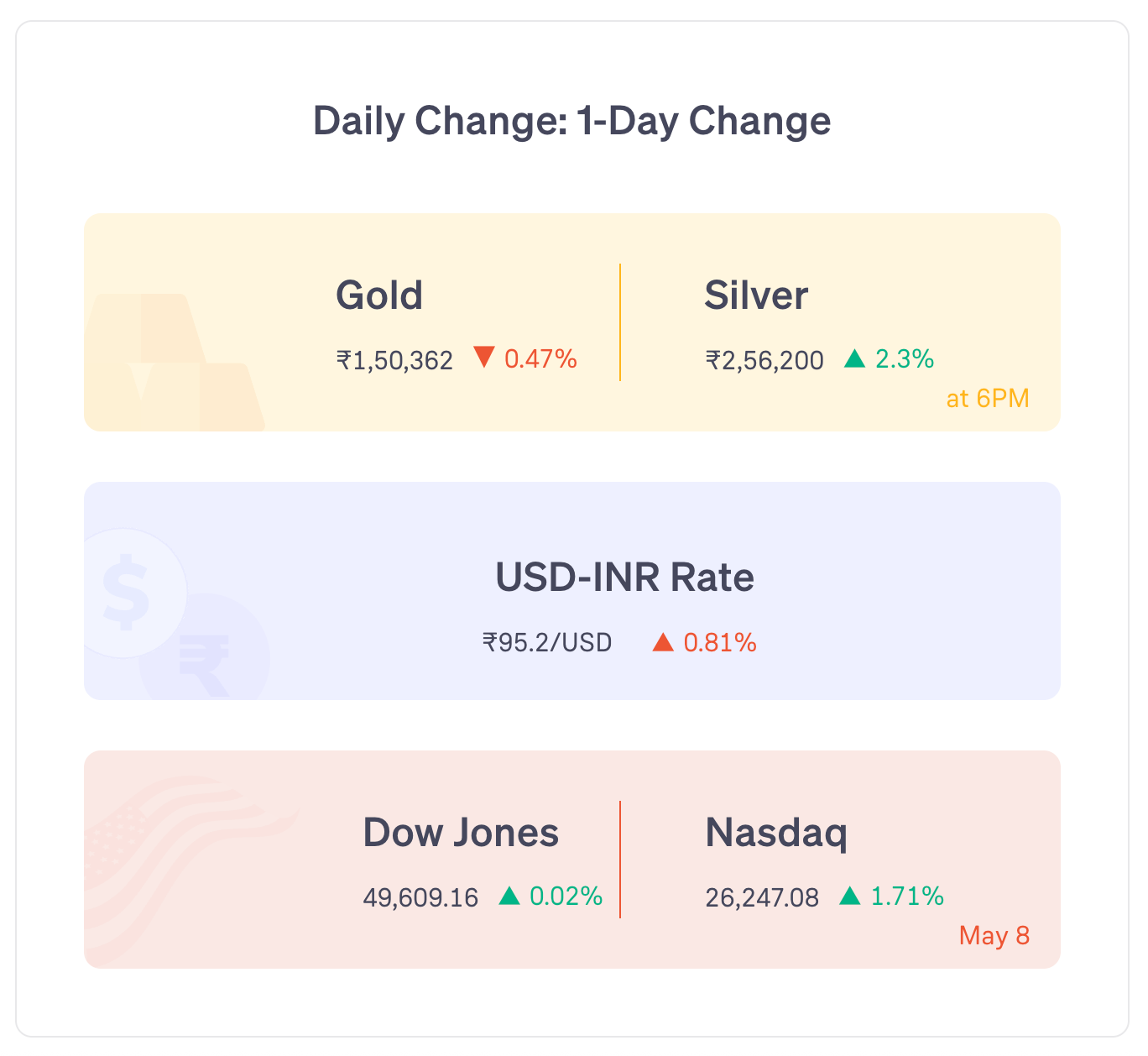
Global markets: US markets fell. Asian markets and European markets showed a mixed trend (as of 6 pm IST).
News
SEBI has proposed changes to buyback rules, including completing open market buybacks within 66 working days, removing the separate trading window, sending electronic notification to shareholders, etc.
India’s urban unemployment rate fell marginally to 6.6% in the Jan-March quarter (vs 6.7% in the previous quarter). Rural unemployment rate rose to 4.3% (vs 4% in the previous quarter).
China’s annual inflation rate rose to 1.2% in April (vs 1% in March).
Stocks Updates
Canara Bank: net profit fell 9.78% year-on-year to Rs 4,574.23 crore in the Jan-March quarter. Dividend announced: Rs 4.20 per share, with 12 June as the record date.
Vodafone-Idea (Vi): following clarification sought by the exchanges on the sudden stock movement, the company said it has not received any communication from the Vodafone Group regarding any stake transfer to the company as treasury stock.
JSW Energy: net profit fell 8.94% year-on-year to Rs 371.57 crore in the Jan-March quarter. Dividend announced: Rs 2 per share, with 5 June as the record date.
Word of the Day
Provisioning
It is the practice where banks set aside a portion of their profits to cover possible future losses, especially from bad loans (NPAs)
This amount is treated as an expense in the books, even though no actual cash is spent immediately.
This acts as a financial safety cushion. If a borrower fails to repay, the bank already has money kept aside to absorb the loss.
The RBI has set strict provisioning norms to ensure that banks stay safe and stable.
6 Day Course
Theme: India’s relation with USD
Day 1: Monday
Mutual Fund (MF) investors often simply chase the mutual funds with the highest returns.
Many times, this can be a bad strategy to invest money. In this week’s course, we will look at how investors can analyse mutual fund returns.
The very first step is to not chase mutual funds with the highest short-term returns.
Many times mutual funds outperform over short periods of time (last 6 months, 1 year, etc).
This can be due to luck or one-off reasons.
Often, the reason may not last long enough and the mutual fund’s high returns would likely not sustain.
As a rule of thumb, very short-term returns of mutual funds must be given low-priority while analysing.





Did you like this edition?
Leave a feedback here!