
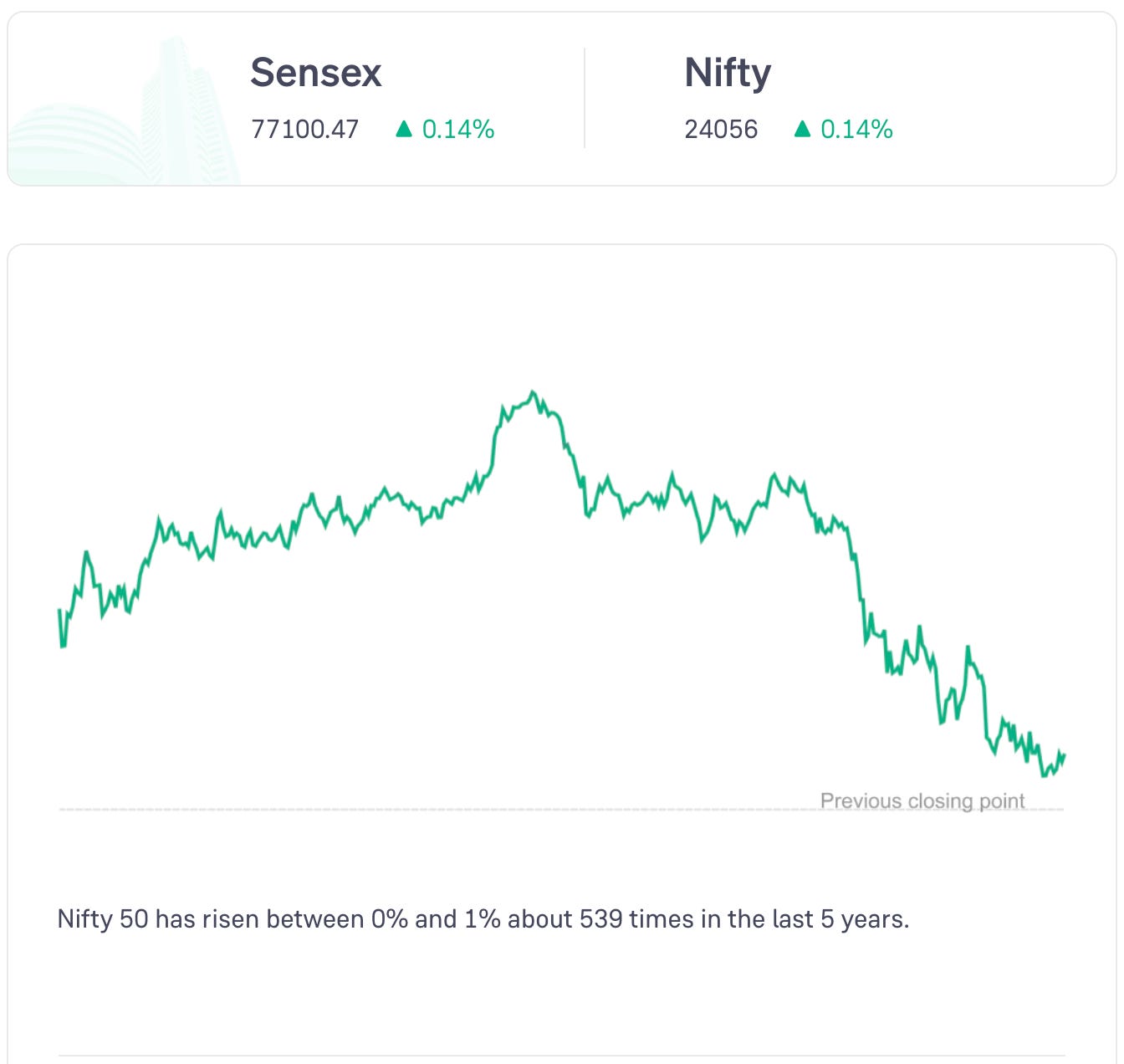
Markets opened above yesterday’s closing point.
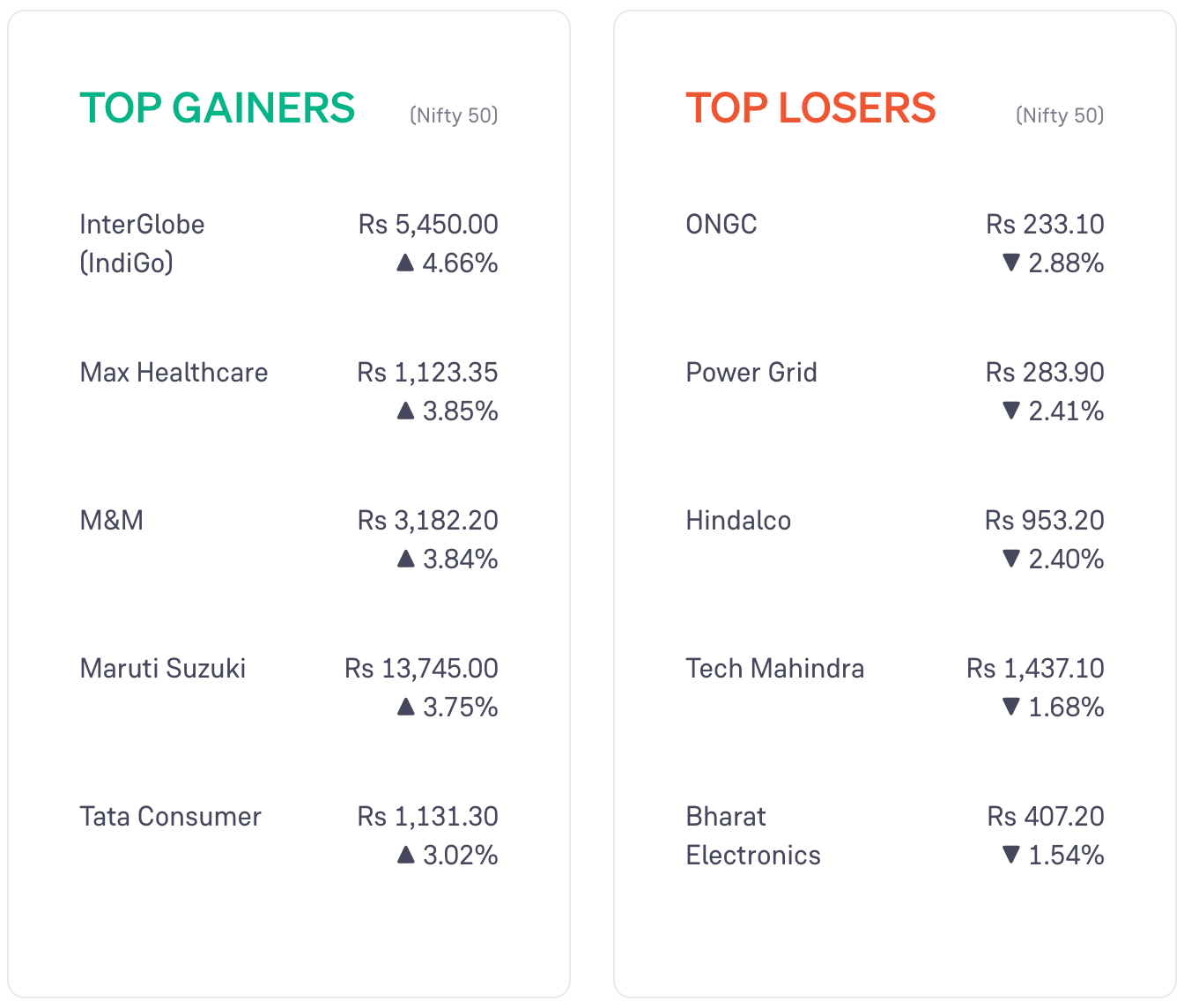
Auto stocks and FMCG stocks rose the most today. Metal stocks and oil and gas stocks fell the most.
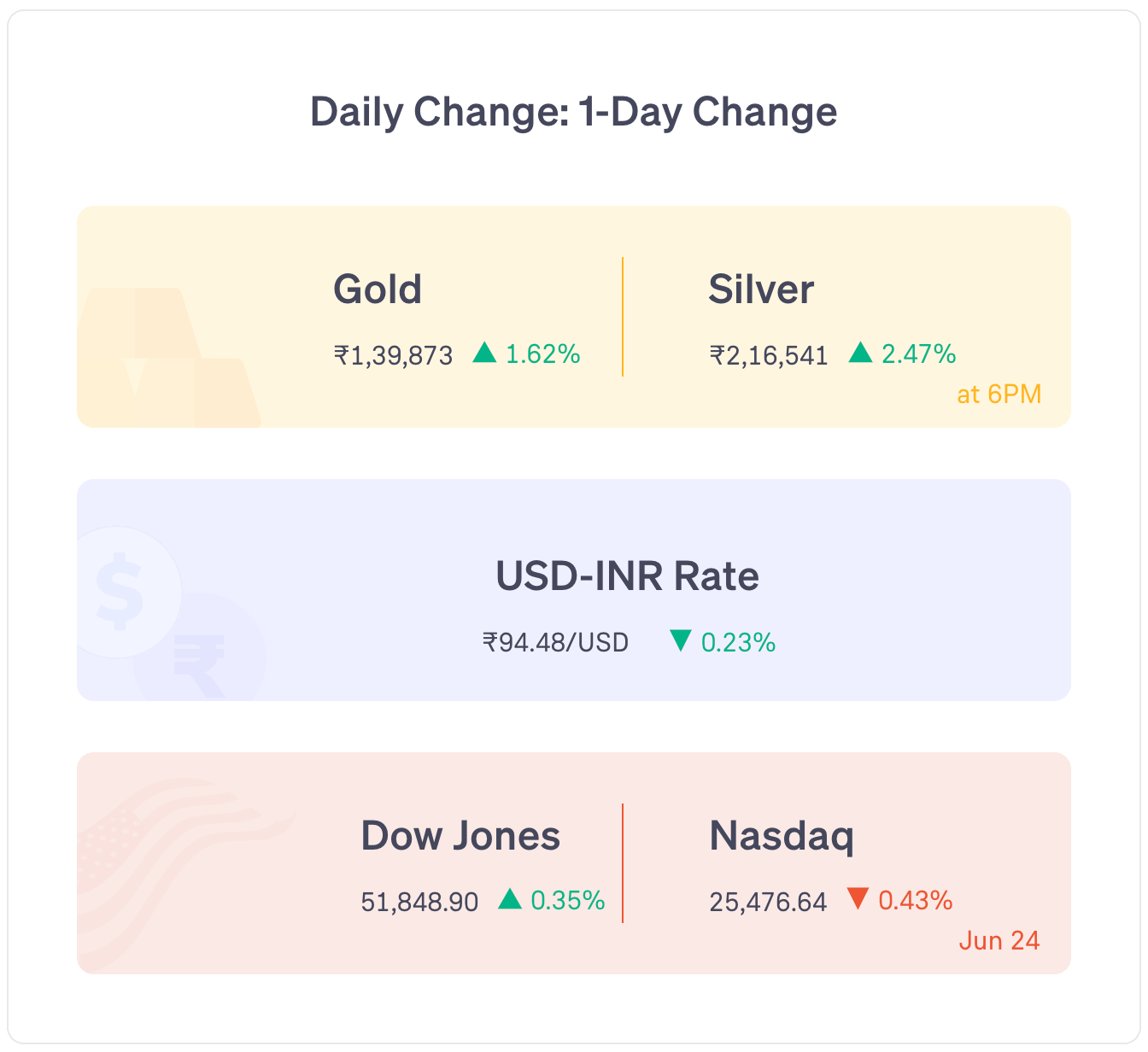
Global markets: US markets showed a mixed trend. Most Asian markets and European markets rose (as of 6 pm IST).
News
The government has removed restrictions on the supply of commercial LPG cylinders and restored supplies to pre-West Asia crisis levels. It has also resumed bulk LPG supplies at 50% of pre-crisis levels.
The government is planning to estimate the economic value of India’s coal reserves, helping track their role in the economy and environment rather than their market price.
Waterways Leisure Tourism IPO was subscribed 1.46 times. Retail subscription: 4.19 times. IPO is closed for subscription.
Stocks Updates
ONGC: bp (UK-based oil and gas company) has been appointed as the Technical Services Provider (TSP) for ONGC’s fields in the Western Offshore Basin. bp will provide technical expertise to improve oil and gas production from offshore fields.
Hindustan Zinc: deployed India’s first 250 metric tonne capacity electric crane at Zinc Smelter Debari in Rajasthan to reduce emissions and improve energy efficiency.
GMR Airports: subsidiary GMR Nagpur International Airport Ltd (GNIAL) took over operations of Dr. Babasaheb Ambedkar International Airport, Nagpur, effective from 25 June.
Shree Cement: GST appellate authority in Patna has rejected the company’s appeal against an earlier GST demand order on technical grounds. The company will challenge the orders.
Tata Steel: invested $172 million (around Rs 1,625 crore) in its wholly owned Singapore subsidiary, T Steel Holdings Pte Ltd (TSHP), through subscription to equity shares. The funds are part of Tata Steel’s previously approved investment plan of up to $2 billion.
L&T: subsidiary Vyoma.AI incorporated a wholly owned step-down subsidiary LTA Data Centres Pvt Ltd to develop data centres and related technology-enabled services.
Word of the Day
Private Equity Firms
They are institutions that invest money in other companies.
They usually invest in companies not listed on the stock market.
These firms pool money from large investors like rich individuals, pension funds, insurance companies, family offices, and other institutions and use it to buy a part of another company.
Private equity is different from venture capital.
VCs usually invest in very young companies, and PE firms invest in companies that are already established but need support to grow further.
PE firms often buy a large part of the company. Sometimes, even buy the full company or take a controlling stake.
Their goal is to hold the investment for a few years, improve the business, and later sell their stake at a profit through an IPO, merger, or acquisition.
6 Day Course
Theme: crucial points in IPO
Day 4: Thursday
Every IPO has anchor investors — reputed institutional investors who are investing in the IPO.
Anchor investors are decided before the IPO opens up for individual investors to invest in.
Good anchor investors does not necessarily mean that the IPO will be a good investment for individual investors.
But missing good anchor investors is usually not a good sign. It shows they choose to stay away from the IPO for some crucial reason.
Investors also keep a tab on how many times a particular IPO has been oversubscribed. Example: “XYZ IPO was oversubscribed by 7.2 times.”
This tells us about how much the IPO is in demand.
We also get this number’s breakup based on each investor type. Example: oversubscription in the QIB segment, individual investor segment, etc.
Featured Question
Q. “Kindly explain Nifty 50 has risen between 0% and 1% about 539 times in the last 5 years (22 june & 24 June )”
We include this line in every Groww Digest Daily and update the numbers everyday.
The markets are always falling and rising.
The intensity of that varies. So, sometimes, it falls or rises by a percentage that is between 0% and 1%.
In a few days, it rises or falls between 1% and 2%.
Even more rare is a rise/fall between 2% to 3%. So on.
With this line we are trying to show how commonly or rarely the rise/fall is occurring.
Example: let’s say the markets have risen by 1.2% on a particular day. That means it has risen between 1% and 2% on that day.
So we try to count the number of times the markets have risen between 1% and 2% (over the previous 5 years).
So, in the example given by you in the question, the markets had risen between 0% and 1% on ~539 days over the last 5 years.
Since we are measuring the number of times the market rose/fell over exactly 5 years, the number may or may not be the same.
Did you like this edition?
Leave a feedback here!