

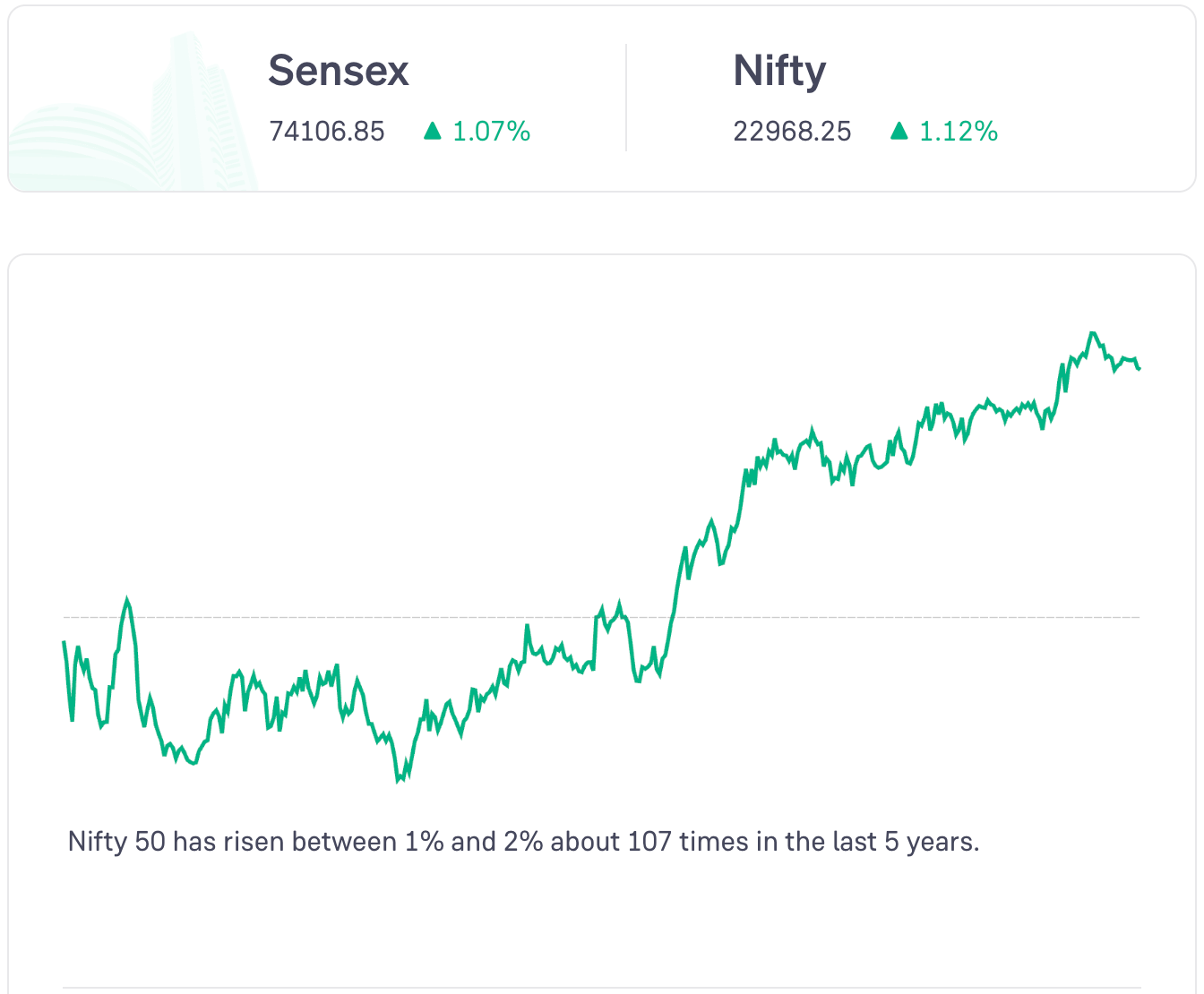
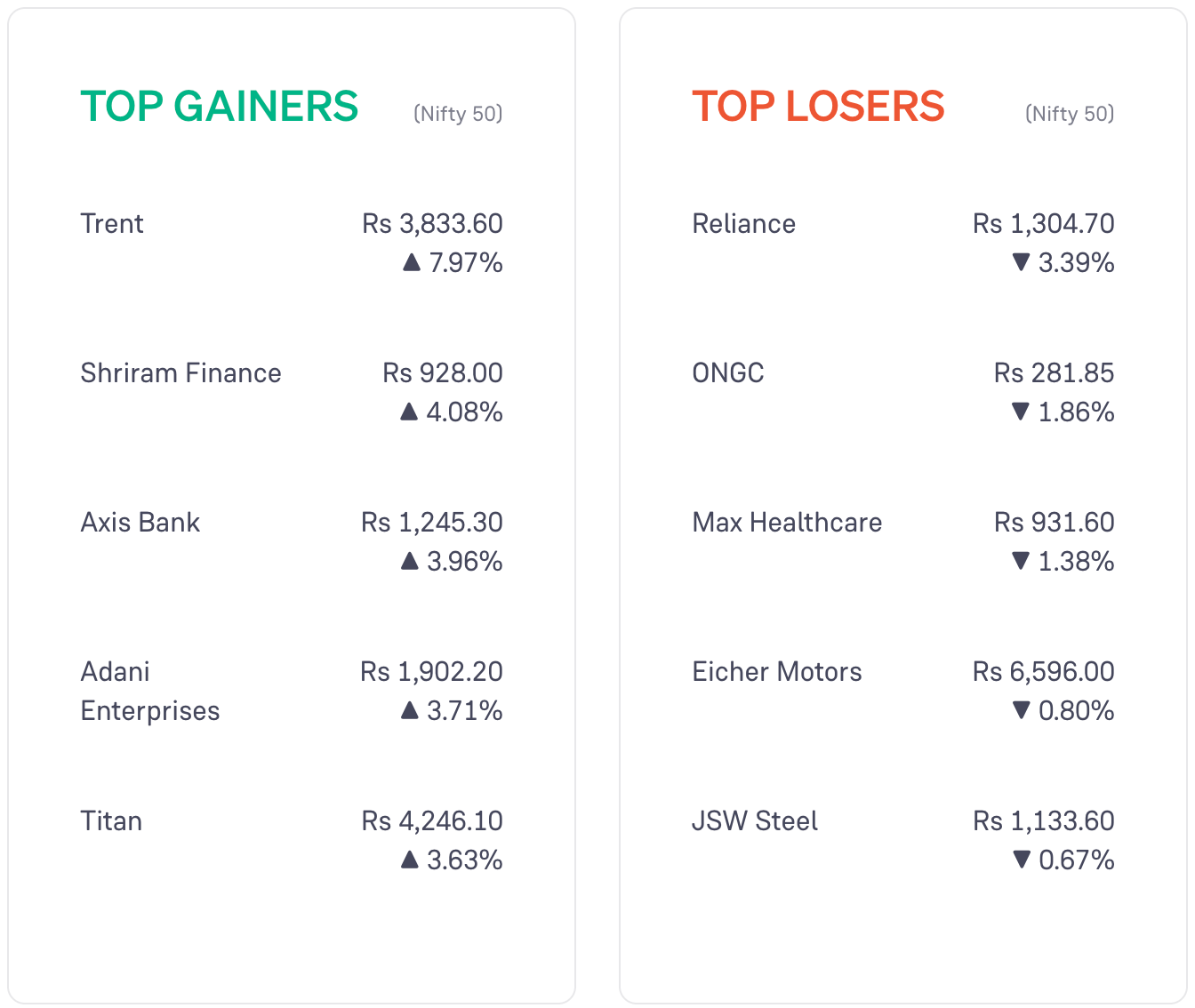
Markets opened below Thursday’s closing point.
The Nifty 50 rose in the second half of the day and closed in the green.
All sectors’ stocks rose today except for the oil and gas stocks and media stocks. Consumer durables stocks and PSU bank stocks rose the most.
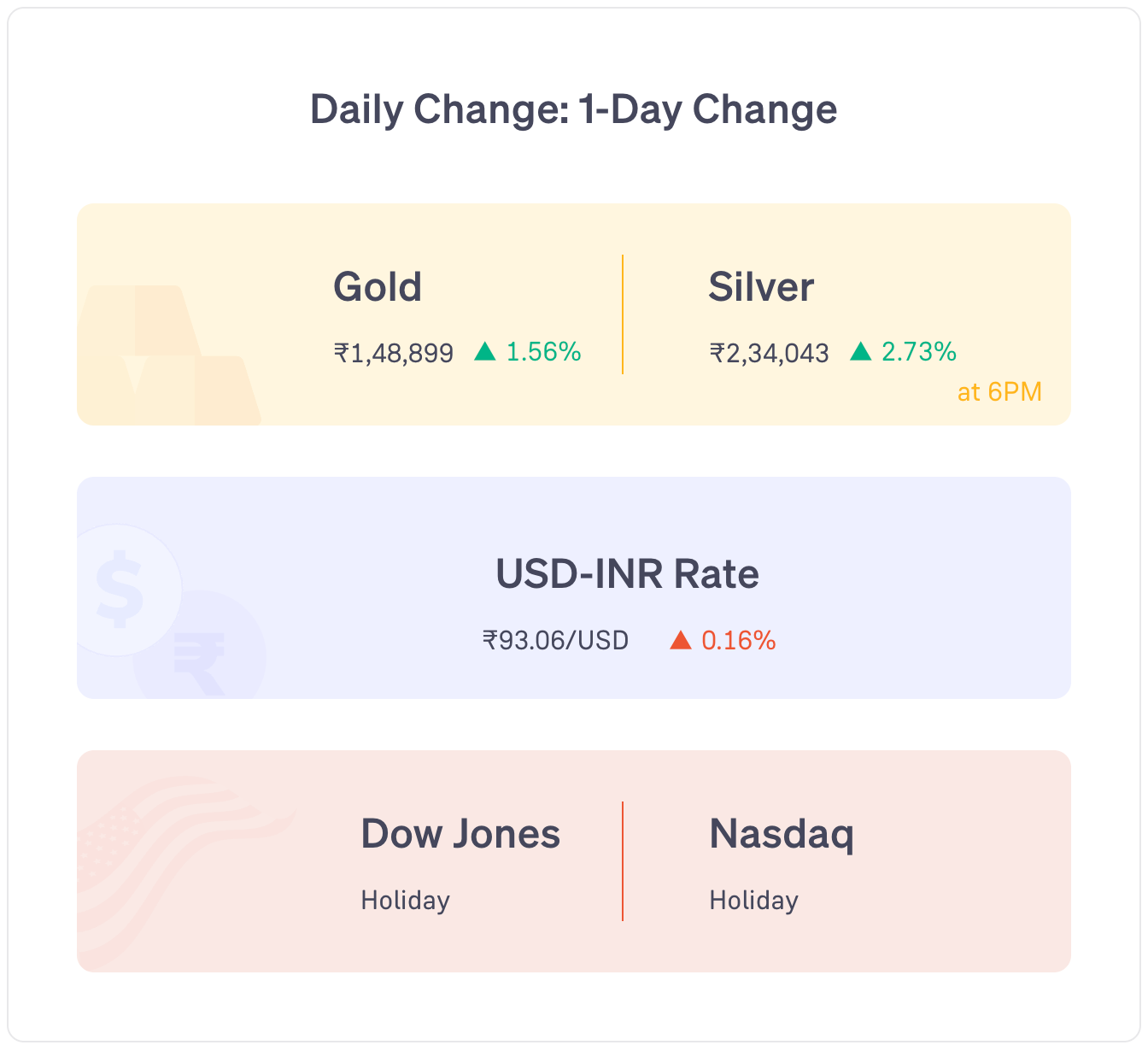
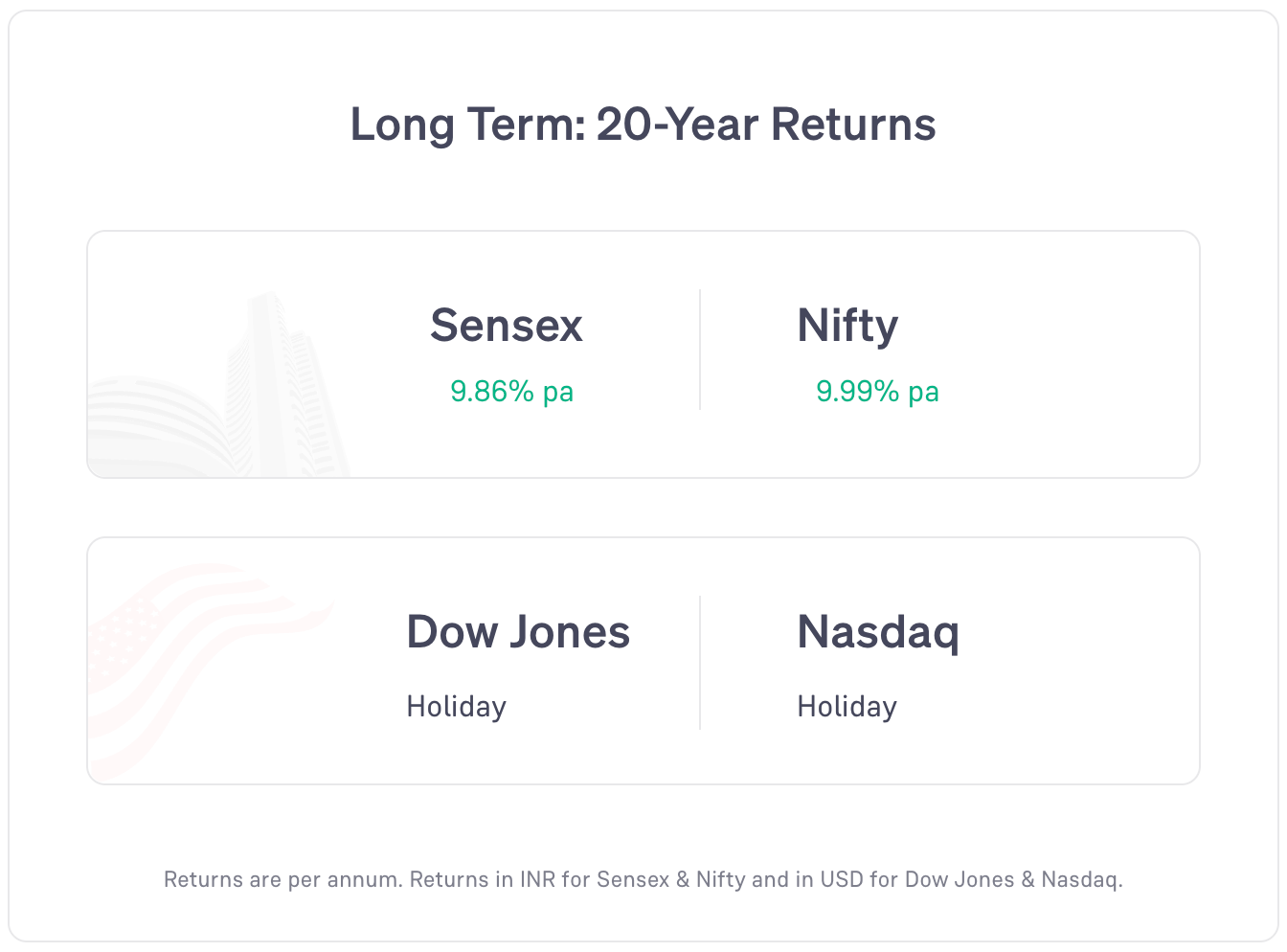
Global markets: US markets were closed on Friday due to Good Friday. Most Asian markets and most European markets fell (as of 6 pm IST).
News
India’s composite PMI (manufacturing + services) fell to 57 in March (vs 58.9 in Feb). Services PMI fell to 57.5 (vs 58.1 in Feb). This means overall economic activity grew more in Feb than it grew in March.
The government has approved multiple projects worth Rs 1,364.45 crore to improve safety, signalling and communication infrastructure across the railway network.
Stocks Updates
Wipro: is acquiring ‘Mindsprint’, the IT arm of Olam, a Singapore-based food & agriculture company. The acquisition is valued at $375 million.
Waaree Energies: company’s subsidiary, Sangam Solar One Private Limited, has officially begun production at its new 3,000 MW solar module manufacturing facility in Kutch, Gujarat.
Ambuja Cements: company’s subsidiary, Sanghi Industries, has officially merged with its parent company. Existing shareholders of Sanghi Industries would receive 12 shares of Ambuja for every 100 shares of Sanghi.
IRFC: has disbursed a loan of Rs 1,000 crore to MAHAGENCO (Maharashtra State Power Generation Company).
Word of the Day
Exit Load
It is a fee charged by a mutual fund company if you withdraw money before a specific time period.
The aim is to discourage investors from backing out too early.
The fee is deducted from your withdrawal amount, based on the fund’s NAV (Net Asset Value).
Thus, the final returns you get decrease.
Not all companies levy an exit load on their investors, it varies for each fund.
6 Day Course
Theme: biggest crude oil price spikes
Day 1: Monday
AUM stands for Assets Under Management.
It is the total amount of money being managed by a mutual fund.
Many investors look at the AUM of a mutual fund also as an important criteria before investing.
In this week’s course, we will try to understand AUM better and understand how much it impacts investors.
The first thing to note is that the term ‘AUM’ is used pretty loosely.
Many people use AUM to describe the entire money being managed by a mutual fund company (combining all mutual funds).
Many advisors also refer to the amount they are advising as their AUM.
In case of mutual funds, AUM is the total value of money that that mutual fund has under it.
It is not the total amount of money it has received from investors.
It is the latest updated value of the total money invested.
Since the value of assets change every day (shares, bonds etc), the AUM also changes every day.




The information presented in this post has been compiled and prepared by Groww Invest Tech Pvt Ltd and is intended solely for informational purposes. It is not tailored to any specific investment objectives, financial situations, or needs of any individual investor. The content should not be construed as investment, financial, legal, or tax advice and should not be relied upon as a substitute for professional consultation.
Investing in securities markets involves inherent risks. Investors are advised to carefully review all relevant documents and consider their own risk tolerance before making any investment decisions.
Mutual fund investments are subject to market risks; please read all scheme-related documents carefully. Past performance of financial instruments, schemes, or markets is not indicative of future results.
Groww Invest Tech Pvt Ltd is registered with the Securities and Exchange Board of India (SEBI) under Registration No: INZ000301838, as a Research Analyst under No: INH200008662, as a Depository Participant under No: IN-DP-417-2019, and with the Association of Mutual Funds in India (AMFI) under ARN-111686.
SEBI registration details: View registered name and registration numbers
Research Analyst Disclaimer: View Research Analyst disclaimer
Did you like this edition?
Leave a feedback here!