

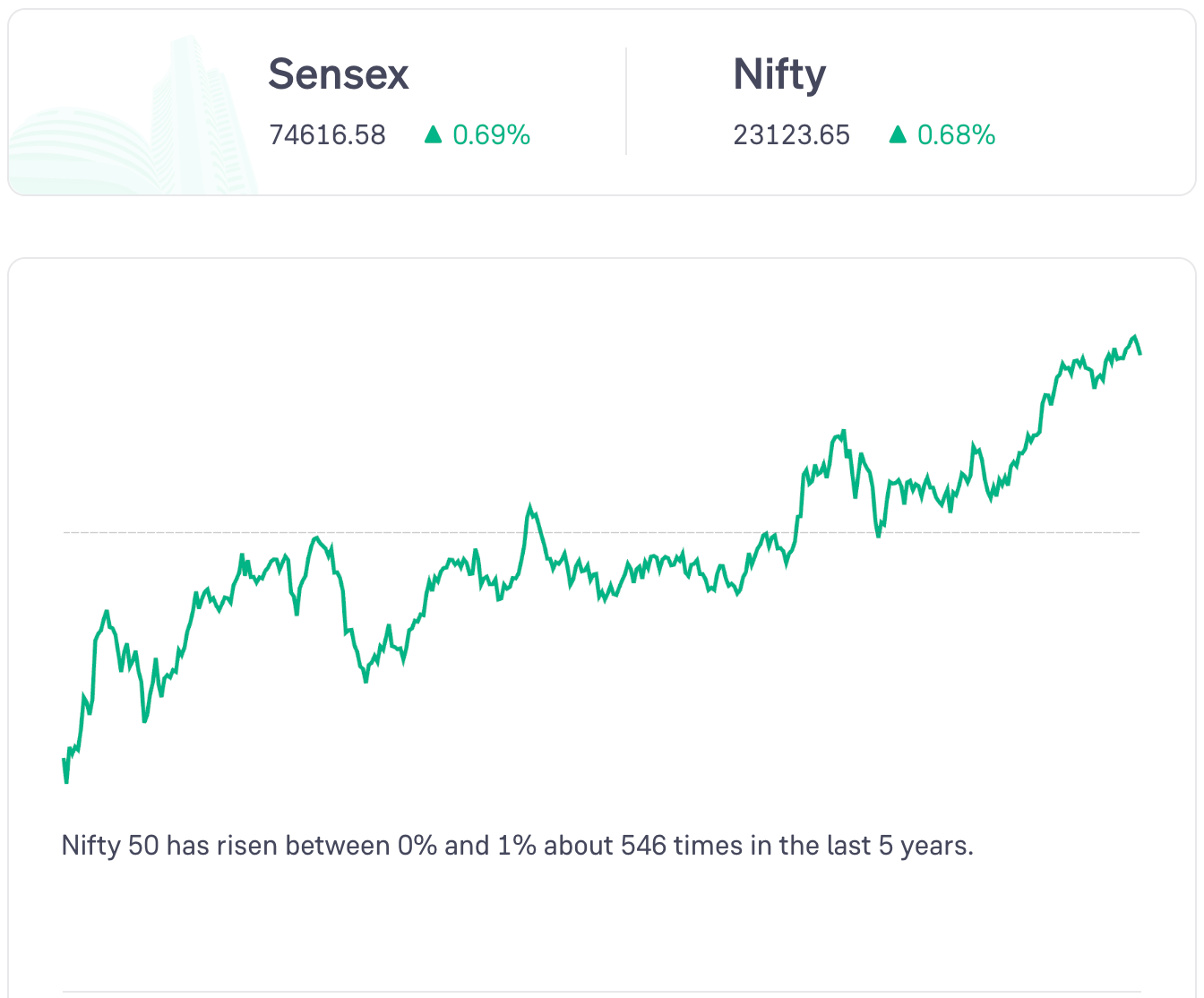
Markets opened below yesterday’s closing point.
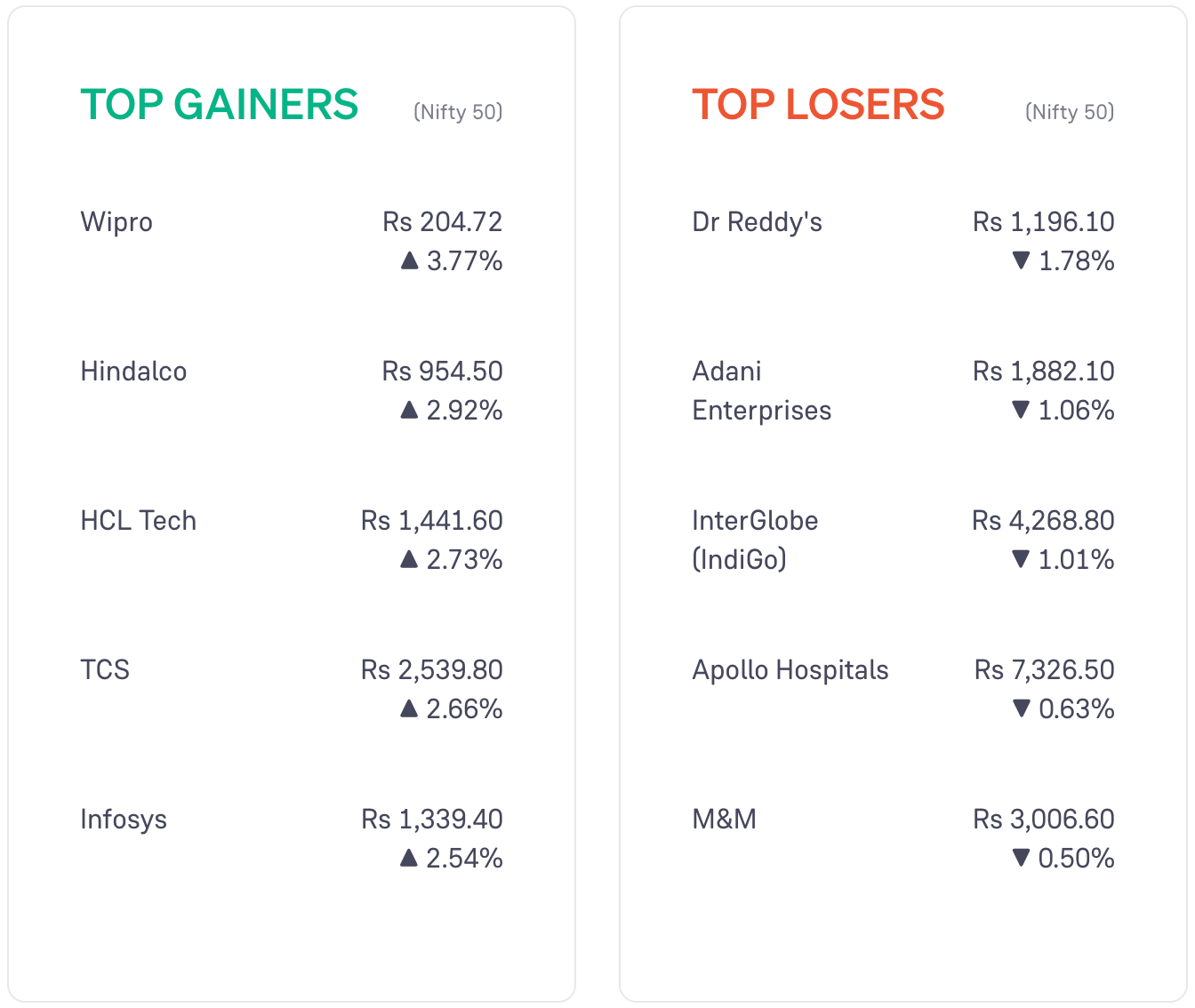
All sectors’ stocks rose today except for the PSU bank stocks and consumer durables stocks. IT stocks and realty stocks rose the most.
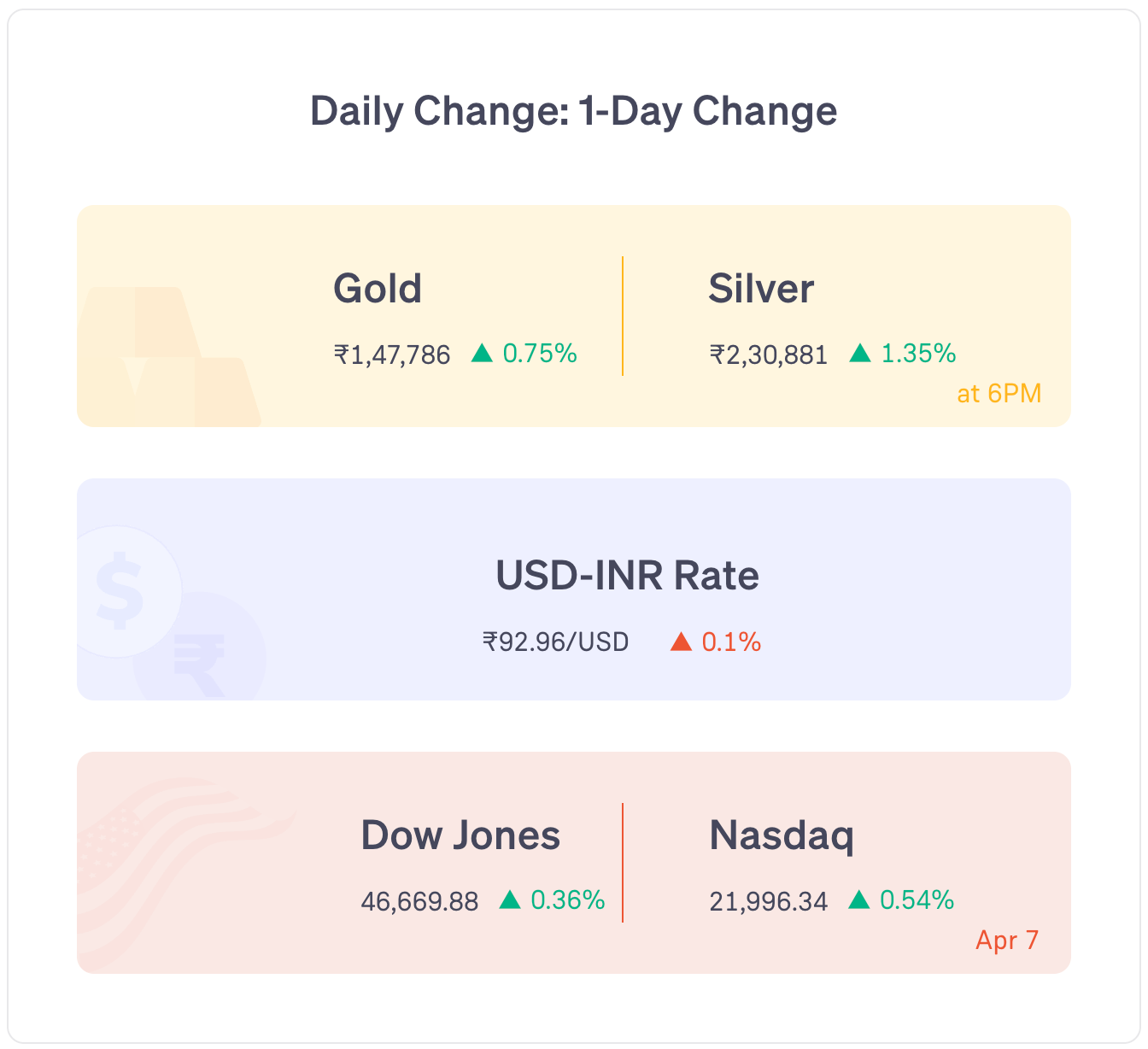
Global markets: US markets and most Asian markets rose. Most European markets fell (as of 6 pm IST).
News
The government has doubled the daily allocation of 5 kg Free Trade LPG (FTL) cylinders for migrant labourers in each state beyond the earlier 20% limit, based on demand. Natural gas supply to industrial and commercial sector networks has been increased by 10% to meet rising demand.
Zepto has received in-principle approval from SEBI for an IPO: as per media sources.
Stocks Updates
GAIL: signed a long-term agreement with Greek shipping company Alpha Gas for the LNG carrier “Energy Fidelity” to strengthen the supply chain.
Infosys: partnered with Harness to improve AI-led software delivery for enterprises.
Word of the Day
Holding Period
It is the length of time an investor holds an asset before selling it.
It is measured from the date of purchase to the date of sale.
The holding period determines whether gains are classified as short-term or long-term, which impacts the amount of tax an investor has to pay.
6 Day Course
Theme: mutual fund AUM
Day 2: Tuesday
A mutual fund’s AUM goes up because of two reasons:
One, when the value of its assets goes up (example: when its held shares’ value goes up).
This is called capital appreciation.
Two, when it receives more money from investors.
This is called inflow.
Similarly, the AUM reduces for the same two reasons: value falling (capital depreciation) or investors withdrawing money (outflow).
At any time, these factors are playing out together.
The value of each stock is rising or falling differently each day.
Investors are putting new money into the mutual fund while some existing investors are withdrawing, everyday.
The updated AUM we see everyday is a net result of all these factors.
Featured Question
Q. “Investing lumpsum during crashes and continuing with direct SIPs is a good idea? Or while continuing SIPs, should lumpsum during crashes also be invested through SIPs? Which is best?”
Many investors invest more money than they usually invest when the markets are down.
The idea is that more money is being put in when the markets are lower — resulting in higher returns.
One reason investors choose SIPs is because it spreads the timing risk.
If you invest a large amount right now and the market falls sharply, you could miss out on the chance to invest at an even lower value.
On the other hand, if you choose to invest by spreading it out over a few months, the money will get invested in different times.
What if the markets rise very fast before the next month’s investment date? Then you miss the chance to invest at a lower value.
This is a conundrum.
As a general practice, it is suggested to invest by spreading investments out across a few months. It takes care of unnecessary timing risk.
But if you are sure the markets are not going to go down much further than where they already are, then lump sum makes more sense.
The information presented in this post has been compiled and prepared by Groww Invest Tech Pvt Ltd and is intended solely for informational purposes. It is not tailored to any specific investment objectives, financial situations, or needs of any individual investor. The content should not be construed as investment, financial, legal, or tax advice and should not be relied upon as a substitute for professional consultation.
Investing in securities markets involves inherent risks. Investors are advised to carefully review all relevant documents and consider their own risk tolerance before making any investment decisions.
Mutual fund investments are subject to market risks; please read all scheme-related documents carefully. Past performance of financial instruments, schemes, or markets is not indicative of future results.
Groww Invest Tech Pvt Ltd is registered with the Securities and Exchange Board of India (SEBI) under Registration No: INZ000301838, as a Research Analyst under No: INH200008662, as a Depository Participant under No: IN-DP-417-2019, and with the Association of Mutual Funds in India (AMFI) under ARN-111686.
SEBI registration details: View registered name and registration numbers
Research Analyst Disclaimer: View Research Analyst disclaimer
Did you like this edition?
Leave a feedback here!