

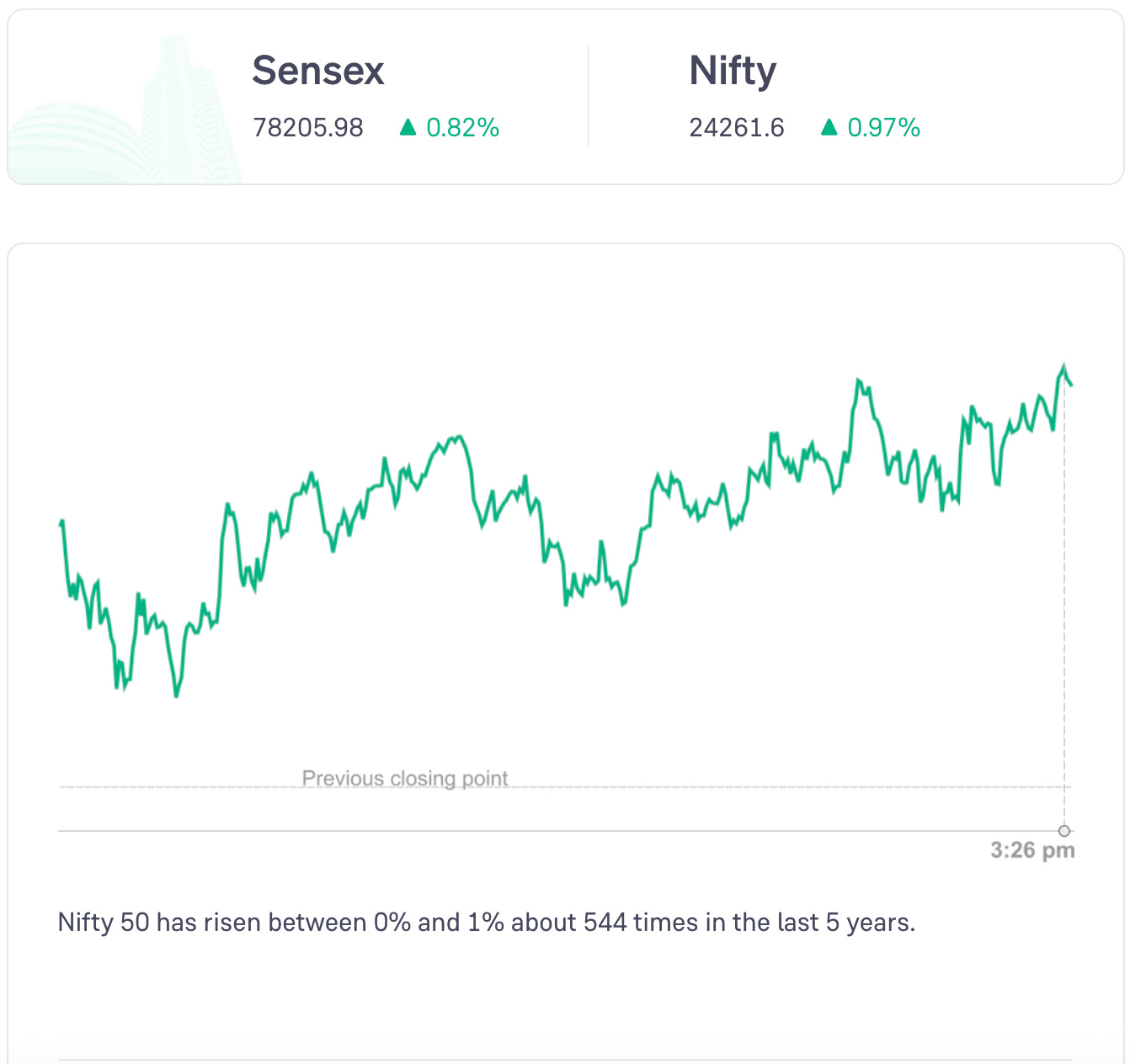
Markets opened above yesterday’s closing point.
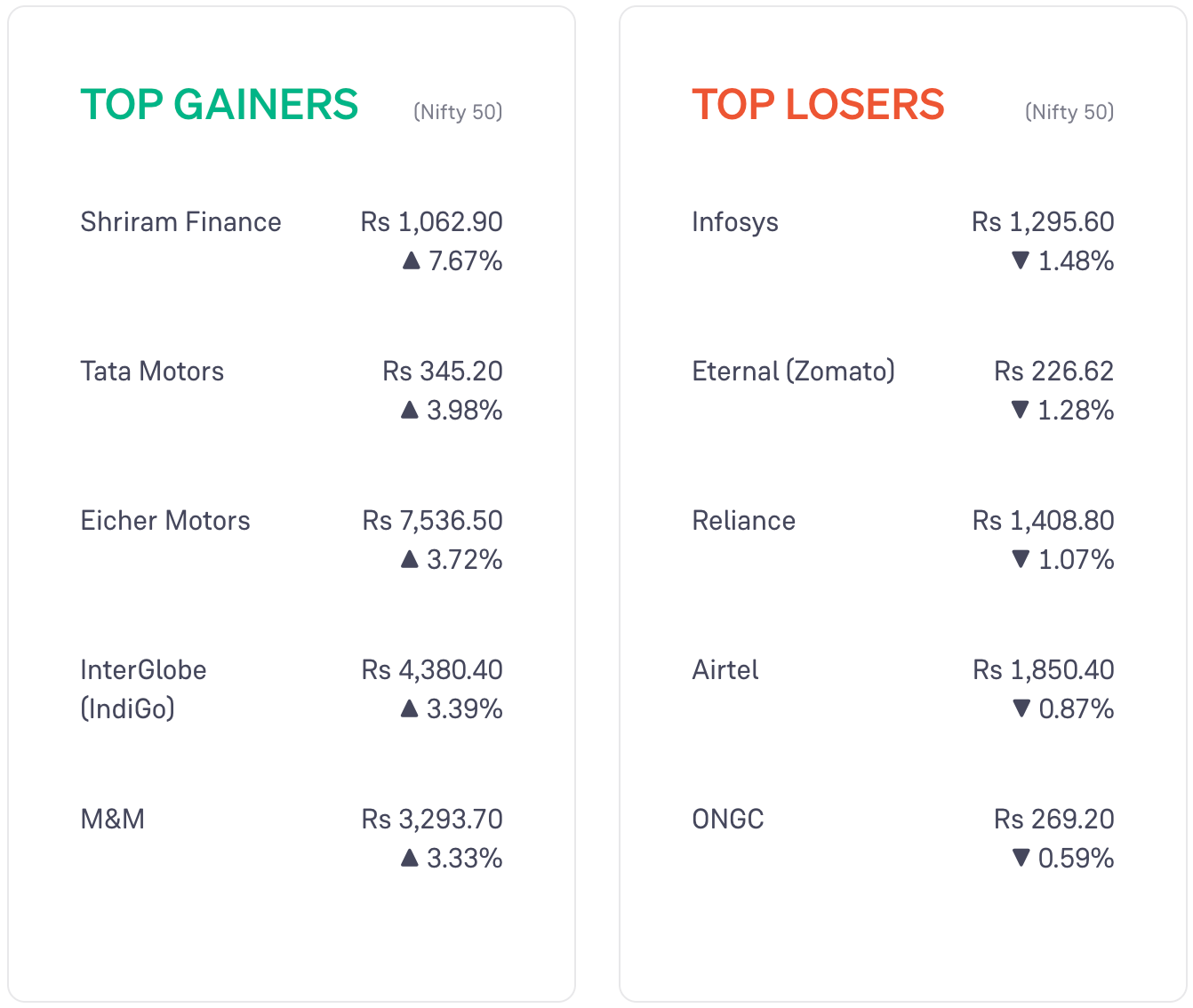
All sectors’ stocks rose today except for the IT stocks and oil and gas stocks. Auto stocks and consumer durables stocks rose the most.
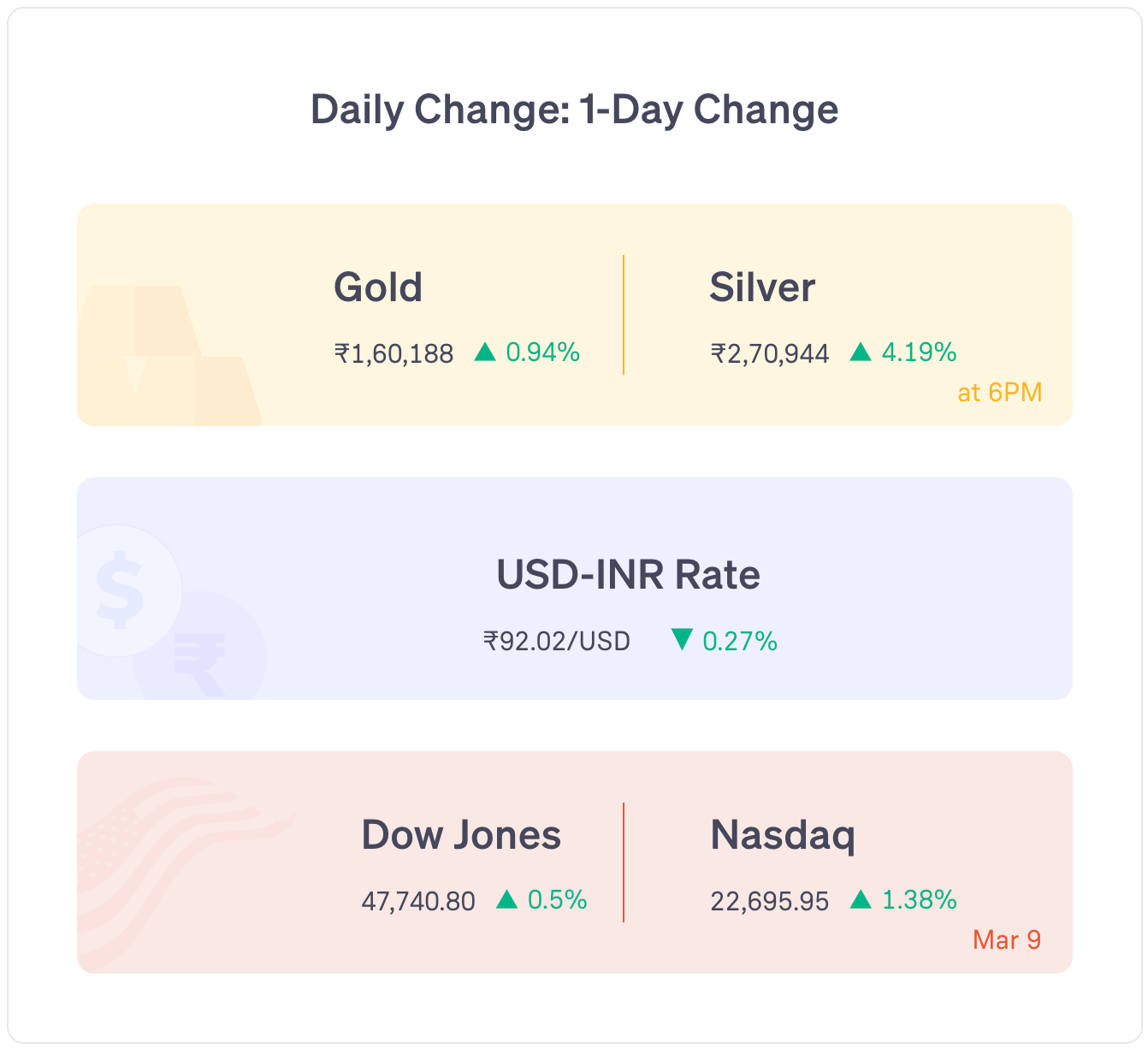
Global markets: US markets and Asian markets rose. European markets rose (as of 6 pm IST).
News
The government has invoked the Essential Commodities Act, 1955 to prioritise LPG production and supply amid shortages due to the war in West Asia. Refiners have been directed to maximise LPG output for household use and prevent diversion of key petroleum streams to other products.
The government has eased foreign direct investment (FDI) rules for countries sharing land borders with India, including China, so that certain investments no longer require government approval: as per media reports
The central government approved a revised Rs 3,630.77 crore plan for a 31.42 km greenfield corridor connecting South Delhi, Faridabad, and Gurugram to Jewar International Airport via the Delhi-Mumbai Expressway.
The government also approved Rs 3,839 crore for a 4-lane highway on the Badnawar-Petlawad-Thandla-Timarwani section of NH-752D in Madhya Pradesh.
The government also approved 2 railway multi-tracking projects worth about Rs 4,474 crore in West Bengal and Jharkhand.
The government approved infrastructure and technology upgrades worth over Rs 765 crore across key railway corridors.
The government approved the extension of the Jal Jeevan Mission until December 2028 with a revised outlay of Rs 8.7 lakh crore.
China’s exports grew 21.8% year-on-year in the Jan-Feb period while imports grew 19.8%.
Truhome Finance applied for a Rs 3,000 crore IPO with SEBI.
Stocks Updates
NTPC: declared commercial operation of 91.6 MW in Andhra Pradesh and 270 MW in Gujarat solar projects.
Adani Enterprises: company subsidiary, Adani Road Transport Ltd, completed acquisition of the remaining 49% stake and 100% preference shares in D P Jain TOT Toll Roads Pvt Ltd for up to Rs 1,342 crore, making it a wholly owned subsidiary.
Power Grid: approved Rs 5,000 crore funding, a Rs 234 crore security project, 100% disinvestment from Central Transmission Utility of India Ltd, and a Uganda transmission alliance.
TCS: TPG Terabyte bought a 49% stake in HyperVault (a TCS subsidiary) for Rs 199 crore, ending its wholly owned status under TCS.
Tata Power: invested Rs 50 crore to acquire a 40% stake in Dorjilung Hydro Power Ltd, which is developing the 1,125 MW Dorjilung Hydro Project in Bhutan.
Word of the Day
Statutory Liquidity Ratio (SLR)
It is the minimum percentage of deposits that a bank has to maintain in the form of cash, gold or government securities
It is a reserve requirement kept with the banks themselves.
It ensures that banks maintain sufficient liquidity and encourages them to invest in government securities, supporting government borrowing.
It is a tool that the RBI uses to control money supply and inflation in the economy.
Currently the SLR is 18% of a bank’s Net Demand and Time Liabilities (NDTL).
6 Day Course
Theme: crude oil price
Day 2: Monday
Crude oil by itself cannot be used. It must be processed or refined.
Refining breaks down crude oil into various petroleum products.
Some of these products include petrol, diesel, kerosene, natural gas, naphtha, bitumen, lubricants, and other chemicals.
Different kinds of crude oil yield different quantities of different products.
Some countries prefer crude oils that give more petrol and lighter fuels. Some countries want the crude that gives them heavier products like bitumen and heavy fuel oil.
Crude oil producing countries don’t necessarily refine it. Many of them sell the extracted crude oil directly. The buyers then refine the oil and sell the products.
Crude oil is transported mainly via oil tanker ships. Transporting oil via pipelines and surface transport (train and truck) also happens though to a lesser extent.
6 Day Course
Q. “Explain weakening of the currency with example,how it is beneficial?”
Weakening of a currency can benefit a country that depends heavily on exporting.
Many countries’ currencies are weak compared to other countries. Some even deliberately weaken their currency.
Say sports shoes in India cost Rs 900.
Let’s say $1 = Rs 90.
Then, the shoes when exported will cost $10.
Now, let’s say India deliberately weakens the currency and makes $1 = Rs 100.
Now, the same pair of shoes will cost Rs 900 in India but when exporting, it will now cost $9.
This cheaper cost would make these shoes more competitive and therefore cause them to sell more. This is one of the biggest reasons some countries intentionally ‘weaken’ their currency. It helps them increase their economic activity.
But there are disadvantages to this too.
Everything the country imports becomes expensive after the country weakens its currency.
Countries that heavily rely on importing goods suffer because of this.
One classic example is crude oil. Most countries rely on imported crude oil and therefore cannot afford to weaken their currency too much.
Did you like this edition?
Leave a feedback here!