

Sit inside almost any modern car in India and look straight ahead.
The windshield may seem like a simple sheet of glass. But it is actually one of the vehicle’s most important safety components.
It must remain clear while handling wind, rain, stones and impact. In newer cars, it also has to work with ADAS cameras, rain sensors, defoggers, antennas and head-up displays.
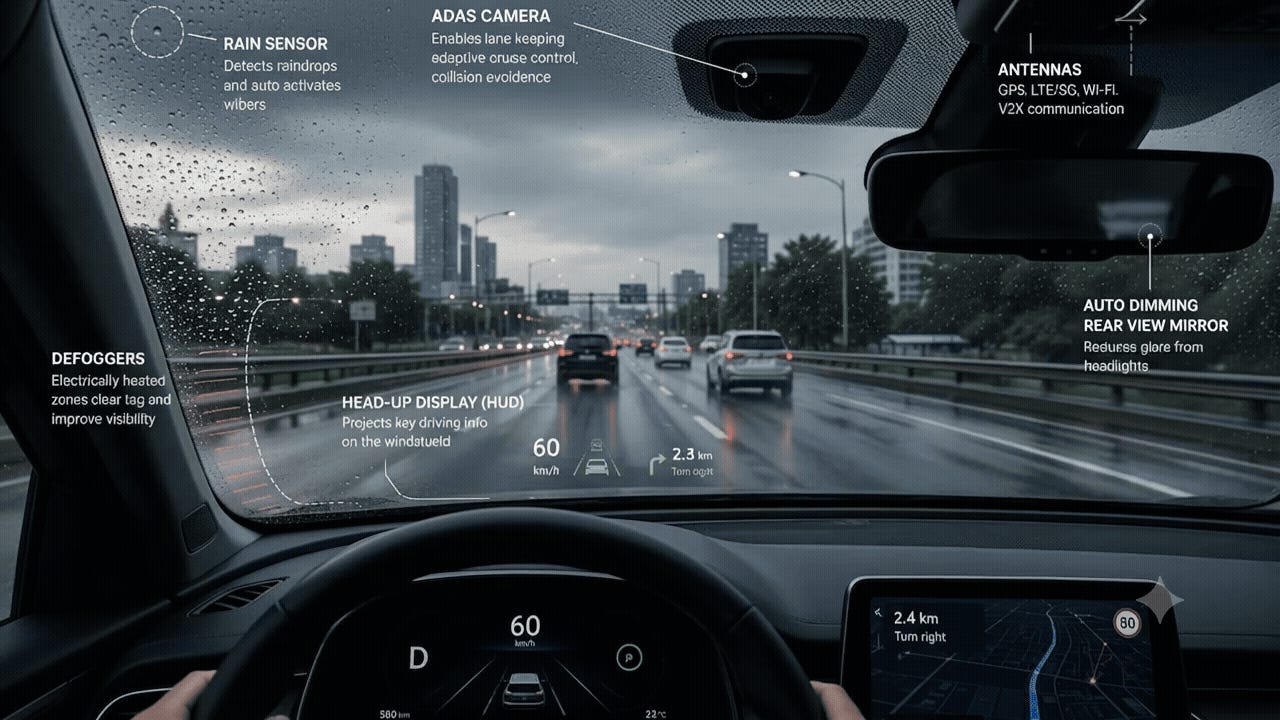
For the driver, it is just a windshield.
For the automaker, it is a safety-critical component that cannot fail.
And in India, one company quietly dominates this business: Asahi India Glass, or AIS.
AIS supplies automotive glass to almost every major passenger vehicle manufacturer in the country, including Maruti Suzuki, Hyundai, Tata Motors, Mahindra, Toyota, Honda and Kia.
It holds around 72% of India’s passenger vehicle OEM automotive glass market and about 16% of the country’s float glass market.
In simple terms, roughly three out of every four passenger vehicles made in India use glass supplied by AIS.
People compare engines, mileage, safety ratings and touchscreens. Almost nobody asks who made the windshield.
Yet for nearly four decades, AIS has remained the dominant supplier to India’s passenger vehicle industry. Domestic competitors, global manufacturers and low-cost imports have all struggled to meaningfully displace it.
So, how did one company build such a powerful position in a product that most customers barely notice?
It started with a customer that owned part of it
AIS began with an advantage that would be almost impossible to recreate today.
In the early 1980s, India barely had a modern car industry. The roads were dominated by the Hindustan Ambassador, based on the 1950s Morris Oxford, and the Premier Padmini, a licensed Fiat. Passenger vehicle volumes remained small, so there was little need for modern safety glass manufacturing in India.
Then the government set up Maruti Udyog and signed a joint venture with Suzuki in October 1982. The Maruti 800 followed in December 1983 and helped create India’s first large passenger car market.
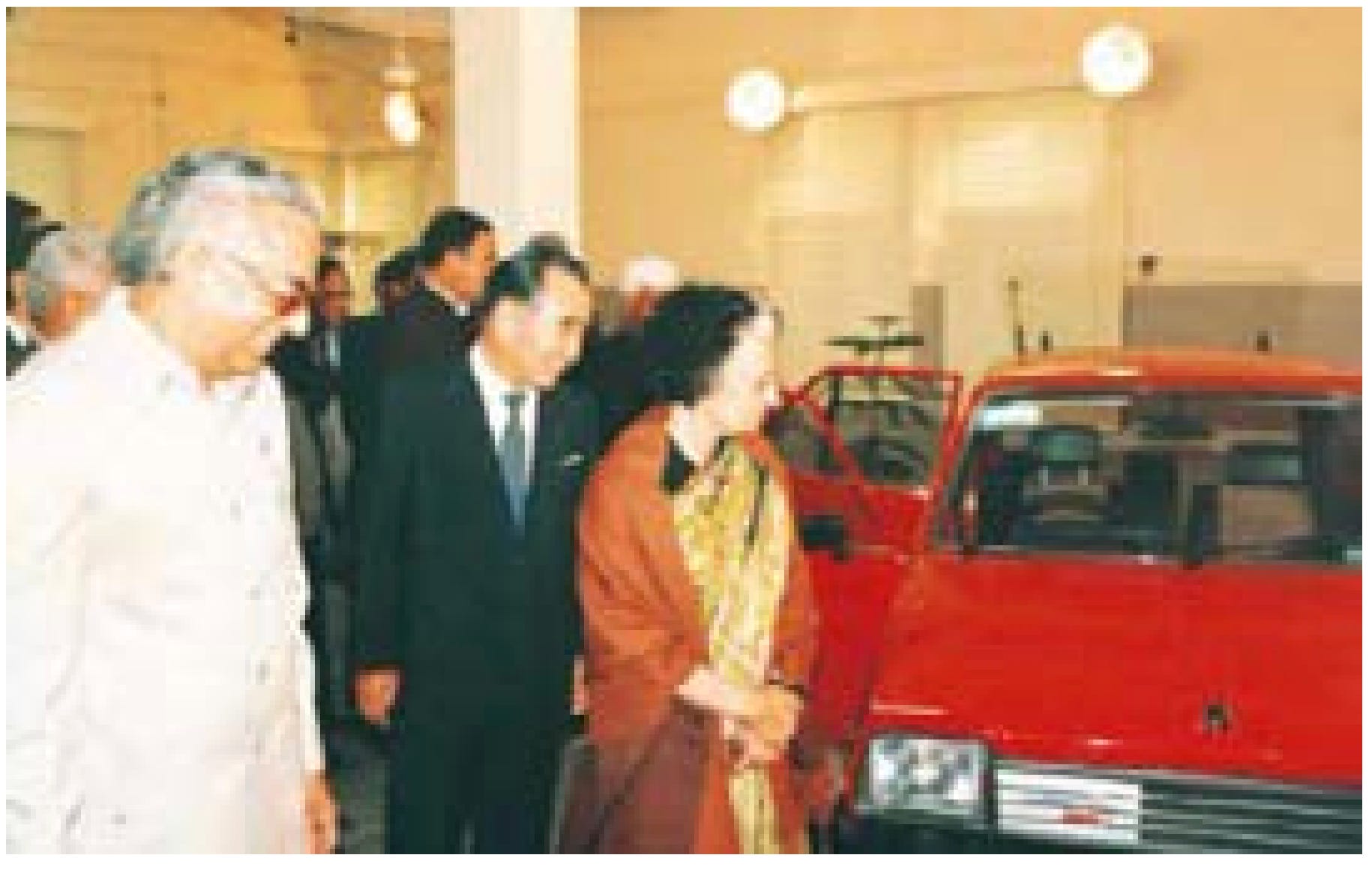
(Former Indian Prime Minister Indira Gandhi with the then Suzuki Chairman Osamu Suzuki glancing at a locally assembled Maruti 800)
Photo Source: Suzuki Motor
But Maruti could not simply import every component.
It had to build an Indian supplier network and source more parts locally. One of those parts was automotive safety glass, which was not yet being produced in India to international standards.
So Maruti helped create a company that could make it.
Indian Auto Safety Glass Private Limited was incorporated in Delhi on 10 December 1984 as a three-way joint venture between the Labroo family, Japan’s Asahi Glass, now AGC, and Maruti Udyog.
Each partner solved a different problem.
The Labroo family brought local business experience and the ability to operate through India’s licence-era regulations. AGC brought global glass technology and decades of manufacturing expertise. It had already been building float and automotive glass across the world, including through a joint venture in Indonesia that dated back to 1973.
Maruti brought something even more valuable: demand.
It did not merely sign a supply agreement. Maruti took an equity stake in the company that would manufacture its glass.
That meant the company creating India’s modern passenger car market was also a part-owner of one of its most critical suppliers. Maruti had a direct interest in making sure the company succeeded.
By 1985, the business had been renamed Asahi India Safety Glass and converted into a public limited company. AGC’s equity role was formally established in 1986, and commercial production of toughened automotive glass began with capacity of around 260,000 square metres.
Operations began properly in March 1987 at a single plant in Bawal, Haryana.
One plant. One product. One major customer.
The structure reduced three risks at once. AGC handled the technology, Maruti provided assured demand, and the Labroo family managed local execution.
AIS was not simply another supplier trying to win business. It was built alongside the company creating India’s modern passenger car market.
The combination of the company creating the market, the Japanese partner that knew how to make the glass and the local promoter who could execute in India became the first and deepest foundation of its moat.
Growing alongside Maruti
That starting position became much more valuable as Maruti went on to dominate India’s passenger car market.
The smaller, fuel-efficient, reliable and affordable Maruti 800 captured 25% of the market in its first year. Maruti’s share rose to 48.8% in 1993, 52.5% in 1996, 55.1% in 1997 and a record 59.2% in 1998, a level that has not been matched since.
This was significant for AIS. Every Maruti 800, Omni, Gypsy, Esteem or Zen required a windshield, four door glasses, two quarter glasses and a backlite.
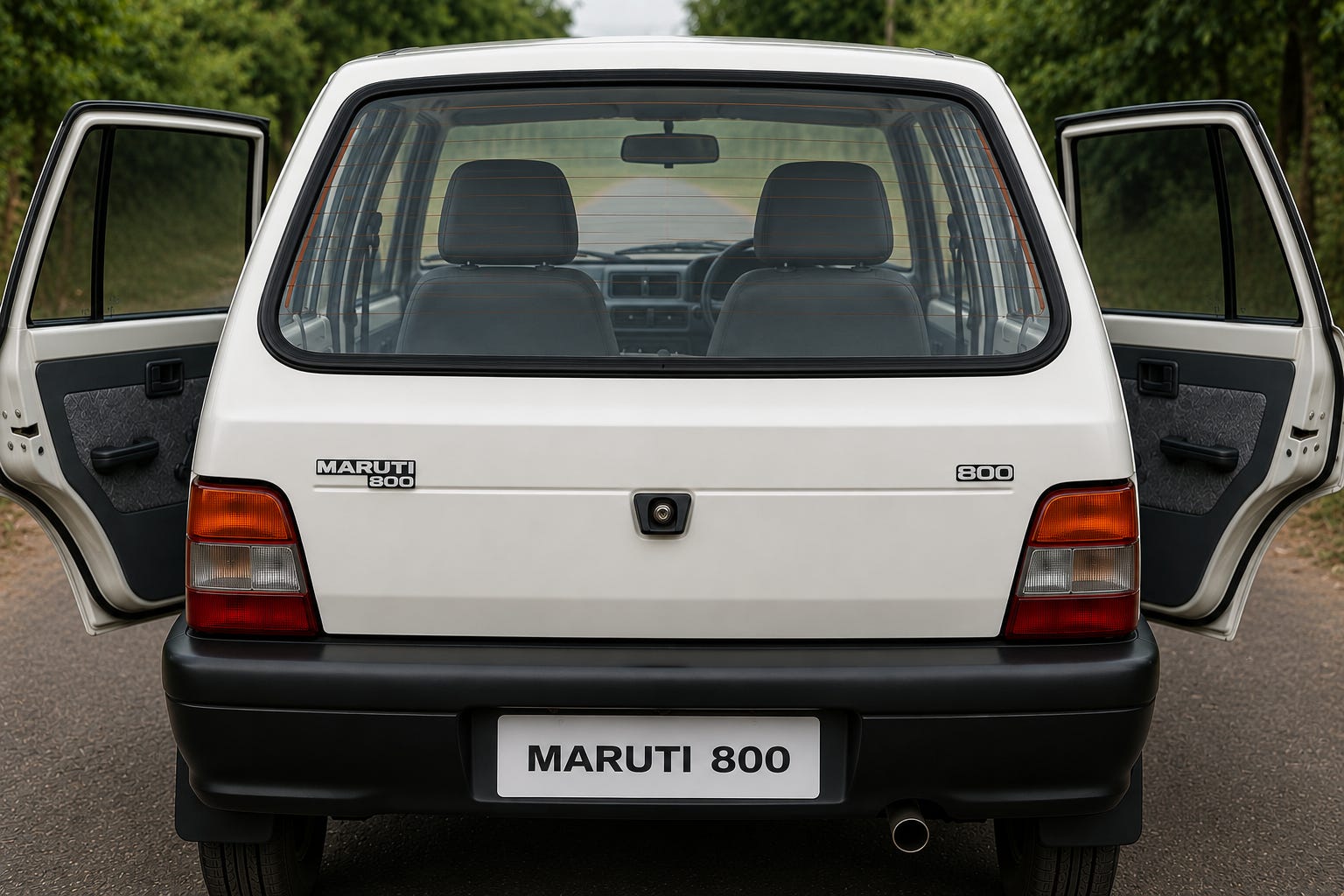
As Maruti’s sales increased, demand for glass rose automatically.
But simply inheriting a customer is not enough to build a lasting advantage. AIS turned it into one over the next 15 years.
In 1989, it set up a furnace to make tempered glass, which is used in side and rear windows because it is stronger than regular glass and breaks into small, less harmful pieces. Around the same time, AIS also started supplying Hindustan Motors and Premier Automobiles, which had lost ground to Maruti.
In 1992, AIS moved into laminated windshields. These use two layers of glass with a plastic layer in between, so they stay together even after impact. The company built a dedicated plant for this in 1993-94. Then, in 1996, new rules made laminated windshields almost compulsory.
AIS was already prepared. It expanded capacity to 750,000 laminated windshields a year while the market was still adjusting to the new rule. This shows a clear pattern: AIS invested ahead of regulation, before demand became certain.
It also got key certifications early. According to the company, AIS was the first Indian glass maker to receive QS-9000 and ISO-9002 certifications through Germany’s TUV Bayern Sachsen. By 1999, it was supplying Hyundai, Ford and Toyota.
How making 3,700 parts became an advantage
Here is what people often get wrong.
A supplier makes windshields for specific car models and sizes. A Baleno windshield cannot fit a Nexon.
AIS has more than 3,700 types of automotive glass.
This may seem like it reduces efficiency, but it actually helps the company benefit from scale.
The costly part is setting up the furnace, bending machines, laminating area and autoclave. Once these are in place, they can be used for many models. Usually, only the mould and cutting settings need to change.
Press bending delivers high-volume, precise glass but needs costly custom moulds. Gravity bending is cheaper, uses one mould per shape, and suits smaller runs and the aftermarket, though it may lack the volume and precision carmakers need.
AIS controls costs by building much of its equipment and tooling in-house, with teams for R&D, Production Technology and New Model. It says it designed all its laminated windshield and tempered glass lines, along with most tooling.
And there is evidence that AIS has been building this capability for years.
In November 2017, it signed an agreement to acquire Timex Group Precision Engineering, a tool room in Noida owned by American watchmaker Timex. The deal was completed through Scopfy Components, a joint venture between AIS, Padmini VNA Mechatronics and individual investors Kapil Kapoor and Rahul Mookerjee. The price was not disclosed, and Scopfy became an associate of AIS in FY18.
At first, a glass company buying a watchmaker’s tool room may sound unusual. But modern automotive glass is not always supplied as a bare sheet. AIS moulds PVC or polyurethane around the edges to create an integrated trim and may also add channels, holders, hinges and clamps. That requires injection moulding and high-precision tools.
Timex had originally built the tool room in 1992 to make plastic watch parts. It began commercial operations in 1998, became a standalone business in 2008 and eventually grew into one of India’s leading commercial tool rooms, making high-precision, multi-cavity injection moulds under ISO 9001 certification from TUV Nord.
AIS had already doubled its encapsulation capacity in FY16, two years before the acquisition. Autocar Professional described the Timex deal as part of AIS’s backward-integration plans.
The benefit shows up in speed. AIS can make a front-windshield prototype in around 50 days and a side-window sample in less than a month. In FY25 alone, its New Model team developed laminated door glass, an illuminated sunroof and a laminated sunroof.
A competitor can buy similar machines. But matching the tool rooms, engineering experience and ability to quickly develop thousands of different parts is much harder.
Over time, this advantage kept growing.
By FY26, AIS had crossed Rs 5,000 crore in revenue. The March 2026 quarter was its best ever, with sales rising 15.48% to Rs 1,325 crore and net profit jumping 43.36% to Rs 132.48 crore.
Switching Costs
The next barrier is not inside AIS’s factory. It is inside the automaker’s operation.
Being “designed into” a Maruti or Hyundai takes years of engineering, testing and approvals. Once AIS develops a windshield for a particular model, that part must still pass months of testing and approval before it can enter production.
Automakers follow strict standards like IATF 16949, APQP and PPAP. Suppliers must show they can make the same part consistently using the approved tools and process. Any change in materials, tools or methods may require fresh testing and approval.
For an existing supplier, getting approved for a new model can take months. For a new company, it’s much harder. They first have to get approved as a vendor, set up the right tools, and then repeat this process for every car model and every automaker. Replacing an existing supplier usually takes years, not months.
Glass is only a small part of a car’s total cost, so the savings from switching suppliers are not very big. But the risks are much higher. If glass supply is delayed, it can stop the entire production line. If there are defects, it can lead to complaints or even recalls. And if a new supplier struggles to ramp up production, it can delay a car launch.
That’s why automakers don’t switch suppliers easily. Once AIS is approved and consistently delivers on quality, cost and supply, there’s little reason to change unless there’s a serious problem or a clearly better option.
You can see this in the numbers. AIS is the only automotive glass supplier for Toyota Kirloskar in India, supplies more than 85% of Maruti Suzuki’s glass needs even after four decades, and has about a 65% share with Hyundai and Kia combined.
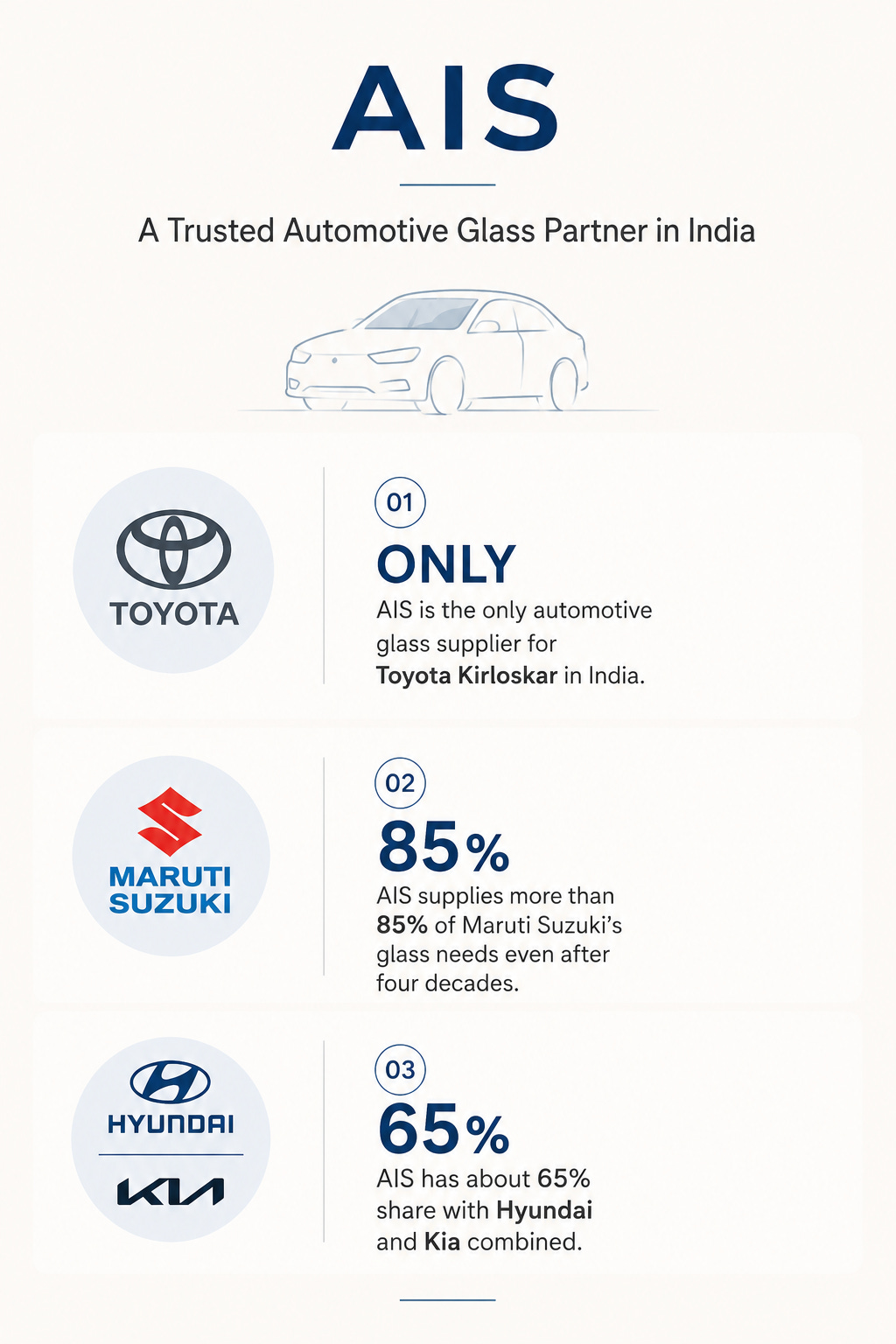
Price alone does not keep these relationships going.
The real reason is that a modern windshield is no longer just glass. It is now part of the car’s safety system. Cameras for features like lane keeping, automatic braking and collision alerts look through the windshield. It may also include rain sensors, heating wires, sound-reducing layers, head-up display areas and antenna prints. Even small changes in clarity, shape or camera position can affect how these systems work.
India is still at an early stage of this change. In the first half of 2025, only 8.3% of passenger vehicles had ADAS features. But this is growing fast. Level 2 systems increased by 70.8% to reach a 5.6% share, and the number of ADAS-equipped variants rose from 241 to 434 in just one year. In cars priced above Rs 20 lakh, adoption is already much higher: 43.6% for petrol and diesel vehicles and 88.2% for EVs.
Government rules are also pushing this trend. Bharat NCAP started in August 2023, and a stricter version is expected in October 2027. To get a five-star rating, cars will need higher safety scores: 70 points from 2027 and 80 points from 2029. Features like automatic braking, lane warning and driver alert systems are also being made compulsory, with most passenger vehicles expected to include them by 2028.
In the replacement market, basic windshields cost Rs 3,000–7,500, rising to Rs 10,500–19,500 for premium models.
For ADAS-equipped cars, recalibration adds Rs 2,000–4,500, making even minor damage a workshop job rather than a simple replacement.
Also, notice who handles this. AIS runs Windshield Experts, which has cashless tie-ups with insurers like ICICI Lombard, HDFC ERGO, Tata AIG and Bajaj Allianz. It replaces the glass, recalibrates the camera and handles the insurance claim. The same company that supplies the glass also manages the repair.
If so much care goes into one car, changing suppliers for a whole vehicle program becomes a much bigger and tougher decision.
AIS has also gone a step further than just making glass. It now attaches ADAS mounting brackets directly onto the windshield. So instead of buying just a piece of glass, the carmaker gets a ready-to-use, calibrated module. This makes it harder to switch to another supplier.
But there is one important thing to keep in mind.
AIS’s advantage is strongest after it has already been chosen to supply glass for a specific car model. Once a company wins that contract, it usually continues supplying for the entire life of that model.
But every time a new car model is launched, all suppliers have to compete again. They are judged on technology, quality, manufacturing capability and price. AIS does not win every time.
Its market share shows this. It was about 77.1% in 2017, a little over 74% in 2022, and around 72% by the end of FY24. The decline is small, but it shows that competition is gradually increasing.
So while AIS can keep supplying the models it already serves, it must keep winning new contracts to maintain or grow its market share.
Building a factory is not enough
A rival can build the plant. Building it profitably is the problem.
The first moat explains why AIS tends to retain a vehicle program once it wins one. This moat explains why so few companies try to build a nationwide OEM automotive glass business from scratch.
Glass manufacturing needs a lot of money to get started. Float glass plants run non-stop, use huge amounts of energy, and cost hundreds or even thousands of crores to build. Once a furnace is up and running, it’s not easy or cheap to shut it down, so companies have to keep it running at high capacity to make money.
The numbers give a sense of how big these investments are. Gold Plus planned to spend about Rs 542 crore on a single 700-tonne-a-day plant in Roorkee, with Rs 362 crore coming from debt. AIS spent around Rs 1,400 crore on its Soniyana plant in Rajasthan. Later, Gold Plus also planned to invest roughly Rs 2,400 crore to add new lines with about 1,900 tonnes of daily capacity.
There’s also no small way to get into this business. The smallest viable float glass plant in India produces around 550 to 600 tonnes a day. So there’s no “starter” option. A company either invests several hundred crores or doesn’t enter at all.
That makes it hard for new players to enter..
So a new supplier must spend hundreds of crores building the factory before it has guaranteed customers.
Now suppose the existing factories can already make all the glass the market needs. The new factory does not create new demand. It must take orders away from AIS or another supplier, usually by offering a lower price.
Existing suppliers then lower their prices to keep those customers. This creates a price war. At the same time, because the same demand is now divided among more factories, each factory produces less than its full capacity.
That is especially damaging in glass manufacturing because the factory has high fixed costs. The furnace, employees, energy and debt repayments still have to be paid even when production is low.
So the problem is not whether a competitor can build a factory. It is whether it can build one, win enough orders and operate it profitably.
India has already seen this happen.
Across FY24 and the first 10 months of FY25, domestic float glass manufacturers added roughly 3,200 tonnes of daily capacity. This increased national capacity by around 30% in just 18 months. Realisations fell sharply, and earnings weakened across the industry.
Gold Plus, India’s second-largest float glass manufacturer, was at the centre of this expansion. It commissioned two 800-tonne-per-day lines, one in June 2023 and another in June 2024. In February 2025, ICRA downgraded the company, citing lower earnings and weaker debt coverage. Its external debt stood at Rs 2,005.6 crore in October 2025, while debt-service coverage was projected at only 1.1 to 1.3 times for FY26.
It went through corporate debt restructuring starting in June 2011 and only came out of it in May 2016. Unlike many competitors, it doesn’t have a foreign technology partner and instead built its plants using equipment from Chinese and European suppliers.
So yes, the capacity was created. But the profits didn’t really follow.
Imports make things even tougher. India has anti-dumping duties on clear float glass coming from countries like Iran, Bangladesh, Thailand and Malaysia, along with BIS quality rules that act as another barrier.
Even then, imports from Malaysia still went up to about 361,000 tonnes in 2024, which is roughly 18% of the Indian market. Some of this glass was priced up to 40% cheaper than what local companies were selling. The DGTR pointed out that this kind of pricing hurt Indian manufacturers, leading to losses and higher inventory. In November 2025, it suggested extending these duties for another five years.
We’ve seen a similar story play out in other countries too. In Bangladesh, many float glass plants were planned when demand was expected to grow quickly.
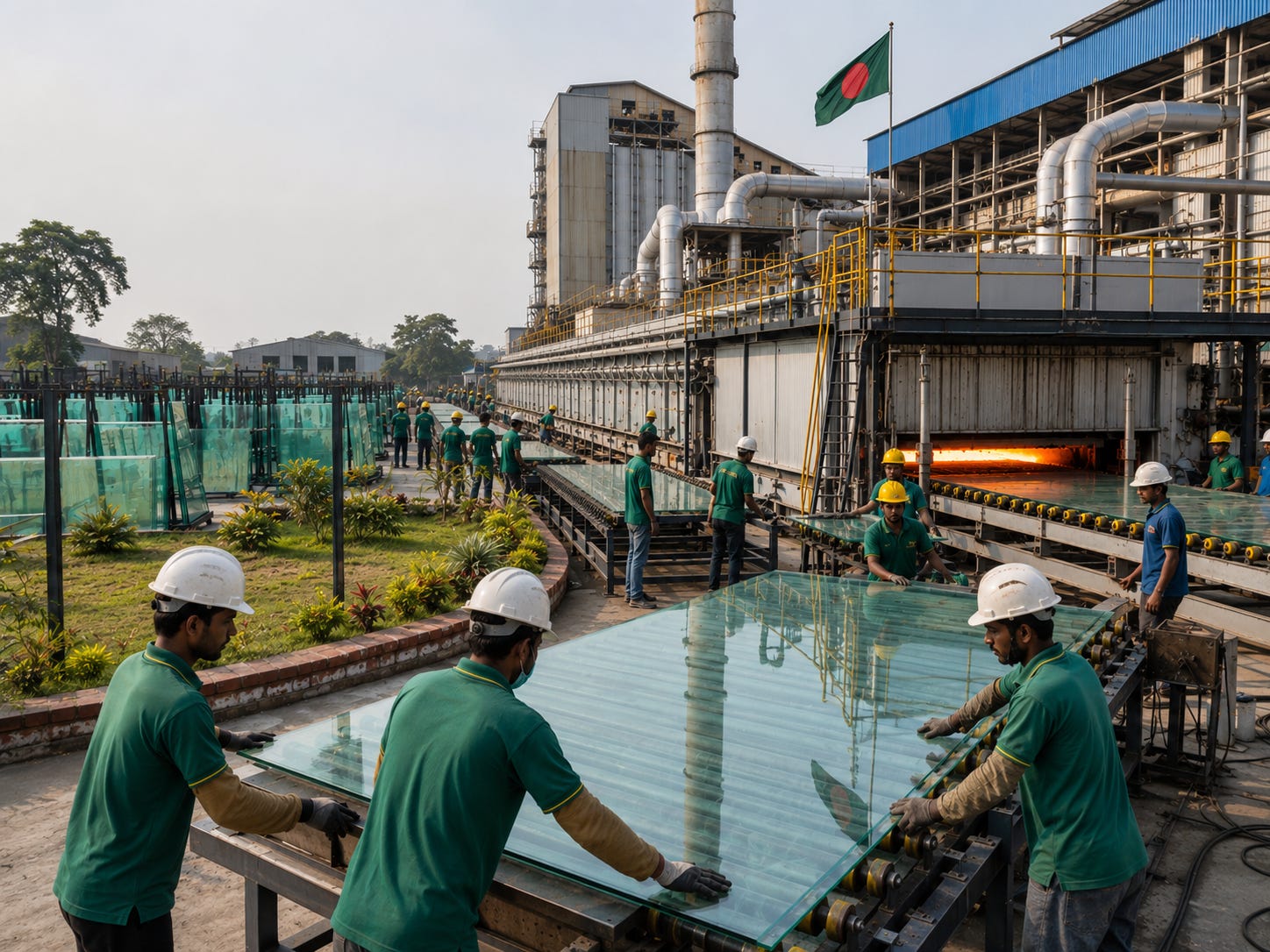
But demand didn’t keep up. The factories still came online, leading to too much supply, falling prices and tough competition, especially with cheaper imports coming in from nearby countries.
The extra glass had to be sold somewhere. This is one reason Bangladesh later came under India’s anti-dumping list.
Overall, this is how a typical commodity glass market works: it needs large investments, there is no easy way to start small, costs depend heavily on energy, and prices drop whenever new capacity is added.
The Indian OEM automotive glass market is quite different. Even after many years of growth in passenger vehicle sales, it is still controlled by a few established players instead of many small manufacturers.
The number of companies is small. In its anti-dumping filings, the DGTR listed only five float glass producers in India: Asahi India Glass, Gold Plus, Sisecam Flat Glass India, Saint-Gobain India and Gujarat Guardian.
The automotive glass segment is even more concentrated. AIS has about 72% share in the passenger vehicle OEM glass market.
Saint-Gobain Sekurit India shows why scale matters. It is the Indian arm of the world’s largest automotive glass group and has access to global technology and strong support from its parent company. Even so, in November 2015, it shut its Bhosari plant near Pune because it was no longer economically viable to run.
Today, the listed company runs a single plant at Chakan with about 99 employees and revenue of roughly Rs 243 crore.
It had better technology. It had a global parent. And still, it couldn’t make a small-scale operation work.
The clearest proof of this moat actually shows up in AIS’s own numbers.
In FY25, AIS had both automotive glass and float glass under the same management. Automotive glass sales grew 13.3% and delivered an EBIT margin of around 12%. Float glass, on the other hand, saw sales fall 12.1%, and margins slipped from 17% to 15% as too much capacity pushed prices down.
Same company. Same year. Same management.
But very different outcomes.
One segment is protected by customer approvals, specialised tooling and long-term relationships. The other is exposed to every new furnace that comes up in the market.
That difference is the moat, right there in the numbers.
That said, there’s an important limit. This moat mainly applies to OEM automotive glass. It doesn’t really extend to the broader glass industry, where AIS competes with several established players in float and architectural glass.
In fact, AIS’s FY25 float glass performance isn’t an exception. It actually shows exactly where the moat stops.
Location matters
AIS’s manufacturing network has taken four decades to build. A competitor cannot replicate it simply by opening one factory.
Automotive glass is bulky, fragile and time-sensitive. Car manufacturers operate on just-in-time schedules, so a windshield that arrives late or breaks in transit can disrupt the assembly line. An automaker is not simply buying glass. It is buying reliable, sequenced deliveries to a moving production line.
That makes location critical. Glass is heavy and relatively low in value for the space it occupies. According to AIS, freight can account for as much as 8% of the invoice value once a shipment travels beyond 1,000 km. On a component that is already a small part of a car’s cost, that can decide who wins the order.
Plants therefore have to sit close to automobile clusters, not wherever land is cheapest.
AIS has spent 40 years building exactly that network. It operates five laminated glass plants, four tempered glass plants and four assembly units, supported by eight offices. Its facilities follow India’s automotive map, with sites in Bawal, Roorkee, Chennai, Taloja, Patan and Soniyana.
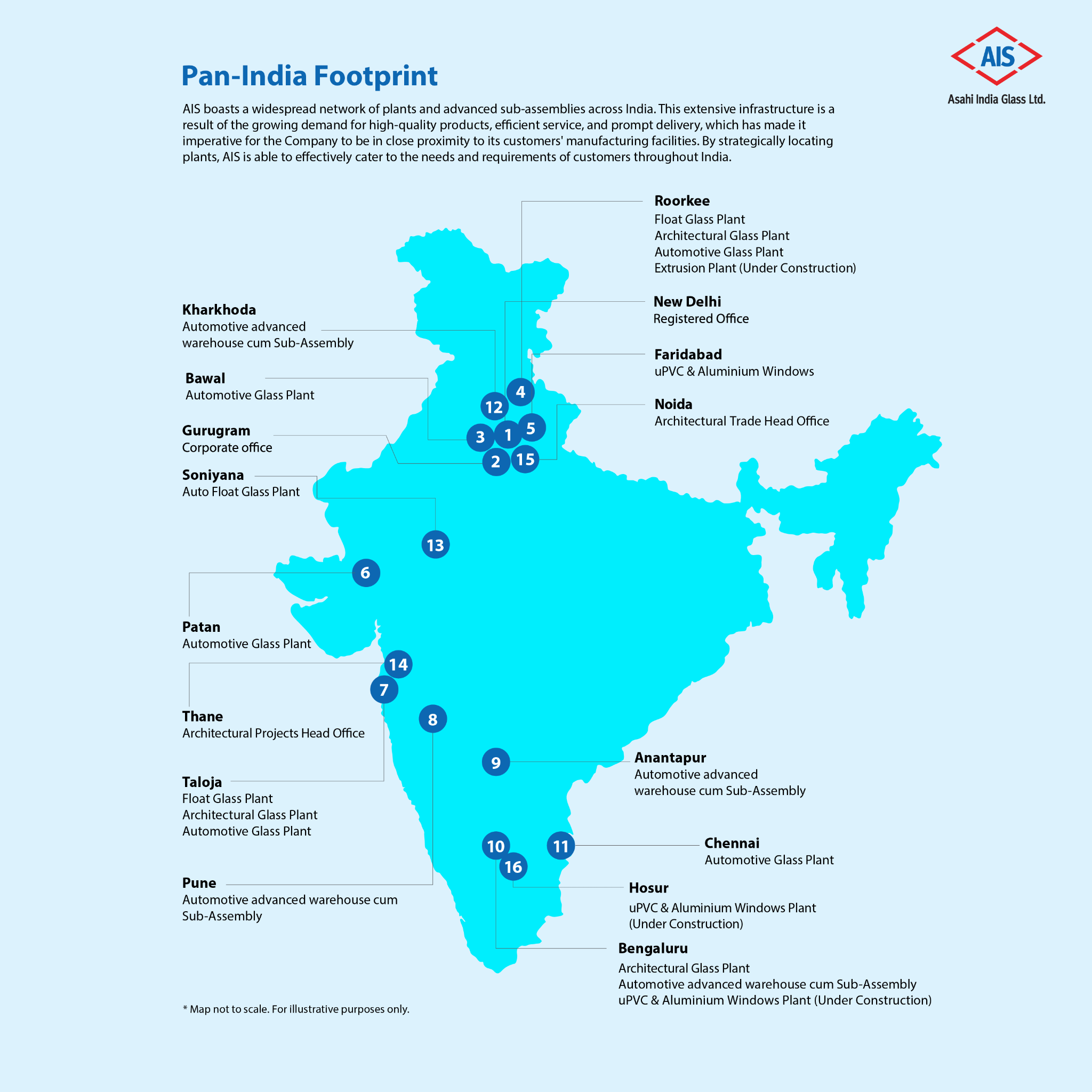
Source: Asahi India Glass
Bawal, its mother plant, alone produces 2.3 million laminated windshields and 3.1 million tempered car sets a year. More importantly, AIS expanded its network as its customers moved into new manufacturing clusters rather than waiting for demand to arrive later.
At first, this may look like a list of factories. It is actually a copy of the customer’s map.
Take Maruti Suzuki, AIS’s most important customer. Maruti now has annual capacity of 2.65 million vehicles across four plants. Gurugram can produce 0.5 million units, Manesar 0.9 million and Kharkhoda 0.5 million, all in Haryana. Hansalpur in Gujarat adds another 0.75 million.
That places 1.9 million units of Maruti’s capacity in Haryana and another 0.75 million in Gujarat.
AIS has Bawal in Haryana and Patan in Gujarat.
It is not just about better technology. It is really about being in the right place.
And not many companies are even close. India has only five float glass makers: AIS, Gold Plus, Sisecam Flat Glass India, Saint-Gobain India and Gujarat Guardian. Out of these, Gold Plus, Sisecam and Gujarat Guardian do not supply glass to car manufacturers.
HNG did enter float glass with its Halol plant, but its parent company went into insolvency in 2021. Fuyao, the world’s largest automotive glass company, has spent over $1.5 billion building plants in the US and has also set up in Vietnam. But it still does not have an automotive glass plant in India.
This also explains why imported glass has not been able to break into the OEM market. Imports may be cheaper, but they cannot match the speed, timing and reliability needed for just-in-time production. Imported glass is more common in the replacement market, where delays are acceptable, but not in car manufacturing, where timing is critical.
Even if glass is cheaper, car companies usually prefer to buy from a supplier that is located nearby.
This advantage is becoming even stronger. Maruti’s new Kharkhoda plant is very large, spread over 800 acres, with an investment of about Rs 35,000 crore. It can currently produce 0.5 million vehicles a year and may increase to one million.
The plant also has a supplier park, where key suppliers are expected to set up their operations inside or very close to the factory itself.
So, a new competitor cannot succeed with just one factory. It would need multiple factories in different regions like Haryana, Gujarat, Pune and Chennai. It may also need to set up units inside these supplier parks.
Each factory only makes money if it has enough steady orders.
This is why being close to customers is such a strong advantage for AIS.
Over four decades, AIS has assembled a combination of customer relationships, manufacturing capability, engineering expertise and supply-chain infrastructure that would take significant time, capital and execution to replicate.
That, more than any single factory or technology, is what defines its moat.
What the moat cannot do
AIS’s moat helps retain customers and protect market share, but it does not give it full pricing power.
Its largest customers are much bigger and negotiate hard. Maruti Suzuki, also a promoter, helped AIS grow but limits pricing flexibility. This dependence applies across its customer base.
AIS’s strong position, being a sole or major supplier, also means reliance on a few carmakers. Any drop in their production or shift in suppliers can quickly affect AIS.
Many factors are outside its control, such as car demand, market share shifts and plant locations. The moat protects share, not industry growth.
AIS’s early advantage came from Maruti’s demand, AGC’s technology and local execution. This starting position is hard to replicate but was not built through open competition.
The product is also evolving. Windshields now integrate sensors and electronics, and future value may lie more in software and systems than glass itself.
AIS’s moat is real but it mainly protects volumes, not pricing.
It keeps competitors out, but not customer pressure.
Its strength will depend on how well it adapts to changing automotive glass technology.
make sense!! well comprehended!!,keep it up.
Interesting . looking forward for similar analysis of other companies too . Keep up the great work .