

In India, when people think of adhesive glue, they usually think of Fevicol, the well-known brand from Pidilite Industries.
Over more than six decades, Pidilite has quietly built up a dominant 70% market share in India’s branded adhesives market, outpacing both domestic and multinational competitors.
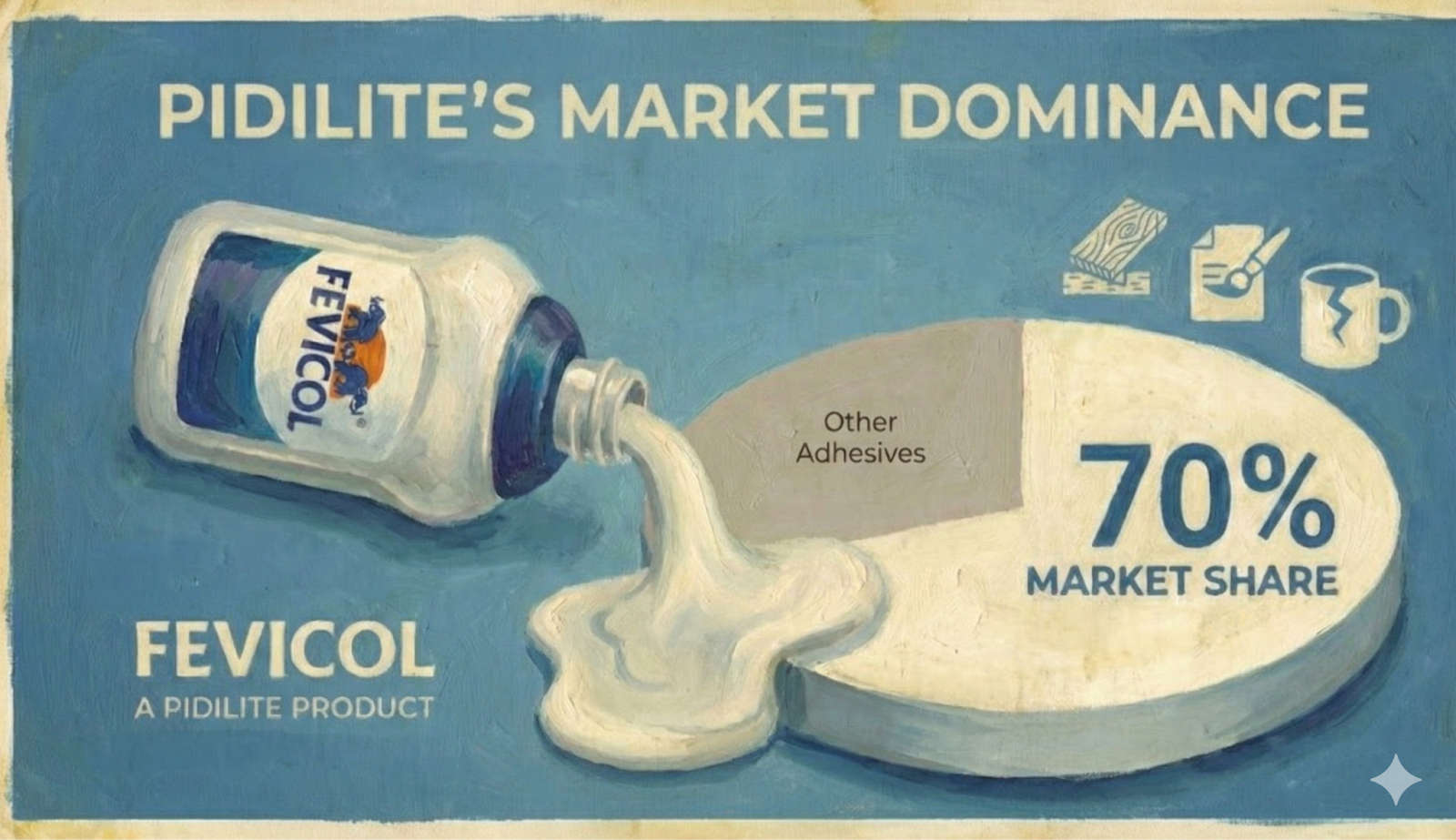
Because of this strong and lasting lead, Pidilite is often seen as a clear example of an Indian company with a wide economic moat – a dominant market leader in its segment.
This dominance did not happen overnight.
It is the result of long-term strategic choices, from product innovation and deep distribution to brilliant marketing, that together form a formidable moat around Pidilite’s core business.
This report explores how Pidilite started building its moat, why these efforts worked in its favour, and why competitors have struggled to breach its “invisible wall” of competitive advantage.
How the Moat Started
Pidilite started in 1959 when its founder, Balvant Parekh, wanted to make a better glue for carpenters.
At that time, Indian carpenters mostly used traditional animal-based glue. This glue was messy and had to be boiled before use, and its quality wasn’t reliable.
Parekh introduced Fevicol, a ready-to-use synthetic adhesive. Carpenters didn’t need to heat it or prepare it. It was clean and easy and created a stronger bond. This simple innovation solved a big problem and saved carpenters a lot of time.
But the secret behind this company was how Pidilite sold Fevicol.
Adhesives are a carpenter-decision product and not a consumer product.
This is the single most important point. Consumers don’t choose the adhesive. Carpenters do.
So the carpenter controls demand, not the homeowner. That means the brand must win the carpenter, not the customer.
And Pidilite did exactly that.
Instead of pushing it through wholesalers like other companies, Parekh decided to directly reach carpenters—the people who actually used the glue.
He and his team met them, gave free samples, showed demos at worksites, and built personal relationships.
This carpenter-driven approach has been a vital part of Fevicol’s success and helped it build this invisible wall which everyone has been trying very hard to crack.
Carpenter-Driven Demand (Not a Consumer Choice)
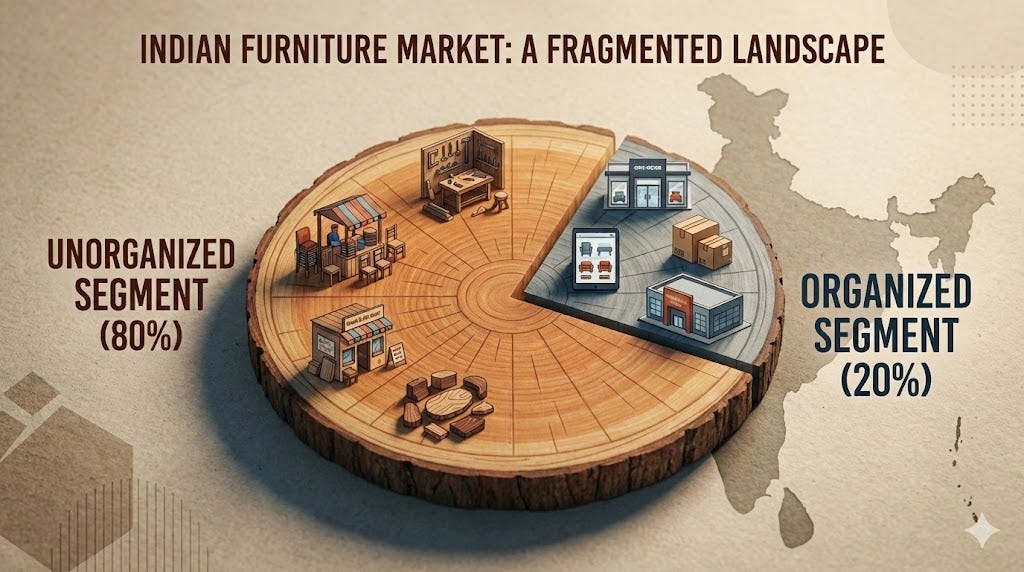
In India, most furniture is made in the unorganised market. And since about 80% of India’s furniture market is unorganised, carpenters play an extremely influential role.
To win their trust, Pidilite supported them in many ways:
It created the Fevicol Furniture Book, a design guide for carpenters.
It gave out free measurement booklets to help them with planning and work.
It regularly trained and helped carpenters through various programs.
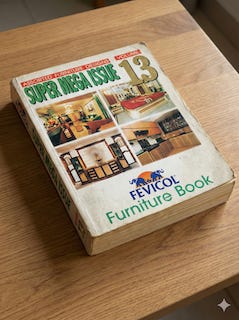
Because of these efforts, carpenters became loyal to Fevicol and often recommended it to customers. Their recommendations increase demand at shops. This encourages retailers to keep more Fevicol products, which makes them even more widely available.
This becomes a self-reinforcing cycle.
From early on, the company ran workshops, demos, and training to teach carpenters how to use Fevicol and why it’s better.
Over the years, Pidilite even built a carpenter loyalty program – the Fevicol Champions’ Club (FCC) – as a community platform for carpenters to network, upgrade skills, and be rewarded for their loyalty.
Such initiatives have forged lifelong loyalty among carpenters, who often insist to customers that they only prefer Fevicol, turning these tradesmen into steadfast brand ambassadors.
No rival has matched the scale or effectiveness with the carpenter ecosystem. This was ecosystem capture.
Adhesives are a Tiny Fraction of Project Cost
In any carpentry or interior project, the cost of the adhesive is extremely small. For example, in a Rs 1.5 lakh wardrobe, the glue might cost only Rs 500 to Rs 1,500 — barely 1–2% of the total project cost.
But that tiny 2% is what holds the entire 98% together. If the glue fails, the whole installation fails.
Because adhesives are a very small part of the total furniture or interior job cost but a critical structural link, carpenters have absolutely no reason to experiment with unknown or cheaper adhesive brands. Saving here is meaningless compared to the risk of damaging the furniture, losing the client’s trust, or having to redo the work for free.
Pidilite understood this structural reality and built its brand and distribution.
This creates another powerful moat. A competitor may offer a lower price, but it doesn’t matter; carpenters will still avoid the risk.
Why gamble their workmanship and reputation for a small saving?
In reality, no price-based competition can break Fevicol’s hold, because adhesives are a low-cost but high-consequence material. That dynamic gives Fevicol a big advantage.
Brand Building and Marketing
Pidilite’s marketing advantage comes from one big strategic insight: don’t just sell glue, but build a brand people emotionally connect with.
During the 1980s and 1990s, Fevicol was already the carpenter’s favorite, but Pidilite wanted everyone in India to recognise and trust it.
They partnered with Ogilvy & Mather in the late 1990s; the company created funny, memorable ads that carried one simple message: Fevicol makes a bond that won’t break. These ads, including the iconic overcrowded bus commercial, became part of everyday culture. People began using “Fevicol ka mazboot jod” even in casual conversation.
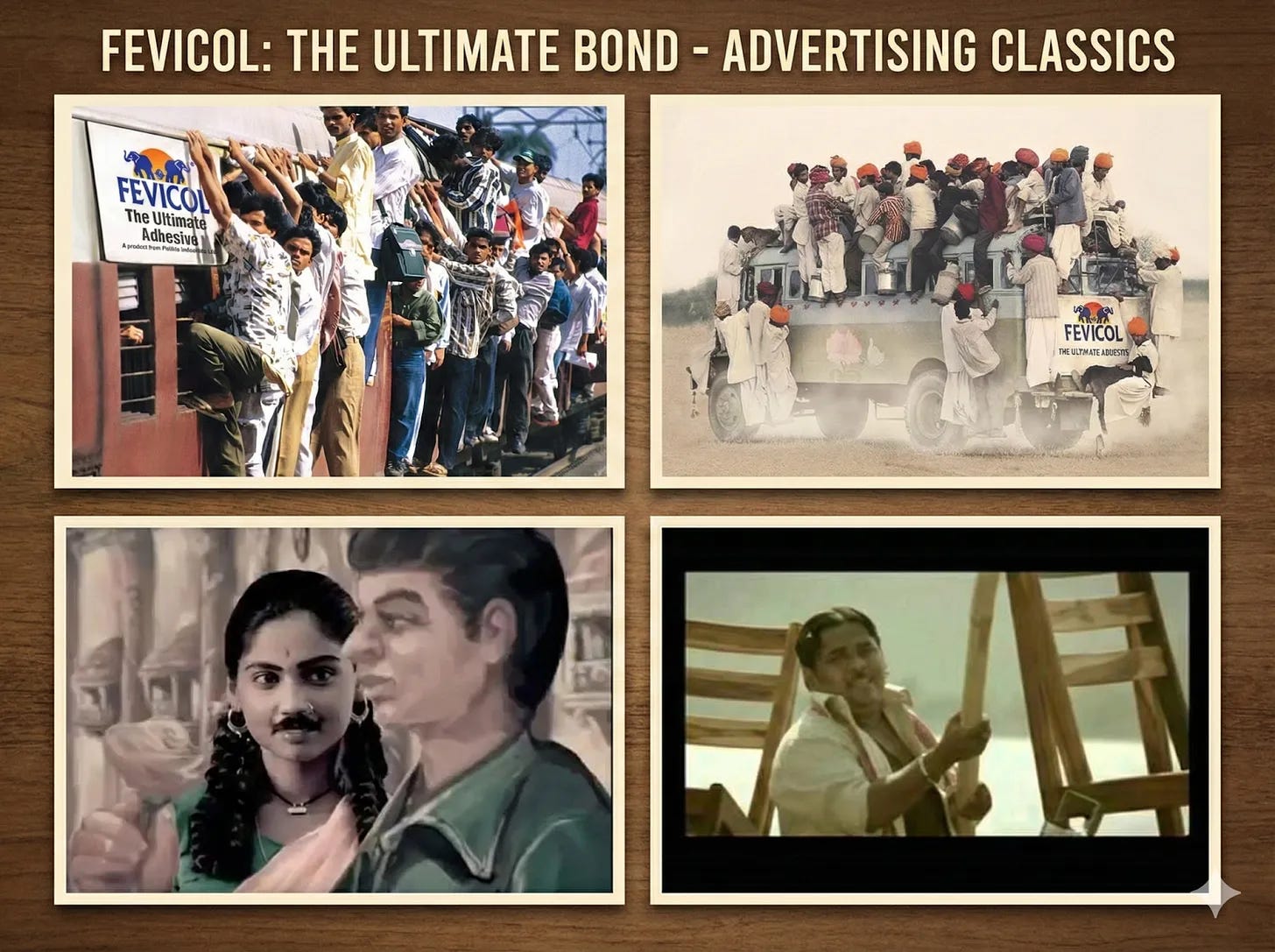
Source: Pidilite
By the 2000s, Fevicol wasn’t just a glue brand. It became a synonym for glue.
This brand strength became a powerful moat.
When a brand becomes part of pop culture, rivals can’t easily displace it, even if they offer similar or cheaper products. Consumers naturally trust Fevicol, and carpenters continue recommending it because of decades of habit and familiarity. Retailers also prefer stocking it because people ask for it by name.
This creates a self-reinforcing loop:
strong brand
high demand
widespread availability
even stronger brand.
Strategically, this moat gave Pidilite huge advantages.
First, it allowed the company to charge premium prices without losing customers, because trust and familiarity matter more than minor price differences. Second, it made it easier for Pidilite to launch new products like Fevikwik, Dr. Fixit, or Fevicol Marine, as the brand’s reputation automatically carried over. And third, it created massive entry barriers.
Competitors would need to spend years building distribution, marketing, and trust before they could meaningfully challenge Fevicol’s dominance.
In essence, Fevicol’s marketing didn’t just promote a product; it shaped consumer behaviour.
It locked in mindshare so deeply that “glue = Fevicol” became India’s default way of looking at a glue.
Product Line Expansion and Diversification
Even though Fevicol remained Pidilite’s star product, the company did not rely on a single category.
Over the years, it expanded into related product lines and often bought the leading brands in each segment. This approach made the moat even wider. A competitor would no longer be competing with just Fevicol, but with an entire portfolio of strong, well-known brands.
A good early example is the sealants category. In the late 1990s, Pidilite sold a product called Feviseal, but it wasn’t a number one choice in the market.
The market leader was M-Seal, a very popular epoxy compound.
Instead of fighting an expensive, uncertain battle, Pidilite acquired the adhesives and sealants business of Mahindra Engineering in 2000s, which owned M-Seal and Mr. Fixit. At that time, M-Seal controlled about 60% of the sealants market, so the acquisition instantly made Pidilite the leader.
Pidilite then rebranded Mr. Fixit as Dr. Fixit, created a friendly mascot, and launched focused campaigns. Over time, Dr. Fixit became India’s most recognised brand for waterproofing.
Pidilite repeated this strategy across other niches. It bought Ranipal in the fabric-care space and Steelgrip in the electrical tape segment, both of which were already leading brands.
By absorbing these players into its portfolio, Pidilite ensured it held the top spot in every category it entered. In 2020, it acquired the Indian business of Huntsman Corporation, the maker of Araldite, a globally respected epoxy adhesive. This not only strengthened Pidilite’s product range but also prevented a strong global competitor from growing too large in India.
Along with acquisitions, Pidilite continued to build new products on its own. It introduced solutions like Fevicol Marine for water-resistant bonding and Fevikwik for quick repairs. By the mid-2020s, the company had more than 1,300 SKUs across 25+ brands, sealants, construction chemicals, and arts and crafts
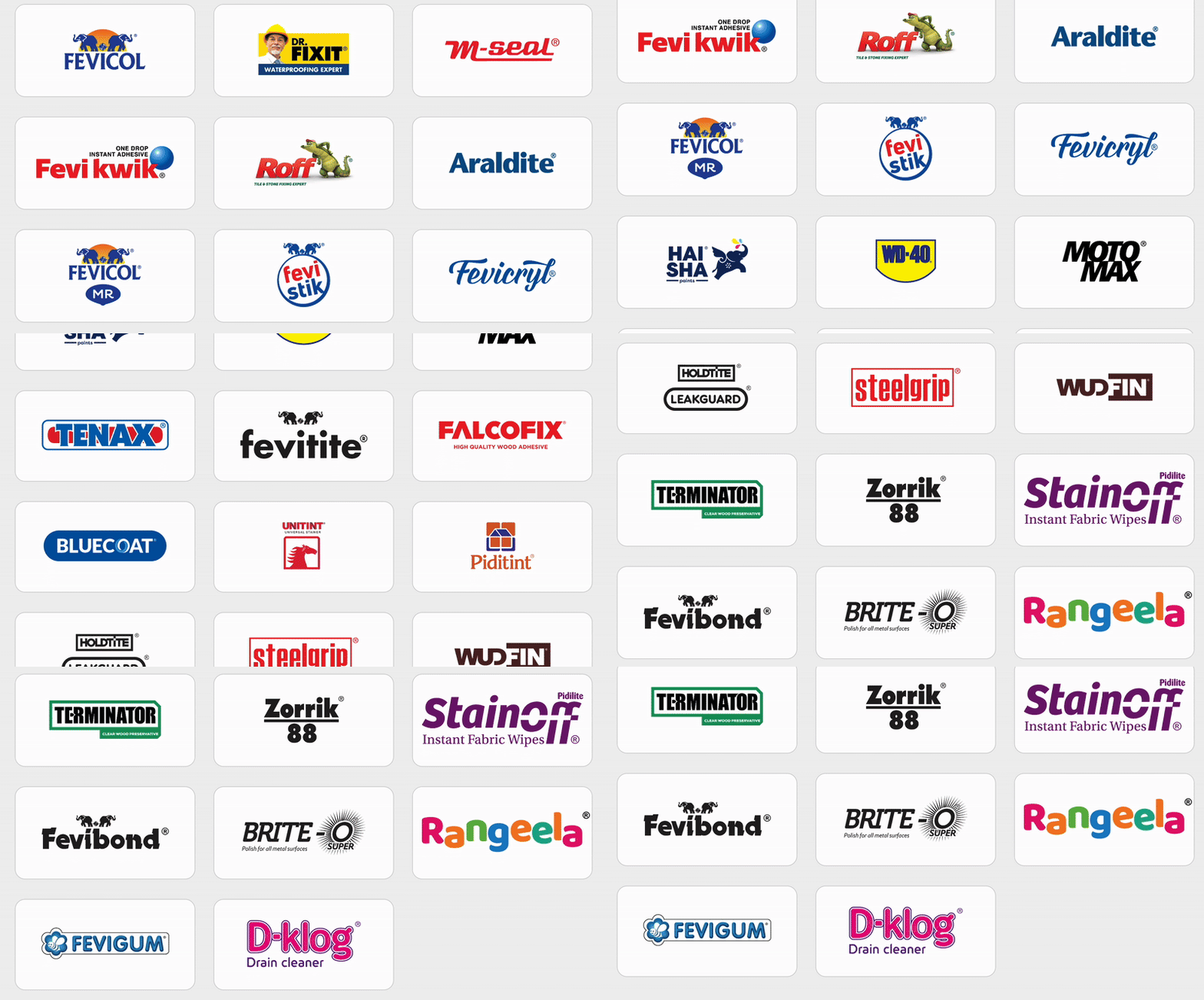
Around 82% of its revenue now comes from its Branded Consumer and Bazaar segment, which includes Fevicol, Fevikwik, Dr. Fixit, Roff and Araldite, while the remaining revenue comes from industrial products such as resins and polymers.
This wide and well-balanced portfolio makes Pidilite’s moat even stronger.
Even if a competitor performs well in one category, Pidilite’s extensive ecosystem of trusted products keeps users within its fold. Competitors are not battling one brand; they are competing with an entire network of solutions that customers depend on.
An Enduring Advantage
Pidilite and Fevicol have achieved something very rare in business: they are so deeply part of the market that using any brand other than Fevicol almost feels unnatural.
The real strength of Pidilite’s moat isn’t technology or patents. It is the relationships the company has built over decades with carpenters, the people who actually use the product. By training them, supporting their work, staying in touch, and helping them grow their skills, Pidilite slowly built an invisible wall that is very hard for anyone else to cross.
Unless a competitor can build the same deep relationships with carpenters and contractors, or unless the furniture industry changes dramatically, Pidilite’s moat will remain strong.
In simple terms, Pidilite didn’t just sell glue — it built a community around it. And that community is what keeps the company at the top.
Article really makes to know how businesses are built, thanks for the presentation
Love reading case studies... especially of marketing, branding, advertising world.....loved reading this....