

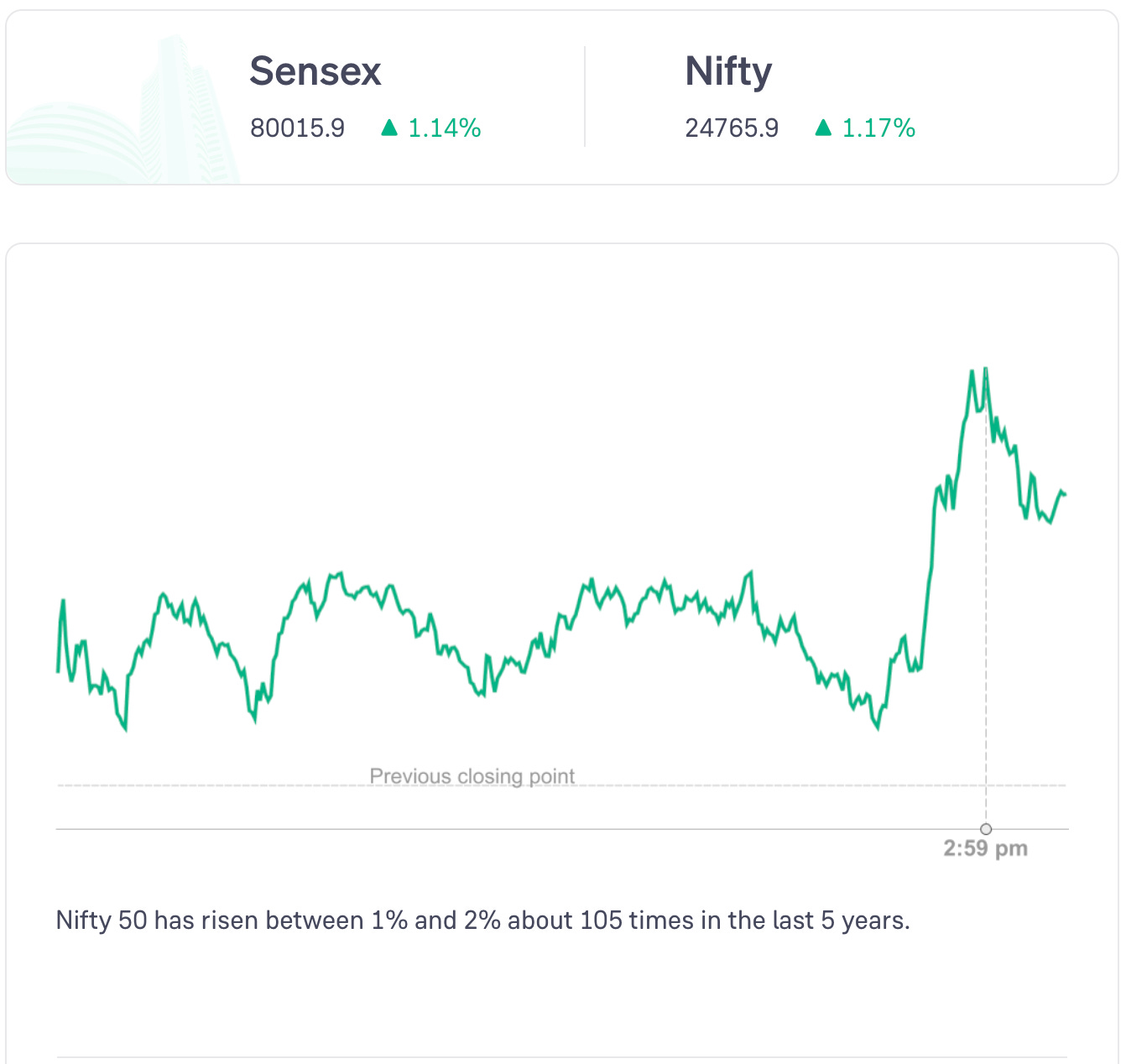
Markets opened above yesterday’s closing point.
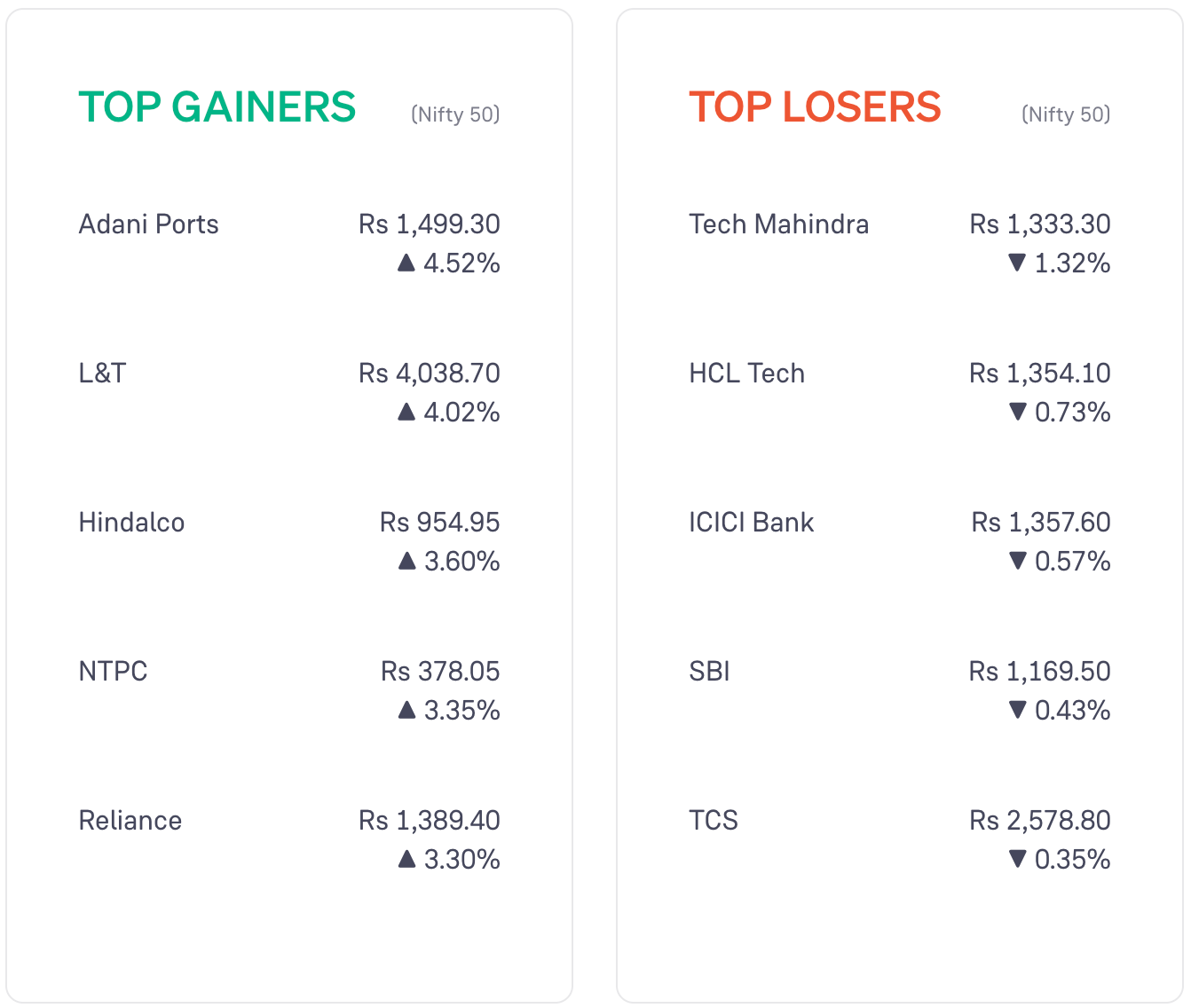
All sectors’ stocks rose today, except for the IT stocks. Metal stocks and consumer durables stocks rose the most.
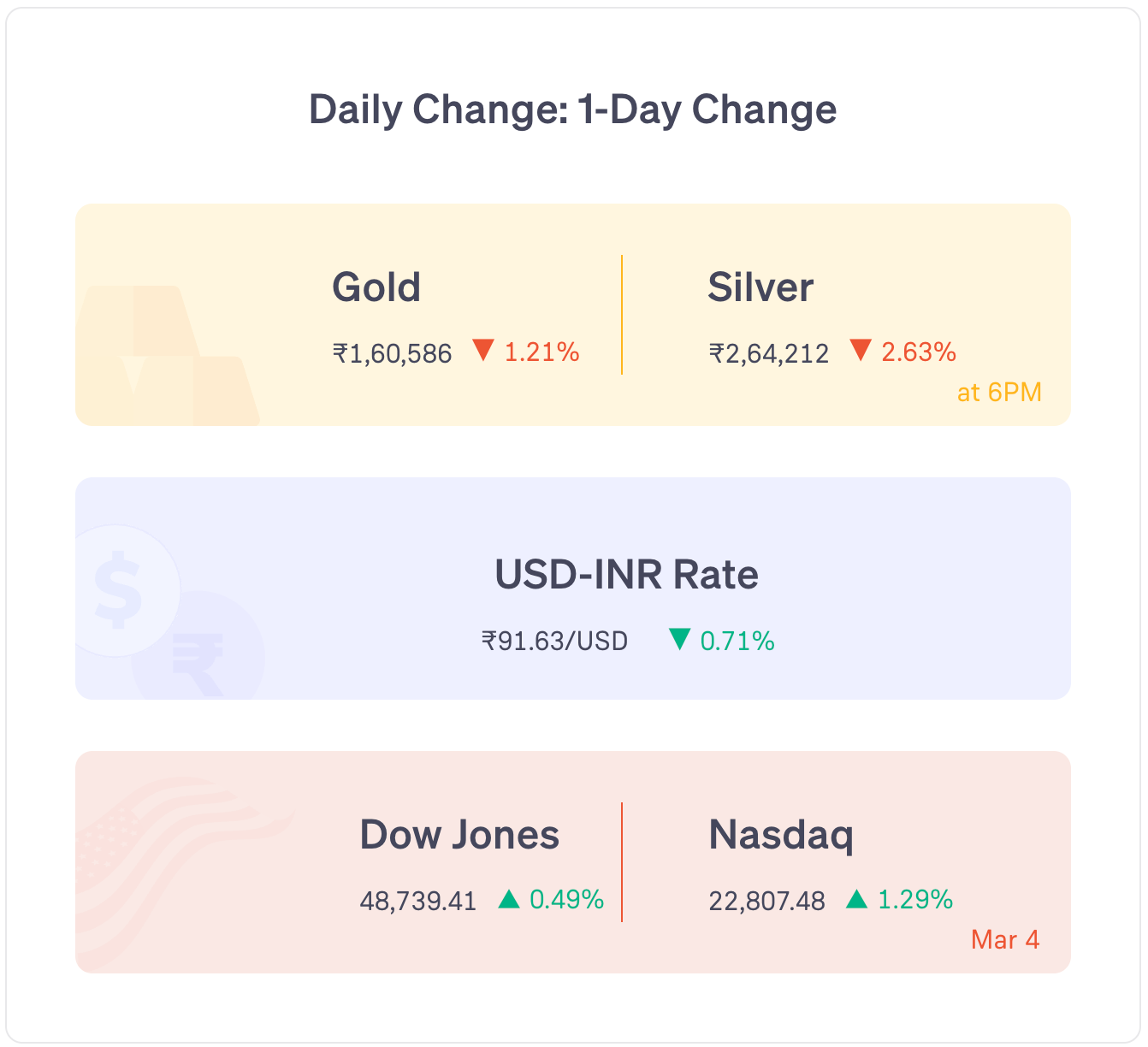
Global markets: US markets and Asian markets rose. Most European markets fell (as of 6 pm IST).
News
India and Finland signed MoUs on migration and mobility, environmental cooperation, and statistics. The two countries also agreed to expand collaboration in trade and technology.
Sedemac Mechatronics IPO has been subscribed 0.46 times. Retail subscription: 0.09 times. IPO closes tomorrow (6 March).
Omnitech Engineering IPO listed on the stock exchanges at a discount of 11.01% over the issue price and closed 9.72% down at the end of the day.
Stocks Updates
Bank of Baroda: allotted Rs 10,000 crore, having 7.10% interest rate, long-term green infrastructure bonds.
Mazagon Dock: the exchanges have sought clarification on a media report of a Rs 99,000 crore defence deal.
Hindustan Zinc: signed an MoU with Virginia Tech to advance research on improving silver recovery and process efficiency at its lead-zinc concentrators.
SBI Life: company’s FY22 tax demand was reduced from Rs 5,317 crore to Rs 471 crore after rectification, and it has filed an appeal.
ICICI Lombard: acquired Rs 40 crore worth of Reliance Industries shares, raising its stake to 0.03%.
Hindustan Unilever: completed the sale of its 19.8% stake in Nutritionalab for around Rs 307 crore.
Word of the Day
Memorandum of Understanding (MoU)
It is an agreement between two or more parties that shows their intention to work together
It outlines the basic terms, responsibilities, and goals of the partnership.
Generally, an MoU is not a legally binding contract.
MoUs are commonly signed between governments, companies, or institutions before a formal contract is finalized.
6 Day Course
Theme: currency
Day 4: Thursday
We all know that different currencies are used in different countries. We also know that different countries trade with each other.
So, they must use each other’s currencies.
This is where the exchange rate matters.
Exchange rates tell us how two currencies interact with each other. If you have Rs 10,000, how many US dollars can you get?
The exchange rate can be fixed — where a certain value of one currency always translates to a certain value of another currency.
The other kind is the floating exchange rate. In this, the exchange rate is decided by market forces.
Which means, the demand and supply of the two currencies decides the exchange rate, much like a share’s price.
In this case, many traders try to make a profit by betting in favour of or against different currencies. This is called forex trading.
Featured Question
Q. “Indian Rupees is a Fiat Currency or is backed by any commodity? Why its value is mostly compared to the US dollars? And how US dollars impact Indian Rupees?”
Yes, the Indian Rupee is a fiat currency.
Most major currencies in the world today are fiat currencies.
Example: US dollar, British pound, Japanese Yen, Euro, etc.
These currencies are backed by the country itself and not by a commodity.
India’s currency (INR) is mostly compared against the US dollar. This is because the US dollar is the reserve currency of the world.
Which means, most international trade happens in US dollar. So even if you want to trade with another country, the trade takes place via US dollars.
An example of this is buying crude oil. When India buys crude oil, we often pay in US dollars even though the country we’re buying the oil from is not the US.
The US dollar has an impact on the Indian Rupee.
Since the exchange rate between the US dollar and the Indian Rupee is floating, the exchange rate can change from time to time.
When people take out money from India, they sell Indian Rupees and buy US dollars.
This causes the price of Rupee to fall while increasing the price of the US dollar.
Did you like this edition?
Leave a feedback here!
Liked this edition of Groww digest 💯!! It tells the basic concepts of economics. Would Love to Read and understand More such concepts of economics.