

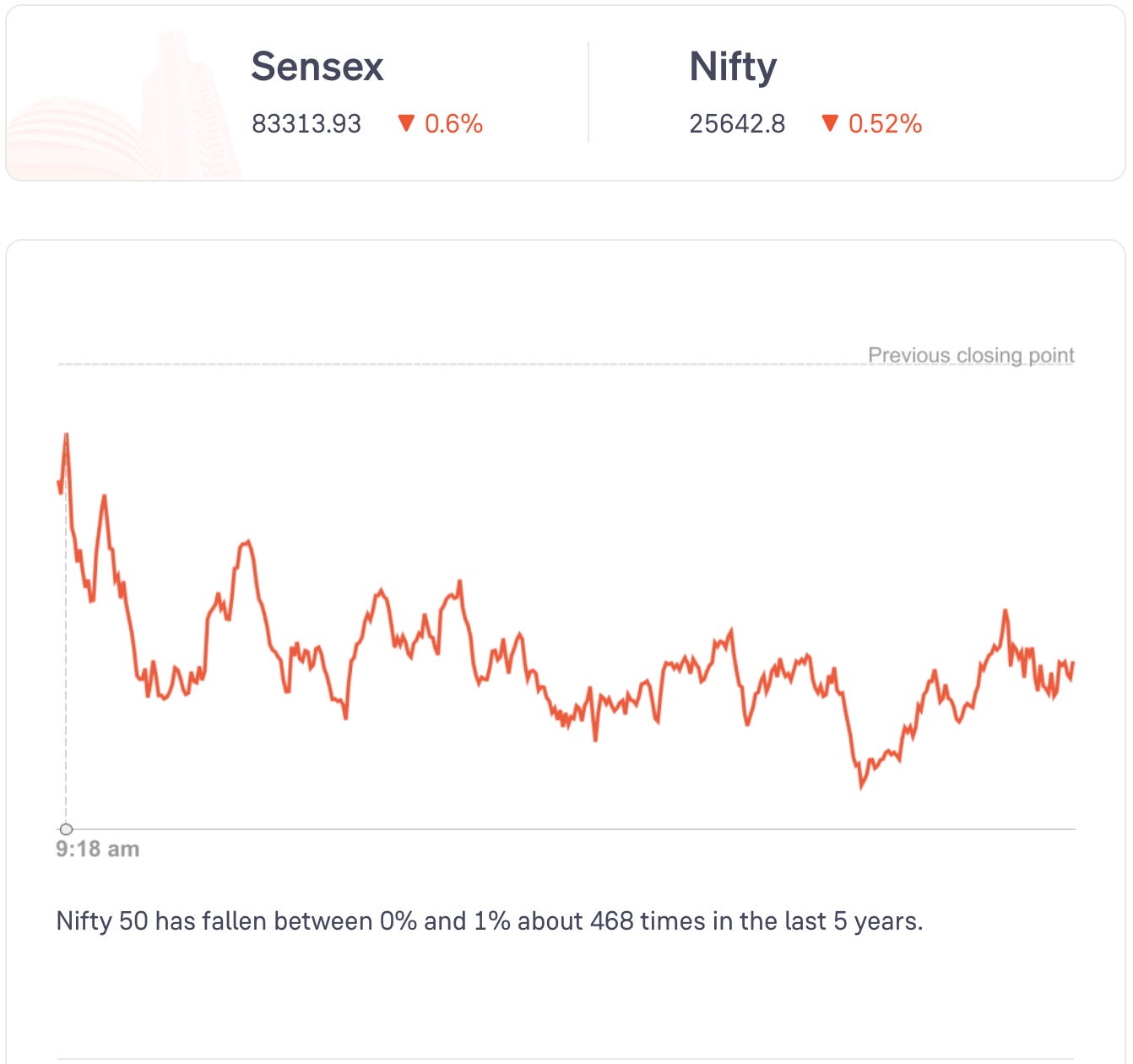
Markets opened below yesterday’s closing point.
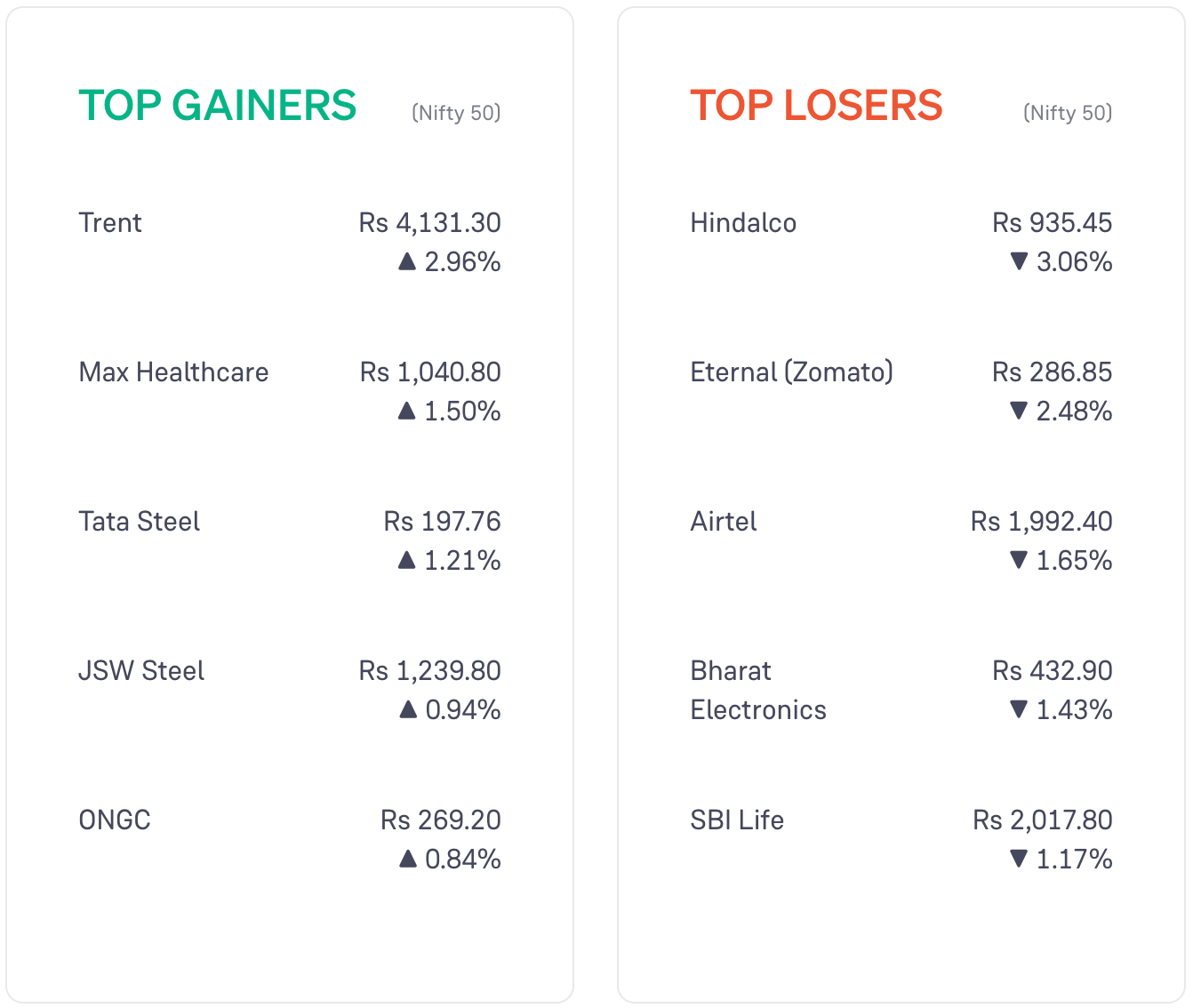
All sectors’ stocks fell today except for PSU bank stocks and healthcare stocks. Metal stocks and consumer durables stocks fell the most.
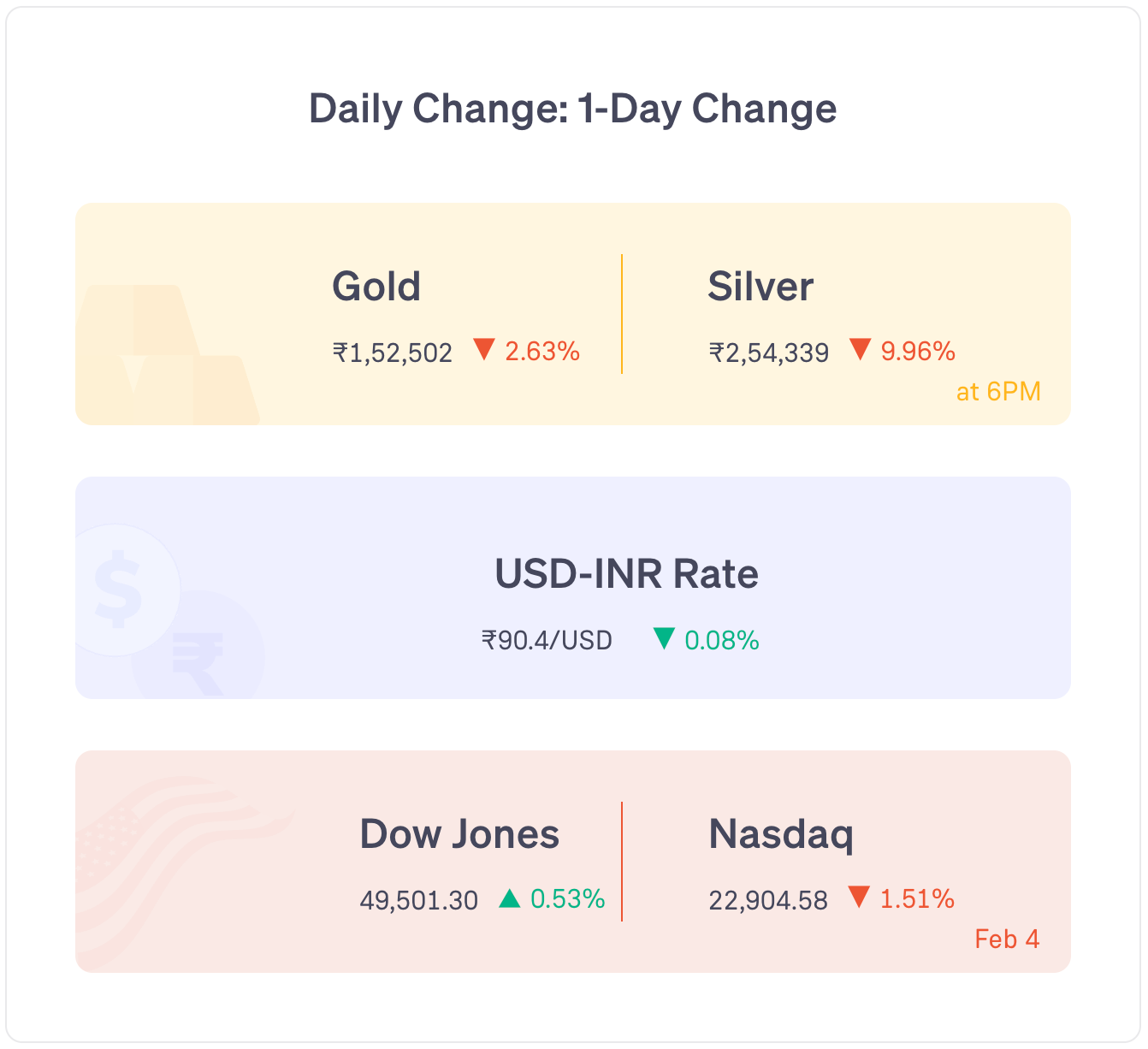
Global markets: US markets and most Asian markets fell. European markets fell (as of 6 pm IST).
News
The Bank of England kept their benchmark rate unchanged at 3.75%.
India and the US are expected to sign a joint statement on their trade deal within 4-5 and a formal legal agreement is likely by mid-March 2026: Commerce and Industry Minister
SEBI has relaxed the OTR (order-to-trade) ratio rules for algorithmic trading in equity options. Orders within a range of 40% of the last traded price or Rs 20 won’t count toward penalties. Market‑makers’ algo orders are also exempt from the penalties.
Stocks Updates
Indian Oil: net profit rose over 500% year-on-year to Rs 13,007 crore in the Oct-Dec quarter.
UltraTech: commissioned 2.7 mtpa grinding capacity at its Aligarh unit in Uttar Pradesh.
InterGlobe (IndiGo): clarified that the CCI has ordered an investigation into alleged seat shortages, which the airline is reviewing.
Airtel: net profit fell 55% year-on-year to Rs 6,631 crore in the Oct-Dec quarter.
LIC: net profit rose 17% year-on-year to Rs 12,930 crore in the Oct-Dec quarter.
Tata Motors Passenger: reported net loss of Rs 3,486 crore in the Oct-Dec quarter (vs profit of Rs 5,406 crore last year). The company faced a cyber attack on its Jaguar Land Rover business which led to substantial losses in the last quarter.
Power Finance Corp: net profit rose 8% year-on-year to Rs 6,292 crore in the Oct-Dec quarter. Dividend declared: Rs 4 per share. Record date: 20 Feb.
Max Healthcare: net profit rose 26% year-on-year to Rs 301 crore in the Oct-Dec quarter.
Mazagon Dock: net profit rose 9% year-on-year to Rs 880 crore in the Oct-Dec quarter. Dividend declared: Rs 7.5 per share. Record date: 13 Feb.
Hitachi Energy: net profit rose 90% year-on-year to Rs 261 crore in the Oct-Dec quarter.
Word of the Day
Anti-dumping Duty
It is a tax imposed to protect domestic industries from unfair competition
A government does this when foreign companies sell products at a price that is lower than the one in their home market (which is called dumping).
Dumping helps foreign companies undercut local prices and gain market share.
Anti-dumping duty aims to raise import prices back to fair levels to protect local businesses.
6 Day Course
Theme: common ways to cook books
Day 4: Thursday
Many times, companies try to move the risks and negative parts of their business outside.
This can happen in different ways such that it does not immediately appear on the balance sheets of a company.
Setting up subsidiaries and separate legal entities is one way to do so.
Now, there are rules and regulations that require disclosures even from subsidiaries but still, there can be loopholes in these rules that ill-intended companies take advantage of.
Another way to justify poor earnings is to show earnings adjusting for certain metrics.
This way, companies use “one-time” factors to explain losses the reasoning being that if it were not for that rare event, the company would be in profit.
If a company remains in loss year after year, the chances are that the one-time factor is not a rare event but actually a part of regular operations of the company.
Featured Question
Q. “Is SIP the best option for lower risk appetite or mutual funds and why?”
It really depends on the type of mutual fund.
SIP is only a way of investing. You invest on the same date every month.
But where you invest your money is what matters more.
By their nature, equity mutual funds are riskier than debt mutual funds.
A Recurring Deposit (RD) is low risk too vs an equity fund.
Investing through the SIP mode rather than investing lumpsum (all at once) does give you the benefit of ‘Rupee Cost Averaging’ - reducing the risk of you investing your money at the peak of the markets.
Because the investments are spaced out, sometimes you will invest when the prices are low and sometimes when prices are high - averaging your buying price.
Did you like this edition?
Leave a feedback here!