

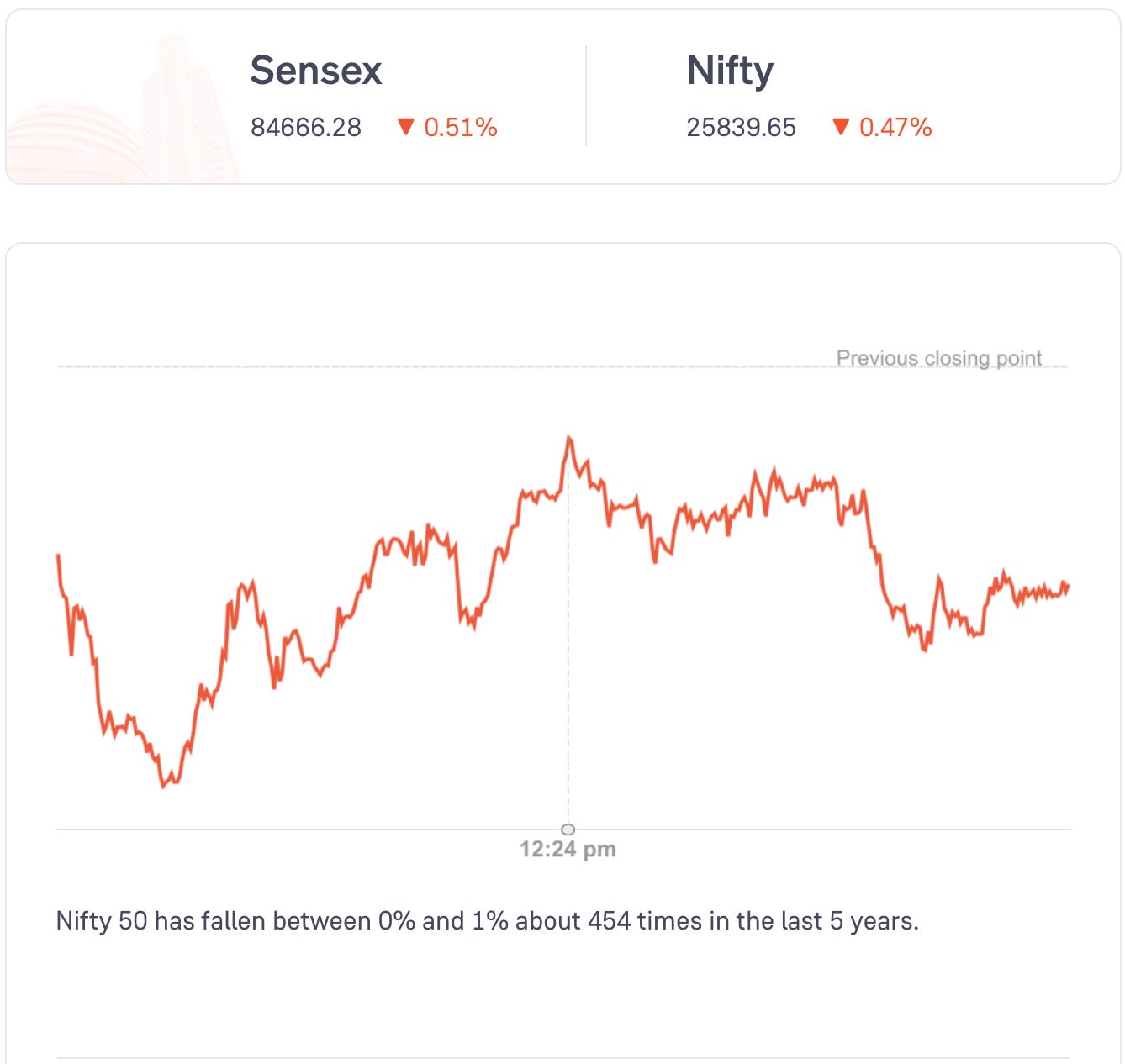
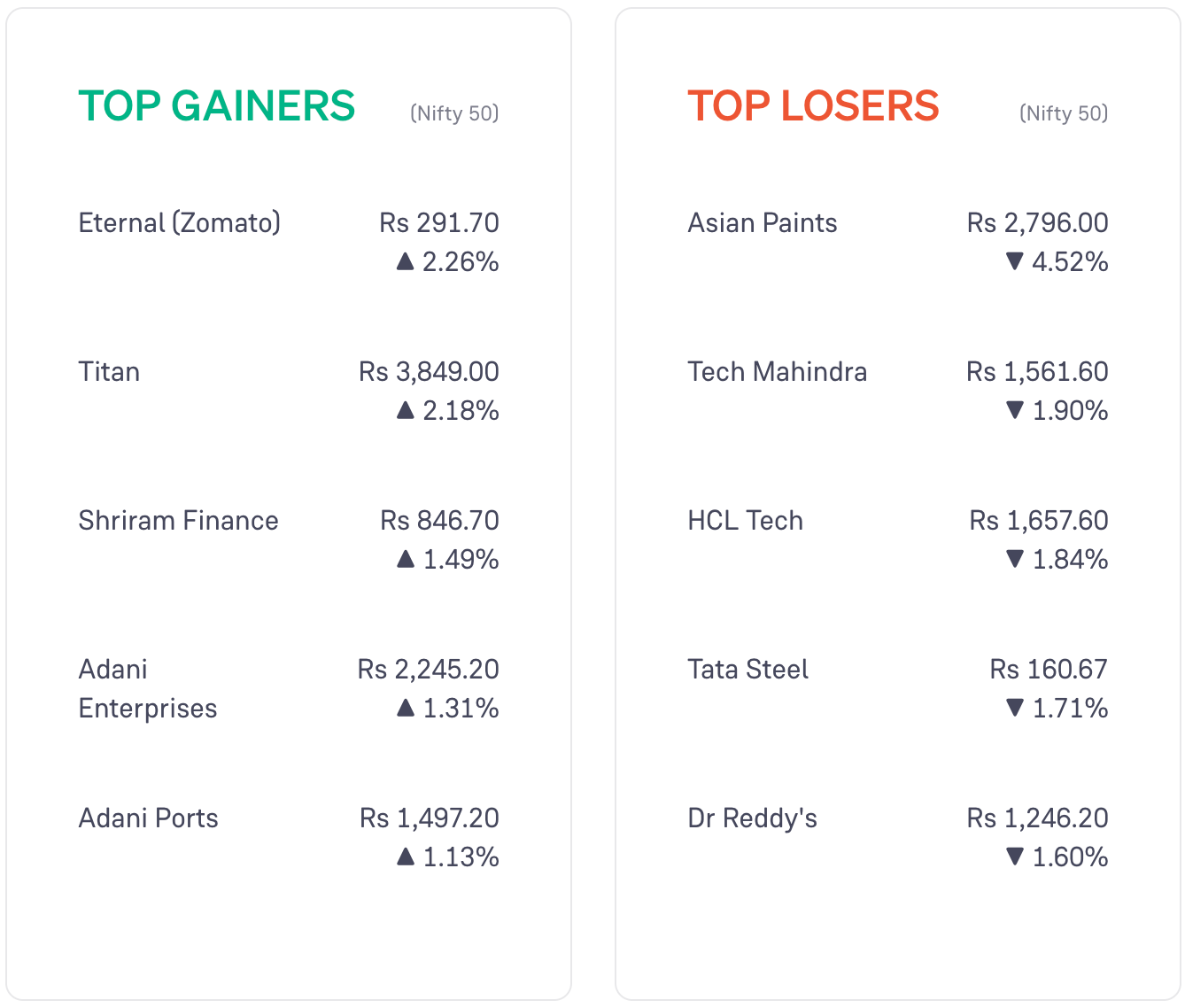
Markets opened below yesterday’s closing point.
Consumer durables stocks and PSU bank stocks rose the most today. IT stocks and auto stocks fell the most.
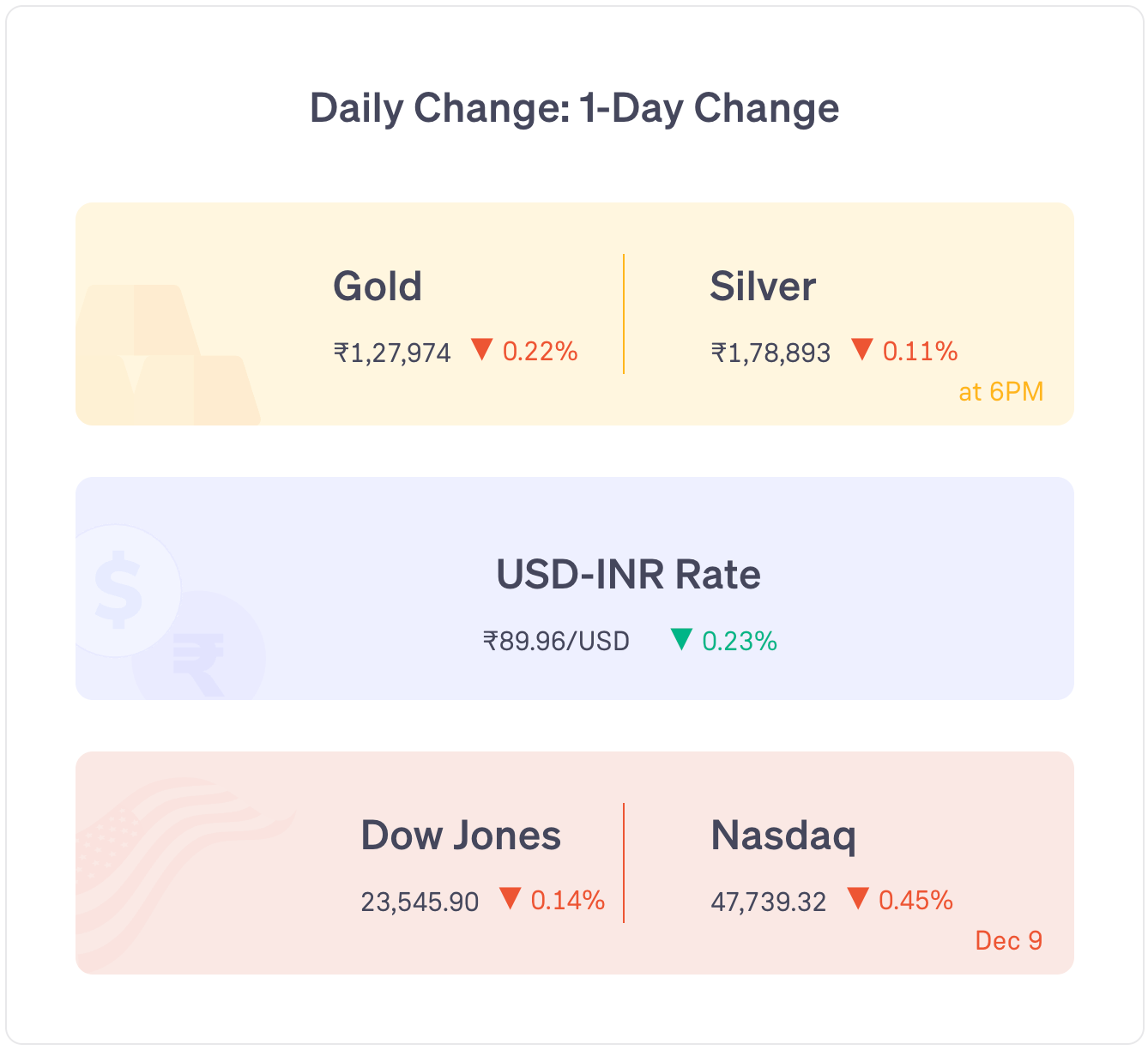
Global markets: US markets and most Asian markets fell. European markets showed a mixed trend (as of 6 pm IST).
News
US President Trump accused India of ‘dumping’ rice in the US and hinted at the possibility of new tariffs on Indian rice imports to protect US farmers. Meanwhile, the India-US trade talks are set to resume this week.
Wakefit IPO has been subscribed 0.39 times. Retail subscription: 1.77 times. IPO closes tomorrow (10 Dec).
Corona Remedies IPO has been subscribed 9.33 times. Retail subscription: 6.37 times. IPO closes tomorrow (10 Dec).
LEAP India and Eldorado Agritech received SEBI’s approval for their respective IPOs.
Stocks Updates
Tata Power: commissioned the 400 kV Koteshwar-Rishikesh line, enabling the evacuation of 1,000 MW of hydropower supply to North Indian states and UTs.
L&T: will shift its real estate business to its subsidiary L&T Realty Properties through a formal restructuring.
Airtel: received a Dept of Telecom notice with a Rs 6.99 lakh penalty for alleged subscriber verification lapses and decided to pay it.
Zydus Lifesciences: partnered with Germany-based ‘Formycon’ to exclusively license and supply a cancer immunotherapy drug for the US and Canada.
InterGlobe (IndiGo): received a tax penalty from Kuwait authorities of around Rs 13.16 crore for FY 2021-25, which it plans to challenge.
Titan: fully repaid its Rs 2,000 crore commercial paper issued on 9 Sept 2025 upon maturity.
Word of the Day
Credit Crunch
It is a situation where it becomes difficult for individuals and businesses to borrow money
Financial institutions are less willing to lend money due to economic uncertainty, rising defaults, or losses on existing loans.
They may reduce the amount of loans available or make lending standards strict, even if interest rates remain unchanged.
The slowdown in borrowing can lead to reduced spending and investment, which can stall economic growth.
Example: there was a credit crunch during the 2007-08 global financial crisis when banks sharply reduced lending, and economies slowed down.
6 Day Course
Theme: AIF
Day 2: Tuesday
Withdrawal rules are different for different categories of AIFs.
Category 3 AIFs (the ones that use hedging, trading, high-frequency trading, etc) are usually more liquid and allow investors to easily withdraw money.
Category 1 and 2 AIFs are more restricted in their withdrawal rules.
These AIFs invest in investment options that cannot be sold easily by the fund manager (unlisted shares, bonds, etc).
Such AIFs promise to let investors withdraw after a certain period, during certain windows when withdrawing is allowed.
AIF units can also be sold to a willing buyer — much like buying/selling shares.
But there is no active market as such for AIF units. You will have to find the buyer of units and transfer the units to them via demat transfer.
All these factors, when considered, make AIFs very poor when it comes to liquidity.
Featured Questions
Q. “If a company is doing well, its share price goes up. Why? How does a company’s good performance benefit a buyer who encouraged to buy its share at higher price?”
Share price is linked to the income a company can make.
People are willing to pay a higher price for a company that is making more money.
It’s kind of like a house — homes with higher rents cost more money to buy.
Similar to homes giving rent, companies give dividends. So companies with higher earnings give higher dividends.
Companies that are re-investing their income back in the business avoid giving dividends but that is okay since they are re-investing the money for greater future earnings.
A shareholder is a part owner of a company. This is why the shareholder benefits when the company’s performance is good.
It leads to greater dividends when the company earns money.
Dividend is not the only way a company shares its profits/earnings with its shareholders.
There are other methods like buybacks. They can be considered the same as dividends for this explanation.
Did you like this edition?
Leave a feedback here!
Well explained ❤️