

“Nobody is indispensable”.
The comment that revealed a cold war at Ferrari.
It had become hot — the secret was out in public.
This was the Fiat-Chrysler (FCA) group’s CEO speaking. And he was commenting on the chairman of Ferrari.
“The fact that we haven’t won anything since 2008? It’s unacceptable”, said the FCA group’s CEO. Expressing disappointment about Team Ferrari’s performance.
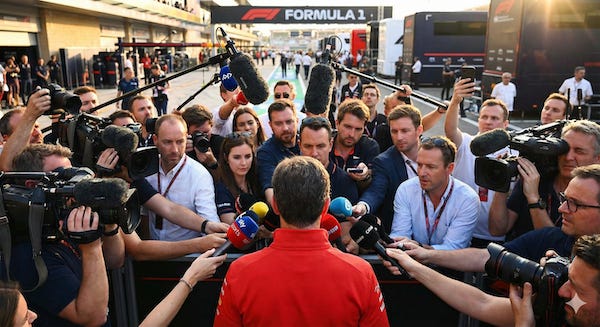
But this was not about the races.
We later see the real reasons why this fight was brewing between the two bosses.
And we see one of them winning over the other changing Ferrari, meaningfully.
But change — every company goes through that.
Why was Ferrari’s case unique?
Ferrari’s business is about exclusivity.
Some of the most expensive cars in the world are Ferraris (auction prices, not brand new). One particular model, the Ferrari 250 GTO, sold for $51 million in 2018. That’s over Rs 450 crores today!
It isn’t about the features the car has. It isn’t about the top speed. It’s the overall car and the craftsmanship.
And about how you have it, while others do not.
If you have the money, you could walk into a Porsche or Lamborghini showroom and walk out with a sports car with relative ease.
Not Ferrari.
For Ferrari, you need to build a relationship with them. You have to convince them you deserve to own a Ferrari.
You start with the lower models or used models. And gradually move up the ladder.
But that’s all about the cars. Here, we’re talking about the company Ferrari.
What was happening inside?
Why were the bosses fighting? And who won?
Company Structure
Before that, let’s understand the structure.
Fiat-Chrysler (FCA) was a group of car companies.
“Was”? Long story.
FCA as a group doesn’t exist anymore.
In 2021, FCA had a major re-structuring and its name changed, it merged — a lot happened. That’s another story altogether.
Some of the car brands that the FCA group owned included Fiat, Chrysler, Jeep, Maserati, Alfa Romeo, Abarth, and a few more.
And one more brand — Ferrari.
The largest shareholder of the FCA group was Exor (it is an investment company that is fully owned by the Agnelli family from Italy). This made them the largest shareholder of Ferrari indirectly.
Did FCA fully own Ferrari?
Yes — sort of.
FCA owned 90% of Ferrari.
The remaining 10% was owned by Piero Ferrari (son of the founder, Enzo Ferrari).
Ferrari ownership as of early 2014:
90%: owned by FCA
10%: owned by Piero Ferrari
Key Figures
Luca Montezemolo:
Luca was no regular executive running a regular company.
He was aristocratic. He was driven by emotions and taste. He was always dressed sharply.
Emotions, company-culture, heritage, and exclusivity were all important to him. Luca insisted on a family-like atmosphere at the Ferrari factory.
When Ferrari narrowly lost an F1 race in 2008, he smashed the TV in anger. Luca was often seen hugging race drivers. And celebrating with joy when the team won races.
Luca wasn’t ‘working’ at Ferrari. The company was a part of his identity.
He had started off his career as assistant to the company’s founder, Enzo Ferrari.
And Luca had been the chairman since 1991.
Sergio Marchionne:
He was the CEO of the FCA group.
Sergio was on the absolute other end of the spectrum. An accountant and lawyer. Efficiency-driven.
Sergio was not someone who would care much about emotions, brand heritage, and culture.
Exor:
Exor was a company that acted as the holding company of the Agnelli family. They were the largest shareholder of the FCA group.
They owned about 29% of FCA. But they had a much higher voting power — closer to 44%.
FCA Group & Sergio
In the early 2010s, the FCA was struggling.
Business was not good. Sales were low. They needed money. And they already had unpaid loans.
Sergio Marchionne, the CEO of FCA, planned a turnaround. He looked within the FCA group and noticed Ferrari.
Ferrari was doing well — it enjoyed a profit margin of around 35-40%.
Many of FCA’s other car brands were regular carmakers — Fiat, Chrysler, Jeep, etc.
Ferrari was a luxury brand.
But somehow, it seemed like the investors failed to notice that FCA owned Ferrari. It got lost in the pile of regular car brands.
FCA’s share price and market-cap were quite poor.
Ferrari & Luca
Luca, the Ferrari boss, was adamant. He did things his way.
One of the points he was firm about was that Ferrari would make only about 7,000 cars per year. No more than that.
He believed that since Ferraris were prized for their exclusivity, selling too many Ferraris would dilute the brand.
“A Ferrari is like a beautiful woman. She must be worth waiting for and desired”.
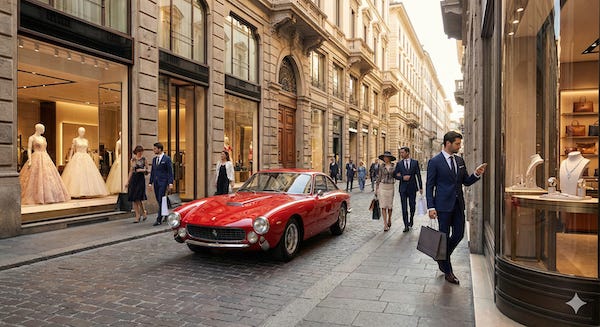
Sergio had problems with this.
The idea that they had a brand with 35-40% margins was tempting. But the limit of about 7,000 cars-per-year seemed like forcefully reducing profits.
He wanted to increase this number. The two bosses (Sergio & Luca) clashed.
Another bone of contention between the two was that of SUVs.
The idea of making SUVs is something all high-end car brands have struggled with. Nobody wanted to build SUVs — because of the fact that they don’t align with the sports car image.
But they sell in high numbers.
When Porsche brought out its first SUV in 2002, fans cried about how the brand was getting diluted. In hindsight, it saved the brand.
Many sports car and luxury car makers have resisted building an SUV. But it is so profitable to build one, most have folded and built SUVs.
Lamborghini, Aston Martin, Jaguar, Bentley, Rolls Royce,… all have SUVs on sale now (after refusing initially).
Sergio’s Idea
Sergio was sure investors weren’t noticing Ferrari.
He had an idea.
Ferrari was profitable, enjoyed great profit margins, and was a luxury brand — so it deserved a valuation like a luxury brand, not a regular car brand.
His theory was that Ferrari was ‘trapped’ inside FCA and that it needed to be liberated.
He decided to test this theory.
In October 2015, Sergio did a small IPO where he listed 10% of Ferrari’s shares.
Before this IPO, the FCA group’s market-cap was hovering around $12 billion to $18 billion.
Immediately after Ferrari was listed, Ferrari’s market-cap shot to nearly $10 billion.
By Dec 2015, FCA’s m-cap was $19 billion. Ferrari’s was $11 billion.
Which means, $11 billion worth of a company was ‘hidden’ inside FCA and investors didn’t even notice!
After treating Ferrari as a separate company and getting it listed on the stock exchange, investors saw its true potential in the open market — and paid an appropriate price for its shares.
This gave Sergio his green signal. He got his answer. He knew he was right.
Then, Sergio went ahead with his plans.
He decided to use Ferrari as a tool — to solve FCA’s problem.
His solution was this: spin-off Ferrari as a separate company with no ties to the FCA group. The money FCA receives from this sale can be used to pay FCA’s pending debt and restructuring costs.
Many shareholders might be angry at losing control of Ferrari. He had a solution for that too.
Only FCA would get out.
Every other shareholder would get 1 Ferrari share for every 10 FCA shares they owned.
This meant that FCA’s biggest shareholder (Exor) would continue to be the largest shareholder of FCA and of Ferrari separately.
Piero Ferrari would continue holding his 10% in Ferrari unchanged.
The share price of Ferrari was worth a lot more. And existing shareholders would continue to hold their Ferrari shares.
Perfect idea. Who would not like this idea?
Ferrari Chairman Opposes
Luca did not like the idea.
He was the head of a company which was entirely controlled by Exor — the largest shareholder of the FCA group.
If Ferrari became a public company, Luca would be answerable to many shareholders and a board of directors.
Like a typical company, he would be forced to optimize everything to suit investors’ wishes. And what do investors know about building classy sports cars?
As you might have guessed from examples given earlier, Luca and Sergio didn’t get along well.
Sergio knew his plans would never work if Luca was around. He planned for Luca to leave Ferrari.
The 2014-2016 period has many examples of Luca and Sergio clashing publicly. Luca stepped down from Ferrari in 2016.
And Sergio went ahead with his plans with approvals from the biggest shareholders including Exor and Piero Ferrari.
Result
In 2016, Ferrari was a fully separate entity from the FCA group.
The FCA group reduced its debt, and raised money for its future restructuring.
By the end of 2020, the FCA group was worth about $36 billion. And Ferrari alone was worth about $57 billion!
Imagine this: the once-a-subsidiary company was now worth more than the parent company.
The FCA group merged with the PSA group after that, so comparing market caps after 2020 is not fair.
Ferrari is worth $65 billion today.
Sergio became the new CEO and Chairman of Ferrari in 2016 while also continuing as CEO of the FCA group.
He did a lot of things that Luca would have raged against.
Ferrari developed and launched an SUV. They increased the number-of-cars-per-year limit. Some key people were removed from the organisation. Turbo-charged engines became more common.
Conglomerate Discount
What we saw here is often called the conglomerate discount in the investment world.
Conglomerates are large, complex companies that do multiple things, not just one thing.
Example: Tata is a conglomerate — salt to software to trucks to airlines.
Which means this company is involved in different kinds of businesses.
Some of these companies have high profit margins. Some have low profit margins. Some are loss-making. Some barely break even.
When combined together, it becomes hard for investors to assess what the correct value of a company should be (and therefore the fair share price for it).
There’s a common saying that conglomerates get discounted by about 10-15% at least.
Mixing good and bad businesses confuses investors.
Clear and distinct businesses are easier to evaluate, and therefore easier to price.
Tata might be a conglomerate, but it does not list its holding company on the stock exchange. The company actually lists many of its individual businesses separately on the stock exchange.
Tata Consultancy Services (software), Tata Motors Passenger (cars), Tata Consumer (FMCG), etc are all listed separately.
This is why each of these companies’ valuations is different.
In fact, separating a fast or efficient business from slow and inefficient companies often “unlocks” new value that was not being factored in.
This is what happened in the FCA-Ferrari case.
There are many other examples of this.
Take Naspers.
The South African newspaper and TV company had invested early in a Chinese start-up called Tencent.
By 2017, Naspers’ stake in Tencent was about $130 billion. But all of Naspers’ market cap was about $100 billion.
They solved this problem by creating Prosus, which became a separate holding company for the Tencent investment, resulting in “unlocking” $30 billion in value.
There are many such cases of conglomerate discount and unlocking of value.
As for Luca, many would argue that he has been proven wrong.
That’s not really a fair thing to say.
Luca led Ferrari successfully for decades. The company sits on the magic formula that Luca perfected over that period.
We don’t know how things would have turned out if he had been kept as the chairman of Ferrari even after the spin-off from FCA.
To be fair to him, even Sergio didn’t rake up the production numbers as everyone feared.
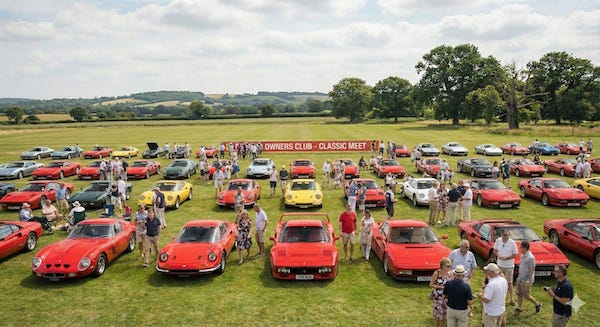
Even today Ferrari produces only about 13,500 cars per year. To give some reference, Porsche sells about 4 lakh cars per year.
It’s hard to say if things would be better or worse had Luca stayed.
Luca still feels attached to the brand and voices his opinion publicly when he notices something he disagrees with at Ferrari.
If you want to research a more recent example of this ‘unlocking’, look up the case of Tata Motors and Tata Motors Passenger Vehicles.
Quick Takes
+ The US President Trump threatened to raise tariffs on Indian goods again if India continues to buy Russian oil.
+ India’s composite PMI (manufacturing + services) fell to 57.8 in Dec (vs 59.7 in Nov). Services PMI fell to a 11-month low of 58 (vs 59.8 in Nov). This means economic activity grew less in Dec than in Nov.
+ MoSPI has estimated 7.4% GDP growth for India in FY26, against 6.5% in FY25.
+ The Supreme Court has asked the central government to decide within four months on raising the current wage ceiling (Rs 15,000) for the employee provident fund.
+ The Indian Navy has deployed its First Training Squadron on a long-range training deployment to Singapore, Indonesia and Thailand to strengthen maritime ties.
+ Govt has announced that the first phase of population census will begin from 1 April 2026, and will continue till Sept end.
+ SEBI has accused Bank of America of breaching insider trading rules and internal controls during a 2024 share sale deal: as per media reports.
+ The Dept of Telecommunications has signed an MoU with IIT Kanpur to jointly develop India-specific telecom standards and advance research in future technologies like 6G, AI, satellite networks, etc.
+ Monthly mutual fund SIP inflows were at a record high of Rs 31,002 crore in Dec: AMFI
+ The US Commerce Secretary has said that the India-US trade deal stalled because PM Modi didn’t call Trump to finalise it. India has refuted these claims.
+ India’s forex reserves fell by $9.81 billion to $686.8 billion in the week that ended on 3 Jan.
+ China’s retail inflation rose by 0.8% year-on-year in Dec (vs 0.75 in Nov), the highest level in nearly 3 years.
The information contained in this Groww Digest is purely for knowledge. This Groww Digest does not contain any recommendations or advice.
Team Groww Digest