

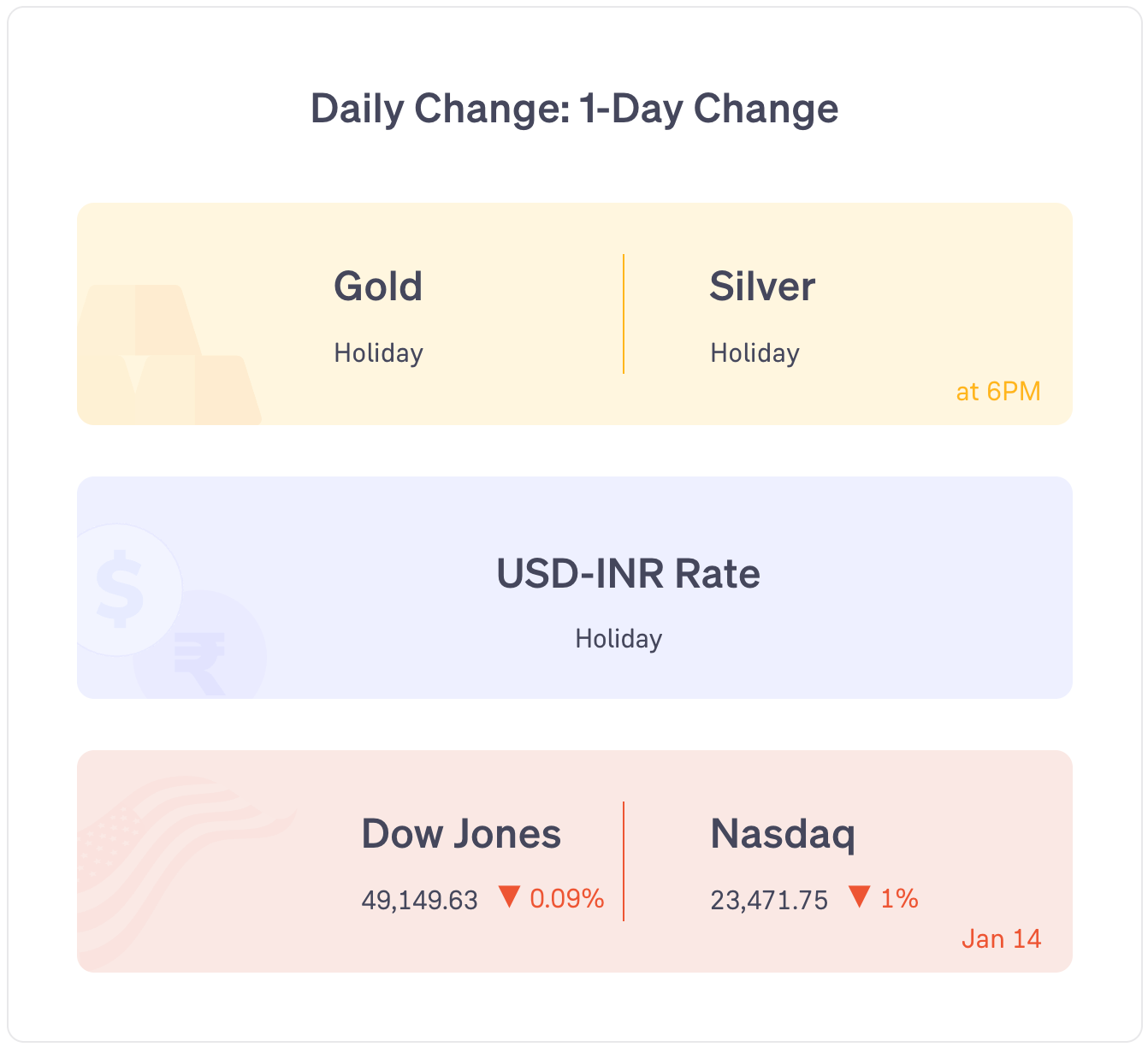
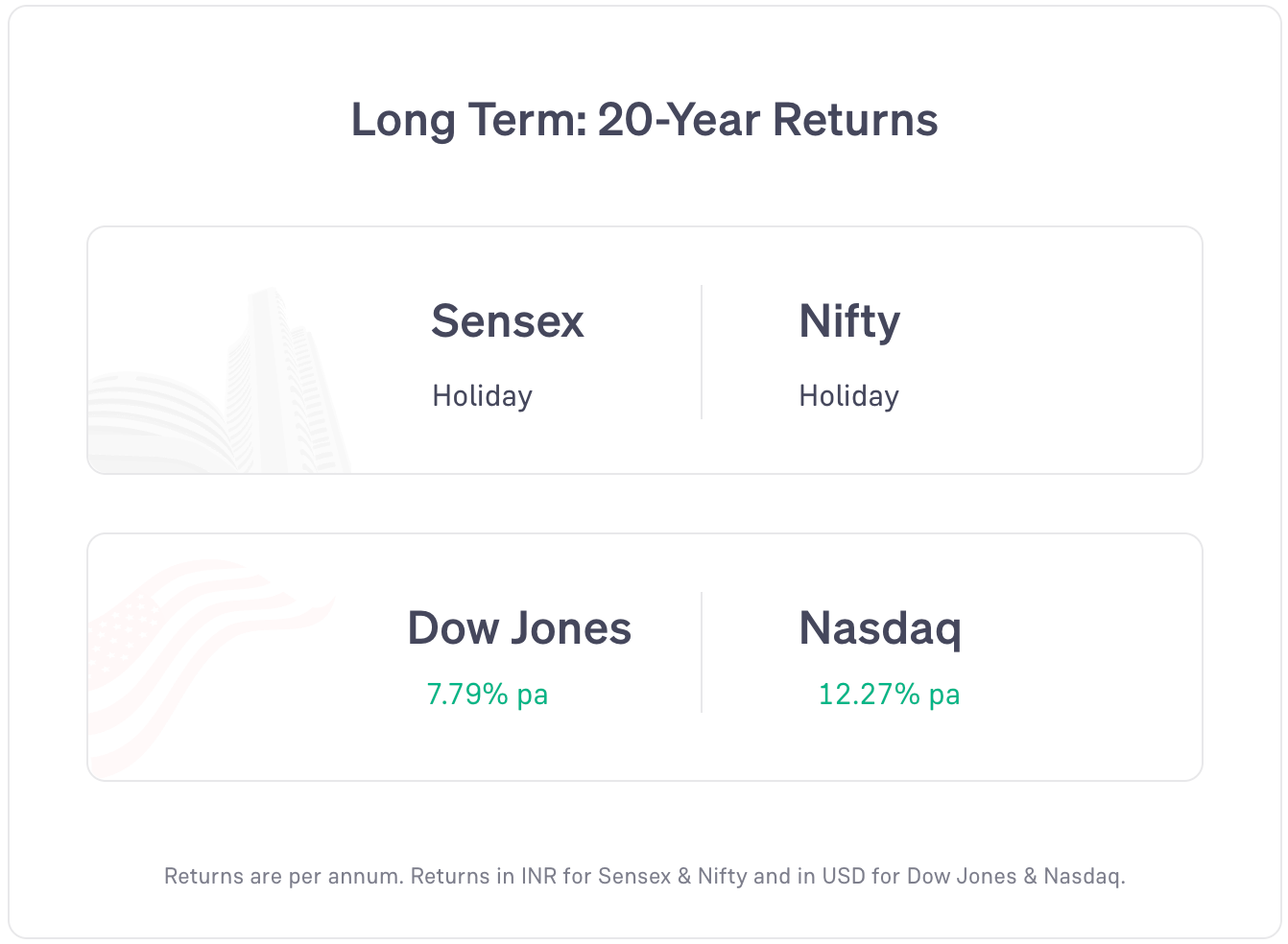
The Indian stock markets and commodities markets were closed today on account of the Municipal Corporation Election in Maharashtra.
Hence, there won’t be any updates on the Nifty 50, Sensex, Top Gainers, and Top Losers sections today.
Global markets: US markets and most Asian markets fell. Most European markets rose (as of 6 pm IST).
News
India’s unemployment rate rose marginally to 4.8% in Dec (vs 4.7% in Nov).
India’s merchandise exports grew 1.87% year-on-year in Dec while imports grew 8.76%. The trade deficit widened to $25.04 billion.
Stocks Updates
Jio Financial: net profit fell 8.7% year-on-year to Rs 269 crore in the Oct-Dec quarter.
HDFC Life: net profit fell 0.7% year-on-year to Rs 418 crore in the Oct-Dec quarter. Net premium income rose 9% to Rs 18,351 crore.
Indian Hotels: approved agreements to acquire around 51% stake in Brij Hospitality for up to Rs 225 crore, expanding its boutique leisure segment in the country.
DLF: the NCLT Chandigarh has approved the merger of 16 wholly owned subsidiaries into the company, subject to filing with the Registrar of Companies.
Zydus: received US FDA approval for Eltrombopag tablets (used to treat low platelet count) and completed the acquisition of US-based Agenus’ biologics facilities.
Word of the Day
Net Interest Income (NII)
It is the difference between interest earned (revenue) and interest paid (expense)
It is a metric used by banks and financial institutions to measure how much profit they earn from their core lending business.
Banks earn interest from different assets like loans, bonds, etc (interest revenue). They pay interest on deposits like savings accounts, FDs or their own borrowings (interest expense).
A higher NII usually means the bank is doing well in its main business of lending and borrowing.
Example: say a bank earns Rs 1000 from loans and pays Rs 400 on deposits. Then the Net Interest Income of the bank is Rs 600.
6 Day Course
Theme: derivatives
Day 4: Thursday
Now, anyone who tries to understand derivatives will assume they are about speculation — kind of like betting.
That is true. But equally important for traders is risk management. They don’t care much about profiting from it. They treat it more like insurance.
Example: fuel expenses are a big component of the money spent by airlines. What happens if there is a sudden increase in the price of oil?
Their business can be hampered.
So, they use futures and options to buy oil in the future at a fixed rate.
That way, they are certain to get oil at a fixed price for the foreseeable future. If the oil price falls, they will still be buying the more expensive oil.
They care more about predictability than profit in case of such trades.
Companies of all kinds use futures and options to reduce future price shocks like agricultural companies, mining companies, energy companies, etc.
Featured Question
Q. “What will happen if markets are open 24 hrs, now everything is online”
It’s hard to comment on what would happen if the stock markets were open 24 hours in a day.
Reaction and price: whenever good/bad news comes, the markets react to it.
We might see more impulsive buying/selling.
Many times, the reaction is in panic, and then the severity (or lack of severity) is understood.
Once the reality sets in, the price moves to a more stable level.
If the markets are open 24 hours, maybe we will see more panic. Similar to how the markets react to good/bad news during market news.
It’s hard to say.
When markets open after a night, sometimes, the first few minutes are panic buying/selling and then the reality sets in.
So maybe that kind of panic will reduce if the markets stay open all the time.
Human cost: it would certainly increase the stress experienced by professionals working in the investing/trading sectors.
The stress might lead to further effects on finance that are hard to comment on.
Algorithms: since algo trades can be placed by computers, we might see even more algo trading taking place since computers don’t need sleep.
It would certainly help international investors since investors from across the world would be able to invest at a time that suits their time-zone the best.
That might automatically increase liquidity — the ease with which a stock can be bought/sold.
Did you like this edition?
Leave a feedback here!