

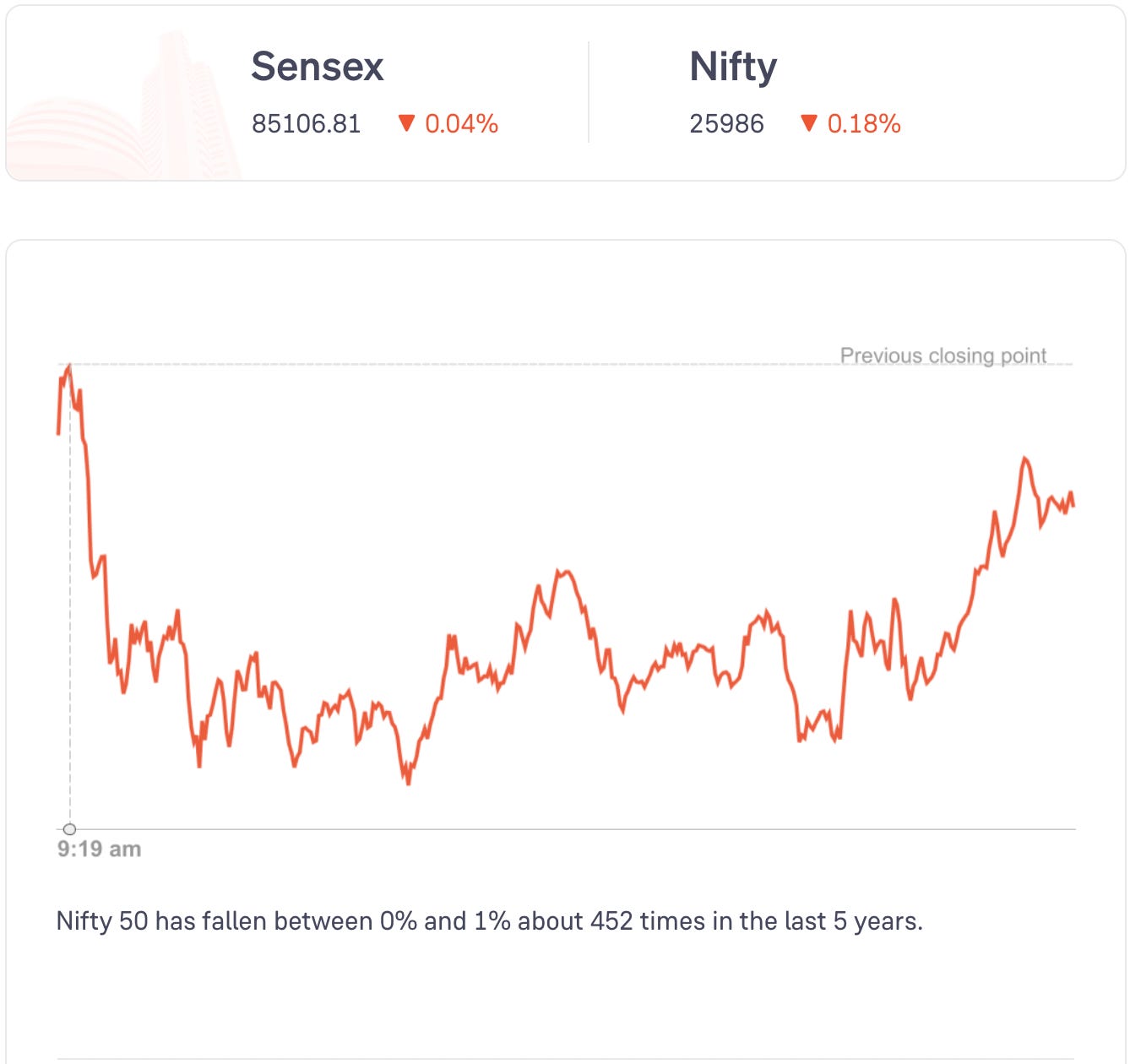
Markets opened below yesterday’s closing point.
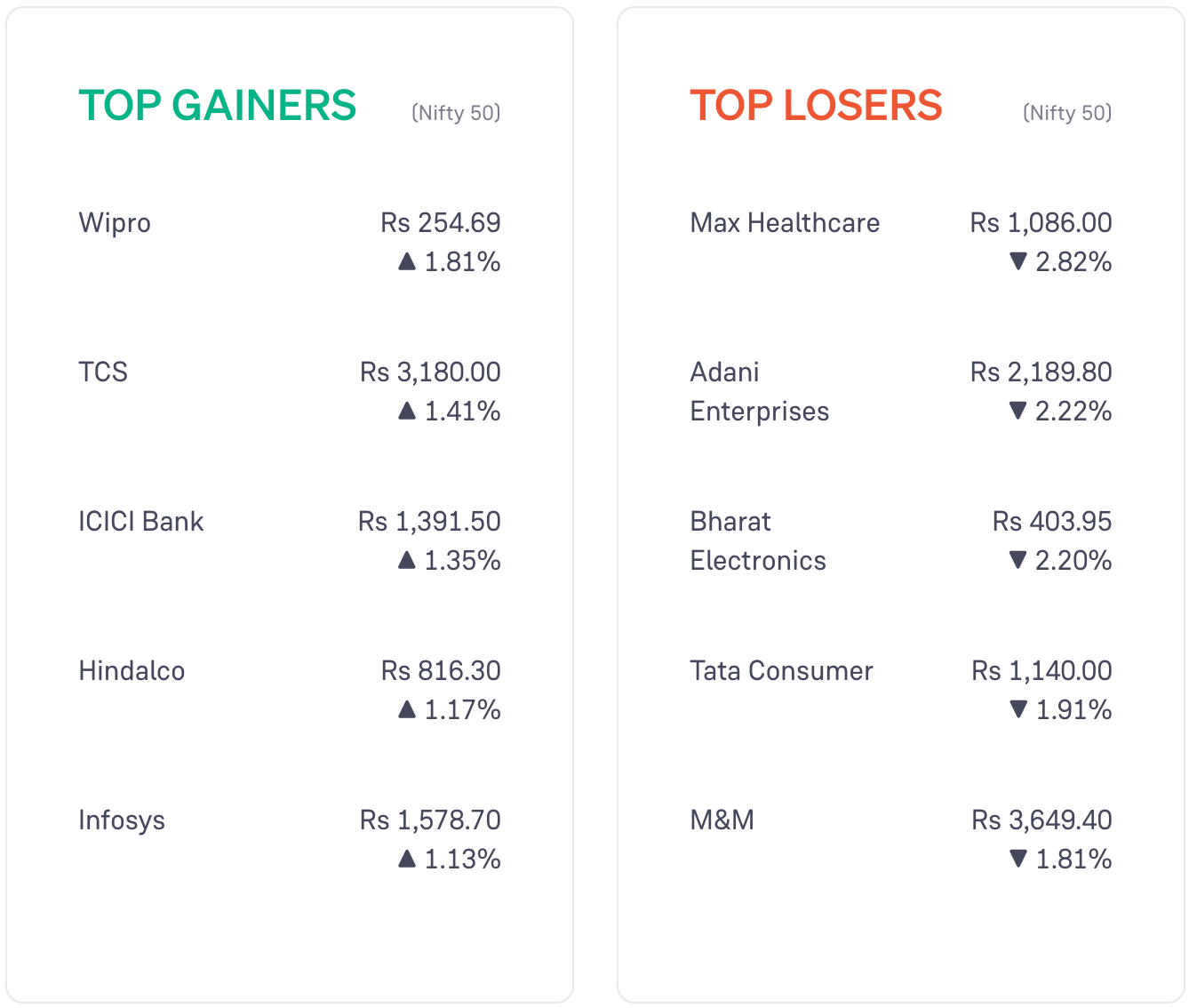
IT stocks and private bank stocks rose the most today. PSU bank stocks and consumer durables stocks fell the most.
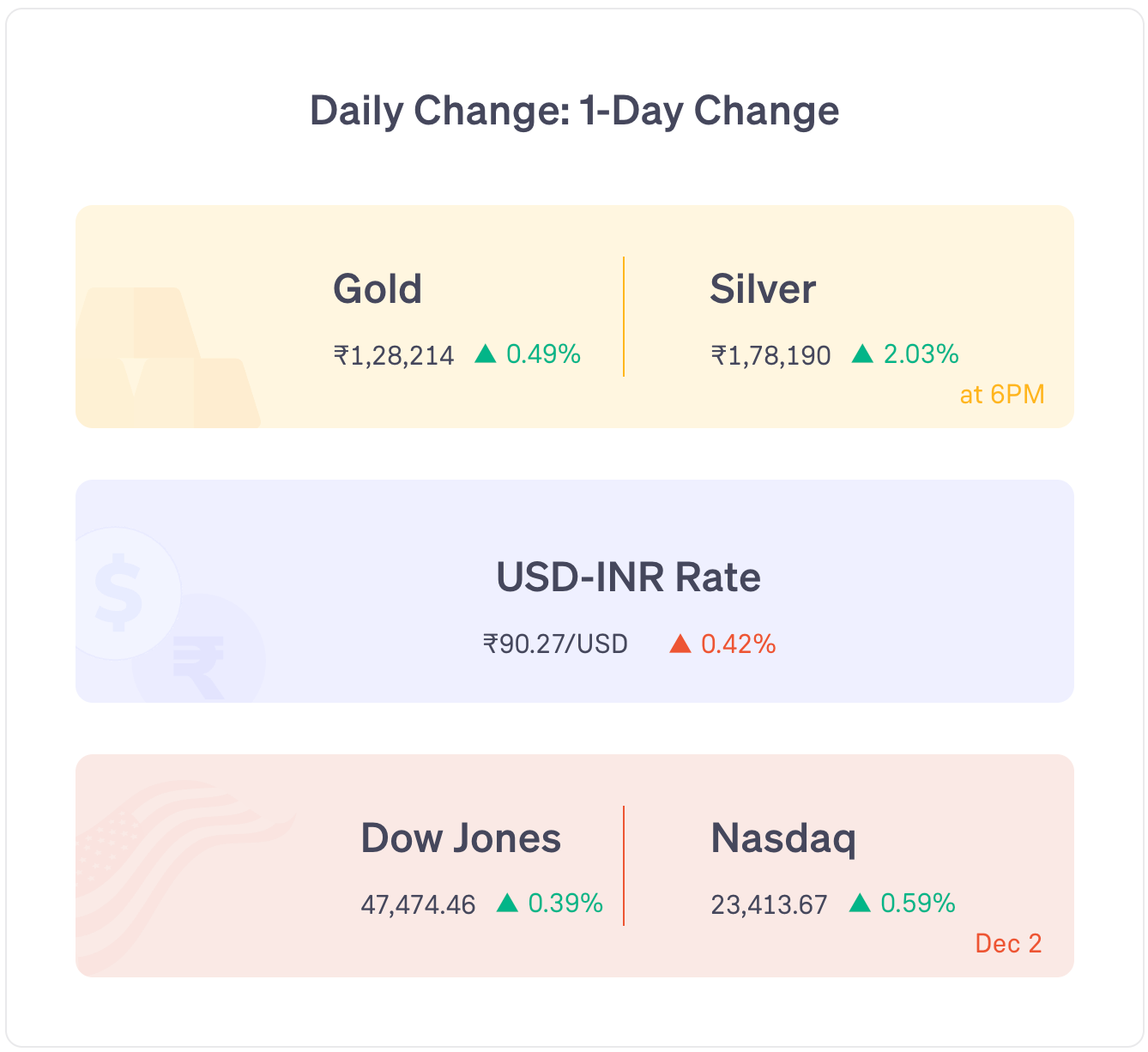
Global markets: US markets rose. Asian markets showed a mixed trend. Most European markets rose (as of 6 pm IST).
News
India’s composite PMI (manufacturing + services) fell to 59.7 in Nov (vs 60.4 in Oct). Services PMI rose to 59.8 (vs 58.9 in Oct). This means overall economic activity rose less in Nov than in Oct.
The RBI has retained SBI, HDFC Bank, and ICICI Bank as domestic systematically important banks (D-SIBs). As part of the classification they must maintain additional capital buffers. SBI must hold an extra 0.80%, HDFC Bank 0.40%, and ICICI Bank 0.20%.
Meesho IPO has been subscribed 2.35 times. Retail subscription: 3.86 times. IPO closes on 5 Dec.
Aequs IPO has been subscribed 3.42 times. Retail subscription: 11.46 times. IPO closes on 5 Dec.
Stocks Updates
ICICI Lombard: received a GST demand and penalty totaling about Rs 94.8 crore for FY 2018-23, and plans to challenge the order.
Adani Enterprises: diluted 49% stake in Astraan Defence and 25% in World Plate Collective Cuisines.
Sun Pharma: subsidiary approved a Rs 3,000 crore greenfield formulations manufacturing plant in Madhya Pradesh.
Adani Green: company subsidiary, AREH11L, incorporated 2 new renewable energy units, Urjasetu Renewables and Hydrobloom Power.
ABB India: launched its new ACS380-E industrial machinery drive for automation applications.
Word of the Day
Evergreening
It is when banks give new loans to borrowers who are struggling to repay old ones
Banks give more loans to stop the old loans from turning into non-performing assets (NPAs).
This makes the bank’s financial statements look better.
In the short term, profits are not affected because banks don’t need to set aside extra money for NPAs.
But this only delays the recognition of bad loans.
It might lead to a bigger financial crisis in the long term (like an NPA crisis).
6 Day Course
Theme: understanding PE ratio
Day 3: Wednesday
When does a high PE make sense?
Like with any item, good or high-quality stocks are always in greater demand than low-quality stocks.
This demand pushes their share price up.
This is why often, the PE ratio of high-quality companies is also usually higher.
This comes with a risk attached with it. If an investor buys the share at a very high PE ratio level, it can mean that share price lowers future returns.
Unfortunately, there is no correct PE level that everyone ever agrees on.
This is the reason why many investors argue with each other.
Most investors have a ‘comfortable’ PE ratio number above which they stop buying.
Many investors have waited for PE ratios of certain companies to fall below a certain level so that they may buy — and missed buying it because the PE ratio never fell enough.
Many have also invested at very high PE ratios hoping the climb would continue — only to see their investment crash.
Featured Questions
“How buying stocks can prevent me from inflation in our country?”
Fighting inflation is all about earning more than inflation.
If the inflation is 5%, then your money needs to grow more than 5% to fight inflation.
Many investments perform poorly compared to inflation because the returns are not high enough (after paying taxes).
For example, many times, the return given by inflation is 0%. This happens when the inflation is high (6-7%) and the FD returns are not enough to fight it (6% per annum before taxes).
This is why investors turn to stocks to earn higher returns.
Different stocks grow at different speeds.
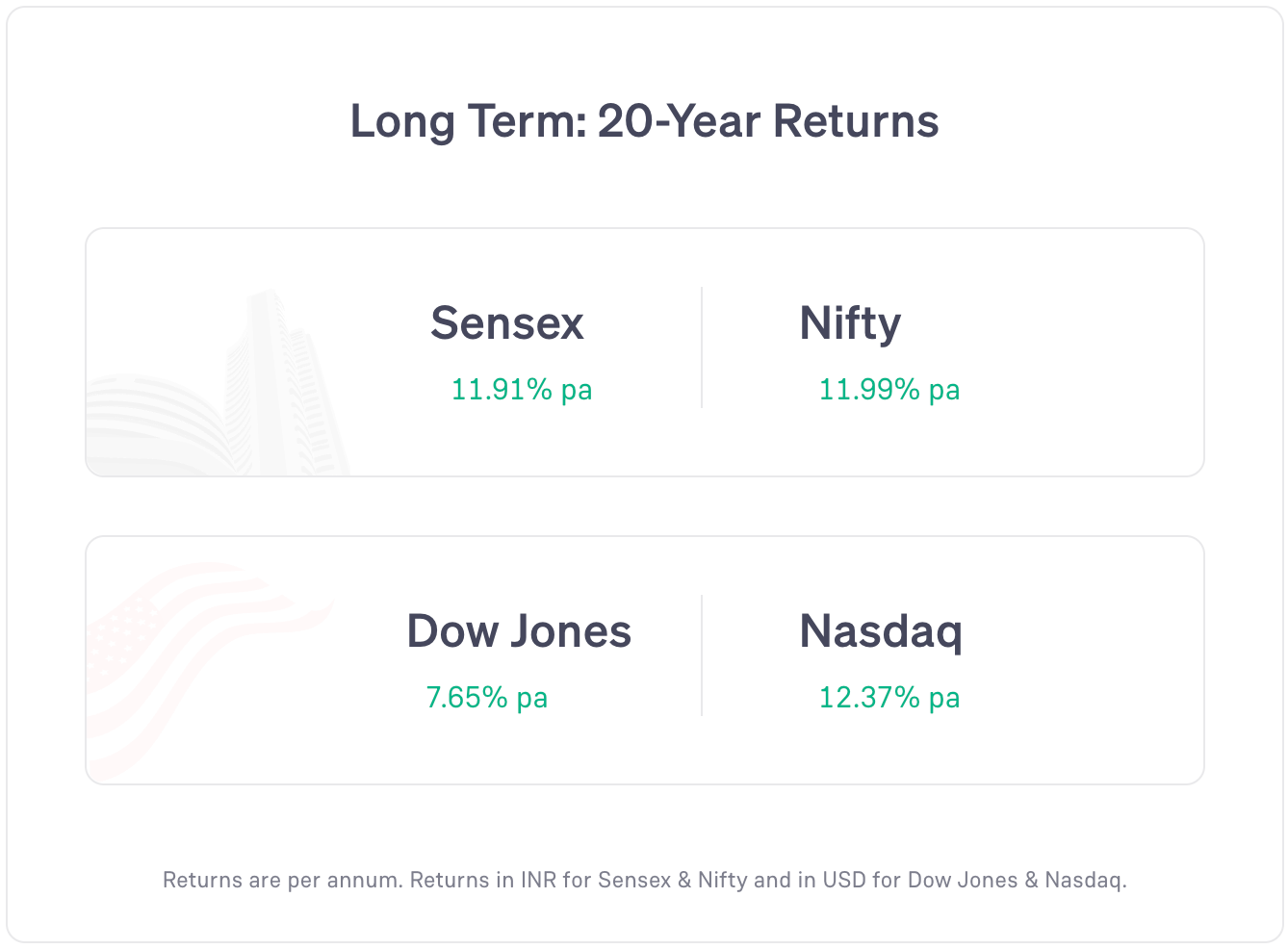
Investors investing in index funds like Nifty 50 (which is made up of 50 of the biggest stocks), have earned about 12-14% per annum.
Investing in equity mutual funds can give slightly higher returns than that.
Investors who are skilled and have knowledge about stocks can pick individual stocks and earn even higher returns than that.
In short, stocks and equity mutual funds can help investors fight inflation better because they have given higher returns than many other investment options.
The flipside of high return investments options like these is that they can prove to be risky.
Did you like this edition?
Leave a feedback here!