

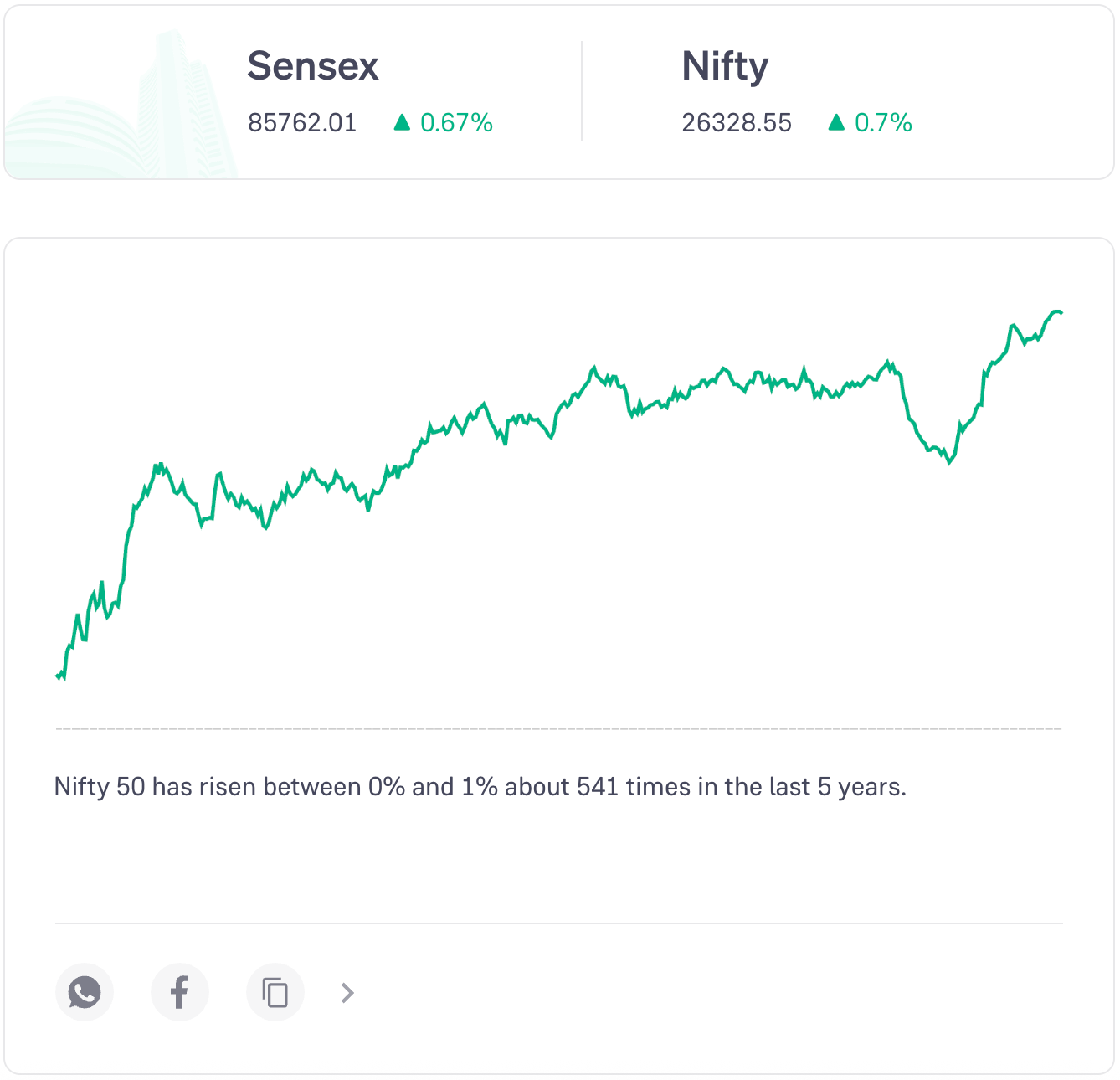
Markets opened above yesterday’s closing point.
Nifty 50 rose throughout the day and touched a new high today.
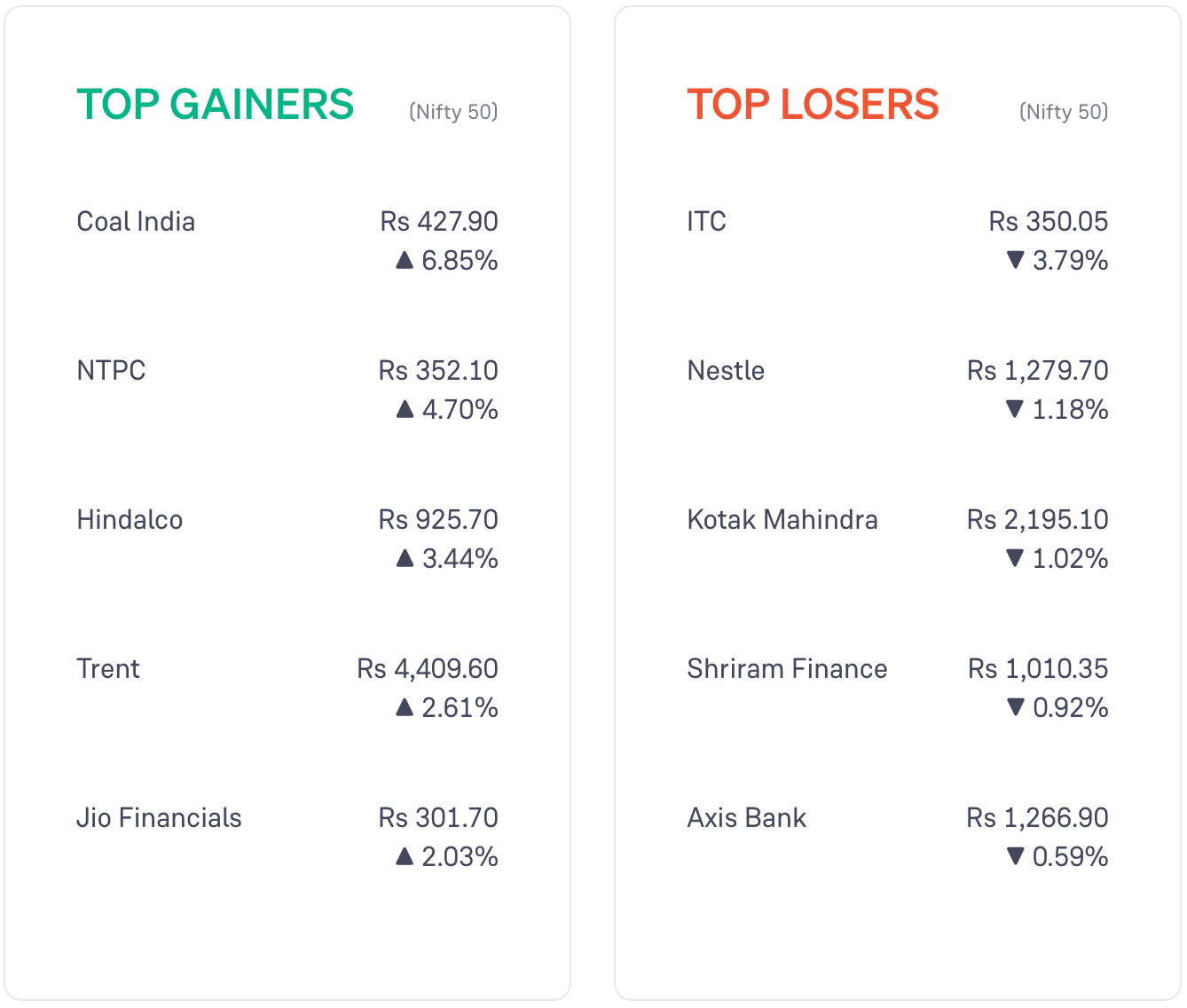
All sectors’ stocks rose today except for the FMCG stocks. Realty stocks and PSU bank stocks rose the most.
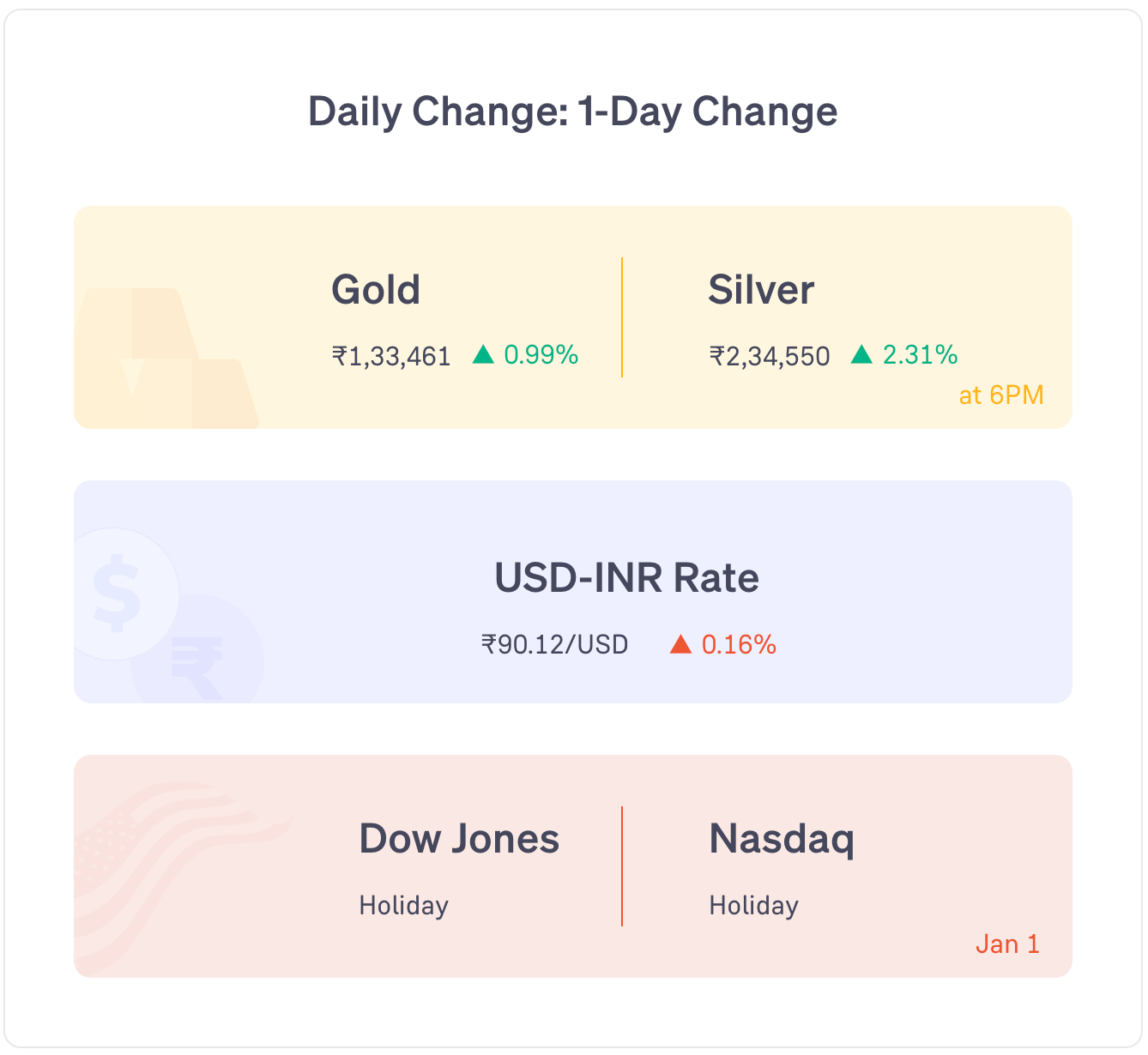
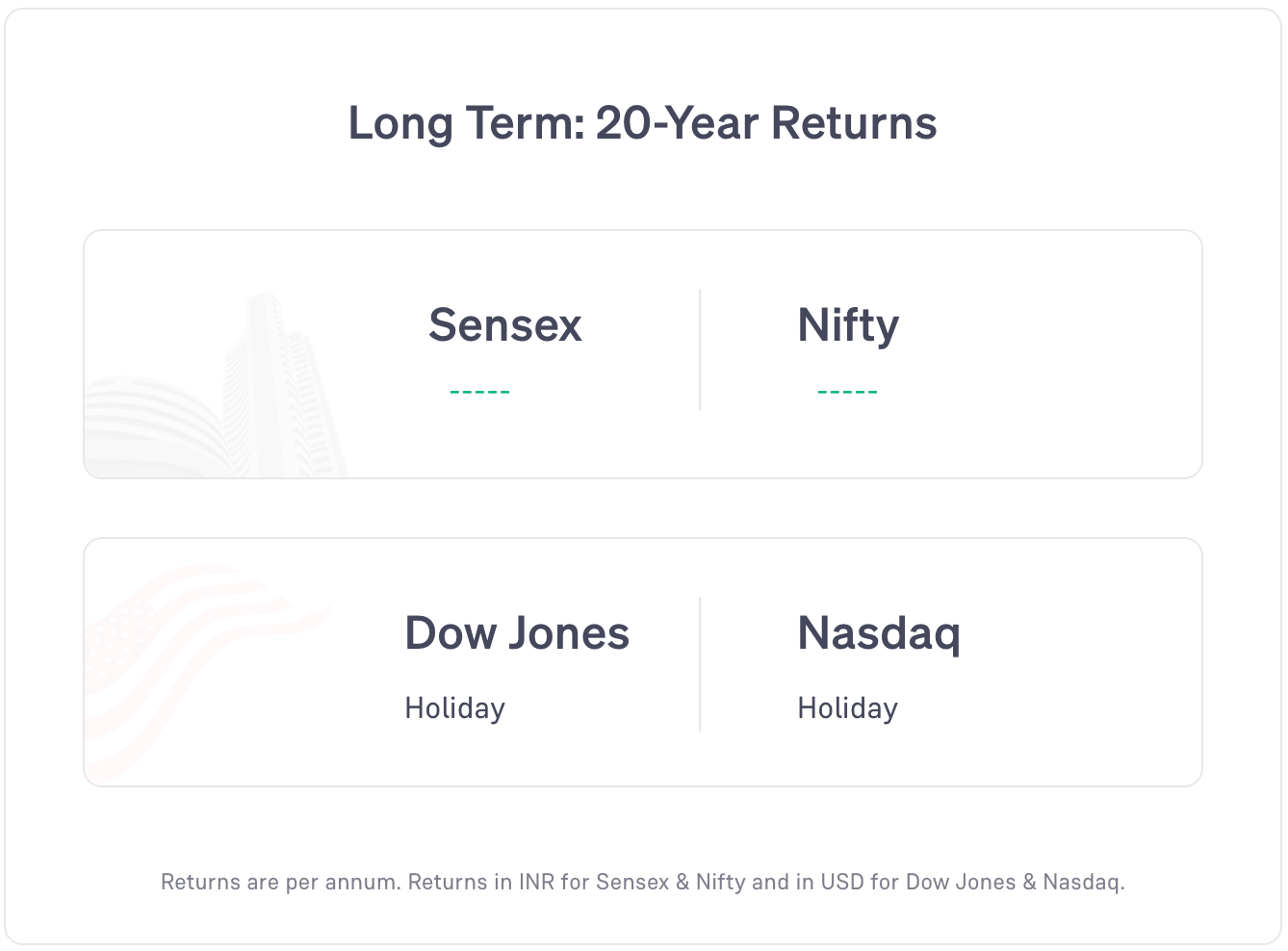
Global markets: US markets were closed on account of New Year’s Day. Most Asian markets and European markets rose (as of 6 pm IST).
News
India’s manufacturing PMI fell to 55 in Dec, a 2 year low (vs 56.6 in Nov). This means manufacturing activity grew less in Dec than in Nov.
India’s forex reserves rose by $4.37 billion to $693.32 billion in the week that ended on 26 Dec 2025.
The central government has approved 22 proposals under the Electronics Components Manufacturing Scheme (ECMS) with a projected investment of Rs 41,863 crore.
Stocks Updates
L&T: received major orders (Rs 5,000 Cr - 10,000 Cr) from SAIL, and other domestic steelmakers.
Coal India: allowed foreign consumers to import coal by directly participating in the SWMA (Single Window Mode Agnostic) auctions, thus enabling greater participation in cross-border markets.
BHEL: has received a tax notice of Rs 4.15 Cr from the GST department. The company plans to appeal against the notice.
NTPC: has clarified of not having entered into any agreement for acquiring a stake in Clean Core Thorium Energy.
Adani Enterprises: to raise Rs 1,000 crore via non-convertible debentures (NCDs) offering a coupon of up to 8.90%.
Word of the Day
Tracking Error
It measures how closely the returns of a portfolio follow its benchmark index
Example: a mutual fund or an ETF tracking Nifty 50.
If the tracking error is low, the fund’s returns are very similar to the index. If it is high, the fund’s returns often differ from the index.
For passive funds, a low tracking error is preferred since the goal is to closely track the benchmark.
6 Day Course
Theme: selling strategies
Day 5: Friday
Rule-based selling.
Many investors try to avoid noise and emotional reactions to price by setting selling rules.
‘If this happens, I will do this, no matter what’.
Often this means they decide a valuation or price at which they will sell their asset.
Any additional gains that they might miss is ignored in the interest of staying disciplined and avoiding pitfalls.
Many investors have a more nuanced approach to this. Instead of a price, they have a certain valuation above which they sell.
Many investors follow a more complicated set of instructions.
Example: ‘if the valuation is above X level, and the price is above Rs Y, and the annual earnings growth falls below Z%, I will sell’.
These more nuanced approaches are individually developed and come with time and experience.
Featured Question
Q. “What is the confidential route of applying an IPO with SEBI?”
Confidential route allows companies to hide their company’s details (financial numbers, strategies, etc) when they submit an application for IPO.
This means that if their application gets rejected, their company details are not publicly revealed.
Once the IPO is approved and cleared by SEBI, the company has to make the updated DRHP public so investors can see the details of the company before deciding to invest in it.
This option allows companies to delay revealing details which can give them an edge against their competitors.
This option is critical and helpful in industries where competition is very high.
Did you like this edition?
Leave a feedback here!