
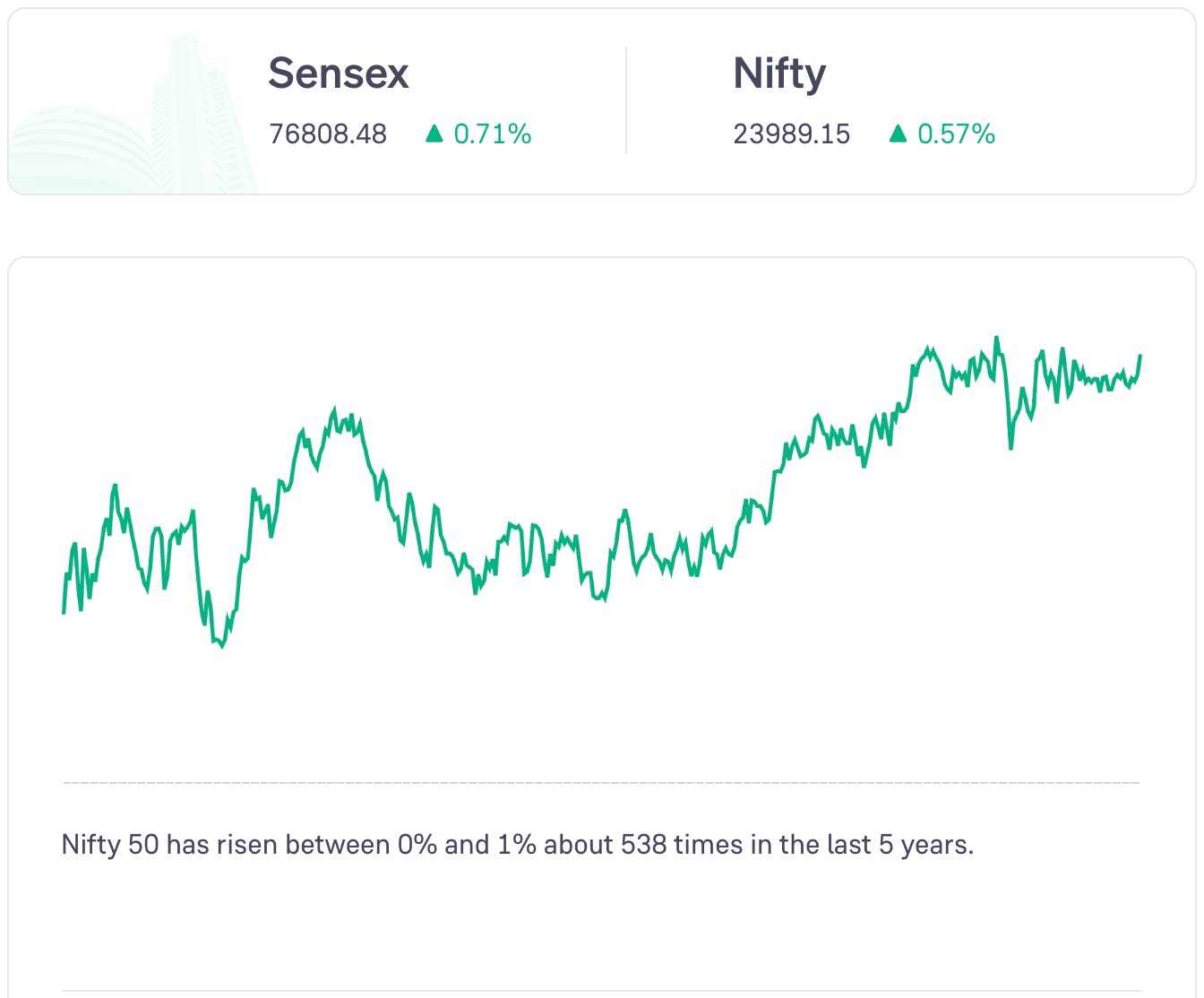
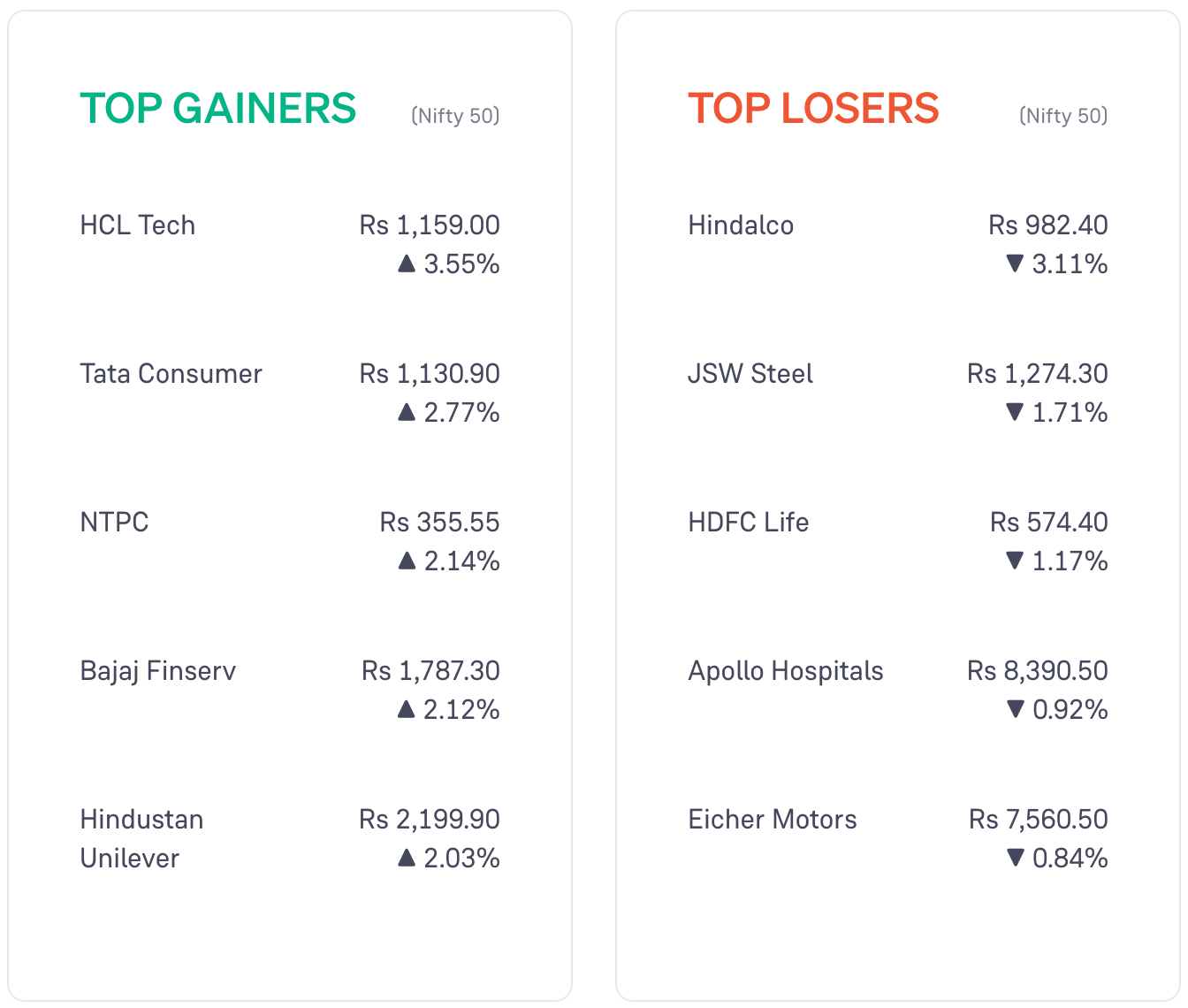
Markets opened above yesterday’s closing point.
Realty stocks and IT stocks rose the most today. Metal stocks and healthcare stocks fell the most.
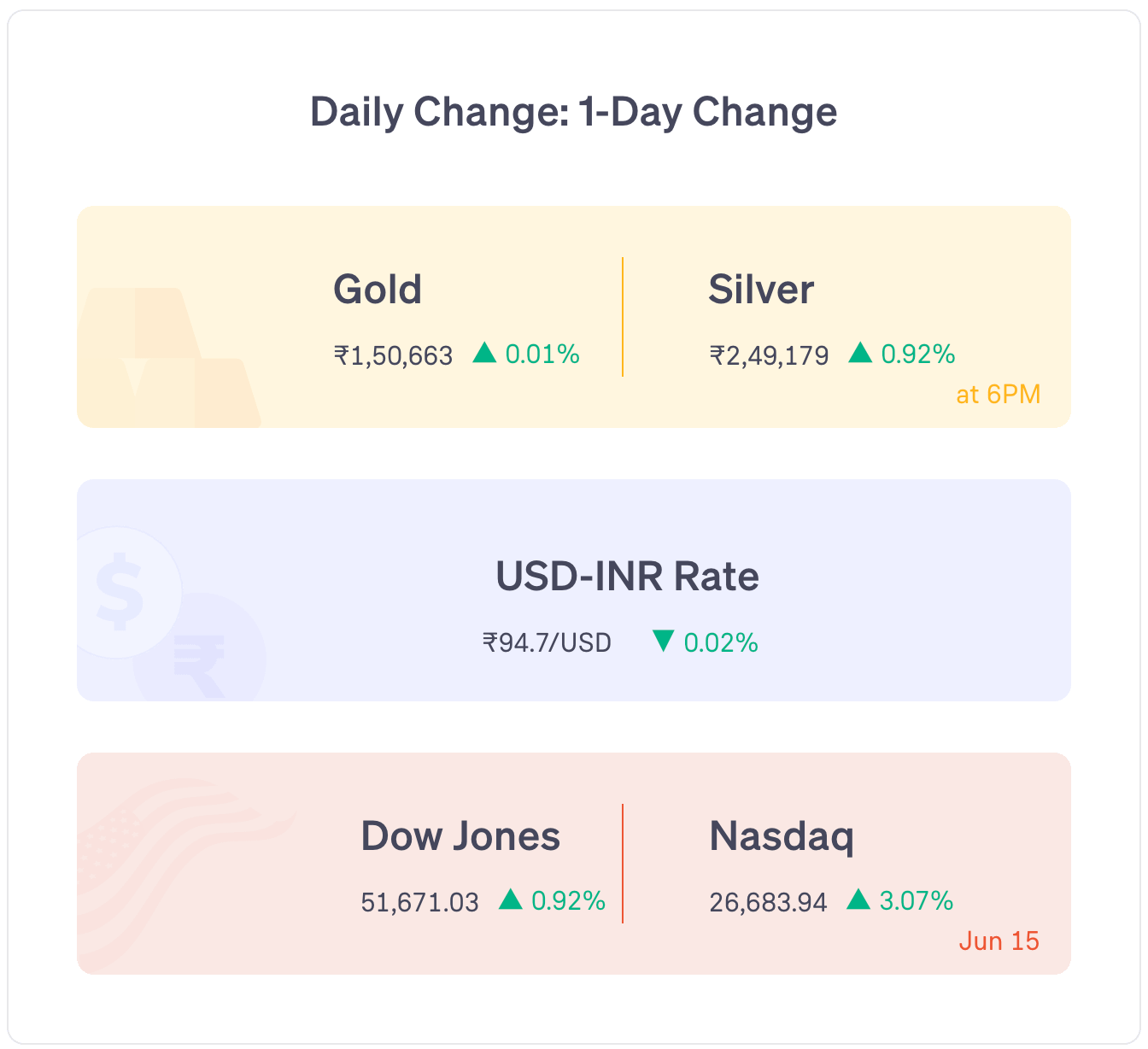
Global markets: US markets and most Asian markets rose. Most European markets rose (as of 6 pm IST).
News
India’s passenger vehicle sales grew 27.3% year-on-year to 4.39 lakh units in May: SIAM
India’s Union Minister Nitin Gadkari has officially signed rules giving legal recognition to 100% ethanol fuel (E100) for vehicles in India.
RBI has given final guidelines banning third-party cash or travel incentives for bank staff to eliminate conflicts of interest and curb mis-selling from 1 Jan, 2027. They also classify financial influencers as Direct Selling Agents, making banks fully liable for any misleading promotional claims made by online creators.
Stocks Updates
Airtel: incorporated a wholly owned subsidiary, Airtel Global IFSC Ltd in GIFT City, Gujarat, to undertake global treasury and related financial activities. The company also received a DoT penalty of Rs 1.06 lakh for alleged violation of subscriber verification norms and has decided not to contest it.
TCS: announced a multi-year strategic partnership with Tottenham Hotspur Football Club to serve as the club’s digital transformation partner.
Infosys: partnered with Finland-based Valmet for an AI-led IT transformation programme to modernise its IT operations and cloud infrastructure.
M&M: subsidiary, Mahindra Holidays & Resorts India Ltd completed the acquisition of a 100% stake in Aditatva Estates for Rs 37.5 crore. Aditatva owns a 50-acre coffee estate in Chikmagalur, Karnataka, which will be used for expanding the company’s leisure resort business.
Adani Ports: expanded partnership with US-based Kaleris to deploy AI-powered terminal operating systems across 15 container terminals in India and overseas.
Grasim: inaugurated Phase 1 of its CPVC resin manufacturing plant at Vilayat, Gujarat, with a planned capacity of approx. 50,000 metric tonnes per annum.
Zydus Lifesciences: completed the acquisition of US-based Assertio Holdings through its wholly-owned subsidiary Zara Merger Sub Inc.
Word of the Day
Subsidiary
It is a company that is controlled by another company, known as the parent company
A company is generally considered a subsidiary when the parent company owns more than 50% of its voting shares or has control over its operations and decisions.
If the parent company owns 100% of the shares, it is called a wholly-owned subsidiary.
Subsidiaries allow companies to expand into different businesses or markets while remaining under the same corporate group. They can protect the parent company from the subsidiary’s legal and financial liabilities.
6 Day Course
Theme: understanding FIIs
Day 2: Tuesday
Many different factors affect the buying/selling/holding decision of FIIs.
Each of them is governed by their own set of criteria. But some factors are common to them all.
One such factor is US interest rates.
This seems trivial but a lot of money moves in and out of emerging markers (like India) simply because of the US interest rates.
The US government bonds are considered the least risky of all investments in the world. But their returns are also very low.
So whenever the interest rates are increased in the US, many investors move some part of their money to the US. This leads to sell off in countries like India and Vietnam (emerging markets).
Most investors have rough targets for their investments. Based on these targets, investors invest in different assets in different percentages.
When the US bond rates go up, they sell elsewhere and move some money into US bonds.
The opposite also happens. When the interest rates are reduced, money starts flowing away from the US bonds and into emerging markets.
Featured Question
Q. “I see some actively managed mutual funds have more than 1 fund managers. How do they mostly divide the responsibilities of managing the fund among themselves?”
There can be many reasons for having multiple fund managers.
Many times, it is based on expertise.
Example: one fund manager may be an expert in certain industries while the other one specialises in other industries.
Or it may be based on strategy — example, one is a more value oriented fund manager while another is a more growth oriented manager.
In some funds it is based on assets. Example: balanced funds might need one fund manager for equity investments and another for debt investments.
Sometimes, one fund manager is the more experienced fund manager while the other is a junior fund manager who will take the fund over from the senior manager at a later stage.
In short, it is a hand over process for someone’s exit or retirement.
There can be other reasons behind having multiple fund managers as well.
Did you like this edition?
Leave a feedback here!
Provides good knowledge
Enjoy reading as they are informative and entertaining