

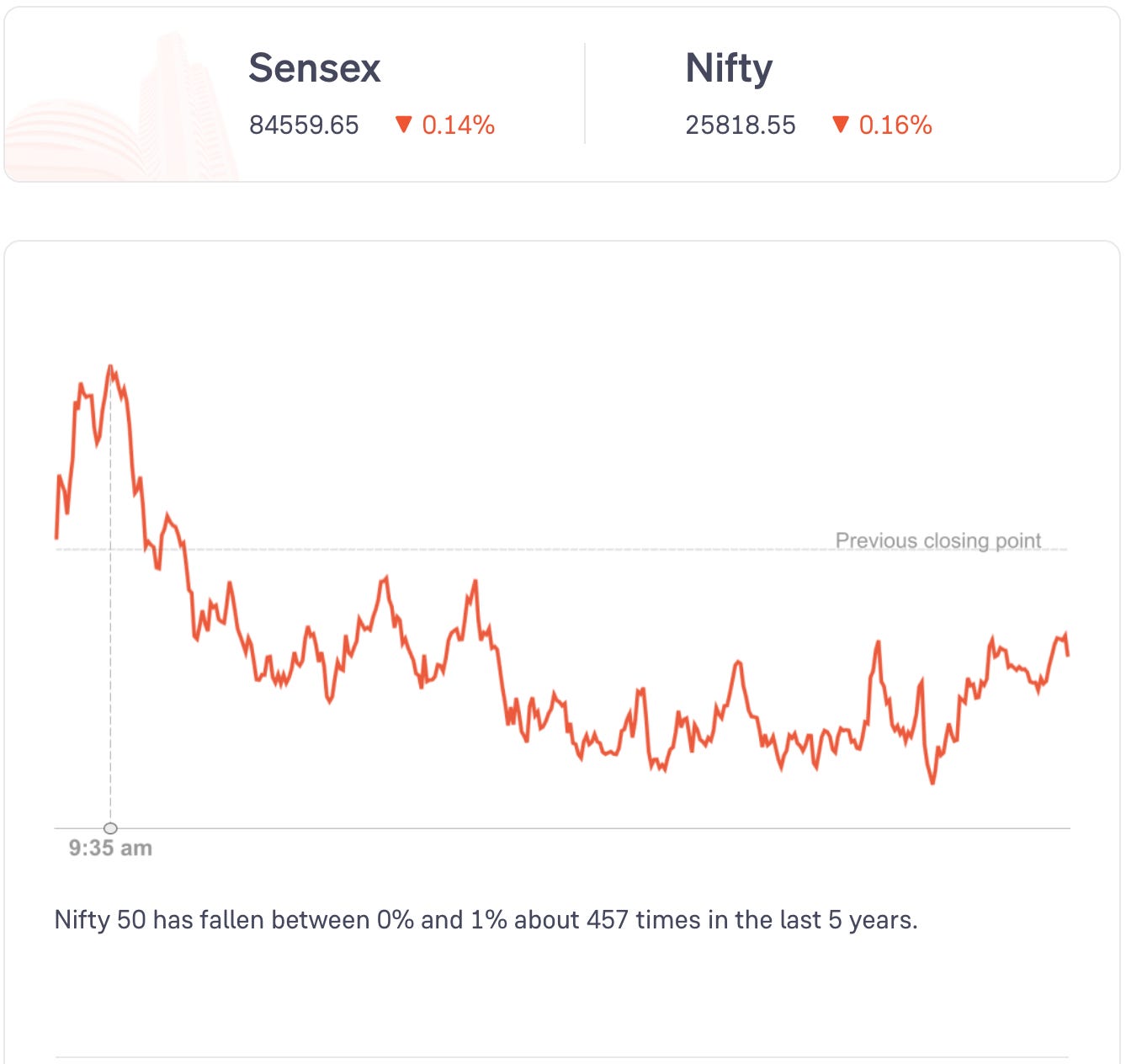
Markets opened slightly above yesterday’s closing point.
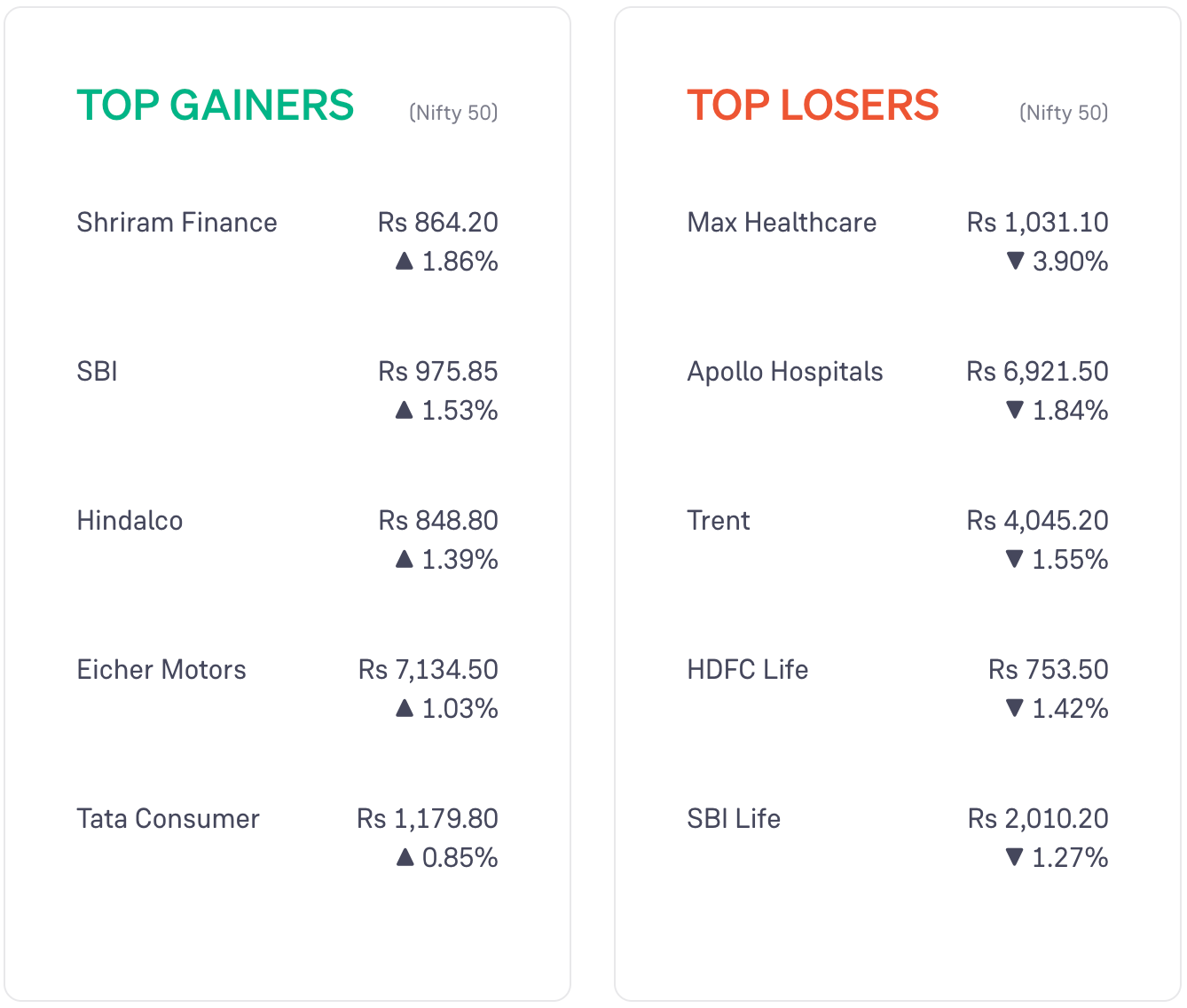
PSU bank stocks and IT stocks rose the most today. Media stocks and consumer durables stocks fell the most.
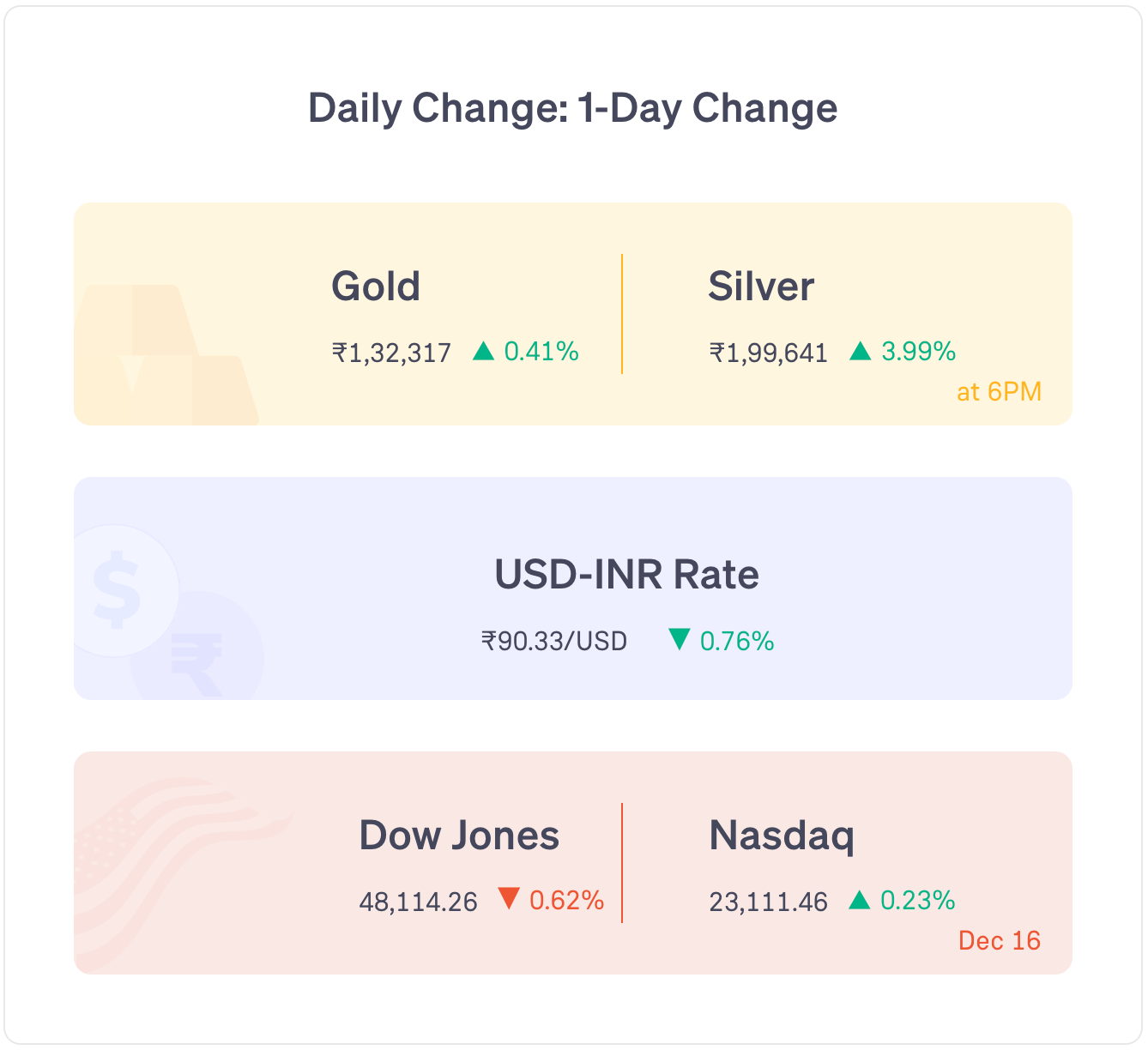
Global markets: Most US markets fell. Most Asian markets and most European markets rose (as of 6 pm IST).
News
India’s passenger vehicle sales rose 18.7% year-on-year to 4.12 lakh units in Nov.
India’s textiles and apparel exports grew 9.4% year on year in Nov to $2,855.8 million.
The UK’s inflation fell to 3.2% in Nov (vs 3.6% in Oct).
KSH International IPO has been subscribed 0.26 times. Retail subscription: 0.46 times. IPO closes tomorrow (18 Dec).
Park Medi World IPO listed on the stock exchanges at a discount of 1.98% on the issue price and closed 8.67% down the end of the day.
Nephrocare Health IPO listed on the stock exchanges at a premium of 6.52% over the issue price and closed 2.45% up at the end of the day.
Stocks Updates
L&T: won multiple orders (ranging from Rs 2,500 to Rs 5,000 crore), including a museum project in Madhya Pradesh, a FIFA-standard stadium in Assam, and luxury high-rise towers in Mumbai.
DLF: company subsidiary, DCCDL, raised Rs 1,000 crore of non-convertible debentures at a 6.98% interest rate with a 4.5-year tenure via private placement.
Marico: extended its option by 12 months to acquire the remaining 40% stake in Satiya Nutraceuticals, owner of the ‘PLIX’ brand.
Shriram Finance: will hold a board meeting on 19 Dec to consider raising funds via rights issue, preferential allotment, QIP, or other ways. The exchanges have asked the company to clarify a news report stating that Japan’s MUFG plans to invest up to $5 billion for a 20% stake.
BSE: received a Rs 7.25 crore GST demand order for excess input tax credit, which it plans to challenge.
NTPC: announced new solar capacities totalling 359.585 MW commercially operational at Nokh and Khavda. It also disclosed a Rs 16.86 crore GST order from Delhi which it will challenge.
Infosys: received a Rs 8.28 crore GST penalty for alleged input tax credit issues across FY 2018-19 to 2022-23.
HCL Tech: partnered with Netherlands-based ASN Bank to upgrade its IT systems in a multi-year deal.
Dabur: company’s GST appeal against a Rs 23.06 crore tax demand (plus equal penalty) was dismissed, and the company will further raise the matter.
Power Grid: approved a Rs 1,226.93 crore investment to refurbish the Bhadrawati HVDC system and also announced commissioning of the WRES-XXV project spanning over multiple states.
TCS: formed 3 new wholly owned subsidiaries, 2 in the USA (TCS North America Corporation and Trident LE LLC) and 1 in Bhutan (TCS BT), to expand its global IT and AI services.
ICICI Bank: announced that its subsidiary ICICI AMC has filed its IPO prospectus with the Registrar of Companies.
ITC: announced that the CCI has approved its acquisition of Century Pulp & Paper from Aditya Birla Real Estate.
Vedanta: announced that NCLT Mumbai has approved its demerger into 4 independent listed companies, subject to fulfillment of some conditions.
Word of the Day
Average Revenue per User (ARPU)
It shows how much revenue a company earns from each user over a specific period
It is calculated by dividing total revenue by the number of active users.
ARPU helps investors understand how effectively a company monetizes its user base.
A higher ARPU might signal a stronger financial performance.
It is used in telecom, streaming platforms, software services or fintech businesses to compare performance across products, regions, or competitors.
6 Day Course
Theme: rebalancing
Day 3: Wednesday
Yesterday, we spoke about the frequency of rebalancing.
In this, an investor sells investments of one kind (mostly equity mutual funds or shares) and invests it in other assets (FD, gold, etc).
This involves taxes and fees.
A more tax-efficient way of balancing can be stopping fresh investments in one asset.
If you are earning and investing regularly, you can change your investment amounts based on your balancing goals.
Example: 70% of monthly investment in equity mutual funds, 20% in FD, 10% in gold. But if equity is too much, you can have something like 40% in equity, 40% in FD, 20% in gold.
This changed monthly investment can be done till your investments are back to being in the aimed percentages.
This strategy works better for investors who are younger and have many years to contribute.
If your invested amount is already large or you are retired, this strategy may not be as effective.
Featured Questions
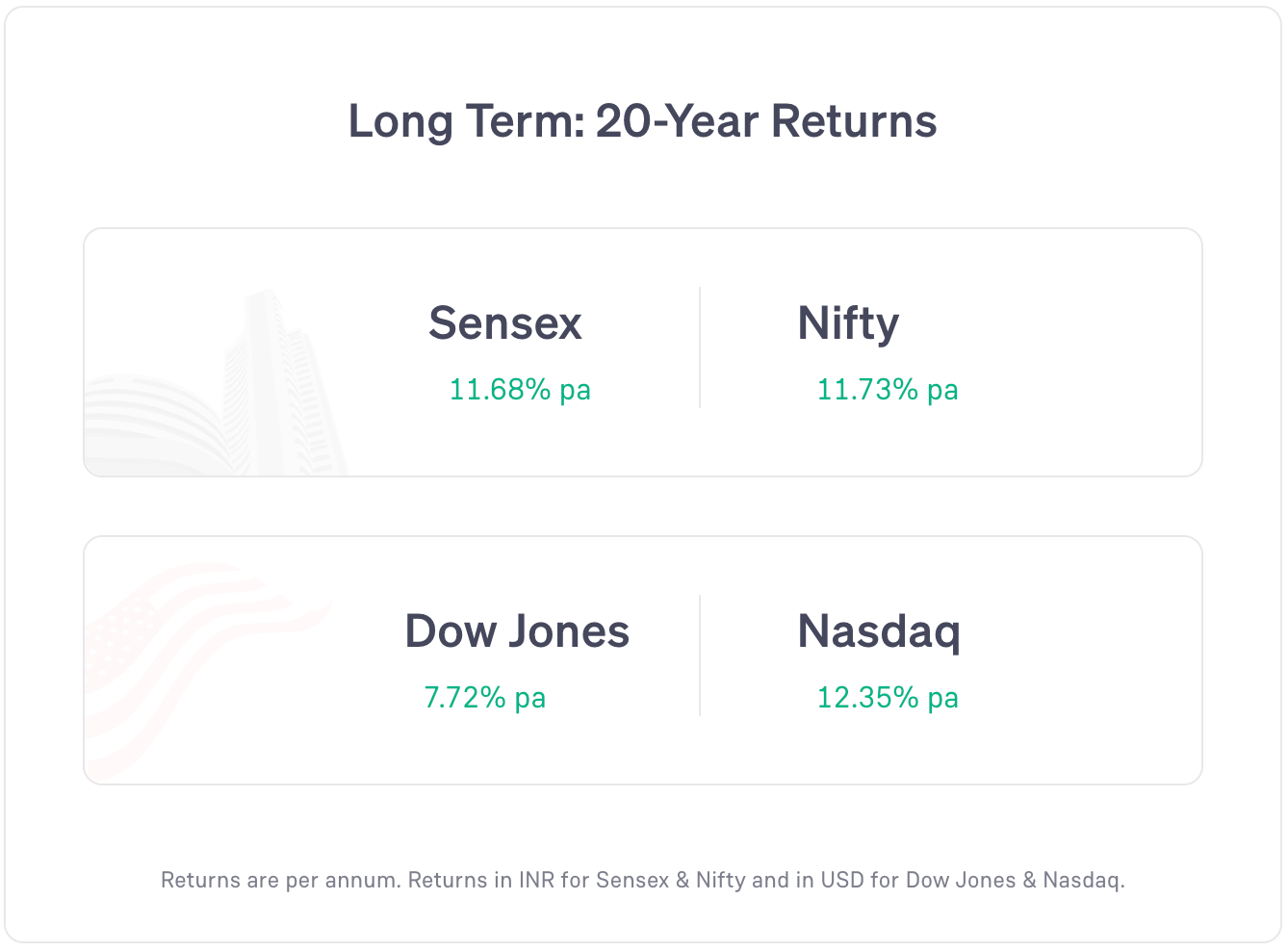
“I believe Nasdaq is an US Equity Index then why is it that returns are equal to or more than that of developing countries like ours? It is been said that investing in developing countries gives more returns ( profits ) than that of developed countries.”
The Nasdaq 100 index is filled with tech stocks.
Tech stocks have been performing very well in recent years.
Tech companies belong to one sector and are not as diversified. This is also why Nasdaq can be more volatile.
Also, these sayings are not always true. These are beliefs that some people have.
Speaking factually, many times these beliefs prove to be false.
Many US indices perform much better than many other developing countries’ indices.
In fact, many developing countries give poor returns because of difficult business environments in those countries.
Some developing countries like India have given better returns than developed countries’ indices.
Not every country is like India.
Developing countries have a lot of opportunities for fast growth. This is true.
Countries that are able to effectively take advantage of this opportunity are the ones that grow fast.
Such countries’ index returns are good.
Did you like this edition?
Leave a feedback here!