
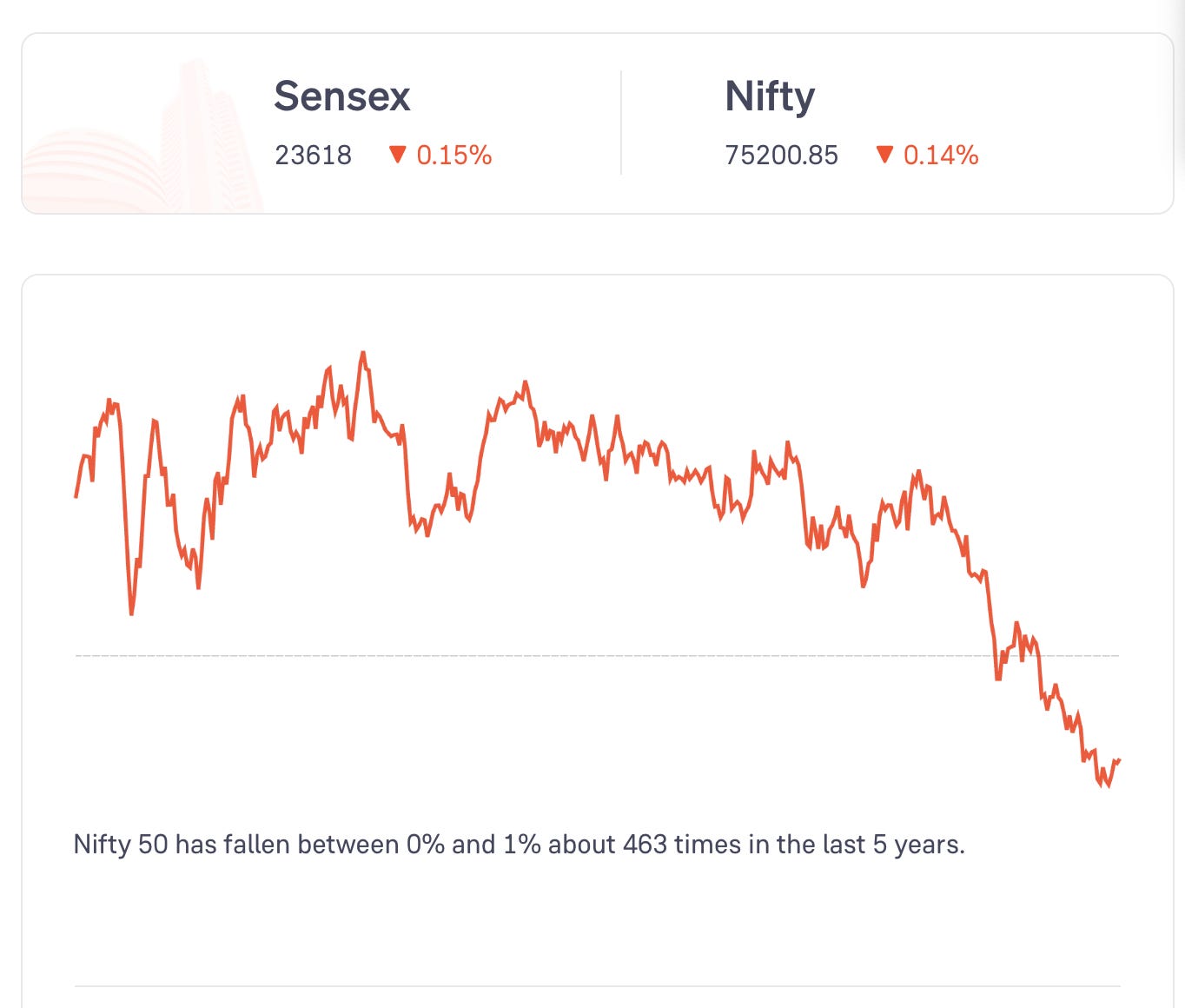
Markets opened above yesterday’s closing point.
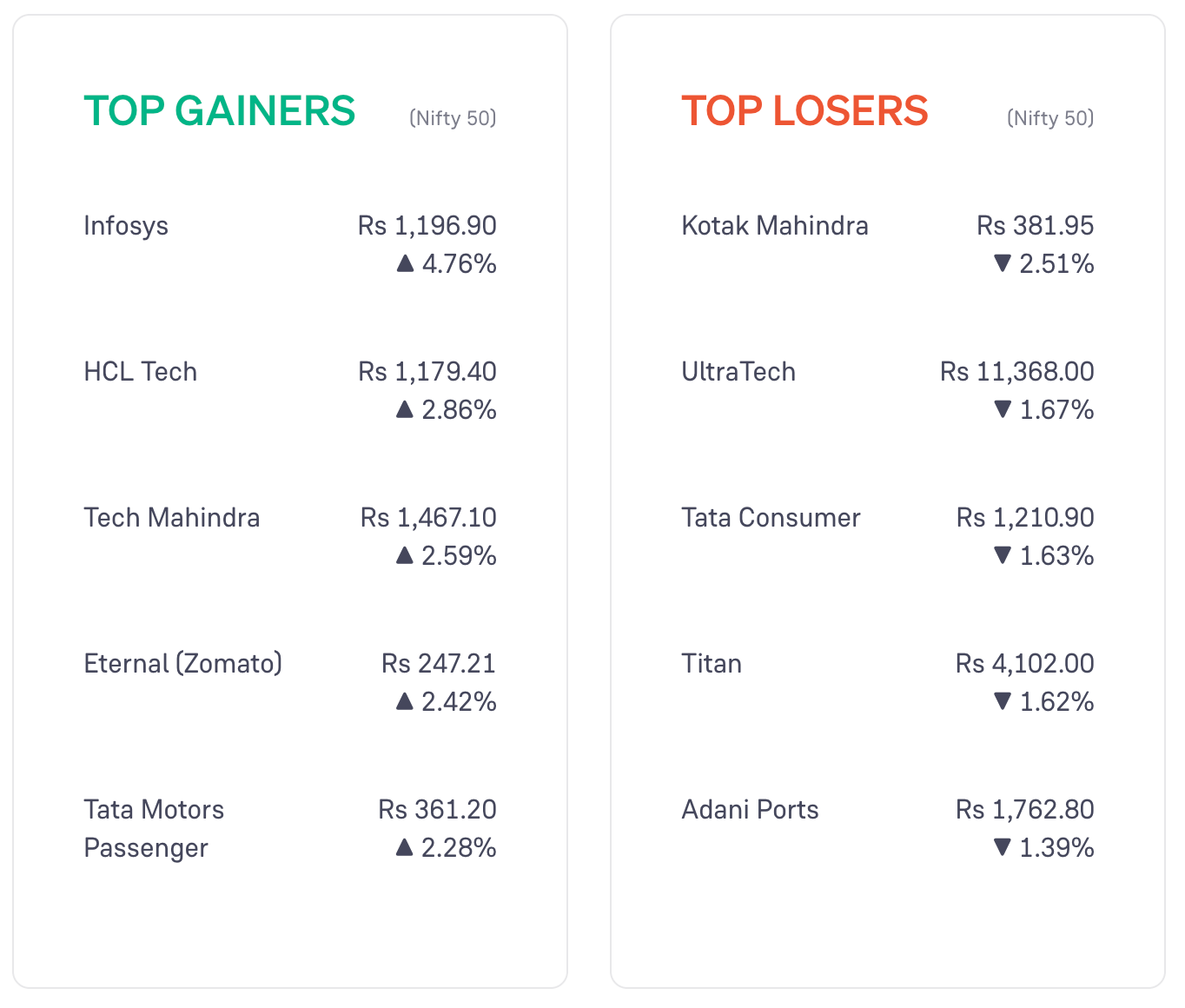
IT stocks and realty stocks rose the most today. Private bank stocks and cement stocks fell the most.
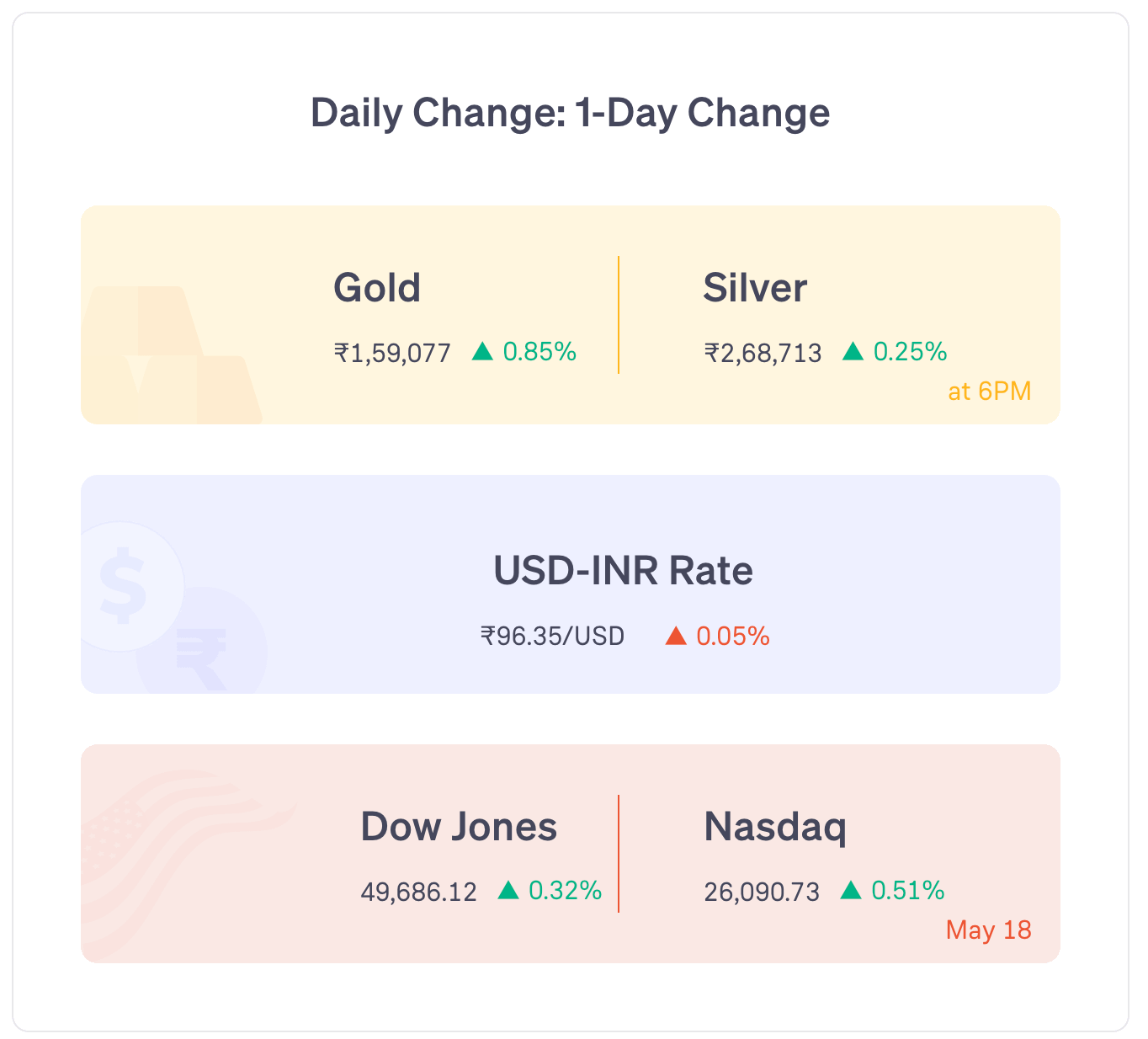
Global markets: Most US markets closed in red. Asian markets showed a mixed trend. Most European markets rose (as of 6 pm IST).
News
India’s petrol and diesel prices were raised by approximately Rs 0.90 per litre, to offset the losses due to the West Asia crisis. This is the second hike in five days, following a Rs 3 per litre increase.
India and Norway signed 5 agreements to expand co-operation in science and innovation, on clean energy, offshore wind, sustainability, geosciences, and academic collaboration.
The Indian Railways approved multiple infrastructure projects including the Rs 993 crore Arakkonam-Chengalpattu doubling project in Chennai, the Rs 962 crore Kiul-Jhajha 3rd line project on the Howrah-Delhi corridor, and safety and rehabilitation work on the Jammu-Shri Mata Vaishno Devi Katra section worth Rs 238 crore.
Stocks Updates
ITC: acquired an additional stake in Mother Sparsh for around Rs 30 crore, increasing its holding from 39.47% to 49.32%.
Bharat Electronics: net profit rose 4.62% year-on-year to Rs 2,225 crore in the Jan-March quarter. Dividend announced: Rs 0.55 per share
Indian Oil: net profit rose 77.98% year-on-year to Rs 14,458 crore in the Jan-March quarter. Dividend announced: Rs 1.25 per share.
Lupin: received USFDA tentative approval for Revefenacin inhalation solution used for COPD treatment. The drug had estimated annual US sales of around $260.7 million.
Zydus Lifesciences: net profit rose 8.68% year-on-year to Rs 1,272.50 crore in the Jan-March quarter. Dividend announced: Rs 1 per share, with 24 July as the record date. Board also approved a Rs 1,100 crore buyback, with 29 May as the record date.
JSW Energy: will acquire an additional stake in Toshiba JSW Power Systems for Rs 150 crore to strengthen the thermal equipment supply chain.
Bharat Forge: signed an MoU with the Andhra Pradesh government to set up India’s first private-sector marine gas turbine facility in Visakhapatnam.
Word of the Day
Free Cash Flow
It is the cash a company has left after spending on day-to-day business operations and capital expenditure
It shows how much cash is available for expansion, debt repayment, dividends, or other business needs.
A company with strong free cash flow is generally considered financially healthy.
A negative free cash flow may indicate that a company has a high spending, weak operations, or did some expansion-related investments.
Example: if a company generates Rs 1,000 crore from operations and spends Rs 300 crore on new plants and equipment, its free cash flow is Rs 700 crore.
6 Day Course
Theme: imports & exports of India
Day 2: Tuesday
After oil and gas, the next big import is precious metals (like gold), gems, jewellery, precious stones, etc.
Purchase of gold for monetary and sentimental value is so integral to India.
The import of gold, silver, precious stones, etc amount to nearly $90 billion in imports every year.
The next after this is electrical and electronic equipment which is about $83 billion.
Heavy machinery imports including factory equipment, boilers, turbines, etc amount to about $60 billion in imports every year.
Organic chemicals used in various industries amount to about $25 billion.
Yet another huge import item is plastics which stands at about $21 billion.
Featured Question
Q. “When people say international exposure is needed for better diversification, are US and India enough? Or should I think about Europe, East Asia etc also? How do I know if it’s good for my financial goals?”
Global diversification offers protection, yes.
The question is how much diversification?
Many assume investing in the US markets is enough for global exposure since US companies are very widely spread across the world.
This theory is true to a great extent.
This is why investing in the US markets has become so common among global investors.
Many other investors feel the need to invest in other markets like the European markets for diversification. This is an individual call.
Some investors try to invest more in emerging markets (like India, Vietnam, South Korea, etc) to get higher returns.
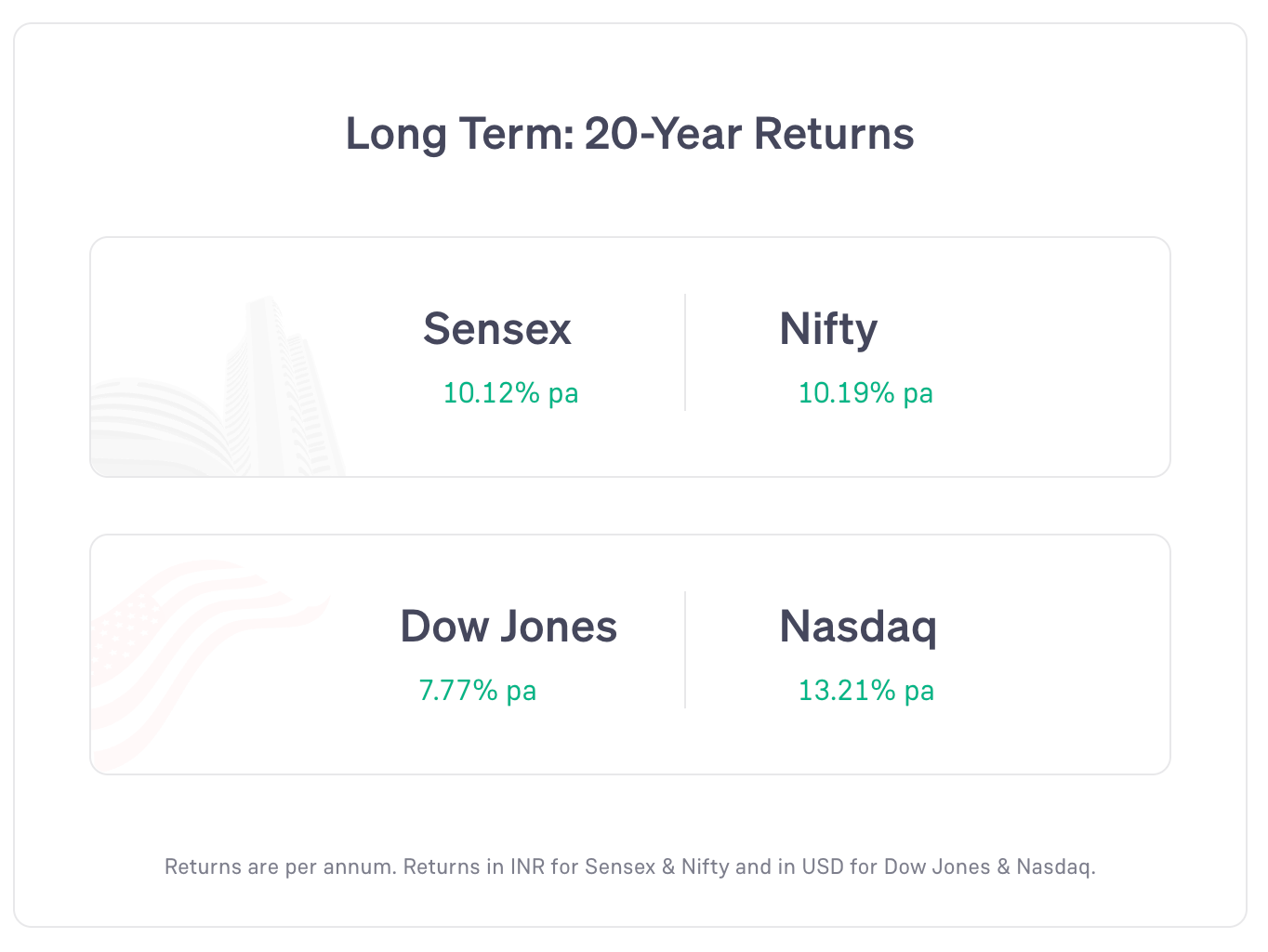
All said and done, you must remember that more diversification reduces risk, but also reduces returns.
Greater diversification leads to spreading out of returns and averaging across all investments.
For this reason, many investors stick to a limited number of countries. Example: their home country + the US.
The information presented in this post has been compiled and prepared by Groww Invest Tech Pvt Ltd and is intended solely for informational purposes. It is not tailored to any specific investment objectives, financial situations, or needs of any individual investor. The content should not be construed as investment, financial, legal, or tax advice and should not be relied upon as a substitute for professional consultation.
Investing in securities markets involves inherent risks. Investors are advised to carefully review all relevant documents and consider their own risk tolerance before making any investment decisions.
Mutual fund investments are subject to market risks; please read all scheme-related documents carefully. Past performance of financial instruments, schemes, or markets is not indicative of future results.
Groww Invest Tech Pvt Ltd is registered with the Securities and Exchange Board of India (SEBI) under Registration No: INZ000301838, as a Research Analyst under No: INH200008662, as a Depository Participant under No: IN-DP-417-2019, and with the Association of Mutual Funds in India (AMFI) under ARN-111686.
SEBI registration details: View registered name and registration numbers
Research Analyst Disclaimer: View Research Analyst disclaimer
Did you like this edition?
Leave a feedback here!