

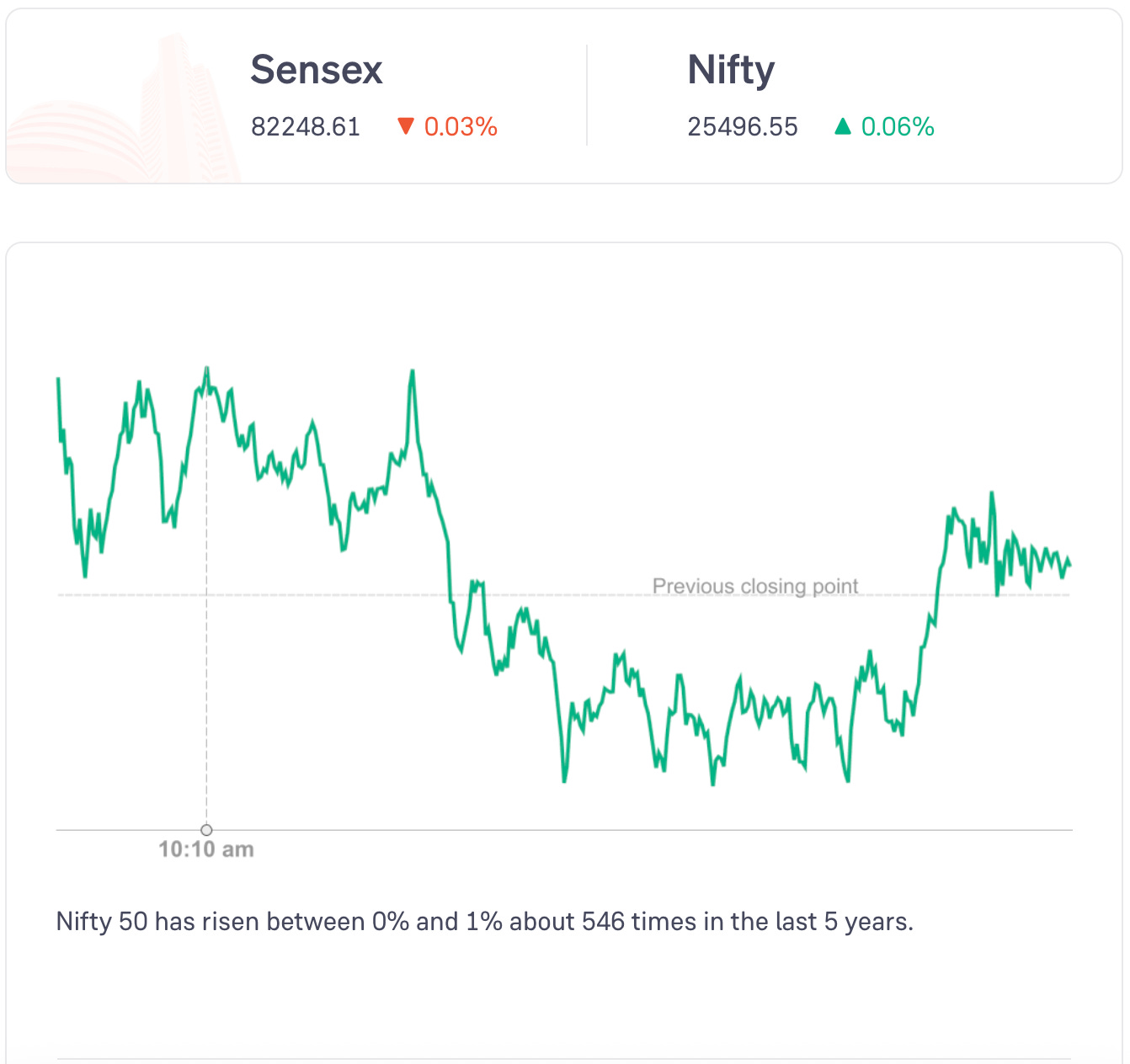
Markets opened above yesterday’s closing point.
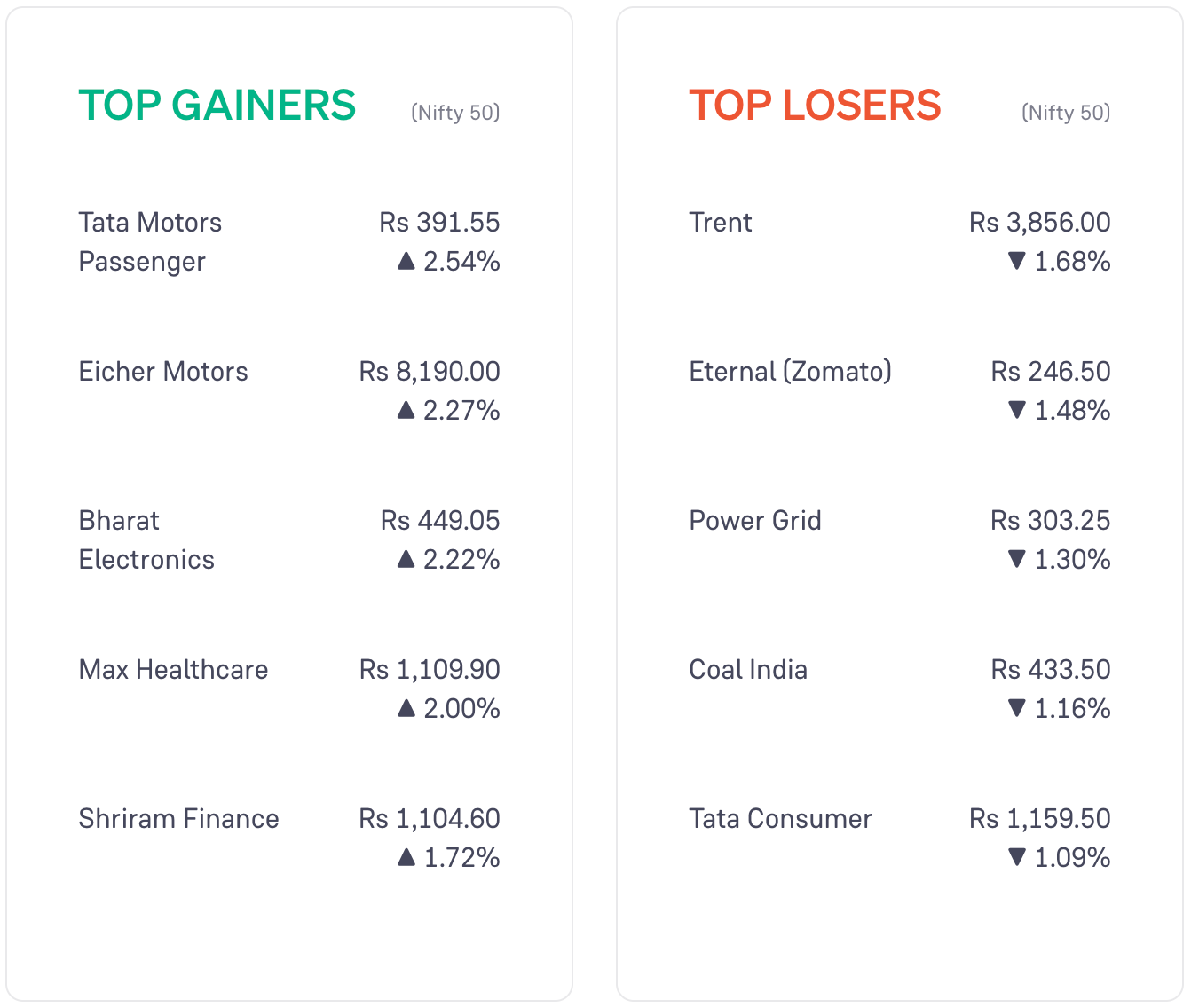
Healthcare stocks and pharma stocks rose the most today. Media stocks and FMCG stocks fell the most.
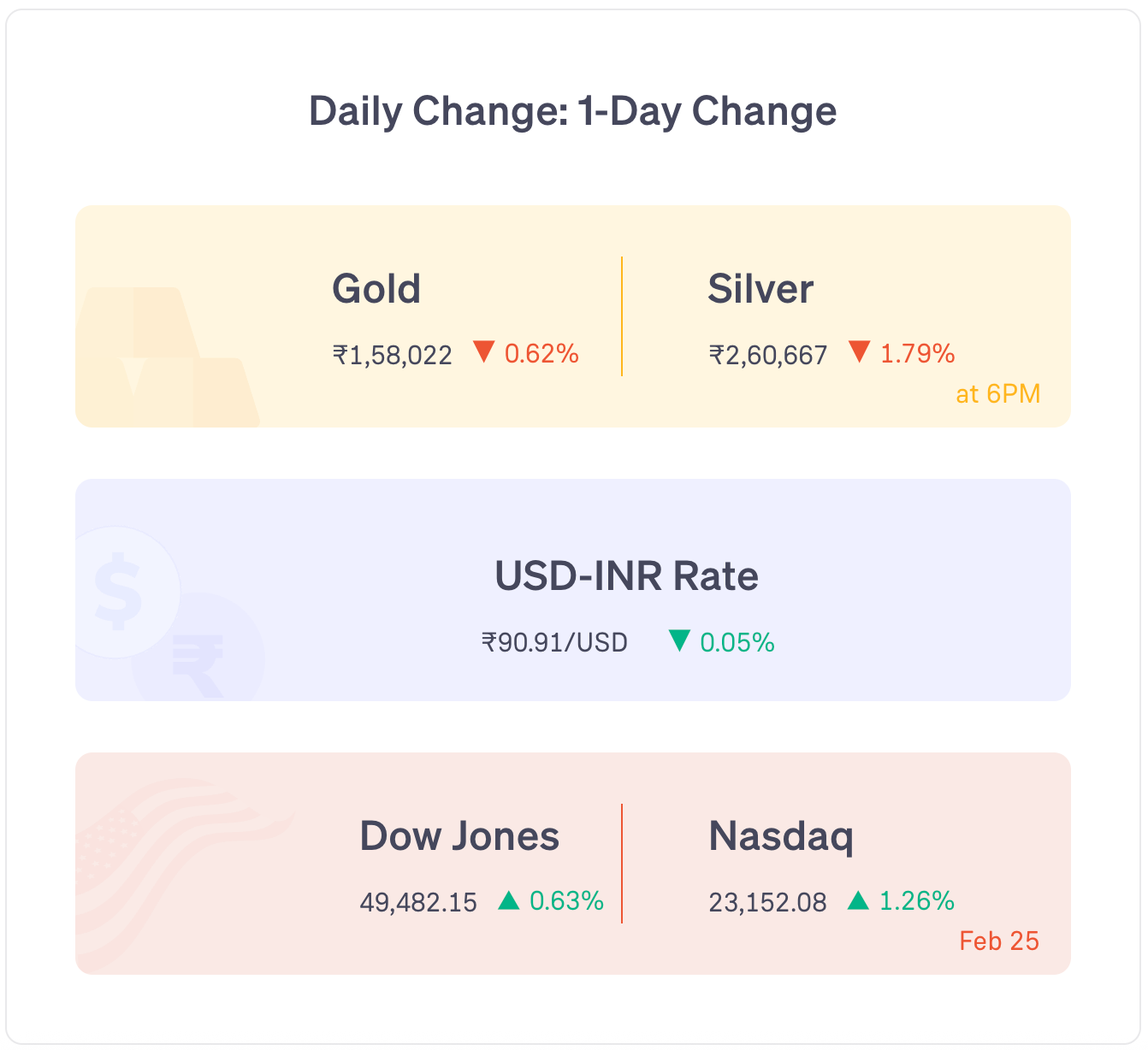
Global markets: US markets and most Asian markets rose. European markets rose (as of 6 pm IST).
News
The central government approved Rs 871 crore worth of railway infrastructure projects across Rajasthan, West Bengal and Kerala to modernize and expand capacity.
Private sector listed non-financial companies saw a net profit growth of 5.2% year-on-year in the Oct-Dec quarter (vs 1.5% in the previous quarter). Sales saw a growth of 10.1% (vs 8% in the previous quarter): RBI
India and Israel now have a Special Strategic Partnership, aiming to expand cooperation in defense, trade, innovation, energy, space, and digital payments.
SEBI has revamped mutual fund rules by scrapping solution‑oriented schemes (like children’s and retirement funds), introducing Life Cycle Funds, and tightening portfolio and naming norms to make mutual funds investor-friendly.
Omnitech Engineering IPO has been subscribed 0.13 times. Retail subscription: 0.13 times. IPO closes tomorrow (27 Feb).
Stocks Updates
SBI Life: declared an interim dividend of Rs 2.70 per share for FY26. Record date: 6 March.
BPCL: incorporated a wholly owned subsidiary in Singapore to set up a trading desk for crude oil, natural gas, and petrochemical products.
Cholamandalam Investment: clarified that media reports of Mr. Vellayan Subbiah’s exits are false, confirming he remains Executive Chairman until March 2030.
NTPC: declared commercial operation of 50 MW (out of 200 MW) at its Dayapar Wind Project Phase-II in Gujarat.
CG Power: company subsidiary, CPSI (Indonesia), agreed to sell its factory assets to PT Prima Layanan Nasional Enjiniring for IDR 155 billion (around Rs 80-85 crore).
Bharat Electronics: secured defence orders worth Rs 733 crore, including TR modules, communication equipment, radars, jammers and related systems.
Word of the Day
Inventory Turnover
It measures how many times a company sells and replaces its inventory over a specific period
In simple terms, it is the speed at which a business sells its inventory
A low inventory turnover may signal overstocking or weak demand. A high turnover indicates that a company manages its inventory efficiently but may also indicate that the inventory stocking is inadequate.
One company’s turnover alone may not show anything. Investors can compare it with companies in the same industry to understand it better.
6 Day Course
Theme: SIF
Day 4: Thursday
SIFs are categorised in a manner similar to mutual funds.
So, they are equity oriented, debt oriented, and hybrid.
Within equity, there is equity long-short, equity ex 100 (similar to small and mid-cap categories), sector rotation (equities from 4 specified sectors).
Under the debt category, we have debt long-short that invests in bonds, CPs, G-secs, etc.
Another one is sectoral debt where they invest in debt from certain specified sectors.
Under the hybrid category, there’s the subcategory called active asset allocator which dynamically adjusts allocation among different kinds of assets.
And another kind of hybrid SIF is called long-short fund which invests in both debt and equity with flexibility to hedge.
Featured Question
Q. “If Sensex has been giving 11% returns every month for the last 20 years, then how can I invest in it? Or what can I invest in?”
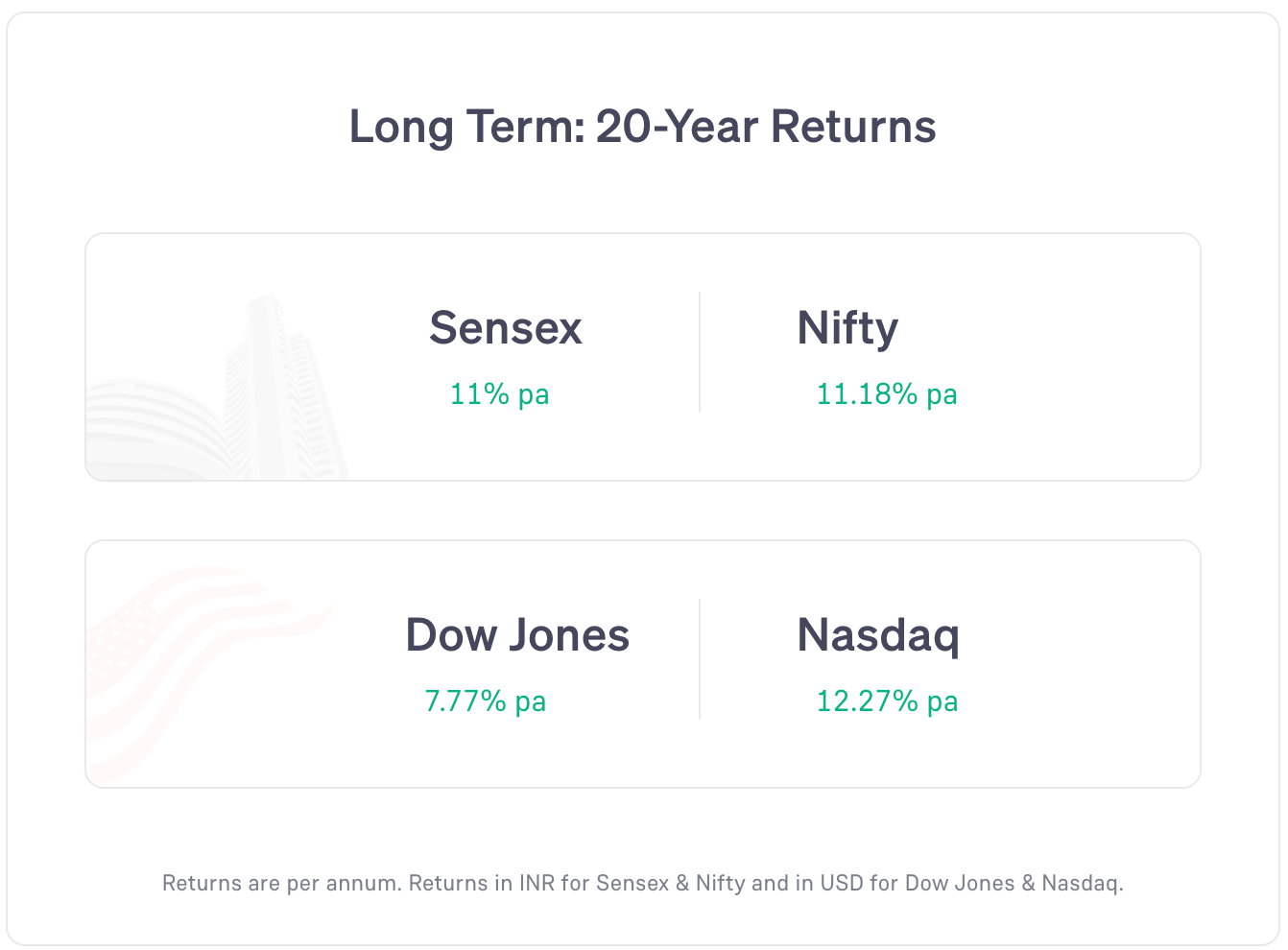
The Sensex has given about 11% per year (not per month) over the last 20 years.
Sensex is an index made up of the 30 biggest stocks on the Indian stock markets.
If you want to invest in Sensex, the best way to do so would be to invest in an index fund that mimics the index.
Different index funds mimic different indices. So make sure to check that the index fund invests in the index you are interested in.
Did you like this edition?
Leave a feedback here!