

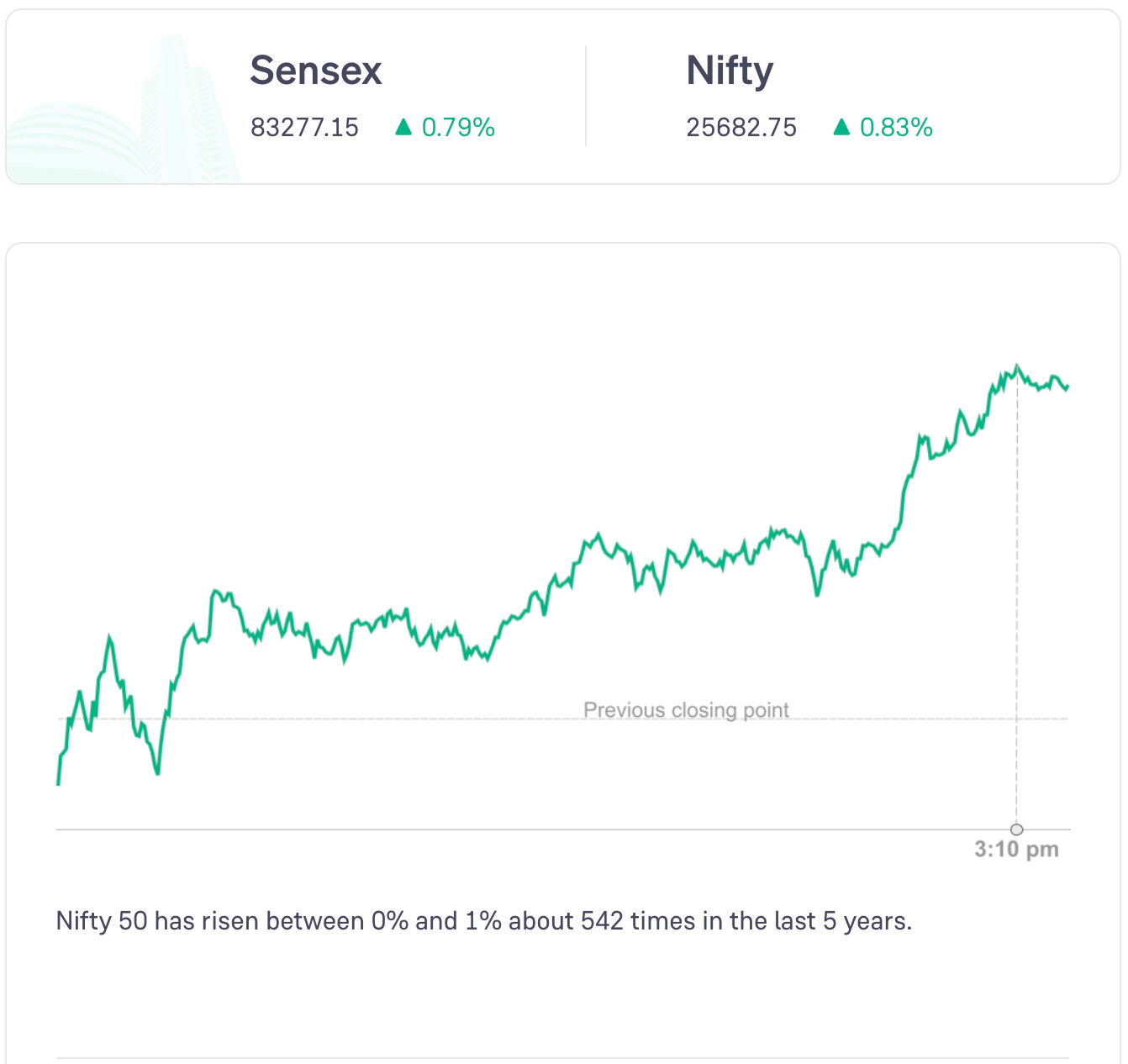
Markets opened below Friday’s closing point.
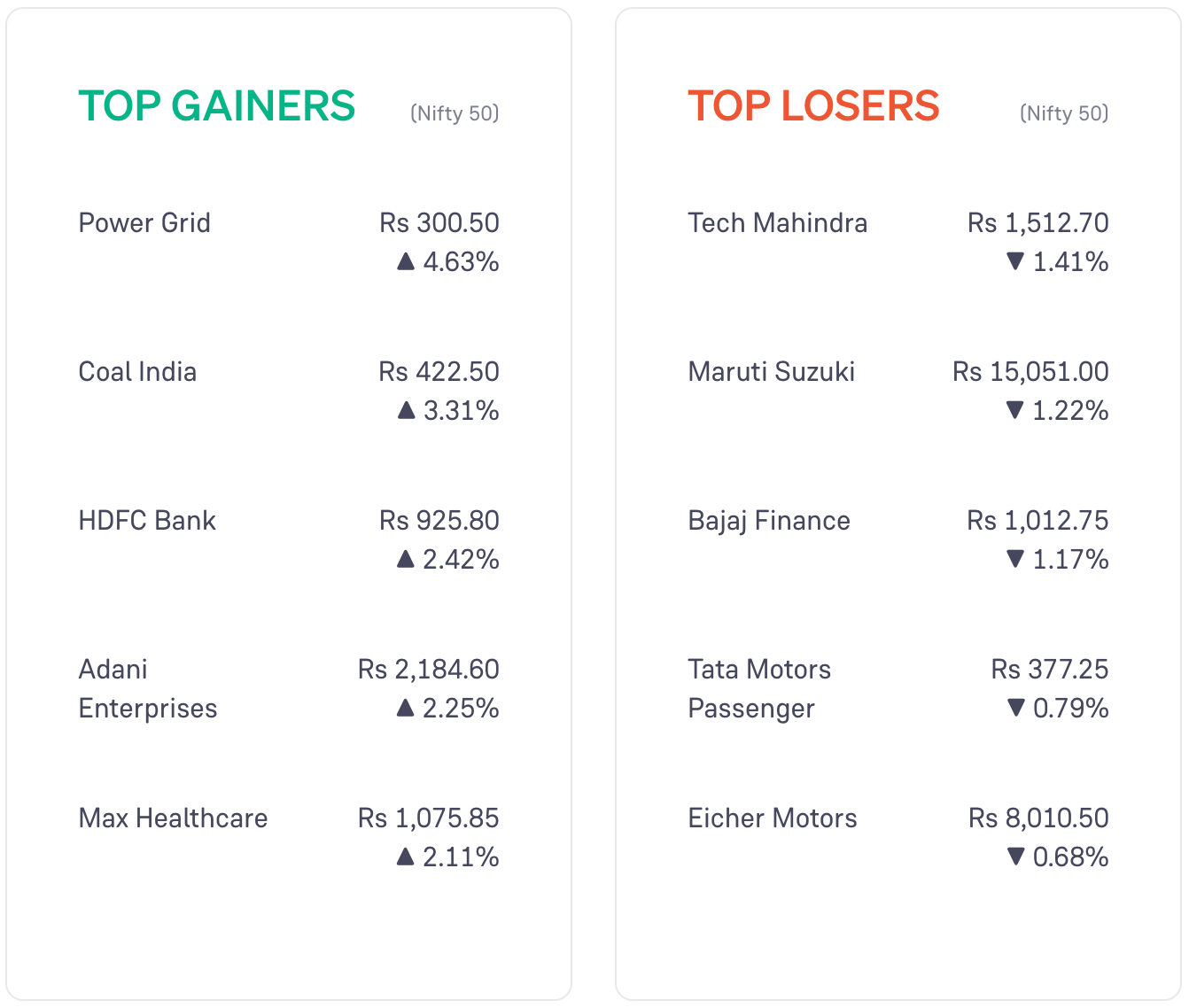
Realty stocks and PSU bank stocks rose the most today. Media stocks and auto stocks fell the most.
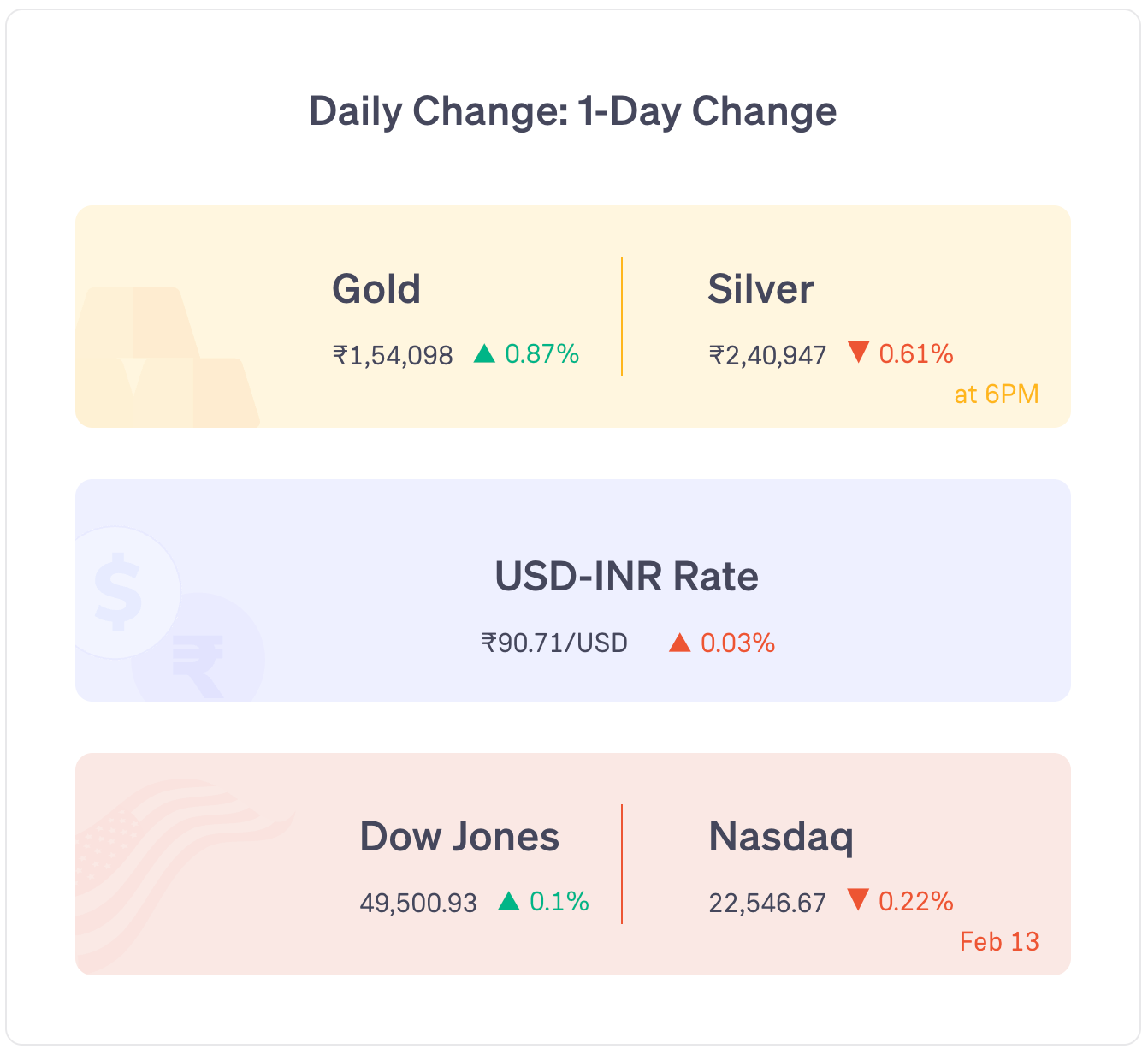
Global markets: Most US markets closed flat on Friday. Asian markets showed a mixed trend. European markets rose (as of 6 pm IST).
News
India’s wholesale inflation rose to 1.81% in Jan (vs 0.83% in Dec).
India’s unemployment rose to 5% in Jan (vs 4.8% in Dec).
India’s merchandise exports rose 0.6% year-on-year to $36.56 billion in Jan while imports rose 19.2% to $71.24 billion. The trade deficit widened to $34.68 billion.
The RBI tightened bank lending norms to stock brokers and capital market intermediaries, from 1 April requiring all credit to be fully backed by collateral and banning bank funding for proprietary trading, to reduce risk in the financial system.
The central government approved multiple road and rail infrastructure projects in Maharashtra, Gujarat and Telangana with a total cost of around Rs 11,000 crore. It also approved a Rs 18,662 crore underwater road and rail tunnel under the Brahmaputra in Assam.
Fractal Analytics IPO listed on the stock exchanges at a discount of 2.67% to its issue price and closed 5.87% down at the end of the day.
Aye Finance IPO listed flat on the stock exchanges and closed 0.07% down at the end of the day.
Stocks Updates
REC: incorporated Vizag Power Transmission Ltd as a wholly owned subsidiary to develop a transmission system for proposed green hydrogen and ammonia projects in Andhra Pradesh.
TCS: and AMD will deploy AMD’s Helios AI infrastructure platform in India to support large-scale AI data centers and national AI initiatives.
L&T: agreed to sell its wholly owned subsidiary ‘Nabha Power’ to Torrent Power for Rs 3,660.87 crore after getting necessary approvals.
Bharat Electronics: approved a 50:50 joint venture with France’s Safran Electronics & Defence to manufacture and support the HAMMER weapon system in India.
Word of the Day
Capital Gains Tax
It is the tax you pay on the profit made after selling an asset
The profit earned after selling assets like stocks, bonds, real estate, etc. is known as capital gains.
The amount of tax paid depends on how long you have had the asset.
Short-term and long-term capital gains (STCG and LTCG) are taxed differently. The time required for an asset to qualify as long-term or short-term can also vary.
Example: if you sell equity shares within 12 months, the profit is taxed at 20% (STCG).
If you sell them after 12 months, the profit is taxed at 12.5% (LTCG) with exemption up to Rs1.25 lakh annually.
6 Day Course
Theme: mistakes made by experienced investors
Day 1: Monday
A lot of attention is given to common mistakes committed by new investors.
But not enough attention is given to mistakes that are common among experienced investors.
This week, we’ll look at those.
One of the most common ones is trying to see patterns where they don’t exist.
Example: an investor who has been through a certain bad period (2008) would start expecting the next bear cycle to be similar and take just as long to recover.
But in reality, no two good or bad periods are similar.
The period, the percentage up/down, and volatility can be vastly different.
Seeing patterns where none exist can lead to ill-informed decisions.
Featured Question
Q. “Should I keepy SIPs active during a falling market?”
A falling market makes your buying price low.
In a falling market, you get more for your money.
Think of it like this: in a normal market you get 1 kg of onions for Rs 50. But during some months, you can get the same onions for Rs 30.
By continuing your mutual fund SIP, you buy at a lower price.
This is one reason why many people not just continue their SIP in a falling market but also increase their investments during that time.
When the markets start rising again, the hope is that you will get better returns because of the lower purchase price.
However, you don’t know for how long the market is going to fall. The market might even fall further after your investment. Bear markets can last for years.
If you need that money urgently, you might have to sell your investments with losses.
Did you like this edition?
Leave a feedback here!