

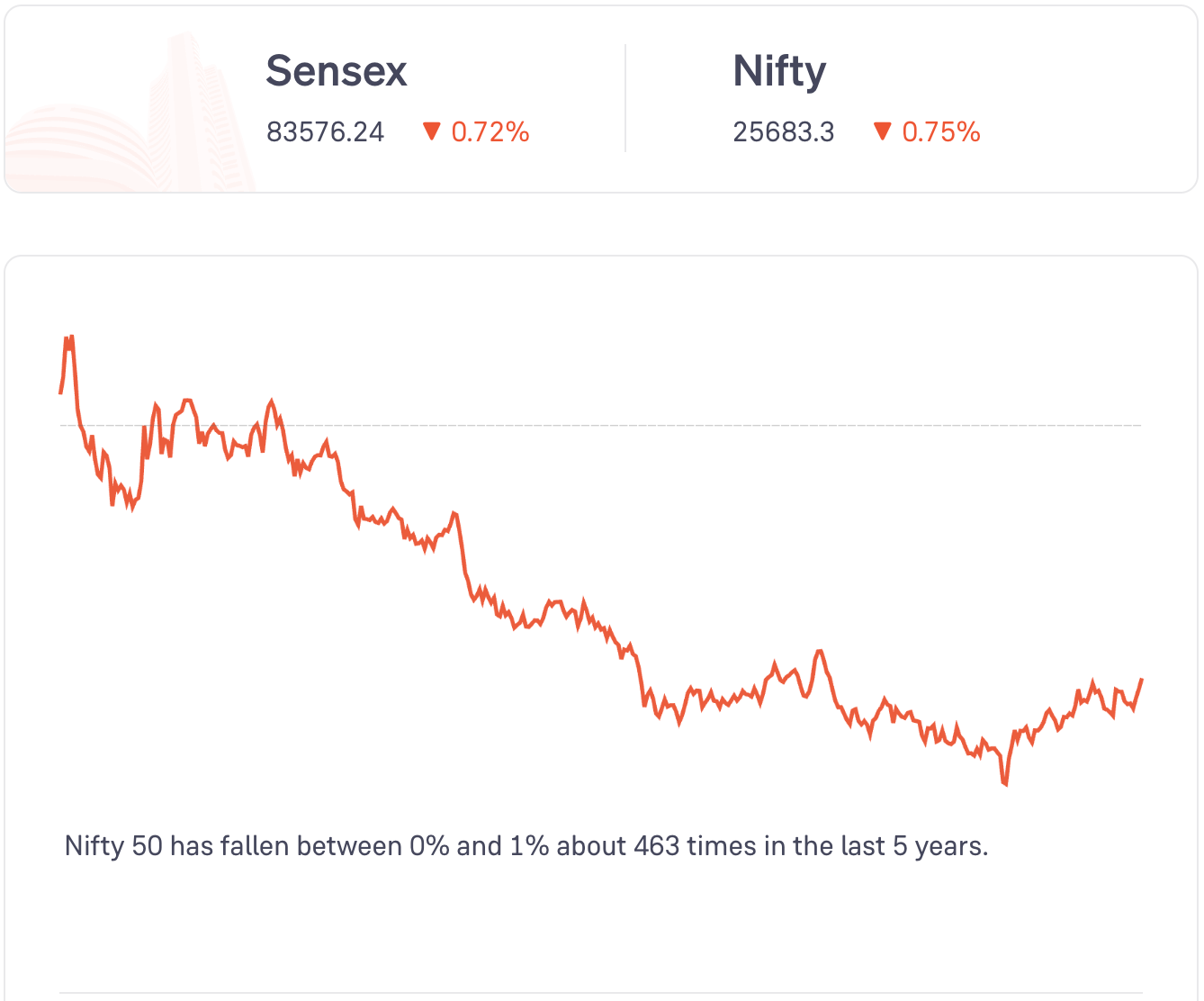
Markets opened above yesterday’s closing point.
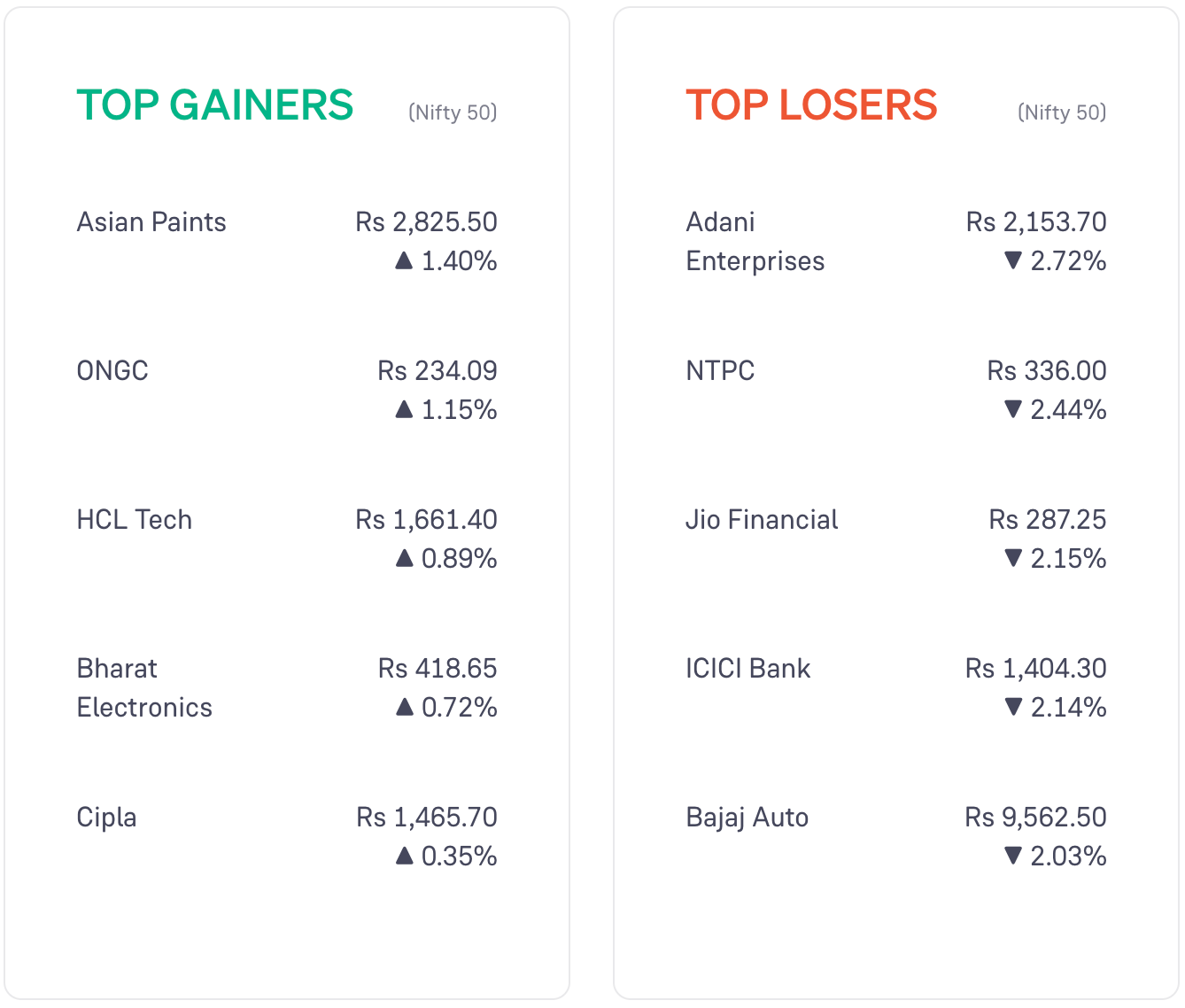
Oil and gas stocks and IT stocks rose the most today. Realty stocks and chemicals stocks fell the most.
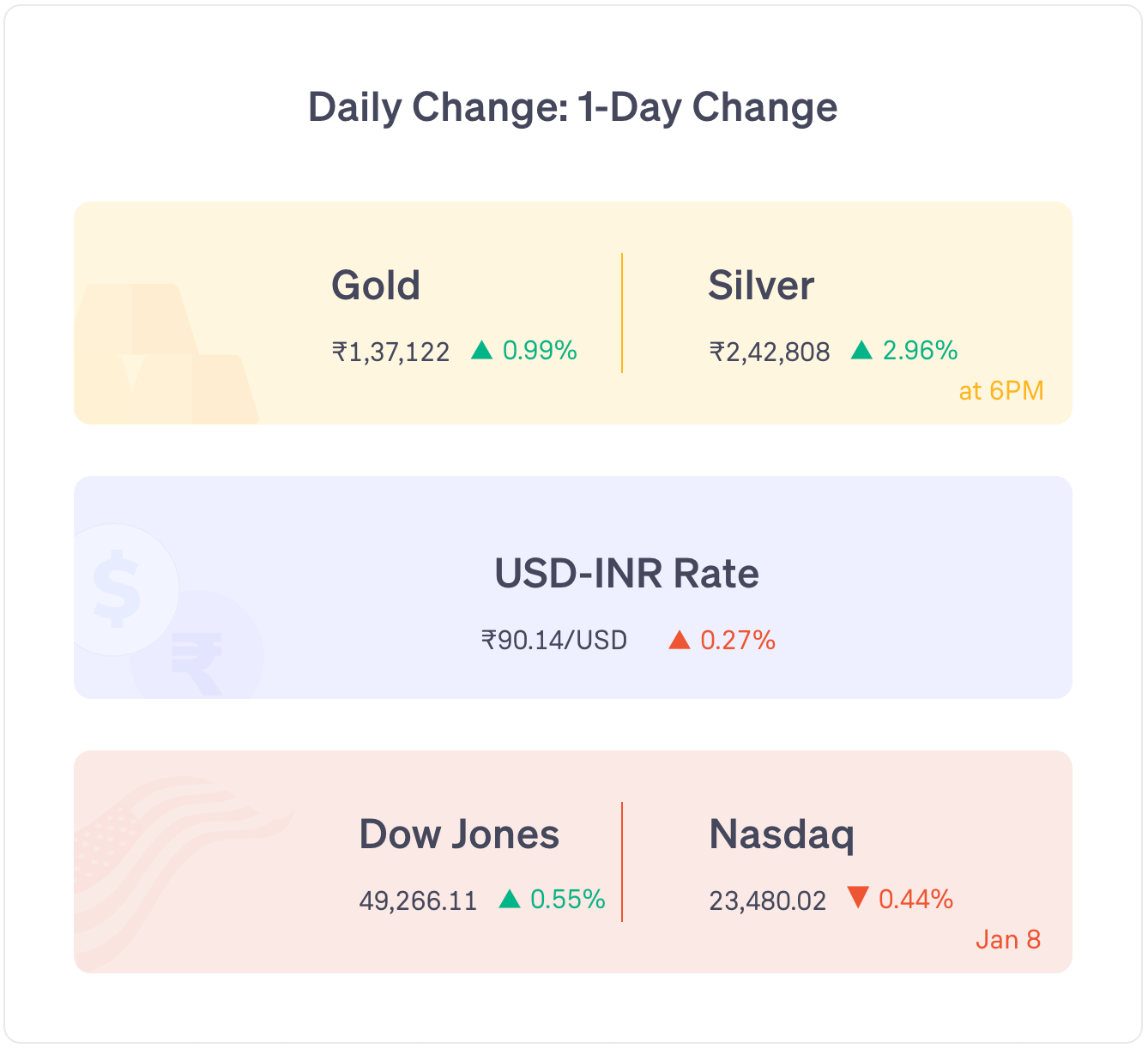
Global markets: US markets showed a mixed trend. Most Asian markets rose. European markets rose (as of 6 pm IST).
News
Monthly mutual fund SIP inflows were at a record high of Rs 31,002 crore in Dec: AMFI
India’s forex reserves fell by $9.81 billion to $686.8 billion in the week that ended on 3 Jan.
The US Commerce Secretary has said that the India-US trade deal stalled because PM Modi didn’t call Trump to finalise it. India has refuted these claims.
China’s retail inflation rose by 0.8% year-on-year in Dec (vs 0.70% in Nov), the highest level in nearly 3 years.
RBI cancelled the registration of 35 NBFCs and accepted the voluntary surrender of registration from 16 others for failing to meet regulatory requirements.
Bharat Coking Coal IPO has been subscribed 8.09 times. Retail subscription: 9.26 times. IPO closes on 13 Jan.
Stocks Updates
BEL: has received additional orders worth Rs 596 crore since its last disclosure on 1 January 2026. Orders received include drone detection and jamming system, mobile communication terminals, software solutions, upgrades, spares, services, etc.
NTPC: Consortium of NTPC and Maharashtra State Power Generation Company (MAHAGENCO) have acquired 100% stake in Sinnar Thermal Power Limited (STPL), that has a generation capacity of 1,350 MW.
Vodafone-Idea (Vi): the AGR dues of the company for FY2007-FY2019 have been frozen. The company will pay up to Rs 124 crore annually from FY2026-2031 and Rs 100 crore annually from FY2032-2035. The remaining AGR dues will be paid in equal yearly instalments up to 2041.
Word of the Day
InvITs (Infrastructure Investment Trusts)
It is a type of investment vehicle that allows investors to invest in infrastructure projects
Instead of owning physical assets, investors buy units of the InvIT, similar to buying mutual fund units.
These can be projects like roads, pipelines, power transmission lines, etc.
InvITs earn money from the cash generated by these projects (like tolls or usage fees) and share most of this income with investors as regular payouts.
They are regulated by SEBI.
6 Day Course
Theme: over-valued stocks
Day 5: Friday
Many times, investors tend to compare one company to other companies within the same sector.
So PE ratios and PEG ratios would be compared.
If no earnings are present, then revenue, market share, potential, etc would be analysed.
While this method works well many times, it is important to recognise that it is not always correct.
Many times, all or most companies in a sector end up becoming overvalued.
In such cases, comparing with other companies is misleading. It is better to compare with other companies’ historical metrics.
Again, the idea is that not all companies would be improperly valued all the time.
Valuation is a tricky art and investors have to learn this by practicing themselves.
The methods mentioned here are a good starting point but definitely not all there is to finding out if a stock is overvalued.
Featured Question
Q. “When should I redeem from a fund even if I am not in need of funds, but because of a presumption that the performance may become poor.”
If you don’t need the money, then why withdraw?
There are a few reasons to do this.
One of the most common reasons is re-balancing.
Investors routinely move money from one asset to another. Example, from equity mutual funds to debt mutual funds.
This is done periodically to maintain the desired percentages in different assets (example: 50% in equity, 30% in debt, 5% in gold, etc).
If not re-balancing, another common reason is underperformance.
If an investor is sure the mutual fund is not performing well any more, the investor might feel like moving the money to another option.
Yet another reason is change in philosophy.
Sometimes, a mutual fund’s nature may change — and that may not align with the way an investor thinks.
Say a fund manager changes, or the top targeted sectors (tech stocks, infra stocks, etc) are changed.
If such changes do not align with an investor’s philosophy, the investor might withdraw and invest elsewhere.
Whenever you are planning to sell an investment, make sure you check the amount of money you will lose in charges (if any) and taxes (if any).
Take all decisions factoring those in.
Did you like this edition?
Leave a feedback here!
Informative