
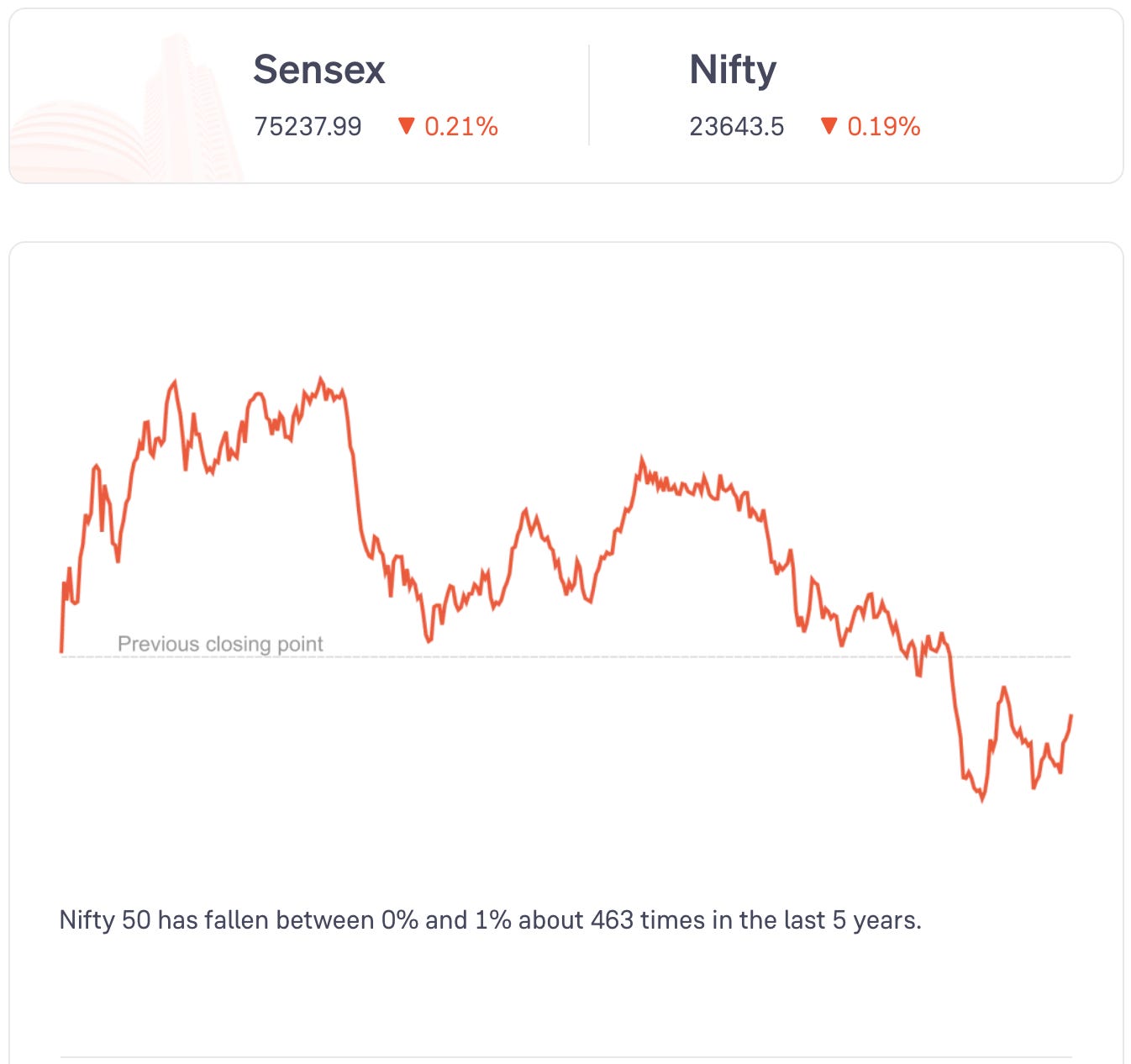
Markets opened slightly above yesterday’s closing point.
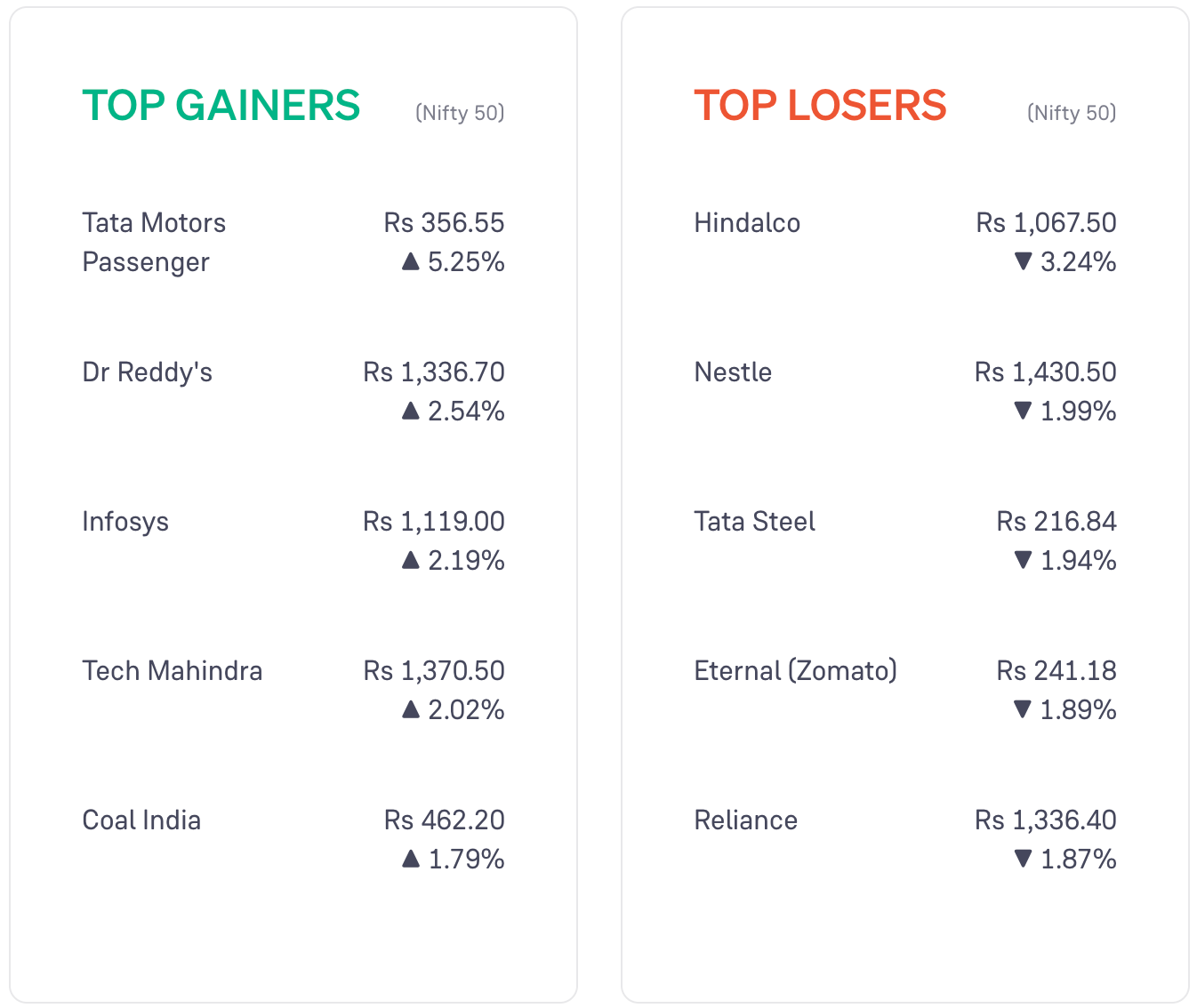
Media stocks and IT stocks rose the most today. Metal stocks and PSU bank stocks fell the most.
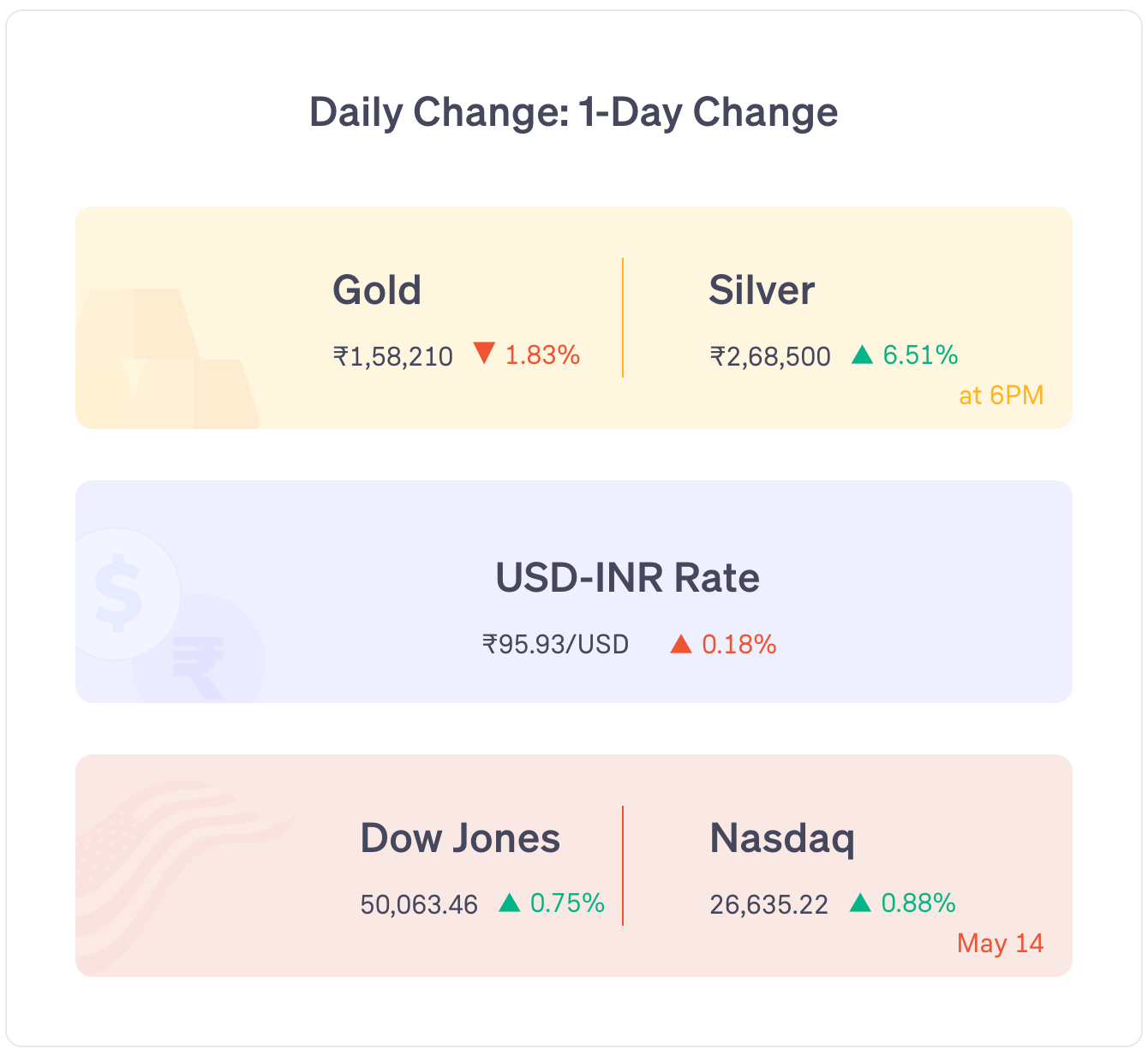
Global markets: US markets rose. Asian markets and European markets fell (as of 6 pm IST).
News
The Indian Rupee hit a fresh all-time low, crossing Rs 96 per USD during the day before settling at Rs 95.92.
India’s merchandise exports grew 13.79% year-on-year in April and imports grew 10.03%. The merchandise trade deficit rose to $28.38 billion.
India’s forex reserves rose by $6.3 billion to $696.99 billion in the week that ended on 8 May.
India’s unemployment rate rose marginally to 5.2% in April, (vs to 5.1% in March).
India’s passenger vehicle sales rose 25.4% year-on-year to 4.37 lakh units in April: SIAM
Stocks Updates
Coal India: government approved IPO and listing of its subsidiary Mahanadi Coalfields through an up to 25% stake sale.
Tata Steel: net profit rose 124.92% year-on-year to Rs 2,925.74 crore in the Jan-March quarter. Dividend announced: Rs 4 per share, with 12 June as the record date. It will also acquire an additional 23% stake in TM International Logistics for Rs 335 crore, raising its holding to 74%.
Wipro: completed the acquisition of Olam Group’s IT and digital services business, Mindsprint, making it a wholly owned subsidiary of Wipro.
Solar Industries: net profit rose 69.95% year-on-year to Rs 547.63 crore in the Jan-March quarter.
Siemens Limited: received government approval to shift financial year from October-September to April-March cycle.
Bharat Forge: subsidiary Agneyastra Energetics will invest Rs 1,500 crore in defence manufacturing facility in Andhra Pradesh.
Word of the Day
Sovereign Rating
It is the credit rating given to a country by global rating agencies to show its ability to repay debt
It reflects the country’s economic strength, financial stability, government finances, and risk of default.
A higher sovereign rating helps a country borrow money at lower interest rates and attracts more foreign investment.
Similarly, a lower rating might increase borrowing costs, and reduce investor confidence making foreign investors more cautious about investing in the country.
6 Day Course
Theme: making sense of MF returns
Day 5: Friday
Many times, some mutual funds give exceptionally high returns due to one-off reasons.
Example: one stock they own ends up massively, one sector does exceptionally well, etc.
In such cases, investors rush to invest in the mutual fund. This is often a bad strategy.
These mutual funds that have exceptional returns due to one-time reasons will likely not repeat the same success again.
In short, the investors are investing in it after it has already gone up.
The rationale is that the mutual fund will continue giving the exceptionally high return.
Yes, that also happens. Really good mutual funds do manage to do just that. But not commonly.
The long conclusion of all of this is that no matter what, investors must always look at long-term returns’ consistency to determine if a mutual fund (of any category) is doing well.
Featured Question
Q. “How to identify which stocks with low promoter holding are good for long-term? How to pickup ITC, ICICI HDFC, M&M as low promoter holding is also a red flag in most the cases.”NCDs are a type of bond.
Not necessarily.
Yes, a high promoter ownership shows that the founders/promotors/owners are bullish on the company’s future. Hence they are still holding on to it.
In case of such companies, if the promoter starts selling, it is often seen in a negative light because investors think the promoter is losing confidence in the company.
There are many companies where the promoter has already exited and sold off their shares (or reduced their ownership percentage to a very low value).
The selling could have happened for various reasons — the promoter wanted to resign and not deal with the company, the promoter wanted to pay off loans, etc.
This does not automatically mean the company is not good. There are many companies that are doing very well without a high promoter holding.
Investors must analyse the business and its fundamentals to understand its future better.
Promoter holding can be one of the many factors to look at, but not the only factor to look at.
Did you like this edition?
Leave a feedback here!