

There’s a remote island in the Pacific Ocean.
Omelek Island.
It is covered in sandy beaches, coconut trees, and not much else.
The island itself is only about as big as 8 football fields. And nobody lives on it.
It is really remote.
It is part of the larger group called Marshall Islands.
Between 1946 and 1958, the US conducted 67 nuclear bomb tests in this island group. The islands are so far from any major civilisation that the US didn’t stop at nuclear tests.
Once they were done testing nuclear bombs, the US used them to test the accuracy of missiles fired from California.
When the tests were done, most islands returned to being the way they used to be — empty and deserted.
Omelek Island saw one key event though.
A rocket took off from the tiny island on 24th March 2006 and failed. Another one took off in March 2007 and failed. Yet another one failed in August 2008.
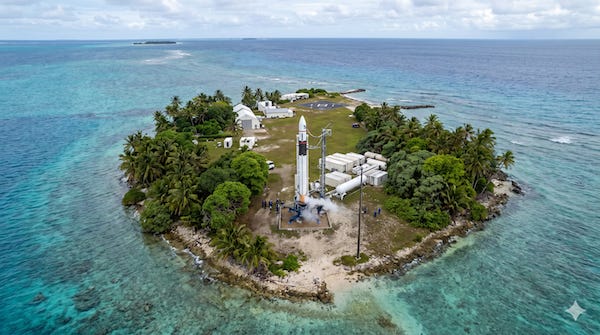
This was a bunch of engineers led by Elon Musk. They were almost out of money.
On 28th September, 2008, they got their first successful launch. And with that, was cemented SpaceX’s pitch. Space transportation.
The SpaceX Journey
SpaceX found it difficult to launch any rockets from sites in America. So they chose Omelek Island because of its remoteness.
SpaceX’s story from its early days is a wild mix.
The team had visited Russia to buy Intercontinental Ballistic Missiles (ICBM). They thought they could use the missiles to send rockets to space. (The plan did not work out).
The successful launch in 2008 was one of many. It was also one of many others that failed.
For SpaceX to be viable, it had to do much more than just launch a rocket. It had to lower the cost of transporting items to space.
When rockets are sent to space, they are spent. A rocket is used once and never again.
Billions of dollars worth of rockets were single-use vehicles.
If sending items to space had to be made cheaper, this cost would have to be brought down many times.
SpaceX had the grand idea of reusing rockets; of sending rockets up and then bringing them back to be reused again, like a car.
Many failed attempts took place.
Then, on Dec 21, 2015, SpaceX’s Falcon 9 rocket went up, came back, and landed vertically, on its own power.
A near impossible site.
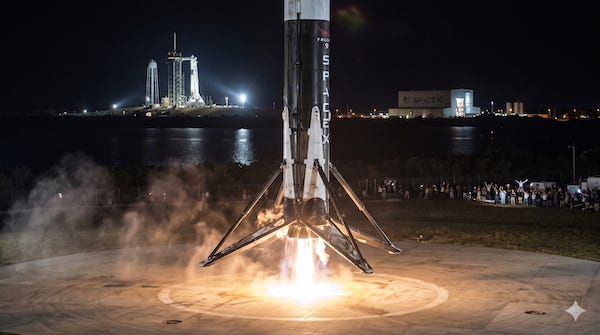
This marked the beginning of the era of reusable rockets. They did more such tests over the next few months.
In March 2017, they reused a rocket that had landed on its own.
This completed the promise. Reusable rockets were real.
It was incredible and unbelievable. Elon Musk had promised this feat for years. And it had become real.
From then on, progress, no matter how incredible, became routine.
SpaceX started reusing rockets. More rockets were sent up. More were received back. More were sent up again.
More incredible feats came along. In 2024, the rockets were caught by robotic arms mid-air, instead of landing on the ground.
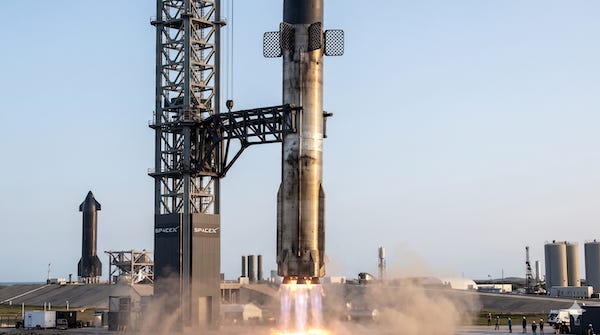
This can allow the rockets to be sent up again within hours. Like a modern day passenger plane.
When space flight first started, the cost of transporting 1 kg of items to space was more than $50,000.
In the 1990s and early 2000s, it was around $7,000 to $10,000.
Today, SpaceX’s reusable rockets have caused that price to fall to $1500. Estimates suggest a further reduction of this cost.
Business
So far, this sounds like a fantastic engineering project. It is. One of the world’s best projects, too.
SpaceX is a company. And companies need to make money.
SpaceX got its first paying customer way back in 2009, right after its first successful flight. It was to put a small satellite in space.
In 2012, they carried cargo to the International Space Station (ISS).
Over the years, they have served many clients, transporting cargo and satellites. Now it is also in the business of transporting astronauts to space.
The company made no revenue in its initial years. $0.
Then, the revenue jumped to $100 million in 2008-09 with its first order.
About 5 years later, the revenue was around $1 billion.
5 years after that, 2019, the revenue was about double that.
And another 5 years later, 2024, it was a massive $13 billion. In 2025, it crossed $15 billion.
That is an impressive rise.
Building rockets requires a lot of money. It is no surprise that SpaceX has been raising money all these years.
Well, it started with a fat amount. Elon Musk brought his personal $100 million to the table right at the start of the company.
It received funding over multiple rounds since then. The total is somewhere around $11 billion in investments.
To add to that, it received billions of dollars worth of government aid in the form of grants, tax breaks, and contracts. Some estimates put that between $20 and $40 billion worth of aid.
Building reusable rockets is not easy. Nobody had done it until SpaceX.
No surprise then that SpaceX has been a giant money sucking machine for many years. No surprise that it was running at a loss for all these years.
But that began to change in 2023. They made $800 million in profit that year. The year after that, $2.2 billion in profits.
So, rockets started making a profit?
Starlink
Not quite.
SpaceX is a telecommunications company, not a space transportation company (at least as of now). Why?
In 2019, they launched their Starlink product.
Starlink is a satellite internet service provider. You have to buy a Starlink device (similar to a Tata Sky dish, but for getting internet).
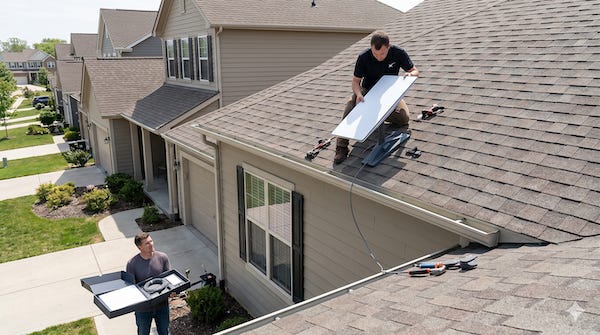
These satellites orbit lower over the surface of the earth.
In 2021, there were 1944 Starlink satellites orbiting the earth. That number nearly doubled in 2022. It kept growing that way.
Today, there are about 11,000 Starlink satellites orbiting around the earth.
As of today, there are over 10 million paying customers.
These Starlink customers are a major source of revenue for SpaceX. It helped the company finally become profitable.
Space Economy: Mining, Transport, More
Space is a frontier companies have been dreaming about for decades now.
Space mining has been the ultimate space fantasy for scientists for ages.
Except for a few hundred kgs of moon dust and some grams from comets and asteroids, we haven’t really gotten much down to the surface of the Earth.
But the promise of vast minerals and abundance holds.
This is what makes space so ever tempting for many scientists and entrepreneurs.
Besides, satellites much closer to earth also have incredible potential.
Elon Musk says he started SpaceX with the aim of making humans a multi-planetary species. He wants us to get to Mars.
SpaceX is the business he runs to be able to do that.
IPOs
SpaceX is reportedly heading for an IPO this year.
When companies head for an IPO, they price their shares based on the future potential of revenues and earnings.
So many times, the present valuation looks a bit stretched, but it makes sense when its future potential is looked at.
When Microsoft went for its IPO, it valued itself at $519 million. Its revenues were $197 million. So, it was asking for a valuation of ~2.5x its revenues.
That can be deemed extremely conservative.
When Google went for its IPO, the revenue multiple was around 7x. Which seems more “fair”.
Facebook’s IPO happened at around 28x.
Now, that might seem “too high”. Yes, but in hindsight, it worked fine.
Why? Because Facebook’s future potential was so high, that valuation worked fine in the long run. The company’s future revenues and profits caught up.
Alibaba at its IPO in 2014 was valued at 20x. It worked fine.
SpaceX has revenues of around $15 billion. And it wants to be valued between $1.75 and $2 trillion.
That makes it valued at more than 115x its revenues.
Why?
There are some justifications.
Starlink is one of the biggest moats the company has.
Since SpaceX owns the rockets, it costs them 70% less than their competitors to put up a satellite into orbit.
This gives them a massive advantage over their competitors.
To add to that, it costs very little for SpaceX to add new customers since the satellites are already in place.
This allows them to continue adding new customers without much cost. The global TAM or Total Addressable Market (potential customer base) is incredible.
That gives them an edge like no other.
That coupled with xAI (which SpaceX owns).
xAI is the company making Grok, a competitor to OpenAI (ChatGPT maker), Gemini, and Anthorpic (Claude maker).
xAI’s revenues are around $100 million in a quarter while suffering losses in billions as it trains its models.
SpaceX does not have many competitors.
There’s Blue Origin that’s owned by Amazon’s founder, Jeff Bezos. It has competing products and has shown very promising results.
But it is a private company still in its early stages and will take time to mature. So we cannot directly look at its numbers for reference.
There is one company that is a SpaceX competitor that also happens to be listed on the stock markets.
Rocket Lab.
Rocket Lab has annual revenues of around $600 million (looks tiny compared to SpaceX). On the stock markets, the company is valued at around $50 billion. That’s a revenue multiple of around 80x.
Looks like the stock markets are indeed willing to pay a high price for rocket companies.
At an IPO valuation like that, SpaceX will be the biggest IPO ever, in the history of the earth.
115-130x multiple? Is that too much? Or is it okay given the future potential?
Hard to say. We have never seen rocket companies go IPO. So we don’t quite know how they should be valued.
This is similar to the confusion that ensued internet-tech companies’ IPOs back in the 2000s.
Investors struggled to determine if the valuation they demanded was deserved.
Quick Takes
+ India’s inflation rate rose to 3.4% year-on-year in March (vs 3.21% in Feb).
+ India’s merchandise exports fell 7.4% year-on-year in March. Imports fell 6.5%. The trade trade deficit narrowed to $20.67 billion.
+ India’s unemployment rate rose to 5.1% in March (vs 4.9% in Feb).
+ India’s passenger vehicle sales in FY25-26 grew 7.9% year-on-year to 46.43 lakh units, the highest in a financial year. Sales in March rose 16% to 4.42 lakh units: SIAM
+ India’s wholesale inflation rose 3.88% year-on-year in March (vs 2.13% in Feb).
+ China has overtaken the USA to become India’s largest trading partner in FY25-26. The value of India’s total trade with China is around $151 billion, with a trade deficit of about $112 billion (vs total trade of about $140 billion with the US).
+ India’s forex reserves rose by $3.83 billion to $700.95 billion in the week that ended on 10 April.
The information contained in this Groww Digest is purely for knowledge. This Groww Digest does not contain any recommendations or advice.
Team Groww Digest