

Los Angeles or LA is incredibly peculiar.
Many famous folks have used a myriad of words to describe it.
“72 suburbs in search of a city”, “beauty parlour at the end of the world”, “constellation of plastic”.
LA is where Hollywood is. In some ways, it is the centre of English cinema and TV shows.

Just off the shore of Long Beach in LA, there exists a tiny island. The island looks like a tropical paradise. Hundreds of palm trees, some tower-like buildings, waterfalls, and flashy lighting.
Another building of note is called the Beverly Center. It is a super-high end shopping mall. Brands like Gucci, Prada, Versace, etc all have their shop fronts.
The island and the shopping center sound absolutely normal.
But this is LA we’re talking about. There’s nothing normal about these.
The island is actually an active oil well. So is the shopping center. They produce crude oil even today.
LA was not always a huge city.
It was mostly cattle ranches and fruit orchards. And then a farmer dug the ground and happened to strike crude oil.
By the 1920s, 20% of the world’s oil was produced in LA.
Since oil was discovered, a lot of people migrated to the area. People would buy land and start digging oil wells.
The population of the area ballooned.
With the people and stable income from oil, the region started to become a city. And the city became a solid breeding ground for many industries.
Aviation and show-business are some of the biggest there.
The city residents started demanding better infrastructure. They got that.
But the oil wells were not dry. They were still pushing out oil.
There was just so much money to be made, the city allowed oil well inside the city without any zoning rules.
The city simply made rules that seem like a middle path between residents and oil well owners.
In the case of Beverly Center, it is both a functional shopping center and an oil well site.
Crude oil is just that vital a commodity. And there’s a lot of money to be made selling oil that the world never seems to have enough of.
Los Angeles can teach us a lot about crude oil, and the power it commands.
Refining
In 1892, a dam in Pennsylvania broke. Rains had caused excessive floods and the dam couldn’t hold back the water.
The raging water hit waste oil reserve tanks along the river.
A spark somewhere caused the entire river flooded with waste oil to burn. Over 130 people died.
In the mid-1800s, the world relied on whale oil for lighting lamps.
Hunting whales were pushing their numbers lower. And then, someone discovered crude oil deep in a salt mine.
It could burn, they realised.
It didn’t take long for someone to distill the rock oil, and extract kerosene from it. That kerosene was used in lamps.
The rest of the by-products were useless tar and lighter oil.
The useless lighter oil was what was burning in the river in Pennsylvania.
We now know that ‘useless oil’ by another name — petrol.
Refining techniques improved. They discovered that crude oil has many different sub-products to offer. And some waste material.
With time, distillation changed to refining — an advanced chemical process to get different products from crude oil.
And with time, they stopped wasting by-products.
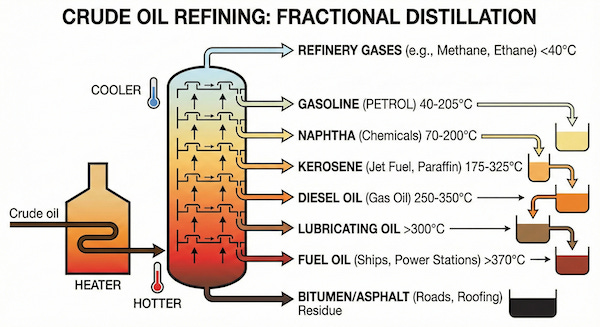
In the modern era, almost all of the products extracted from refining crude oil get used.
The crude oil gets processed: heated, boiled, chemically processed, vacuum treated. Then you get various products from it.
Broadly speaking, the products are LPG and other gases, petrol, naphtha, kerosene, diesel, bunker fuel, lubricating oil, asphalt, and a few more.
Types of Crude, Sources
When crude oil was first discovered, there weren’t many testing equipment available.
So they would literally taste the oil by touching their tongue to the oil.
It tasted like petrol. This was a quality they appreciated.
Some were more sour or had a rotten egg smell (higher sulphur content).
Later, when a much bigger deposit of oil was found in Texas, quality testers were aghast. The crude oil tasted very sour there.
They deemed it to be bad quality.
With time, the world has discovered crude oil can be very different depending on where it is found.
This also means that different kinds of crude oil give off different percentages of by-products.
Sweeter crude oil gives more petrol and less asphalt.
Sourer crude oil gives less petrol and more heavier oils and asphalt.
Different oil customers demand different traits from their oil.
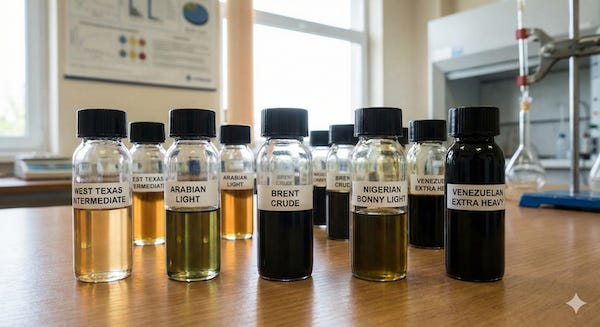
Sulphur content is of primary importance — lower is often desired. Density is another important metric. There are a few others.
West Texas Intermediate (WTI) is one of the best sources of crude oil. It is incredibly low in suplhur and is easy to refine into petrol.
The price of WTI crude is a benchmark used in America.
Brent crude is another crude oil benchmark that is used for nearly 60-70% of all crude oil produced in the world. It is less ‘sweet’ than WTI crude.
Dubai/Oman crude is a benchmark often used in Asian countries. It is even more sour.
Price of crude, OPEC
Of course, we all know that oil is found at several locations across the world.
In fact, even within a country, there can be many different oil well locations.
Surely not all produced across the world would be similar to either WTI, Brent, or Dubai/Oman?
True.
Crude oil from different oil wells varies a lot.
In fact, there are over 150 different types of crude oil. Each region produces a different kind of crude oil.
Examples:
-White Rose (medium-sweet) is found in Canada
-Merey 16 (heavy-sour) is found in Venezuela
-Oman Export Blend (medium-sour) is found in Oman
-Brent Blend (light-sweet) is found in the UK
And, Bombay High (light-sweet) is found in India
With over 150 types of crude oil, how are they priced?
Their price is compared to the 3 main benchmarks (WTI, Brent, Dubai/Oman).
Price for each oil is set based on how similar or different it is from the benchmark oil.
The 3 crude oil benchmarks are floating. This means that their price is determined by supply and demand.
The factors that influence supply and demand are of course many.
On the supply side of things — the one thing to know is that oil-producing countries restrict it. They try to produce a pre-decided quantity of oil so as to keep the price of oil above a certain limit.
One of the biggest bodies that does this is called the OPEC+ group of countries.
Countries like Saudi Arabia, the UAE, Venezuela, Iraq, Kuwait, and a few others are members of it. They meet regularly to decide how much oil they want to produce.
Other major producers that are not part of OPEC+ are the USA, Russia, and Brazil.
So in some sense, there is competition among the producers.
Of course, demand also greatly affects the prices.
Transport costs are a big component of crude oil prices. WTI crude is supposed to be better than Brent crude. But the price of Brent is often higher than WTI.
This is because WTI is produced inland from where, transporting it to the coast for shipping can cost money. Brent crude is extracted in oil wells located out in the sea.
There are hundreds of other factors.
Demand can be seasonally affected. Refineries can be down. Geopolitical conflicts can hamper crude shipping routes. So much more.
Geopolitics of Crude
The modern economy essentially runs on crude oil. Or rather, products of refining crude oil.
So much so that wars are fought over crude oil.
In 1991, Kuwait and Iraq fought a war because Iraq was sure the other side was drilling slanted to extract Iraq’s oil.
Iran and Iraq have fought wars over oil.
Sudan and Nigeria have experienced civil war over oil.
Many of the battles in World War 2 were actually over oil.
There are enough examples.
Crude oil is transported because most countries in the world do not produce their own oil. Which means, they are dependent on imported oil.
The routes via which this oil arrives is extremely crucial to such countries. This is one reason why naval ships of many countries patrol the seas.
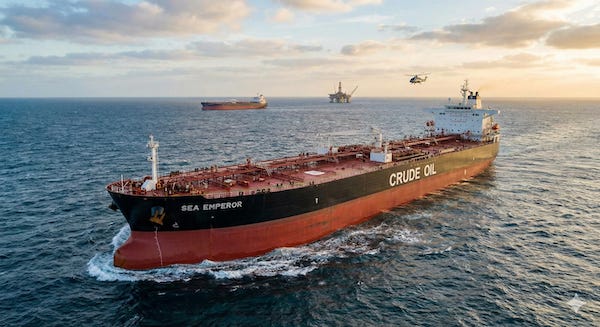
Crude pipelines are heavily guarded and monitored using sonar and drone equipment.
Countries try to source their oils from a variety of sources so as to not depend on one source only. They also maintain oil reserves that may last a couple of weeks to months.
Indian Companies Dealing With Crude & Direct Impact on Life
Most of the oil we consume in India comes from refineries owned by 3 companies — Indian Oil, Bharat Petroleum, and Hindustan Petroleum.
Another big name you might have heard is ONGC. They drill and extract oil. And that oil is sold to a refining company like Indian Oil.
Reliance, the name that is the biggest in the private space, is famous for having the world’s biggest single-largest oil refinery.
Their refinery is extremely sophisticated and is capable of handling very high-sulphur content crude oil with ease.
A bulk of their oil is for export only.
The US is the biggest producer of crude oil in the world.
China is the biggest importer of crude oil in the world.
India is the 3rd biggest importer.
Many countries realise how big a risk it is to depend on crude oil too much. China is aggressively shifting to electric vehicles. It has ramped up electricity production in the form of nuclear, hydroelectric, and solar power.
India, too, is trying to reduce dependence on imported crude oil.
A push towards EVs and CNG vehicles is a part of this push.
Countries will not stop tussling over oil. That is going to continue happening.
The latest is the USA-Venezuela situation.
Quick Takes
+ India’s retail inflation rose 1.33% year-on-year in Dec (vs 0.25% in Nov).
+ India’s passenger vehicle sales grew 26.8% year-on-year to 3.99 units lakh in Dec. For calendar year 2025, sales grew 5% year-on-year to 44.9 lakh units.
+ The US President Trump announced 25% tariffs on countries that do business with Iran.
+ India’s wholesale inflation rose to 0.83% year-on-year in Dec (vs a fall of 0.32% in Nov).
+ The US’ annual retail inflation stood at 2.7% in Dec (same as Nov).
+ China’s exports grew 6.6% year-on-year in Dec (vs 5.9% in Nov). Imports rose 5.7% year-on-year (vs 1.9% in Nov). China’s annual trade surplus reached a record high of $1.2 trillion in 2025.
+ Executive Centre India received SEBI’s approval for a Rs 2,600 crore IPO.
+ India’s unemployment rate rose marginally to 4.8% in Dec (vs 4.7% in Nov).
+ India’s merchandise exports grew 1.87% year-on-year in Dec while imports grew 8.76%. The trade deficit widened to $25.04 billion.
+ India’s forex reserves rose by $0.39 billion to $687.2 billion in the week that ended on 9 Jan.
+ SEBI has given in-principle approval to NSE’s settlement application in its unfair market access case.
The information contained in this Groww Digest is purely for knowledge. This Groww Digest does not contain any recommendations or advice.
Team Groww Digest