

How do you imagine oil wells work?
Many would imagine something like a coconut.
You drill a hole and the liquid can be sucked out. That’s true for many oil wells.
The US was sitting on a different kind of oil. Shale oil.
The oil was in between rocks. Pulling this oil out was a massive hassle. Still, wherever there’s oil, there are oil diggers.
The challenge was that it was expensive.
For decades, pumping out the oil did not make economic sense.
Techniques and technologies improved, and the shale oil output improved. The US kept using this oil along with importing more oil.
------------------------
Note:
The markets are open tomorrow (1st Feb).
That’s becase the Finance Minister will be presenting the Annual Budget tomorrow (happens on 1st Feb, every year).
So tomorrow evening, expect us to send you an edition of Daily Groww Digest too.
Which is why, this edition of Weekly Groww Digest is reaching you a day early — on a Saturday evening, instead of a Sunday morning.
------------------------
Around the 2008-2010 period, the US was producing about 5 million barrels of oil per day.
OPEC & US Oil
And then there was a sharp jump. In mid 2013, it was producing roughly 7.5 million barrels of oil per day.
The production kept rising.
This rise meant the price of petroleum products in the US fell. Consumption picked up.
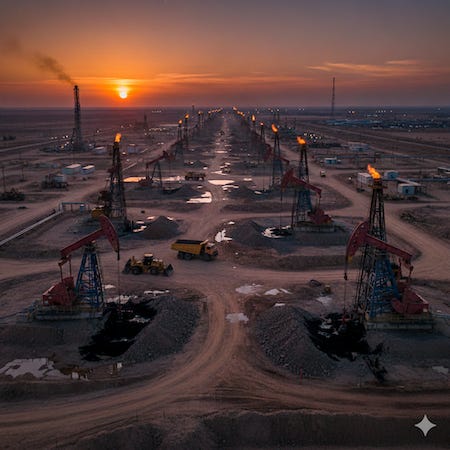
The US was consuming more of its own oil. Or in other words, it was relying less on imported oil.
That will obviously not be received well by those selling oil to the US.
OPEC (organization made up of many major oil producing countries) was worried. They decided that it was okay to make less profit per barrel of oil. It was not okay to lose market share.
They decided to ramp up oil production.
This would mean lower crude oil prices.
Commodities Markets
Why would lower crude oil prices be bad?
They were bad news for shale oil producers.
The cost of producing one barrel of oil varies. In some places, the cost is quite low. Something like $5 to $10.
In the case of the US shale oil, the cost could have been as high as $50 to $70.
During that period, the price of crude oil was hovering around $90-100. If the price dipped only a bit more, US shale oil producers would be forced to shut their oil wells. They would close and probably go out of business.
But they didn’t.
They used insurance or rather, hedging. Namely, they used financial products smartly to survive long enough for things to change in their favour.
Yes, OPEC producing more oil had started to bring the price of oil down further. But they had already sold futures for the oil they were going to produce.
Which means, even though the price of oil had dipped, they would still be getting a higher price.
This allowed them to remain active and oil-producing for much longer.
The thing about the commodities markets is that there are two kinds of players in it.
One, the speculator.
This party is trying to make a profit by betting on the future price movements of an asset.
Two, the hedger.
This party cares a lot less about making profits. This party wants insurance; a guarantee of future prices.
The US shale oil producers had managed to insure themselves well.
Commodities
A quick refresher.
In a commodities market, the most common financial products are futures and options.
Futures contracts are signed by two parties. It looks something like this:
“Party A promises to sell Party B 200 barrels for $90 per barrel on 8th June 2026”.
It is signed for a future date.
Neither party can back out of this contract, no matter what the price of the crude is on 8th June 2026.
This way, Party A is sure it will get a price of $90 per barrel. Party B is also sure it will get a price of $90 per barrel.
Of course they are both expecting different things to happen.
Party A is worried the price will rise higher than $90 so wants to lock down the price.
Party B is worried the price will fall lower than $90 so wants to lock down the price.
Only one of these two parties will turn out to be right.
Options are slightly different. It’s pretty much the same thing but one party has the option to use the contract. If that party doesn’t want to use the option (buy/sell), they can decline.
Of course there’s a premium to be paid here to buy an option.
The futures and options can be bought and sold before the contract’s settlement date.
Speculators are simply buying and selling these contracts. They do not intend to actually get delivery of the commodity, nor do they intend to supply it.
The reason speculators are welcome to this mix is because they bring in liquidity.
With many speculators, buying and selling contracts becomes much easier making it far easier for hedgers to insure themselves.
While many of us continue to obsess over the world of stocks and the businesses behind those names, the world economy simultaneously runs in commodities exchanges.
Main Commodities: Oil & Energy
This is by far one of the biggest segments in the commodities world.
This is mainly made up of crude oil, natural gas, and coal.
The price of crude oil is dominated by factors like: OPEC countries, US shale production, and geopolitical tensions.
Transportation is one of the consumers use-cases for crude oil.
Crude oil always has many buyers and sellers in the commodity markets. It is extremely easy to buy or sell oil contracts.
Natural gas is another that’s becoming more important with time. It is much harder to transport and requires pipelines or specialised tanks to be transported.
Heating and power generation are some of the biggest consumers of natural gas.
Because of its constraints, its prices are extremely volatile. It keeps commodity traders on edge.
Coal has been an important source for long and continues to be so.
Power generation and industrial use cases dominate, espeically steel production.
Cheap and seasonal, coal is another commodity that is extremely sensitive to policy decisions like import and export bans.
Main Commodities: Metals
Metals, as you would imagine, is a long list of various metals.
Aluminum, steel, copper, zinc, nickel, and tin are some of the primary ones on this list.
China is a dominating force in many metals’ cases — it produces about 50-60% of the global supply of some of these metals.
The demand of various metals is quite different and varies with time. Some of these metals’ demand is also sensitive to the price.
Many of these metals; demands are cyclical which means it increases and reduces over certain periods.
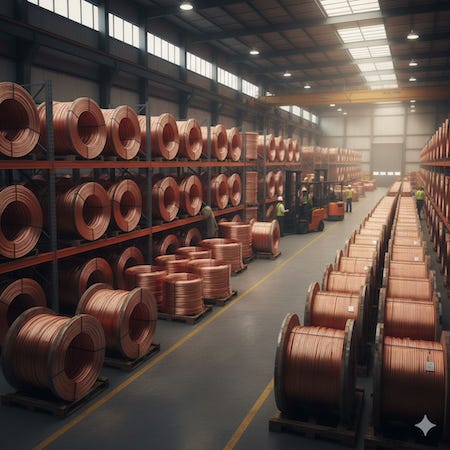
Copper is often used as an indicator to judge a country’s industrial health since a lot of copper is consumed in setting up industries.
Main Commodities: Precious Metals
Gold and silver are the easy names to come forward here.
Demand for them is actually very consistent. Gold has no other use other than as a store of value (mainly). Jewellery and industrial applications also exist to some extent.
Silver in that regard is similar but slightly different — it has industrial applications also. The increased industrial demand is one reason why we are seeing such an astronomical rise in silver prices.
Central banks’ behaviour is a big factor behind their price changes.
Main Commodities: Agricultural
Similarly, there exist vital agricultural products. One of the most important of them being wheat. Rice and corn are other examples.
Wheat is extremely weather dependent. It is also a commodity that is extremely prone to export bans by countries.
Corn is an extremely liquid commodity with lots of buyers and sellers in the commodity markets.
Corn used to be a food source only but now, in addition to being a food source, it is also a source of fuel (ethanol), and other industrial applications.
There are many many more commodities.
And in each commodity’s case, there are producers and consumers who are trying to hedge or insure their future. They use commodity markets to get price certainty.
And in each of these commodities’ cases, there are speculators. Commodity traders who simply juggle buying and selling contracts before they expire.
Each of these players is vital in ensuring the world of commodities functions smoothly.
The US shale oil diggers managed to use these contracts to get price predictability for some time.
This allowed them to survive. Over that duration, constant innovation and improvement allowed them to further reduce their costs.
And that eventually let them continue being viable despite falling crude oil prices.
Today, US oil production is the highest it has ever been.
Quick Takes
+ India and the European Union concluded negotiations for the India-EU Free Trade Agreement with significant tariff cuts on both sides.
+ India’s industrial production grew 7.8% year-on-year in Dec (vs 7.2% in Nov). Manufacturing production grew 8.1% (vs 8.5 in Nov ), mining grew 6.8% (vs 5.8 in Nov) and electricity grew 6.3% (vs a fall of 1.5% in Nov).
+ The RBI and the European Securities and Markets Authority (ESMA) signed a new MoU to boost cooperation on central counterparties. This MoU will allow Indian clearing houses to regain EU recognition.
+ Shadowfax IPO listed on the stock exchanges at a discount of 9.19% over the issue price and closed 11.31% down at the end of the day.
+ India’s economic growth for FY26 is estimated to be 7.4%: Economic Survey 2025-26
+ The Indian markets will remain open on Sunday, 1 Feb, the day of the Union Budget announcement.
+ India’s forex reserves rose by $8.05 billion to $709.4 billion in the week that ended on 23 Jan.
+ SEBI has given a no-objection certificate for NSE’s IPO: as per media reports
The information contained in this Groww Digest is purely for knowledge. This Groww Digest does not contain any recommendations or advice.
Team Groww Digest