

Iranian scientists were walking targets.
Attempts to kill key nuclear scientists in Iran are not unheard of.
The West absolutely did not want Iran to develop nuclear weapons.
Their intelligence agencies were hard at work to prevent Iran from making nuclear bombs.
Iran is in a neighbourhood where lots of countries dislike each other. If one of them got nuclear weapons, others would also start their own nuclear programs.
The West did not want this at all.
In fact, nuclear armed nations do not want more countries to become nuclear armed.
Iran wanted nuclear arms. Why?
Because they heard Iraq was developing its own nuclear bomb. A war between Iran and Iraq in the 1980s convinced Iran of the desperate need for a nuclear bomb.
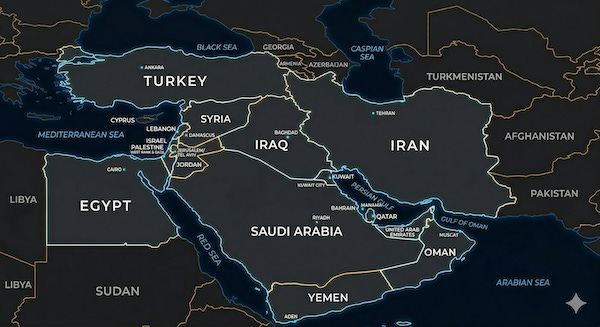
The West had been clamping down on Iran via economic sanctions. Any company found dealing with Iranian companies would have to suffer.
At first, it was mostly the West who were against the Iranians.
In 2002, when it came to light that Iran was working on nuclear bombs, the world got together and isolated Iran.
Economically cut off, Iran couldn’t do a lot of business with others. Its growth was greatly slowed.
The Situation
Now, we cannot go into the history of how, what, when, and if in this article. This isn’t about that at all.
What this is about is the situation the world had, and how it was dealt with.
How two different key figures saw this. And what they thought was the right way to deal with Iran.
The situation the world faced in the 2010s is this: Iran was developing nuclear weapons. Many countries knew it. And most countries were against it.
America’s president around this time was Barack Obama. He was under pressure to deal with the situation; to do something about it.
He did what he thought was right. He signed a historic deal with Iran in 2015.
Only 3 years later, the new US president, Donald Trump, came and threw that deal out of the window.
Uranium Enrichment
We have all heard that uranium is the raw material needed for nuclear power and bombs.
To proceed, we will have to understand uranium a bit more. So, here goes.
There are two types of uranium (isotopes). There’s U-238 and there’s U-235.
Naturally, 99.3% of uranium is made up of about U-238. The remaining 0.7% is U-235.
You can probably guess where we’re going with this — U-238 is not useful in this case.
For nuclear purposes, U-235 is what’s needed.
But 0.7% of U-235 is too low. So they have to increase the concentration of U-235. The process of increasing concentration is called enrichment. Uranium enrichment.
Once U-235 reaches ~4%, it can be used for nuclear power generation.
At 20%, it becomes useful in medical research and treatment.
For weapons, it needs to be above 90%.
Enrichment is not easy. Uranium is first turned into gas. Then it is put into spinning tubes (centrifuge). The spinning causes the U-235 to be concentrated in the centre. This can be extracted carefully.
But, one round of doing this only improves the concentration very slightly.
So they run multiple centrifuges, one after the other.
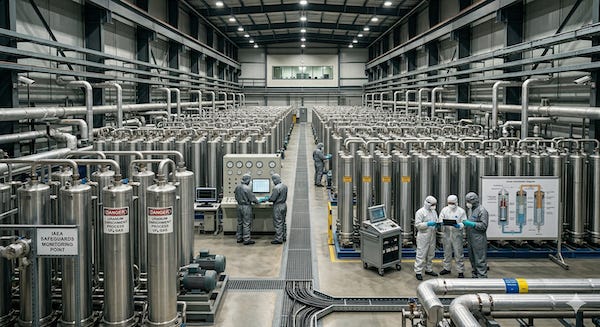
Hundreds or thousands of centrifuges are required to run constantly to enrich uranium. Even to enrich uranium to use in power plants can take a few years for countries who don’t have the infrastructure.
Back to The Situation
In the late 2010s, Iran was sitting on enough enriched uranium to run power plants (~4% enriched uranium).
It even supposedly had some medical grade uranium (~20% enriched uranium).
This scared the West. Panic set in.
Since Iran was sitting on so many tons of enriched uranium, they were close enough to enriching some of it further and getting enough weapons grade uranium (~90% enriched uranium).
The US president at that time, Barack Obama, felt the need to do something about the situation.
Obama’s Solution
Away from the public eye, the Obama administration started talks with the Iranian administration.
The talks lasted about 2 years. Through various ups and downs, they reached terms both sides agreed upon.
JCPOA or Joint Comprehensive Plan of Action had many details. But the summary of it was this:
+Iran would not enrich uranium to more than ~4% required for power generation
+Iran would not reduce the total enriched uranium it had at any time
+Iran would also reduce the total number of enrichment centrifuges it had
There were many more details. But these were the biggest takeaways.
Using these methods, Obama wanted to prevent Iran from reaching a stage where it could easily and quickly make a nuclear bomb.
The most critical part of this deal was that many of these restrictions had a sunset clause.
Which meant the restrictions were in place for a fixed period (15 years, 25 years, etc).
They signed the JCPOA deal on 14th July 2015.
Obama The Lawyer
Obama seemed to lean much more towards diplomacy and talks.
Much before Obama became president, he made a speech in 2002 that had made him famous across the USA. The line to take away was, “I am not opposed to all wars. I am just opposed to dumb wars”.
This was right in the thick of the US-Iraq conflict.
He spoke about the challenges of having wars running unnecessarily wasting money and resources.
He was deeply critical of the Washington style of dragging the US into long conflicts, especially in the Middle East.
Obama grew up outside the mainland US and got a chance to understand how the world viewed the US.
He became a lawyer who championed civil rights.
One of the deals he is most famous for (before he became president) happened when he was in his 20s.
A public housing project had an asbestos problem. The authority that was responsible was famous for being corrupt and unresponsive.
Obama carefully coordinated meetings between the officials and the residents where he forced the officials to answer questions from the residents.
These questions were specifically about the asbestos.
He was extremely logical and fact based in his approach.
Using evidence, and direct discussion between both parties, he was able to get the authorities to start work towards solving the asbestos problem.
Trump’s Counter
On May 8, 2018, US president Trump pulled back from the deal with Iran.
Trump had a few counter arguments. He called it a “disastrous one-sided” deal.
His biggest opposition was to the sunset clause. That is, what happens after 15 years or so when each clause no longer applies?
Many key restrictions had such sunset clauses, including the number of centrifuges they could have, the enriched uranium they could keep, etc.
In short, he argued that the deal only delayed Iran’s nuclear bomb plans, not prevented the development of the bomb entirely.
Trump was also critical of the fact that the deal did not address Iran’s missile programs (the delivery mechanism of the nuclear bombs).
He had more concerns beyond these.
Trump was sure he could get Iran to sign a better deal. That was his signature move: he championed himself as an excellent deal maker.
Obama actually countered what Trump said.
He was of the opinion that the sunset clauses bought America time to further negotiate and normalise ties with Iran.
He also fought back saying the most crucial part — that of not developing weapons — had no sunset clause.
Since Iran was suffering due to economic sanctions, they wanted to trade more with the world. And hence, Obama was of the opinion that they too wanted some sort of a deal.
Trump The Realtor
Donald Trump was the son of a realtor from New York state.
Already wealthy while growing up, Trump grew up with a deal-making philosophy very different from Obama’s.
While Obama was looking for the middle-ground in the deal, Trump believed in a more aggressive approach.
His style was to “win” a deal. He did not like a balanced deal where both sides walked away equally satisfied. That was not winning the deal.
One of Trump’s most famous deals was of that nature.
There was an abandoned hotel in central Manhattan that was an eyesore. The local government was desperate to have it up and running.
Trump did not have enough money to buy the hotel but he convinced the city that he had enough money to buy it.
On the other side, he convinced the owners of the property that he had “special right” that would enable him to turn the hotel around and operate it.
Then, he used that to negotiate with the city. He got a 40-year tax break from the city. This was unheard of in that period.
It established Donald Trump as a real estate mogul in the city.
Trump is well known for his pressure tactics and attempts to “win” at deals.
The Person
If there’s anything to learn from this, it is that no matter how much democracy we have, we will still be dependent on individual figures.
America is a democratic country that elects its president every 4 years.
And yet, we see that the person who gets elected has a disproportionate impact on the decisions being made.
Some of the biggest and most impactful decisions are made by individuals.
And those individuals have their own reasons and biases for acting in the ways we do.
Whenever we try to get a picture of what a person might do, it makes sense to look at what they have done earlier.
Quick Takes
+ The RBI has injected Rs 79,256 crore of liquidity into the banking system through an overnight variable rate repo auction to ease tightening cash conditions in the financial markets.
+ India’s composite PMI (manufacturing + services) fell to almost a 3 year low of 56.5 in March (vs 58.9 in Feb) as per preliminary estimates. Manufacturing PMI fell to 53.8 (vs 56.9 in Feb). Services PMI fell to 57.2 (vs 58.1 in Feb). This means economic activity grew significantly less in March than in Feb.
+ The government has approved a Rs 28,840 crore Modified UDAN scheme to improve regional air connectivity. The plan includes developing 100 airports and 200 helipads.
+ The government has approved Rs 1,800 crore to extend the immigration and visa system (IVFRT) for 5 years till March 2031 to make visa processing faster and more digital.
+ India has approved new climate targets aiming to cut emissions intensity by 47% and increase clean energy share to 60% by 2035.
+ The government has reduced excise duty on petrol and diesel by Rs 10/litre. The fuel prices won’t change, as the duty reduction is to accommodate underrecoveries by fuel companies.
+ The Defence Acquisition Council (DAC) has cleared equipment procurement proposals worth Rs 2.38 lakh crore for the Indian Armed Forces.
The information contained in this Groww Digest is purely for knowledge. This Groww Digest does not contain any recommendations or advice.
Team Groww Digest