

Salaries in Japan depend on one event.
The event is called Shunto.
It happens every year in March.
International traders realised that this event could have a direct impact on them.
Rengo, a confederation of unions in Japan, is on one side. Big corporations like Toyota, Mitsubishi, Sony, Hitachi, and others are on the other side of the table.
It’s not literally one big meeting. These meetings happen among individual sectors and companies.
Rengo puts forward a number. This is the hike they expect that year. Then, the corporations get back at them with a counteroffer.
Some back-and-forth happens. And they settle on a number.
This number is the annual hike workers should get working at the negotiating companies.
What makes the Shunto a big deal is that it sets the tone of the hikes for each year. So even small businesses tend to try and match a similar hike.
So, the hike negotiated between Rengo and the corporations sets the tone for the hike salaried workers across Japan would get.
For over 30 years, Rengo had been asking for modest hikes of around 1%.
This was mostly a seniority based hike. It was not meant to fight inflation.
The Japanese economy has been largely stagnant for nearly 3 decades. Salary growth in this period has been negligible. Interest rates in the country have also been near 0%.
If these companies went bankrupt, Japanese workers would lose their jobs.
So, they agreed to rock-bottom salary hikes.
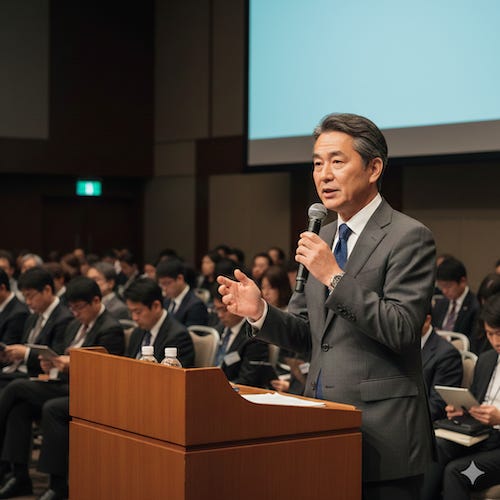
A low-increment job was better than no job altogether.
In 2024-25, they successfully negotiated a 5+% hike. The highest hike in 34 years.
Traders and BoJ
Across the oceans in some hedge fund offices in the USA, the UK, and a few other countries, traders watched the news.
Along with them, other big institutional investors were also eyeing this first-in-decades news.
So was Japan’s central bank — Bank of Japan.
The Bank of Japan had kept its interest rates near 0% or even negative in the hopes of triggering economic growth.
They suffered an economic slow down back in the 1990s from which they were still trying to recover.
This allowed for an interesting investment opportunity.
Since their interest rates were near 0%, borrowers could essentially have free money. They could borrow at 0% per annum, and invest the same in a safe but higher interest rate investment like US treasury bonds which are considered extremely low risk.
This is called a carry trade.
Take a loan at cheaper interest rates. Invest the money in higher interest rate bonds. The difference is your profit.
Since the interest rates in Japan have been near 0% (or lower) for over 30 years, many kinds of strategies have been able to emerge.
The easiest was to invest in government bonds of higher interest countries. Low risk and safe. Borrow from Japan, invest in government bonds in America, the UK, Australia, etc.
Many years pass. Investors warm up to the idea of near 0% interest rates in Japan. They get used to it.
They expect it to stay that way. They get bolder.
Borrow from Japan, but invest in corporate bonds.
Some time goes and things turn out fine, mostly.
Boldness is upped a bit more.
Money starts going into equities — shares of companies. Tech and AI stocks become favourites.
Time goes by, Japanese interest rates remain low despite interest rates in the rest of the world going up and down.

Boldness increases further.
Money borrowed from Japan goes into emerging markets, venture capital, and even ultra-high risk assets like crypto.
And to make matters worse, some trades started using leverage on top of this.
BoJ Reads the Signs
No central bank prefers to keep interest rates at 0%. It takes away their ability to control inflation and also the ability to control economic activity.
When inflation rises too much, central banks increase interest rates. This reduces economic activity. But lowers inflation.
On the other hand, if economic activity reduces and inflation is also low, they decrease interest rates. This causes higher economic activity.
BoJ had kept their interest rates at 0% and still, economic activity had not picked up enough. And inflation was very low.
This left no room for them to act.
When Rengo negotiated a hike rate of ~5% in 2025, BoJ noticed.
They realised that finally inflation was high enough that workers were demanding bigger raises.
Workers in Japan did not demand raises because they were afraid of a loss of jobs from companies not being able to make money (spoke about earlier in this write up).
The fact that workers demanded higher wages, and companies agreed, meant that the Japanese people were willing to demand higher wages and companies were confident of being able to earn more money to cover the higher costs.
They started raising interest rates in Japan.
You can imagine how this move is a concern for carry traders.
They borrow at a certain rate. They then earn a certain return on it. The difference is their profit. If this difference reduces, their profit reduces.
At present the rate is up at 0.75% (yes, this is a high rate for them).
The Bank of Japan has indicated that they intend to increase further.
Panic struck among traders. They feared they would have to pay a higher interest rate. Further, they feared everyone would think the same — and start selling their assets.
That would cause prices of those assets to fall. So to avoid that, they started panic selling.
This caused a pretty significant price dip in some tech companies’ stock prices (down 3-5%) and crypto prices.
Still Wide
The gap between Japanese interest rates and the returns that can be earned from investing in US treasuries still remains.
This means that carry trade is not dead yet.
It is still profitable.
It took some time for the traders to realise this. And when the realisation set in, the panic sell off stopped.
The gap exists. It might reduce, as some hints seem to suggest.
Some hints suggest that BoJ may increase the rates from the current 0.75% to about 1.5%.
At that level, carry trades would still work, theoretically speaking.
But those trades would be susceptible to small changes. It would make the trade risky. When the interest rates were close to 0%, it was technically free money.
That has reduced now.
And it may reduce further.
Double Edged
If it was just about the gap in interest rates, things would be easier. But they are not (of course).
When someone borrows money from Japan, it is in Yen. When they bring it to the US (example), they convert it to US dollars.
This means exchange rates matter.
When money was moving out of Japan, demand for Japanese Yen was lower and US dollar was higher. Borrowers were borrowing in Yen, and trying to convert it to US dollars.
This caused the Yen exchange rate to fall.
This meant that by the time the borrower had to pay back their loans in Japan, the Yen exchange rate would be even lower.
Which means they would have to need even fewer dollars to pay back their loan.
Double benefit.
But if many investors are doing the opposite — selling assets elsewhere and trying to buy Japanese Yen to pay back their loans — the exchange rate of Japanese Yen goes up.
So they will need even more US dollars to clear their loans.
Double disadvantage.
As you would know, exchange rates change a bit all the time.
When they were borrowing at 0% from Japan, and earning 5% in the US, the difference was large enough. They could take some risk since they were making so much returns.
But if the BoJ’s interests reach 1.5%, and the US lowers theirs to 3.5%, the difference is only 2%.
That makes investors susceptible to currency swings.
Fewer carry trade will happen.
The magnitude of borrowed Japanese money in the global economic system means whatever happens — we have to keep an eye on it.
All markets are deeply linked.
Quick Takes
+ India’s industrial output grew 6.7% year-on-year in Nov (vs 0.5% in Oct), the highest in 2 years. Manufacturing output grew 8% year-on-year (vs 2% in Oct).
+ The Defence Acquisition Council (DAC) approved proposals worth about Rs 79,000 crore to procure advanced systems for the Indian Army, Navy and Air Force.
+ Australia will remove tariffs on 100% of Indian exports from 1 Jan 2026 under the India-Australia Economic Cooperation and Trade Agreement: Minister of Commerce and Industry Piyush Goyal
+ The Ministry of Defence signed contracts worth Rs 4,666 crore for the procurement of Close Quarter Battle Carbines and Heavy Weight Torpedoes.
+ The central government approved the widening and strengthening of a stretch of NH-326 in Odisha at a cost of Rs 1,526.2 crore.
+ The central government approved a 6-lane Nashik-Solapur-Akkalkot highway corridor in Maharashtra at a cost of Rs 19,142 crore.
+ India’s 1st bullet train is expected to begin operations from 15 Aug 2027: Railways Minister Ashwini Vaishnav.
+ The government notified that from 1 Feb 2026, an additional excise duty will be applied on tobacco and tobacco related items over and above the GST rates.
+ India’s gross GST collections rose 6.1% year-on-year to Rs 1.75 lakh crore in Dec (vs Rs 1.70 lakh crore in Nov). Net GST collections rose 2.2% year-on-year to Rs 1.45 lakh crore.
+ India’s manufacturing PMI fell to 55 in Dec, a 2 year low (vs 56.6 in Nov). This means manufacturing activity grew less in Dec than in Nov.
+ India’s forex reserves rose by $4.37 billion to $693.32 billion in the week that ended on 26 Dec 2025.
The information contained in this Groww Digest is purely for knowledge. This Groww Digest does not contain any recommendations or advice.
Team Groww Digest