

The mistake behind a Tulip Mania seems obvious (now).
It almost seems avoidable.
And yet, bubbles repeat.
The Tulip Mania was not the last bubble. There have been many bubbles over the ~400 years since.
For those who are not familiar: people in the Netherlands started buying tulip flowers.
It became a hot commodity.
That caused the price to rise to astronomical levels. People started buying the flowers to be able to sell at a higher price. The price kept rising until one day the bubble popped: the prices crashed.

Many people lost large amounts of money.
South Sea Bubble
Silver Bubble
Japanese Real Estate Bubble
Dot-com Bubble
These are only some examples of bubbles since then.
So why do they keep happening?
To answer this question, we need to look at high-returns elsewhere.
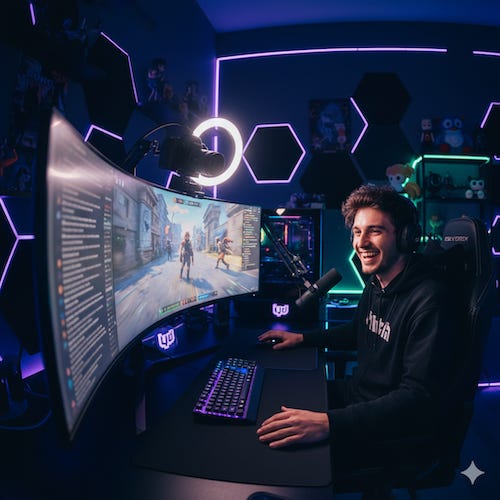
Twitch
In July 2012, Bessemer, a venture capital firm, announced that it was investing about $13 million in a start up called Twitch. This investment would give them about 18% stake in the company.
At this point in time, the company revenues were meagre. And profit was not a priority.
What was Twitch?
A gaming streaming platform.
People who played computer games could record themselves playing and post the videos online. Or stream the game live.
In 2012, if you wanted to watch a video online, you went to YouTube. They dominated the space without any meaningful competitor.
YouTube was starting to gain from a snowball effect that most market-places have.
People came to YouTube because it had so many videos. Video-makers of all kinds came to YouTube because that’s where all the video-watchers were.
Education-related videos? YouTube? Entertainment? YouTube. Sports? Wildlife? Cooking? Same. News. Also YouTube. It had everything.
This producer-consumer advantage made YouTube the default place for any video on the internet. In some ways, that’s true even today, nearly 13 years later.
Despite YouTube’s absolute dominance and rising growth, Bessemer decided to invest in Twitch — a video platform only for gamers.
Their justification was that over 1.5 lakh gamers used Twitch every month.
About 2 years later in 2014, Amazon acquired Twitch for a little under $1 billion.
Bessemer’s investment had grown over 10 times in that period. It turns out to be around 216% per annum.
Amazon bought it because it felt Twitch would help it expand in a new direction (and grab revenues there).
Some investors really do make astronomical returns. And everyone else thinks they can repeat the same success.
This is why bubbles – despite seeming impossibly good – still persist. Investors think they can hit it big despite the odds.
What an Informed Investor Does?
But clearly, Bessemer wasn’t just investing blindly hoping for things to work out.
What do these investors think?
Well — the thought process is pretty much the same as any other investor.
They are willing to pay a higher price for something today. The hope is that the future price will be so high, the purchase price wouldn’t matter.
Think of it like this.
In an area, a new airport has just been announced. 1 acre land costs Rs 50 lakh here.
You are trying to buy it and the seller wants Rs 60 lakh. What do you do?
Many investors would be okay to pay this higher price because in the future, the price might be Rs 1 crore per acre.
So buying at a slightly higher price is better than not buying at all.
Now obviously, things can go wrong. What if the airport gets delayed or cancelled. That risk does exist.
That also has to be factored in the decision being made when buying.
So all things factored in, how much are you willing to buy the 1 acre land for?
Even if you buy it at Rs 90 lakh and in a short period it goes to Rs 1 crore, you have made a gain over a short period.
This is essentially what every investment is.
Investors want to pay a low price for shares, real estate, etc.
But are willing to pay a higher price so as to not miss the deal. That reduces the investor’s returns a bit. But that is still better than no profit.
The problem occurs when you pay Rs 10 crore for land that will be Rs 1 crore in the future.
Then, no matter what an investor does, a loss is guaranteed.
Investing is about:
Trying to estimate the future value of an asset
Making sure you pay as low a price for it as possible compared to that future price
The Challenge
Then, the primary challenge in investing is determining the future value of an asset.
This is unknown. Nobody has a clear-cut answer to this question.
In some assets, this might be easier to estimate. Bonds, real estate to some extent.
In others, it is difficult. Large companies’ shares.
And in some, it almost seems impossible. Like early-stage investing in companies.
Investing is making informed estimates about the future value of an asset.
One easy way to avoid overpaying is to compare the price of an asset today to the maximum it could be tomorrow.
If the price is higher than that, the answer is simple — do not invest.
Many bubbles can be avoided by doing that. The price reaches stupidly high. Nothing can justify the price.
At that point, whoever is buying is merely buying hoping to sell to someone else who would be willing to spend even more (without a solid reason). It becomes a house of cards.
Often, the reason investments underperform is not because people are unaware. It’s because they estimate the wrong future value.
This can happen to anyone. It can happen to even the best of investors.
Successful investors are those who estimate more right and less wrong.
Quick Takes
+ India’s wholesale inflation fell to -0.32% year-on-year in Nov (vs -1.21% in Oct).
+ India’s unemployment rate fell to 4.7% in Nov (vs 5.2% in Oct).
+ India’s merchandise exports rose 19.38% to $38.13 billion in Nov and imports fell 1.89% to $62.66 billion. The trade deficit narrowed to a 5 month low of $24.53 billion.
+ India’s manufacturing PMI fell to 55.7 in Dec (vs 56.6 in Nov) as per preliminary estimates. Services PMI fell to 59.1 (vs 59.8 in Nov). Composite PMI (manufacturing + services) fell to 58.9 (vs 59.7 in Nov).
+ India’s passenger vehicle sales rose 18.7% year-on-year to 4.12 lakh units in Nov.
+ India’s textiles and apparel exports grew 9.4% year on year in Nov to $2,855.8 million.
+ SEBI approved new regulatory changes including easier mutual fund investment norms, simplified IPO rules, and updates to brokerage regulations, etc.
+ India and Oman signed a Comprehensive Economic Partnership Agreement (CEPA) offering a significant tariff reduction on most goods and expanded cooperation in services and investment.
+ The Bank of England cut its key interest rate from 4% to 3.75%.
+ Japan raised its key interest rate to 0.75% from a previous rate of 0.5%. It is the highest rate of interest in the last 30 years.
+ India’s forex reserves rose by $1.69 billion to $688.95 billion in the week that ended on 12 Dec.
+ China has filed a formal WTO complaint against India challenging India’s tariffs on information and communications technology (ICT) products and subsidies for the solar sector, claiming they give Indian industries an unfair advantage and violate WTO rules.
+ The central government approved a Rs 887 crore project to develop a world‑class marina in Mumbai Harbour.
The information contained in this Groww Digest is purely for knowledge. This Groww Digest does not contain any recommendations or advice.
Team Groww Digest