

Bowhead whales, a species almost half the size of a blue whale, is the longest living mammal on earth.
The marine giant could survive for more than 200 years, which is quite an age.
But can you guess who comes next to Bowhead whales?
It is us, humans.
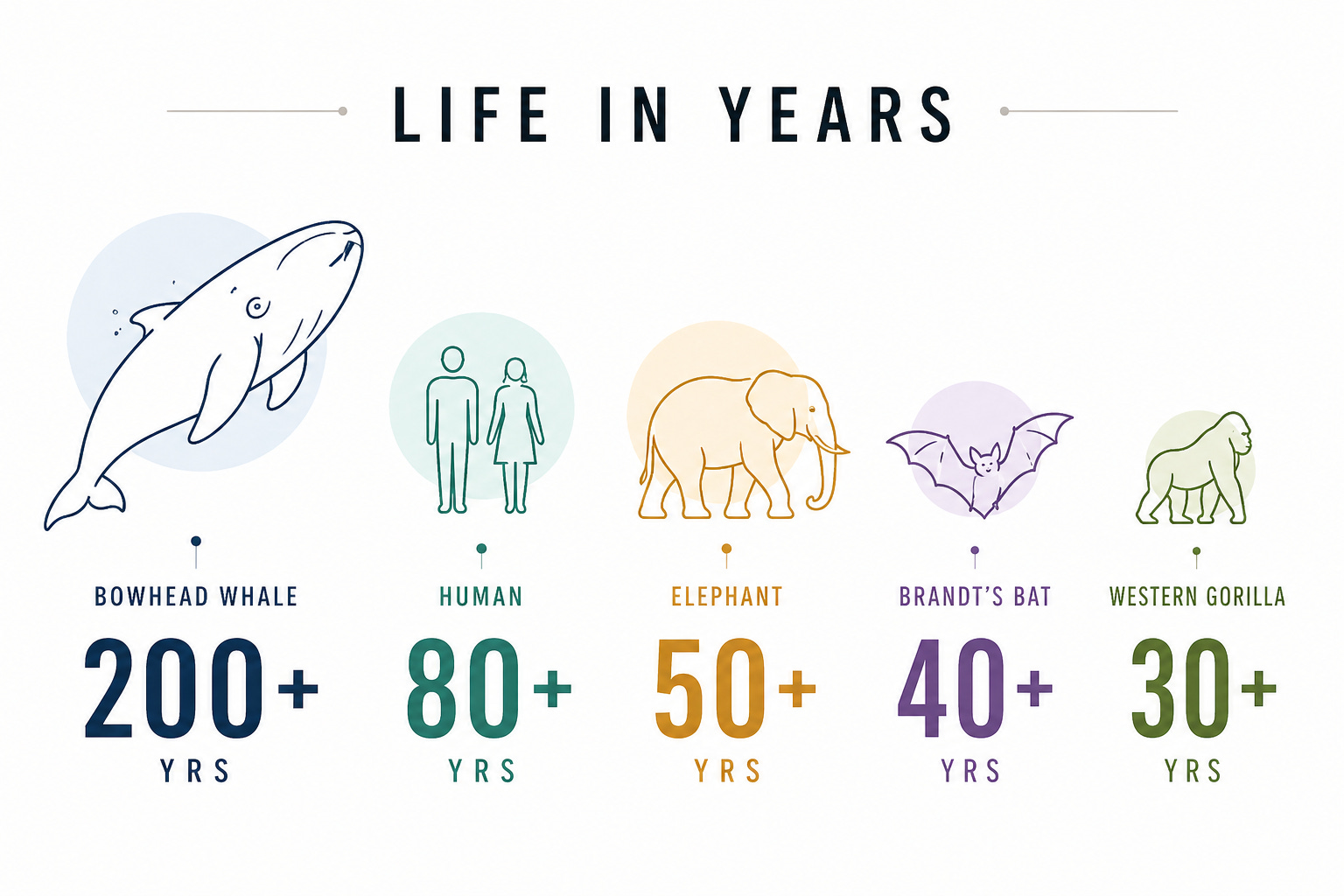
With modern civilisation and advancing healthcare, a lot of humans today are conveniently crossing the timeline of 80 years.
And going by the numbers, 80 years or 29000+ days is not a small duration.
With such a long lifespan, it’s natural that we only have vivid memories of a handful of days, rather than recalling every day we live.
The last day of school, the moment you got embarrassed in front of your crush, the joy after getting your first salary, or the moment when she, or he said ‘yes’, etc.
It’s just a few days that turn out to be critical in a person’s life, days which decide where the life will lead itself from here on.
But what would you say if we tell that this idea fits well in the stock markets too?
So the stock markets trade for nearly 250 days each year, roughly 2,500 days in a decade, and ~5,000 in 20 years.
Everyday, it moves a little up or a little down.
What do you think would happen if we removed just 2 days in the last 20 years?
So we attempted a small simulation.
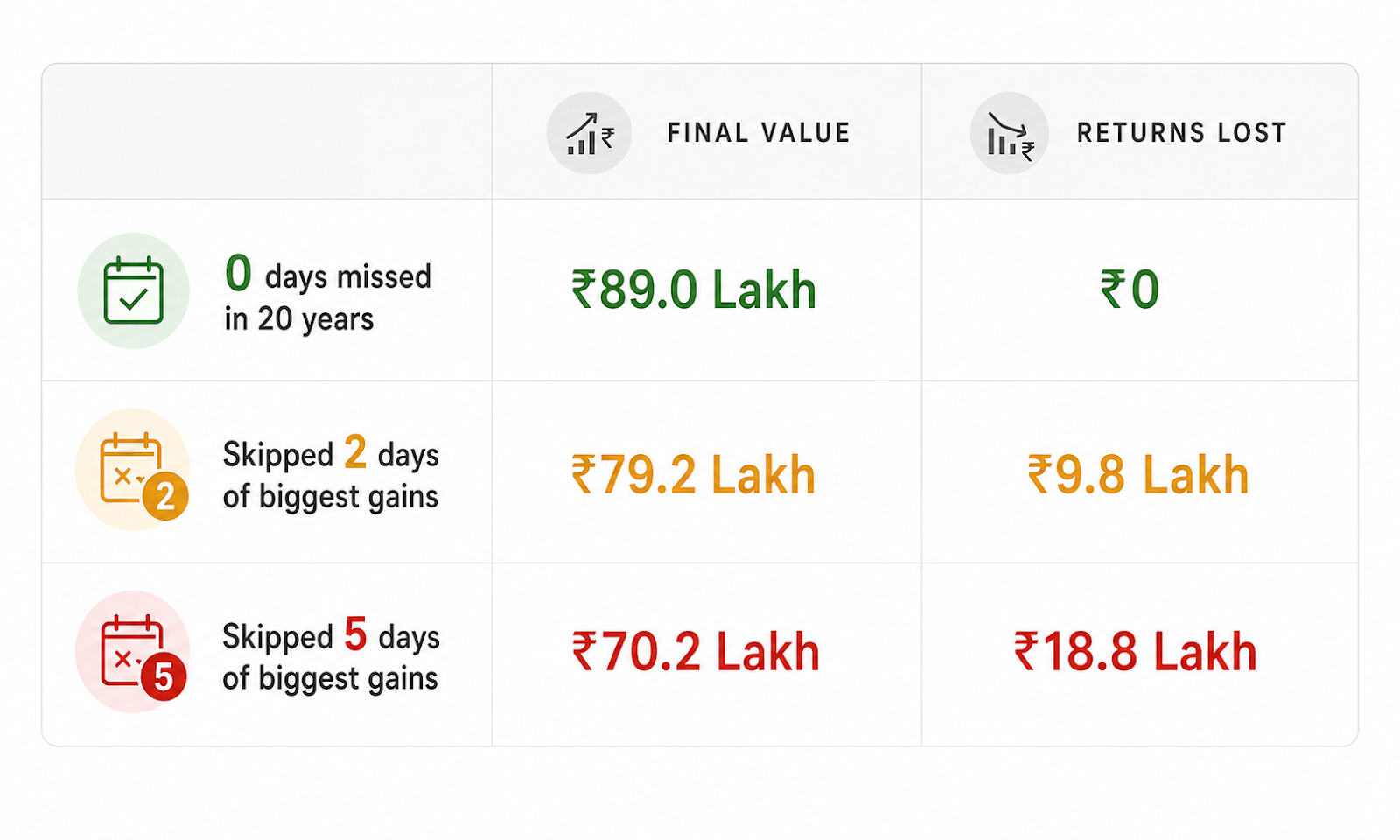
We made monthly SIP investments of Rs 10,000 in a Nifty 50 Index Fund for 20 years, from January 2006 to December 2025.
The only change was, we didn’t participate or stay invested on 2 specific days, when the Nifty rose the most.

This means we sold off our entire accrued investments one day before the omitted days, sat on cash during omission days, and bought again the very next day at the then prices.
By doing so, we witnessed a change that was worth noting.
Just by missing the 2 best days in 20 years, there was a significant drop in the total returns.
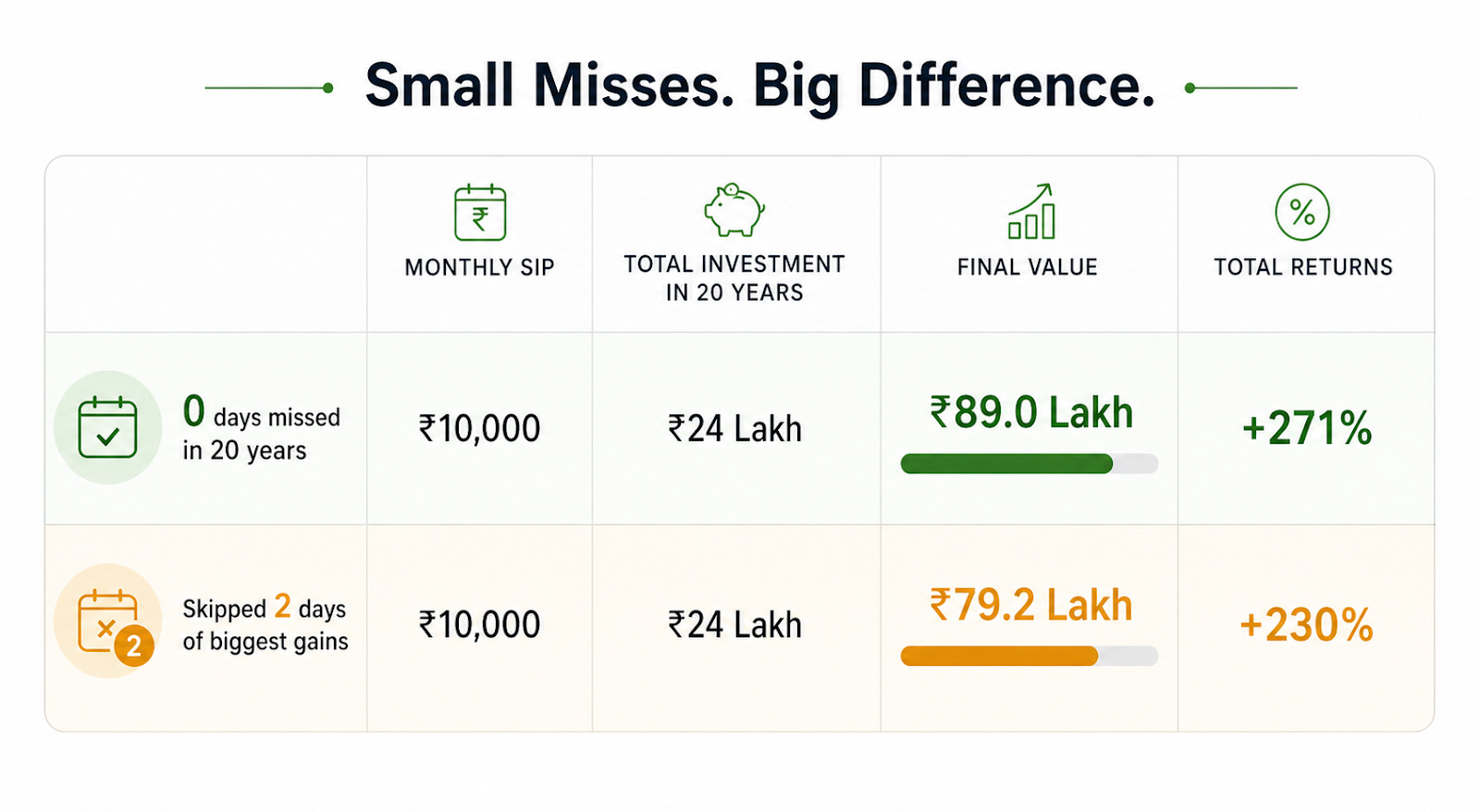
Missing out on those 2 days could have cost almost Rs 10 Lakh.

This reflects too big of a difference coming up in too short periods.
These numbers brought out the adventure lover in us, and we tried again, but this time skipping the best 5 days in 20 years.
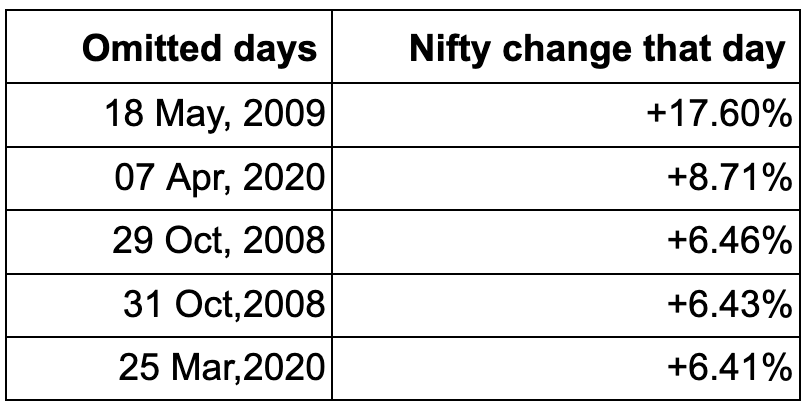
Here is what we found.
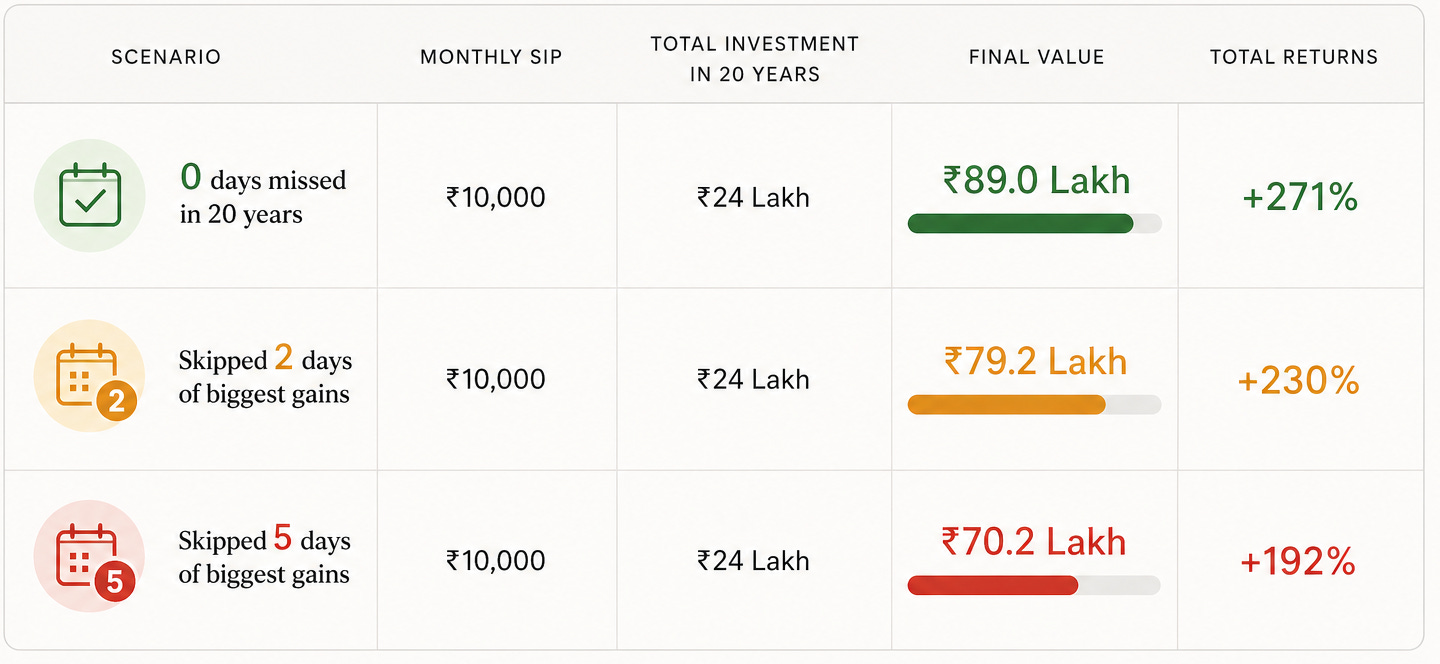
The lost returns doubled down to almost Rs 19 Lakh when we skipped for 5 days, from 2 days.
Now there is something more that grabbed our attention and we would like you to know.
The big gain days were never in isolation; almost every such day came only after a big fall day.
9 out of 10 days of the largest gains in the last 20 years(Jan 2006 - Dec 2025), either occurred the very next day after a big fall, or within just a couple of days of it.
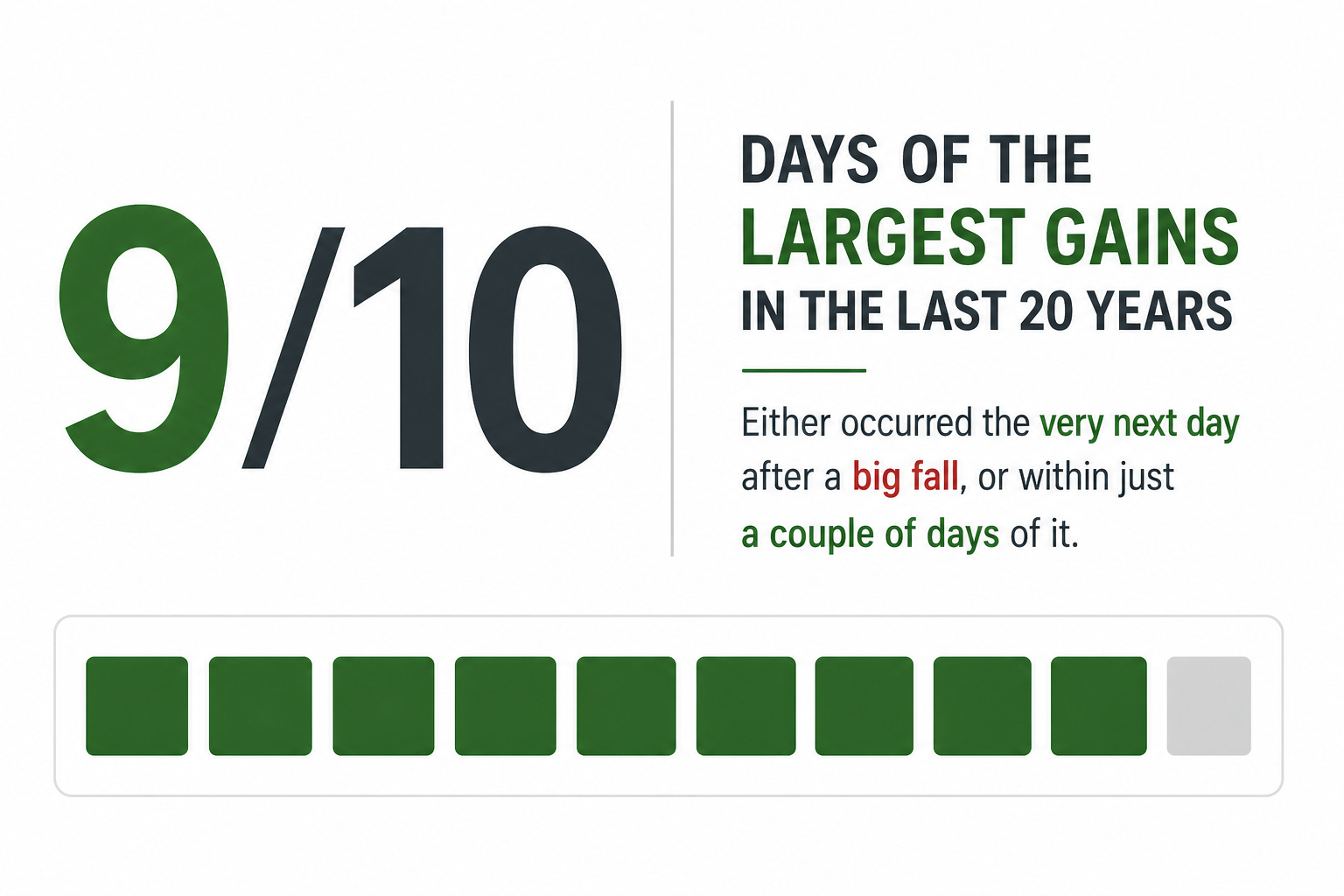
Showing that the most crucial days we talked about earlier actually lie around the worst of the days.
Which is surprising to know, as bear markets or a big fall happens to be a major trigger to exit for most of us.
And here it shows that the tendency may potentially do more harm than good, since one might actually miss some of the best days just looming around.
It therefore makes sense to hold onto your investments rather than withdrawing, if panic was the only reason to make that withdrawal.
What do you think?
Feel free to share your thoughts in the comments!
Note:
SBI Nifty 50 Index Fund Regular - Growth has been used for index fund SIP return calculations.
The outcome of this simulation could have been different if a different mutual fund or a different timeline could have been chosen
Images used are AI generated
Is there any co-relation between when you invested?
Consider 2 scenarios.
1. My 10k SIP goes for execution at the highest monthly nifty level.
2. My 10k SIP goes for execution at the lowest monthly level.
Which will win or I think both will be ideally same?