

The Japanese diplomats had made several trips to Brazil.
The discussion went on for a few years.
This was in the 1970s.
The challenge was that Brazil had vast Cerrado grasslands. These grasslands were mostly flat and vast.
This made these grasslands potentially ideal for agriculture.
But the soil quality was inferior. It was too acidic, lacking in nutrients, and often had elements that killed agricultural plants.
The soil needed to be treated.
This is where the Japanese came in.
They started a program to jointly work together starting in 1979.
The Japanese provided expertise, infrastructure, and funding for the initiative. The soil was treated with multiple different methods. Crops were rotated to increase biomass availability.
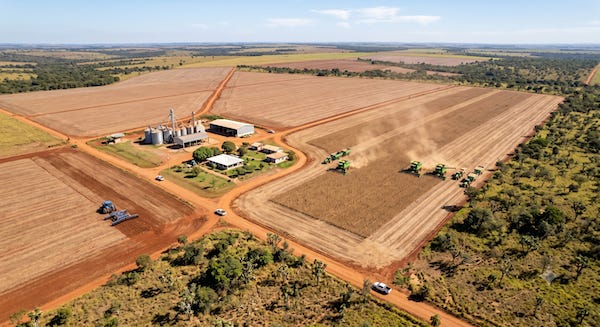
It all started bearing fruit in the 1980s.
Brazil obviously wanted that for itself. They wanted food security. They had been independently working on it for decades.
The Japanese assistance catalysed the effort.
Sometime in the 1980s, Brazil went from being a net importer of food to a net exporter of food.
Today, Brazil is also the world’s biggest producer of soybeans.
Japan and Brazil are a world away from each other. Why did they involve themselves in this initiative half a world away in Brazil?
The answer is that a long chain of unexpected events pushed them to it.
Peruvian Anchoveta Crisis of 1972
Peru was one of the biggest suppliers of this fish called the Peruvian anchoveta.
This tiny fish is not a particular favourite among people. But this fish had become an extremely integral part of the world’s food supply chain system.
Peruvian anchoveta was used as fishmeal. It was the food fed to fish and chickens. And fish and chickens are what is critical in the global food supply chain system.
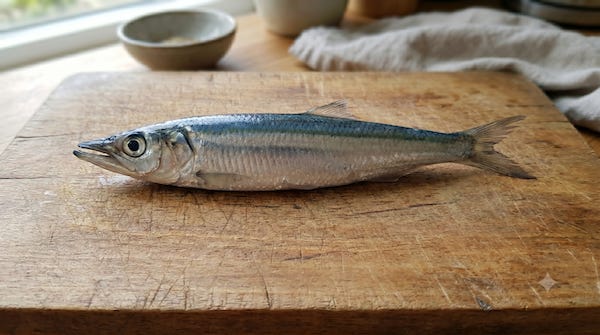
In 1972, Peru suddenly banned fishing for the Peruvian anchoveta.
Every year, fishermen would go out into the Pacific Ocean to catch them.
In 1972, the population of these fish was so low, Peru had no choice but to ban the fishing outright.
Why?
In April, the waters had suddenly turned warmer than usual, and the fish either didn’t reproduce enough or were driven away somewhere else.
Seeing the record low numbers, scientists warned the government about the risk of damaging the existing population from overfishing.
Thus, the ban was enforced.
The warm waters alone weren’t responsible for the fish population crash. Overfishing too was a factor. But the warm waters really pushed it over the edge.
Despite the warnings of the scientists, the government allowed fishing again with strict restrictions.
Still, the chain effect of damage had been done.
Peru was one of the biggest suppliers of these fish. In the absence of this fish, farmers turned to another crop to feed their fish and chickens. Soybeans.
The US was already a large producer of soybeans. But the Peruvian anchoveta shortage was so large, the US decided to restrict the export of soybeans in 1973.
And that was where the Japanese came in. They were heavy importers of soybeans.
Over-reliance on the US for these beans spooked them. They wanted to diversify their soybean supply, among other food items.
They looked across the world. One of the few countries they decided to rely on was Brazil.
Today, Brazil is the world’s largest producer of soybeans, and the US is the second largest.
Combined, today both these countries supply over 65% of the world’s soybeans.
Eventually the Peruvian anchoveta’s population recovered. But the farmers who relied on them to feed their fish and chickens had switched to soybeans.
Many never went back to the anchoveta.
Now, why exactly did the Pacific waters turn warm in 1972?
El Nino
El Nino. That’s the effect’s name.
The oceans are kilometers deep. The top layer of the ocean gets heated by the sun. The bottom layers do not get much sun. So it remains cooler.
Trade winds blow across the Earth’s equator. They blow from the east to the west.
The Pacific Ocean is the world’s biggest ocean. If you took a flight from South America to Australia, it would take you 12 hours to cross the Pacific Ocean.
Over this vast ocean, the winds blow from east to west, from near the Americas to Asia and Australia.
These winds push the topmost water layer towards the west.
So we get more warm water near Asia and Australia. To fill the empty space, colder water rises from beneath the ocean and rises to the surface near the east.
The cooler water from below is rich in nutrients. They support abundant life. Which is why the East Pacific Ocean makes for such great fishing waters.
Normal years:
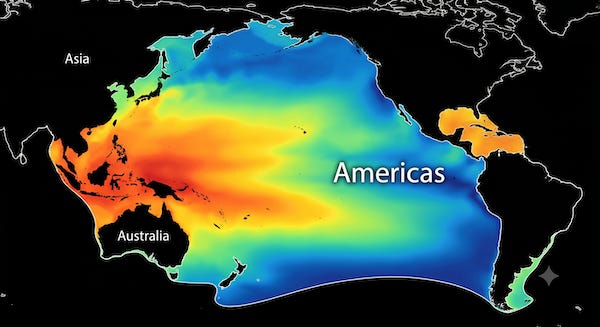
Sometimes, these trade winds weaken.
This means that not enough warm surface water gets pushed west. So, it stays near the Americas. The less nutrient-rich warm water leads to fewer fish.
This is called El Nino.
El Nino years:
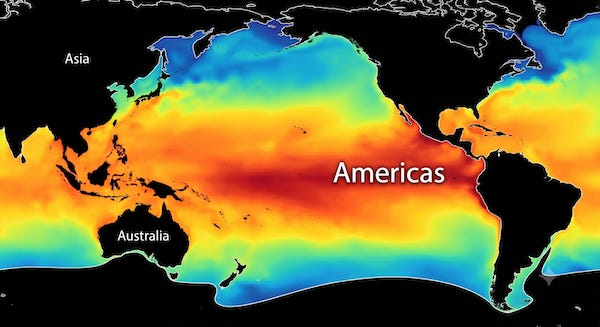
It does not occur at fixed intervals. It can happen anywhere from every 2 to 7 years. When it does occur, it lasts for about 9-12 months. Some have lasted longer than that though.
El Nino is why Peru experienced the 1972 Peruvian Anchoveta Crisis.
That, unfortunately, is a fairly localised event.
El Nino has a far greater impact. In fact, its impacts can be felt across the globe.
Effects
The global weather is linked.
One change in one part of the world can affect another.
Given just how massive the Pacific Ocean is, any change in surface temperatures can have a chain impact across the global weather system.
Its effects can be felt across the Americas, Africa, South Asia, Southeast Asia, and Australia.
The regular weather patterns get broken. Some parts experience more dryness than normal. Some experience more rainfall and storms than normal.
The dryness can result in forest fires that are hard to control. The excessive rains can cause flooding and infrastructure disruption.
In India, it often manifests as less-than-normal rainfall in the monsoons. It may also manifest in the form of higher than normal rainfall in winters in parts like Tamil Nadu and Kerala.
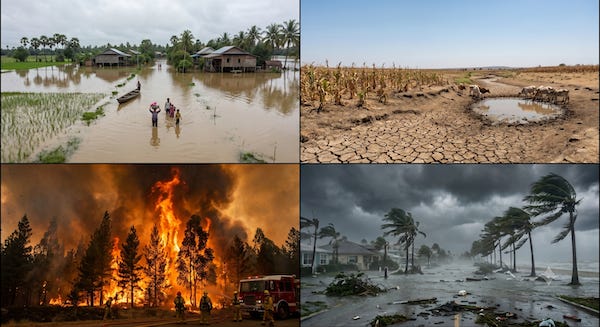
During El Nino years, the entire Earth becomes slightly warmer.
What sounds like a minor inconvenience is actually a disruption of giant proportions.
Farming and food supplies get hampered. Loss of livelihood and migration becomes a common pattern in these regions.
Thousands of people die every El Nino event because of the effects of the disrupted weather.
El Nino History
El Ninos aren’t always the same.
Some are massive. Some are less intense.
One of the strongest El Nino years in recent times was only about 2 years ago, in the 2023-24 period.
It was rated as being one of the strongest in the last 2 decades.
Another one in 2015-16 was similarly strong.
Other noteworthy El Nino years have been 2009-10, 2002-03, 1997-98, and 1991-92.
The Peruvian anchoveta example is one example that might help us get a sense of how unexpected and far-reaching the effect of El Nino can be.
Some more examples might aid here.
1991-92
In the 1991-92 period, higher than normal rain led to a vegetation boom in the Southwestern part of the USA.
The denser vegetation resulted in an explosion of mice. A higher-than-normal mouse population led to greater human-mouse contact. And that led to more diseases.
This El Nino resulted in a hantavirus outbreak in 1993 in the region.
1997-98
This El Nino created excessively dry periods in the Southeast Asia region.
Forest fires became so common that they affected tourism, airports, shipping, and health systems. El Nino didn’t directly cause forest fires, but the lack of rains resulted in uncontrollable forest fires.
1876-78
This one’s about 150 years old but is infamous for being one of the deadliest.
It resulted in famines across India, China, parts of Africa, and Brazil. Indirectly, it killed 50 million people.
2026-27
Yes, this year is an El Nino year too.
Yes, there will be disruptions.
And yes, this one’s supposed to be a big one.
What could it mean?
Well, this isn’t the first time. We’ve seen these come and go. We’ve also seen some El Nino years in the recent past.
The challenge with these is that we cannot fully understand all that will happen.
The general expectation is that the country might face severe heat in some parts and extreme flooding in some parts.
That’s the first and most immediate effect. How that will play out for the rest of the system is hard to predict.
We can look at yesteryears to get some sense of this.
One of the most common patterns is less than normal monsoon rainfall.
That impacts the food and agriculture products grown in the country. Any shortages there lead to higher prices of food items.
But then, does it always manifest in that way? Not really. Many times, governments stockpile food in cold storages to prepare for El Nino’s drought years.
So we cannot even say for sure that food prices will climb. They may climb.
Beyond that, the more wacky chain of events cannot be predicted.
It’s not a normal year. But it’s also not a once-in-a-century event.
But we’ve been through these before.
Quick Takes
+ India’s wholesale inflation rose to 9.68% year-on-year in May (vs 8.26% in April). Fuel inflation rose 30.33% year-on-year (vs 24.89% in April).
+ India’s merchandise exports rose 18% year-on-year to $45.2 billion in May while imports rose 20.6% to $73.41 billion. The trade deficit increased to $28.21 billion (vs $22.56 billion in April)
+ India’s unemployment rate rose to 5.5% in May (vs 5.2% in April).
+ Razorpay has filed for an IPO with SEBI through the confidential route.
+ India’s passenger vehicle sales grew 27.3% year-on-year to 4.39 lakh units in May: SIAM
+ India’s Union Minister Nitin Gadkari has officially signed rules giving legal recognition to 100% ethanol fuel (E100) for vehicles in India.
+ The sales of India’s listed private non-financial companies grew 13.9% year-on-year in the Jan-March quarter.
+ The government has increased the export duty on diesel to Rs 14 per liter and aviation turbine fuel (ATF) to Rs 12.5 per liter, while leaving petrol levies unchanged.
+ The US Fed kept the interest rate unchanged in the 3.5% to 3.75% range.
+ The US and Iran have officially signed an interim peace agreement to end the West Asia war. Iran has agreed to dilute its enriched uranium in exchange for major economic relief. In return, the US will lift its naval blockade and waive oil sanctions, while Iran will reopen the Strait of Hormuz.
+ The India-UK Free Trade Agreement (CETA) will officially take effect on 15 July, 2026, significantly reducing tariffs for both sides.
+ NSE has filed draft papers with SEBI for a Rs 30,000 crore IPO.
+ India’s forex reserves fell by $9.98 billion to $671.63 billion in the week that ended on 12 June.
+ Jio Platforms has filed draft papers with SEBI for an IPO with a fresh issue of up to 27 crore equity shares.
The information contained in this Groww Digest is purely for knowledge. This Groww Digest does not contain any recommendations or advice.
Team Groww Digest
Detailed article of el-nino and its indirect effect on consumer world.🙂
Excellent for general and economic related information and knowledge enhancement