

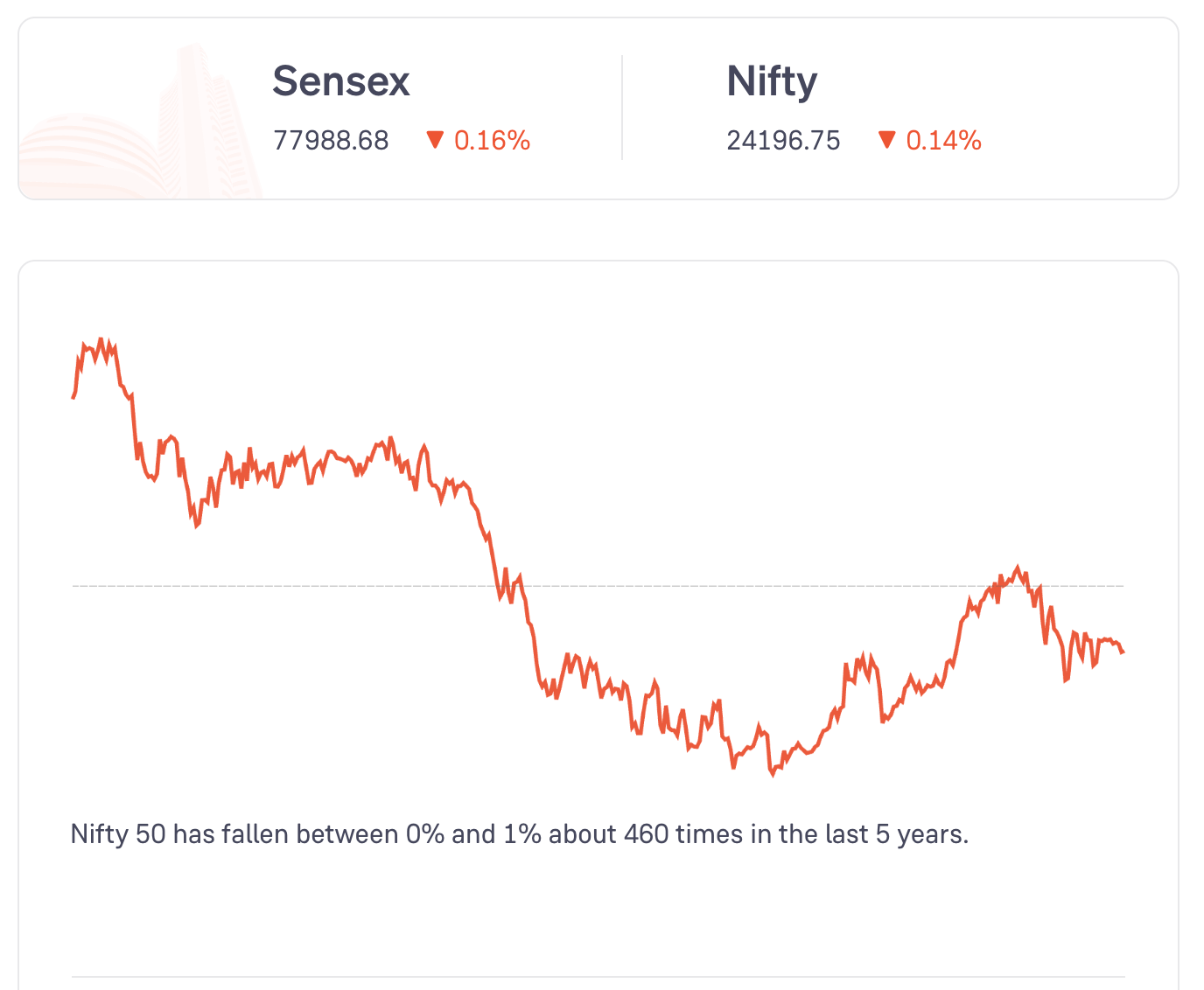
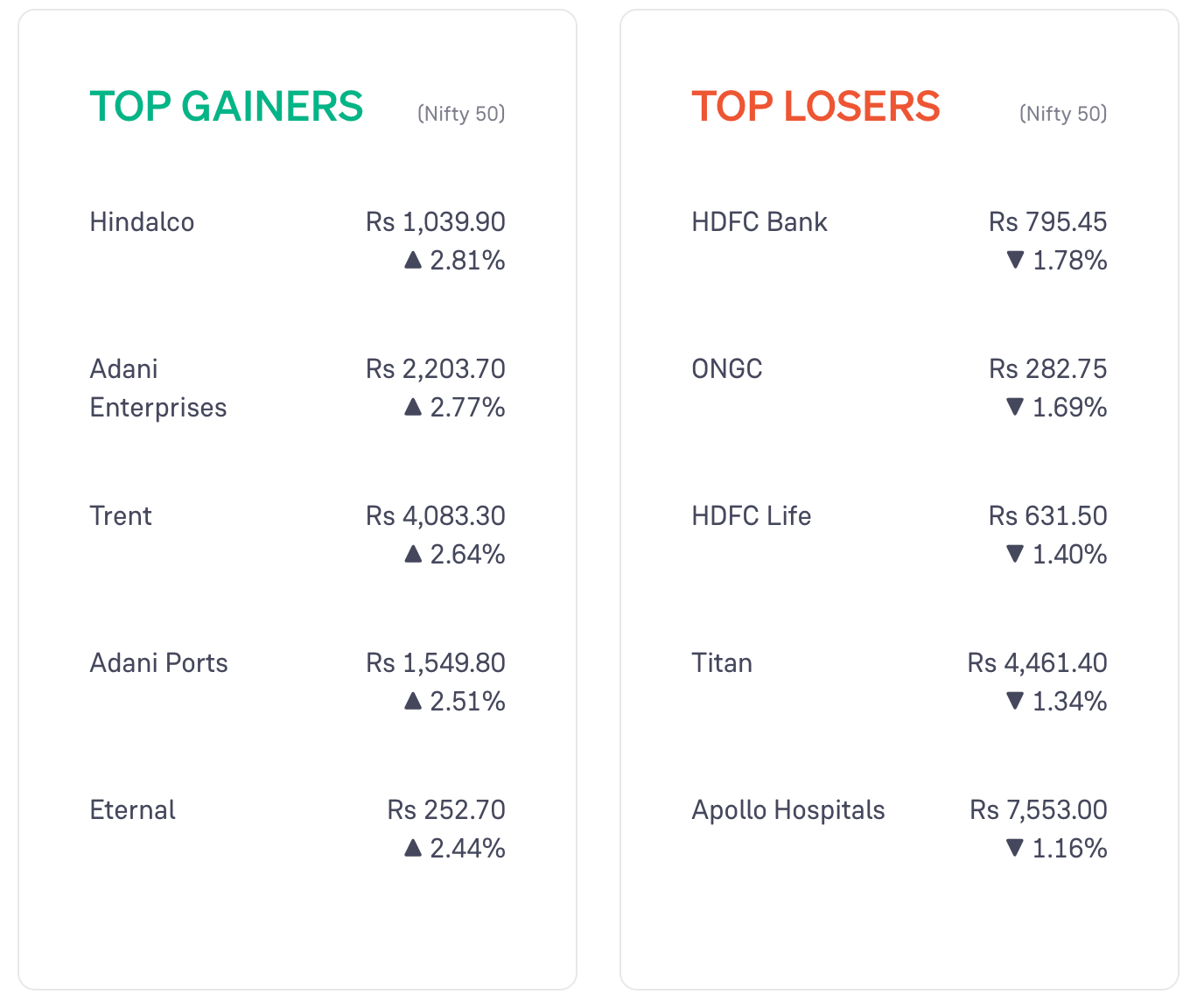
Markets opened above yesterday’s closing point.
Metal stocks and IT stocks rose the most today. Private bank stocks and auto stocks fell the most.
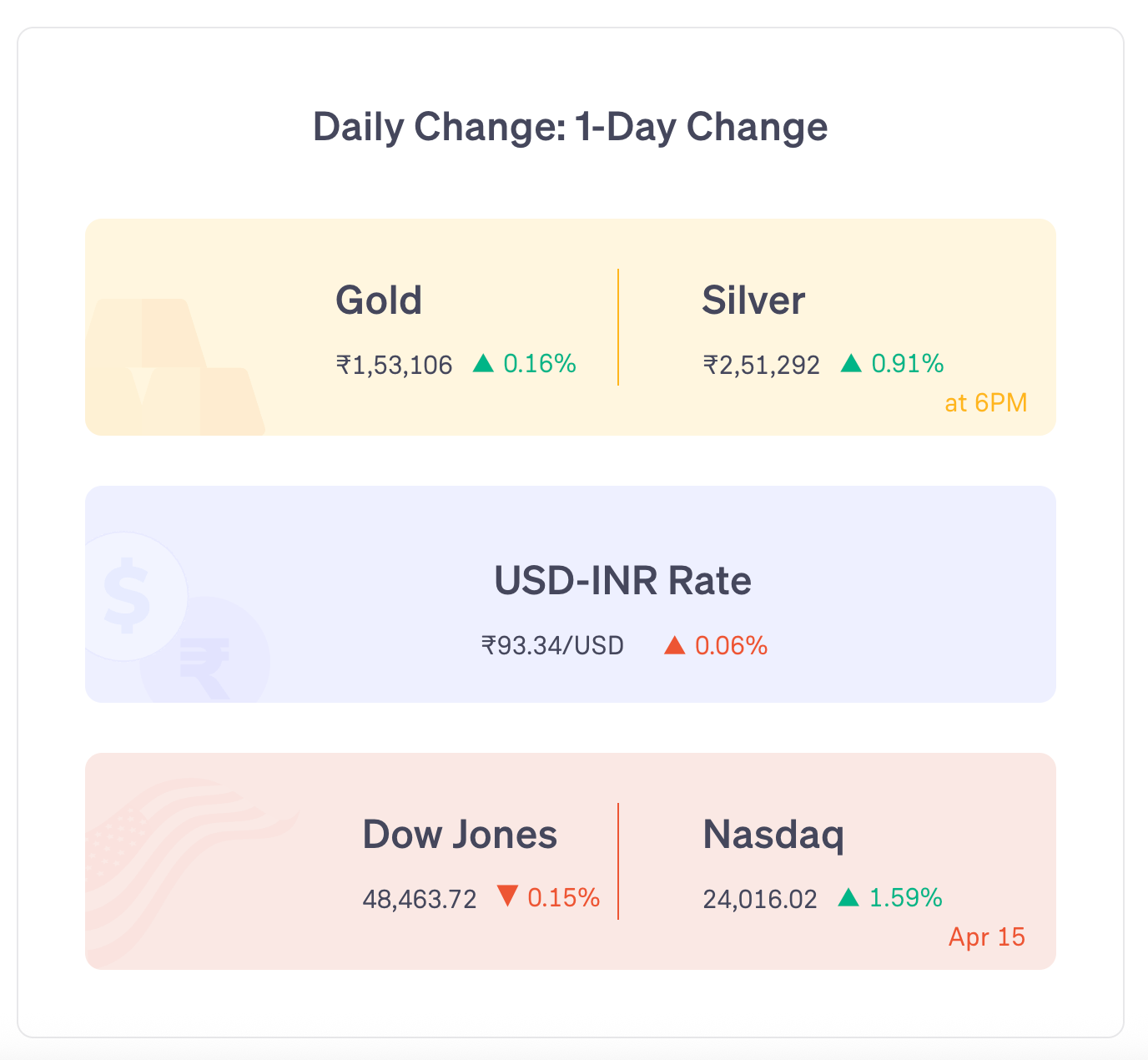
Global markets: Most US markets and most Asian markets rose. European markets rose (as of 6 pm IST).
News
China has overtaken the USA to become India’s largest trading partner in FY25-26. The value of India’s total trade with China is around $151 billion, with a trade deficit of about $112 billion (vs total trade of about $140 billion with the US).
China’s GDP grew 5% year-on-year in the Jan-March quarter (vs 4.5% in the previous quarter).
Stocks Updates
Wipro: net profit fell 1.9% year-on-year to Rs 3,521.6 crore during the Jan-March quarter. Company has announced a buyback for an aggregate value of up to Rs 15,000 crore.
HDFC Life: net profit rose 4% year-on-year to Rs 496.65 crore during the Jan-March quarter. Dividend announced: Rs 2.10 per share, with 19 June as the record date.
HDFC Bank: to invest up to Rs 1,000 crore in its subsidiary, HDFC Life Insurance Company Ltd, subject to RBI approval.
GAIL: signed contract agreements with TUSCO Limited to set up a 600 MW solar project with 550 MWh battery storage system at TUSCO’s Solar Park in Jhansi, Uttar Pradesh.
HDFC AMC: net profit fell 2.5% year-on-year to Rs 622.66 crore during the Jan-March quarter.
ICICI Lombard: net profit rose 7.25% year-on-year to Rs 546.56 crore during the Jan-March quarter. Dividend announced: Rs 7 per share.
Zydus Lifesciences: received USFDA EIR approval for oncology injectable manufacturing facility in SEZ1, Ahmedabad.
Samvardhana Motherson: company’s indirect step-down subsidiary, GIE Groupe AD, was dissolved and deregistered by the Commercial Register in France.
Word of the Day
Book Building
It is a process in an IPO where the price of the shares is determined.
When a company’s IPO opens, it gives a price range (called a price band) instead of a fixed price.
Investors place bids, mentioning the number of shares they want and the price within this band. As bids come in, the company’s bankers record them in a ‘book.’
The company decides the final price of the shares based on the demand that comes at each price.
This way, the price is discovered based on investor demand.
6 Day Course
Theme: sector rotation
Day 4: Thursday
The final phase is the crash which happens after a period of euphoria.
In this period, we see the markets initially feel overvalued with unrealistic investments taking place.
Then, we see a crash happen where a lot of the money gets wiped out and investors lose money.
After a crash, central banks usually lower interest rates to encourage economic growth.
Discretionary spending goes to an extreme low as everyone is trying to save money assuming things will get worse or remain the way they are.
Earnings across different companies start reducing as people are spending less.
A cyclical effect takes place where companies start cutting jobs, reducing hiring, and giving no or lower salary increments.
Featured Question
Q. “What is the difference between variable interest rate and floating interest rate?”
They are both similar and often, people use the two interchangeably.
But there is a clear difference between the two.
When you take a loan, the interest rate may be floating. This means, there is an external benchmark that is used to calculate the interest rate.
If the RBI increases the repo rate, the bank/lender has to increase the rates too. And vice versa.
The rate is transparent, formula based, and not decided by the bank.
Variable rates are similar, they change with time and the prevailing interest rates.
But their interest rate is not as transparent. It is decided by the bank/lender and can be kept high even if the RBI reduces the repo rate.
It is not formula based and therefore is less transparent.
The information presented in this post has been compiled and prepared by Groww Invest Tech Pvt Ltd and is intended solely for informational purposes. It is not tailored to any specific investment objectives, financial situations, or needs of any individual investor. The content should not be construed as investment, financial, legal, or tax advice and should not be relied upon as a substitute for professional consultation.
Investing in securities markets involves inherent risks. Investors are advised to carefully review all relevant documents and consider their own risk tolerance before making any investment decisions.
Mutual fund investments are subject to market risks; please read all scheme-related documents carefully. Past performance of financial instruments, schemes, or markets is not indicative of future results.
Groww Invest Tech Pvt Ltd is registered with the Securities and Exchange Board of India (SEBI) under Registration No: INZ000301838, as a Research Analyst under No: INH200008662, as a Depository Participant under No: IN-DP-417-2019, and with the Association of Mutual Funds in India (AMFI) under ARN-111686.
SEBI registration details: View registered name and registration numbers
Research Analyst Disclaimer: View Research Analyst disclaimer
Did you like this edition?
Leave a feedback here!