
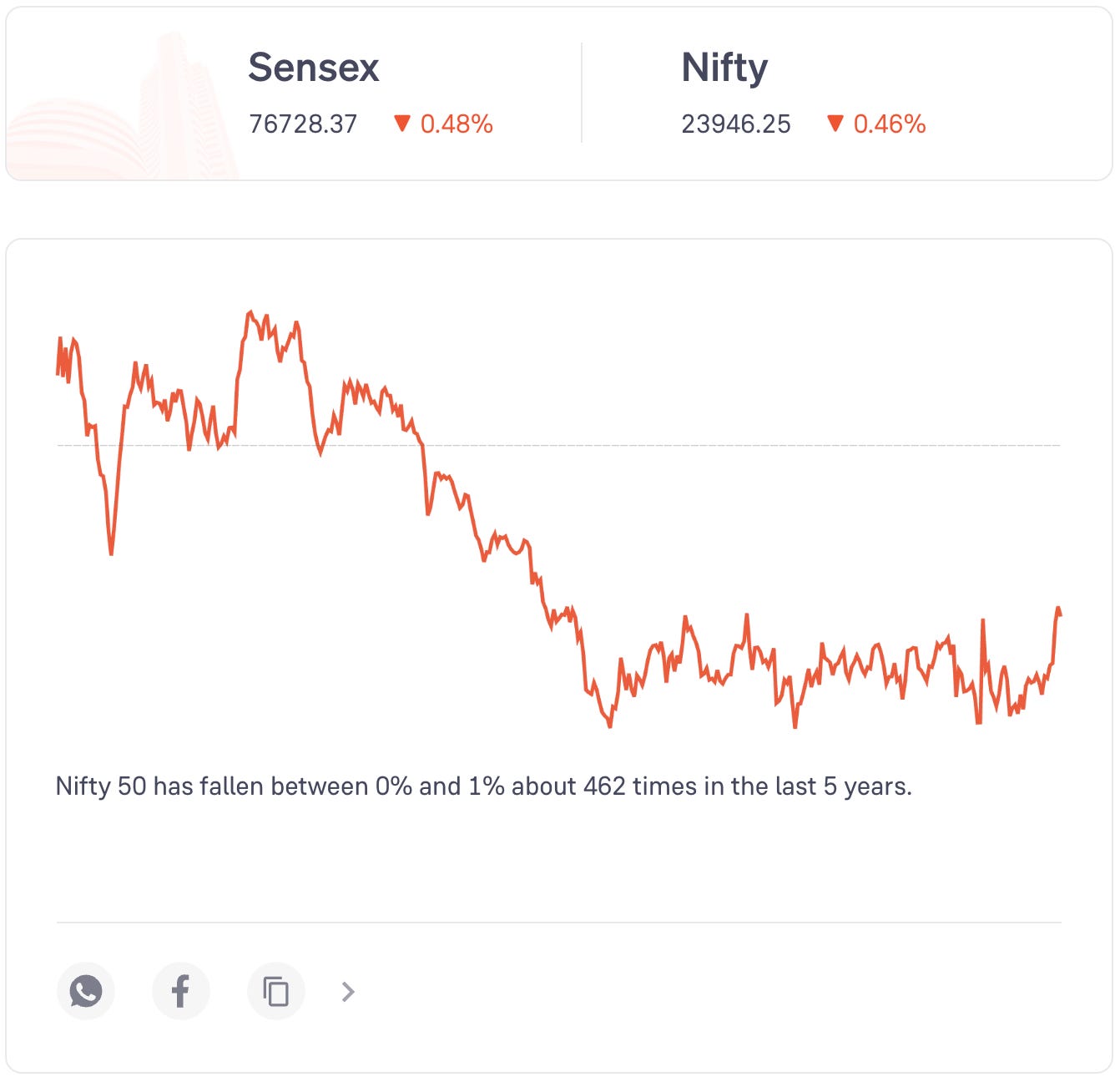
Markets opened above Friday’s closing point.
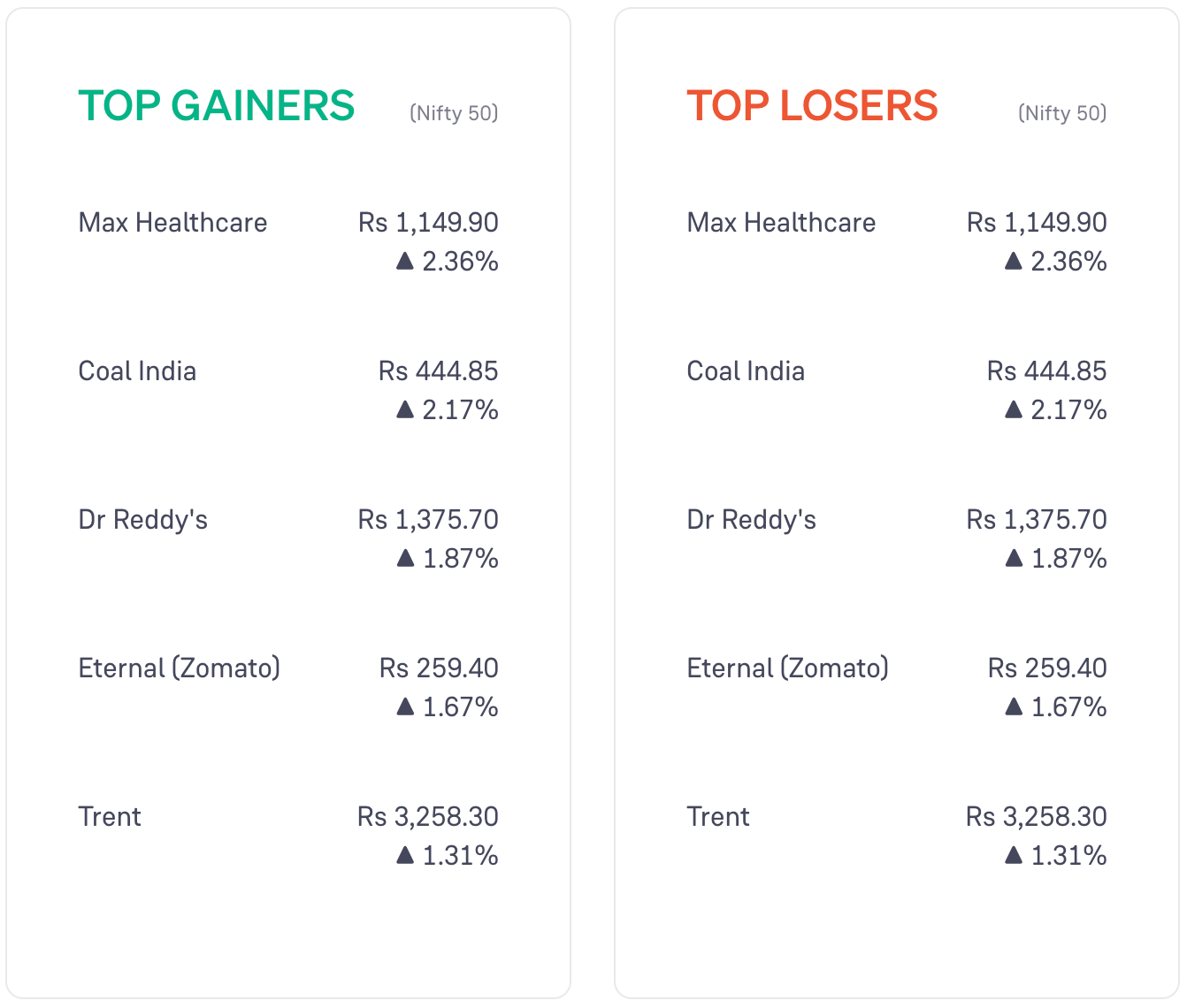
Pharma stocks and healthcare stocks rose the most today. Auto stocks and cement stocks fell the most.
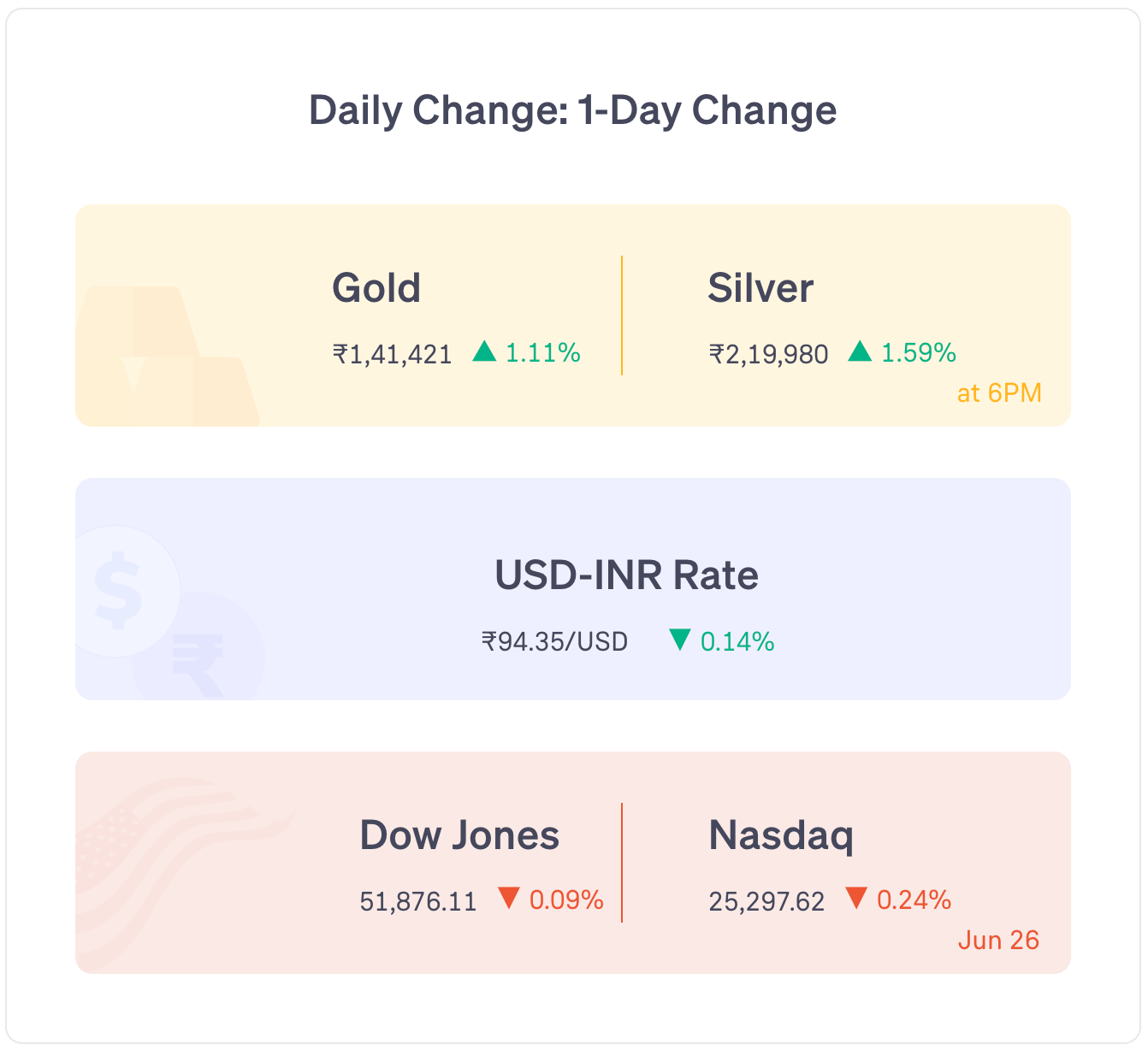
Global markets: Most US markets closed flat. Most Asian markets rose. European markets were flat (as of 6 pm IST).
News
India’s industrial production grew 5.1% year-on-year in May (vs 4.9% in April). Manufacturing production rose 5.5% (vs 6.1% in April).
Turtlemint Fintech Solutions IPO listed on the stock exchanges at a discount of 11.25% over the issue price and closed 10.94% down at the end of the day.
Stocks Updates
SBI: raised $300 million through 3-year senior unsecured floating-rate bonds at SOFR + 100 bps. The bonds will be issued through its London branch on 6 July.
Hindustan Zinc: executed a composite licence with the Uttar Pradesh government for the 210.01-hectare Nawatola Laband Rare Earth Elements block in Sonbhadra.
Bajaj Auto: buyback of up to 46.94 lakh shares at Rs 12,000 per share, aggregating up to Rs 5,632.8 crore, will open on 1 July and close on 7 July.
Power Grid: commissioned the transmission scheme for solar energy zones in Ananthapur (2,500 MW) and Kurnool (1,000 MW) in Andhra Pradesh.
Adani Green: company’s step-down subsidiary, Adani Renewable Energy Eight, commissioned a 150 MW solar power project at Khavda, Gujarat. With this, Adani Green’s total operational renewable energy capacity increased to 19,985.8 MW.
HAL: board recommended a final dividend of Rs 10 per share for FY26. Record date: 14 Aug. Subject to shareholder approval.
Samvardhana Motherson: acquisition of a 28.15% stake in HR Dhauliganga Pvt Ltd (HRDPL), an SPV of Hinduja Renewables Energy Pvt Ltd, proposed to support captive power sourcing, is now expected to be completed in Q4 FY27 instead of Q1 FY27.
BPCL: will acquire a 40% stake in Tiki Tar and Shell India Pvt Ltd (TTSIPL), a joint venture of Tiki Tar Group and Shell Gas B.V. for Rs 85 crore to expand its value-added bitumen business.
Aditya Birla Capital: allotted NCDs worth Rs 300 crore (Rs 200 crore at zero coupon and Rs 100 crore at 8.26% p.a. coupon) on a private placement basis.
Aurobindo Pharma: USFDA completed an inspection of subsidiary Auroactive Pharma’s API manufacturing facility in Andhra Pradesh with two observations.
Word of the Day
Discounting
It shows how much a future amount of money is worth today.
That is, it gives the present value of a future amount. Money today is always worth more than the same amount in the future because of inflation and the opportunity to invest and earn returns.
Discounting helps investors decide if an investment is worth it by comparing future returns in today’s terms.
A higher discount rate means future money is worth less today, usually because of more risk or uncertainty.
A lower discount rate means future money is worth more today, indicating less risk or a better investment environment.
6 Day Course
Theme: value trap
Day 1: Monday
Value trap is an investment that looks like it is available for cheap but ends up trapping people’s money.
In this week’s course, we’ll look at some common traits of value traps.
The first and foremost value trap is that of a low-PE ratio stocks.
This does not apply to all stocks with a low PE ratio. But some stocks have a low PE ratio and stay that way.
The reason for it might be because the company is actually a low-growth business or has fundamental flaws that prevent it from performing well.
Investors who invest in such companies’ stocks might think they are buying a cheap undervalued stock but end up getting low returns because the stock never performs well or gives good returns.
This can apply to all metrics used for valuation of a company including PE ratio, PB ratio, cashflow multiple, revenue multiple, etc.
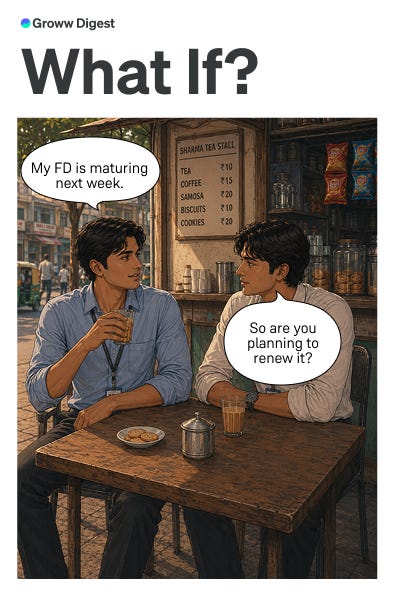

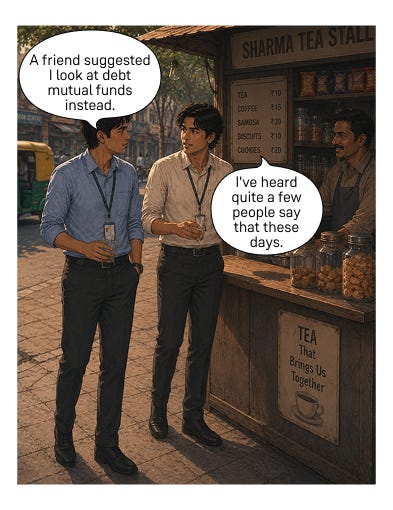
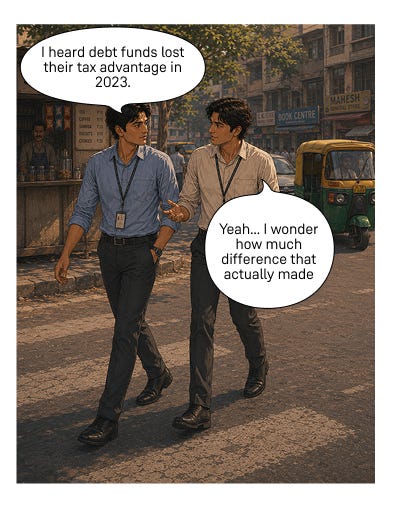
We explored the question “What if you chose a debt fund instead of an FD?”
Check out the full report here .
Did you like this edition?
Leave a feedback here!