

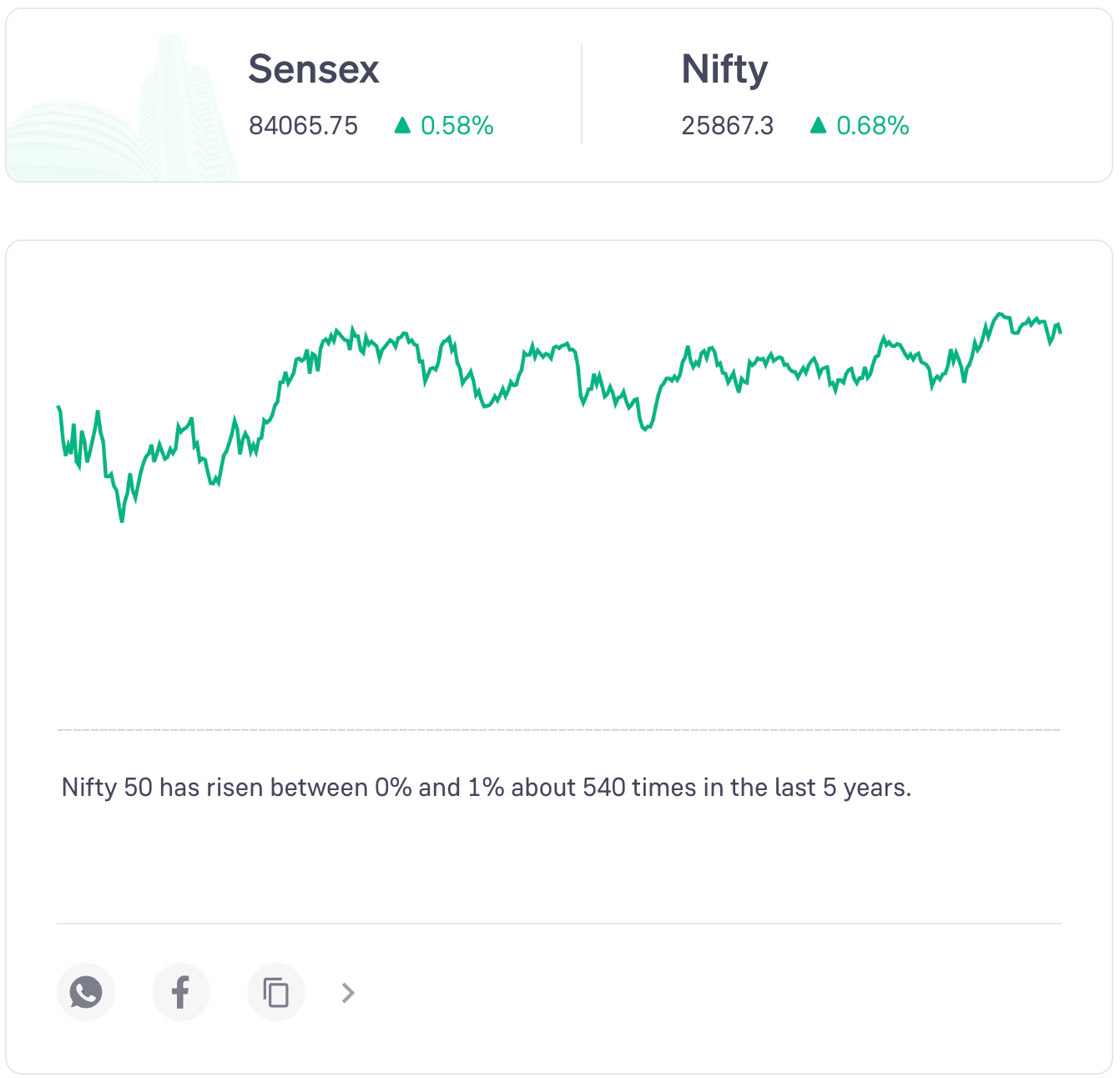
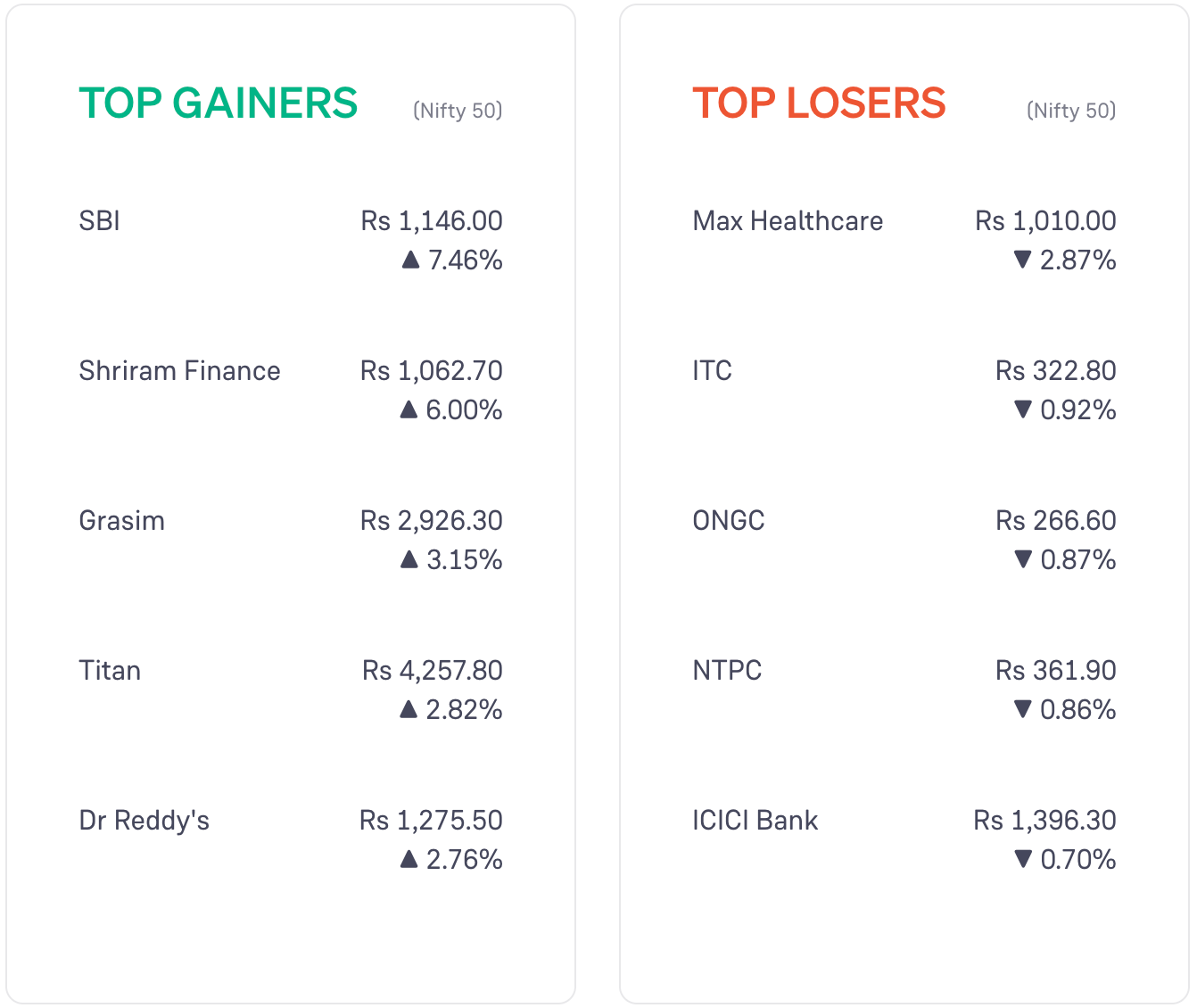
Markets opened above Friday’s closing point.
All sectors’ stocks rose today. Media stocks and consumer durables stocks rose the most.
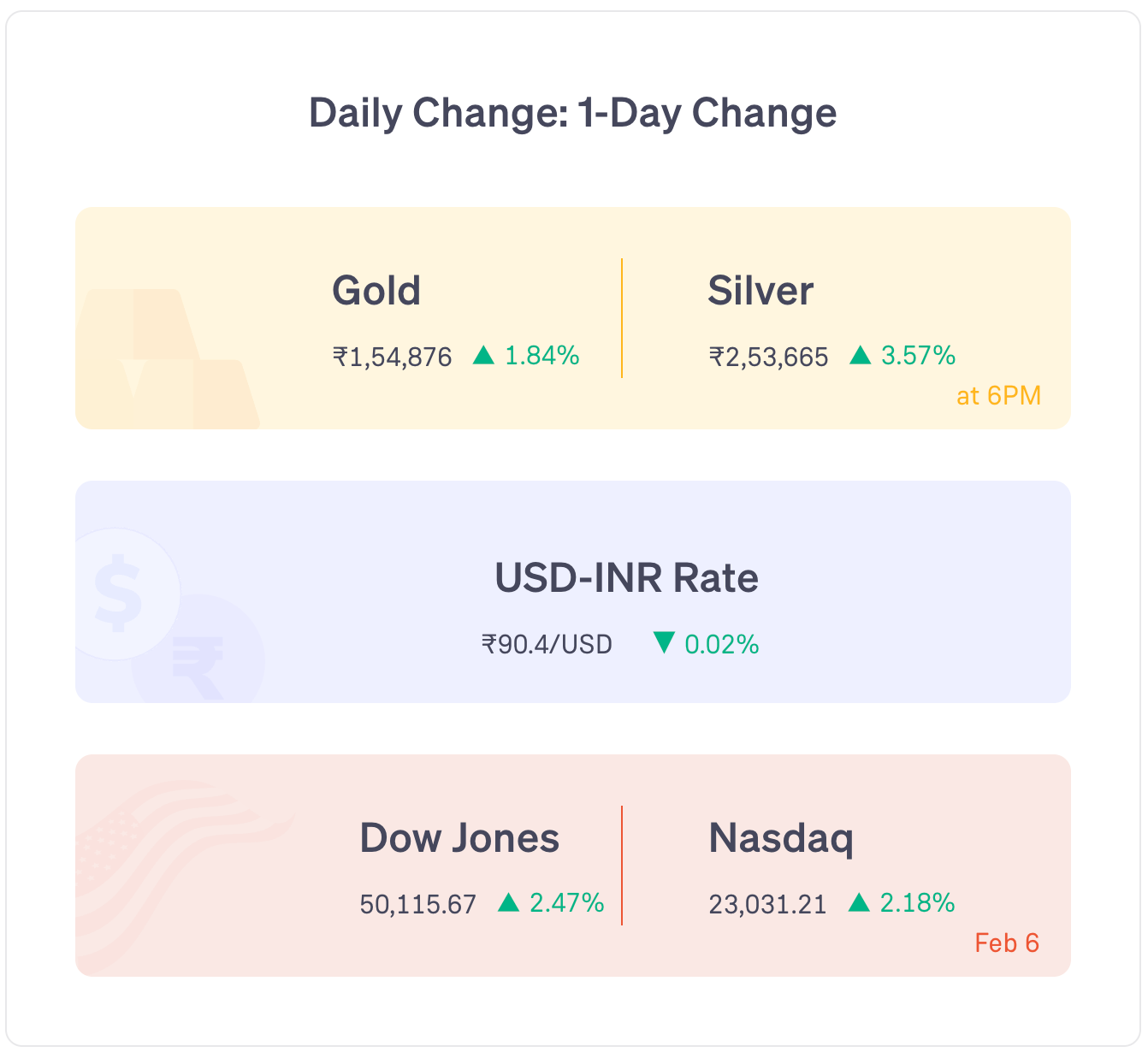
Global markets: US and Asian markets rose. Most European markets rose (as of 6 pm IST).
News
India’s gross non‑performing assets (NPAs) of scheduled commercial banks have fallen to a historic low of 2.15% as of September 2025.
Gujarat signed a letter of intent with Elon Musk’s Starlink to bring high‑speed satellite internet to remote and underserved areas.
India and Seychelles signed a $175 million special economic package to support development projects in Seychelles in areas like housing, mobility, health, defence and maritime security.
Fractal Analytics IPO has been subscribed 0.09 times. Retail subscription: 0.35 times. IPO closes on 11 Feb.
Aye Finance IPO has been subscribed 0.12 times. Retail subscription: 0.26 times. IPO closes on 11 Feb.
InCred Holdings received SEBI’s approval for its IPO.
Stocks Updates
Zydus Lifesciences: net profit rose 1.8% year-on-year to Rs 1,042 crore in the Oct-Dec quarter.
Reliance: the FMCG arm of the company, Reliance Consumer Products, has acquired a majority stake in Australia-based beverage company, Goodness Group.
SBI: net profit rose 14.1% year-on-year to Rs 21,876 crore in the Oct-Dec quarter.
Adani Energy: the company has secured long-term financing from a Japanese banks consortium for a 950 km, 800 kV HVDC corridor that will transmit 6,000 MW of renewable power from Rajasthan to Uttar Pradesh by 2029.
Tata Motors Passenger: has incorporated an IT services subsidiary named ‘AIEQU Mobility’. This venture will focus on developing advanced digital and AI solutions for vehicles. It also inaugurated its Rs 9,000 crore Jaguar Land Rover plant in Ranipet, Tamil Nadu.
Word of the Day
Alternative Investment Fund (AIF)
It is an investment that differs from traditional assets like stocks, mutual funds, and bonds.
It is a privately pooled fund, meaning it is not open to the public. Usually, wealthy individuals or institutions are the ones to invest in them.
AIFs invest in various assets like real estate, private equity, infrastructure, and hedge funds.
They can offer high returns, but they come with higher risks. They also have a lock-in period.
They have higher fees and might be harder to sell quickly due to low liquidity.
6 Day Course
Theme: how ETFs work
Day 1: Monday
ETFs are becoming more popular with time.
The recent gold and silver movements have helped popularize ETFs even more.
ETFs are launched and run by asset management companies (AMCs). Exactly like mutual funds.
AMCs are responsible for launching, running, and managing ETFs.
But the assets are not owned by the AMCs. That’s held by custodians.
Most ETFs are passive in nature. They invest by mimicking an index.
This index is provided by an index provider.
For example, many ETFs use indices provided by NSE and BSE.
Even though they are passive, they still have a fund manager who is responsible for ensuring the ETF follows its mandate.

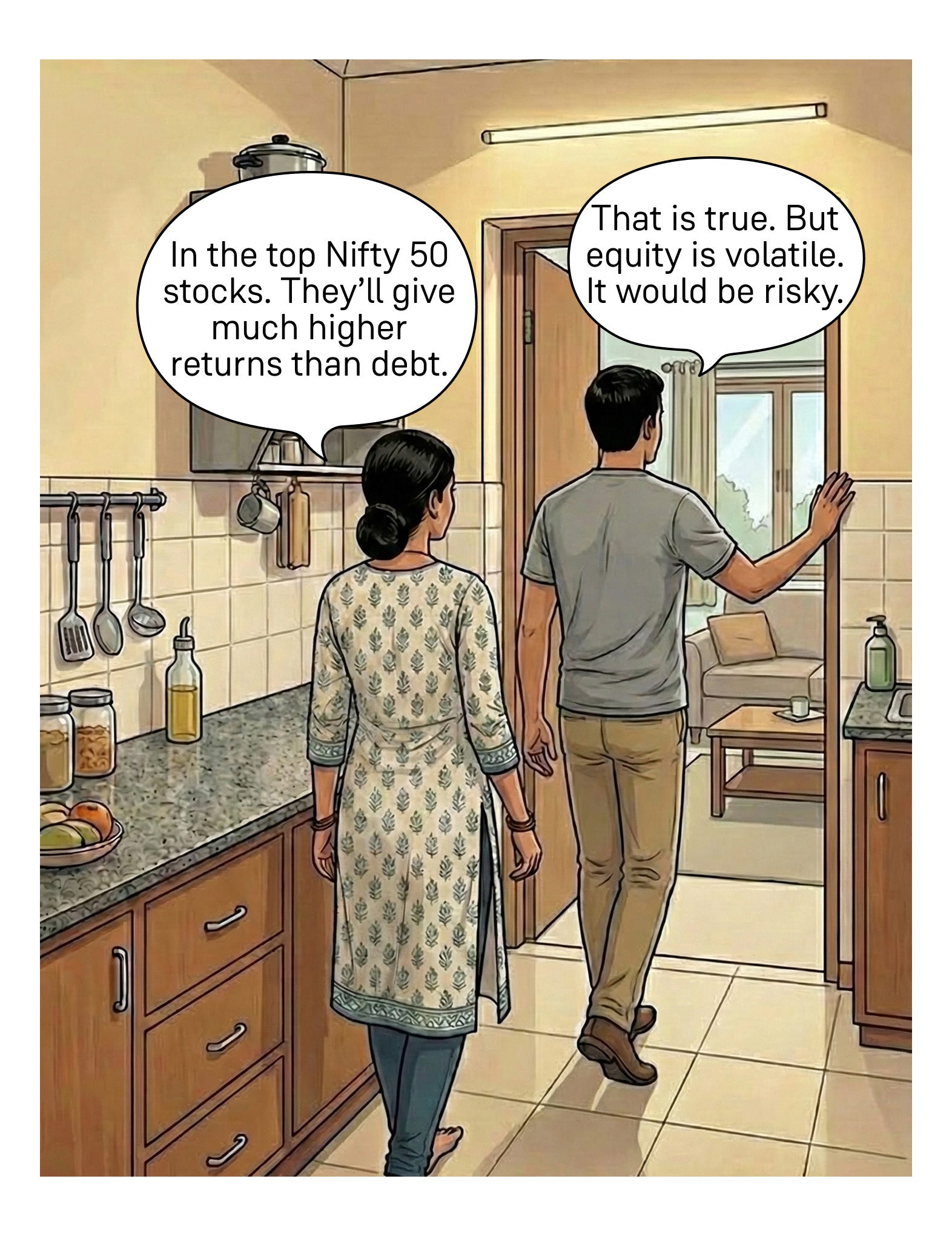



We explored the question "What if I invested in the Top 5 Nifty 50 companies instead of debt?"
Check out the full report here.
Did you like this edition?
Leave a feedback here!